
SpaceX Completes Historic $75 Billion IPO: How the Space Economy Just Changed
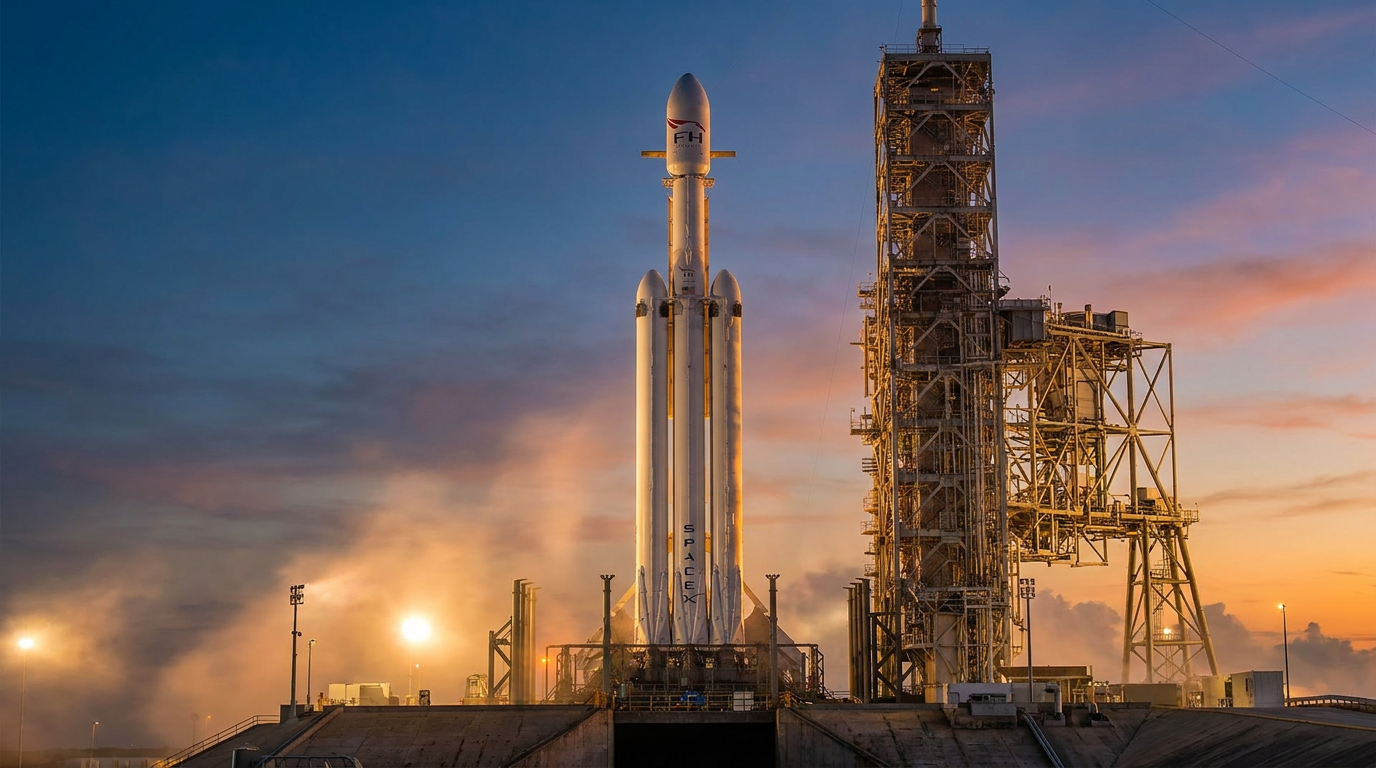
SpaceX has officially entered the public markets with a record-breaking $75 billion initial public offering, transitioning from a privately funded venture to a publicly traded aerospace giant.
By Factlen Editorial Team
- Financial Markets & Analysts
- Focuses on the unprecedented scale of the IPO, the unconventional fixed-pricing strategy, and the company's valuation multiples.
- Tech & Retail Enthusiasts
- Emphasizes the technological breakthroughs, the AI potential of Starlink, and the democratization of investment in space exploration.
- Commercial Space Sector
- Views the IPO as a validation of the commercial space model, while weighing the impact of SpaceX's market dominance on competitors.
What's not represented
- · International space agencies (ESA, CNSA)
- · Astronomical research community
Why this matters
By opening its financial books and strategic roadmap to the public, SpaceX is fundamentally altering how the global space economy is funded. Retail and institutional investors can now directly participate in the commercialization of low Earth orbit and the development of interplanetary infrastructure.
Key points
- SpaceX completed a historic $75 billion IPO, valuing the company at roughly $2 trillion.
- The company bypassed traditional Wall Street roadshows, opting for a fixed $135 offer price.
- Analysts estimate the fixed-pricing strategy left approximately $20 billion in first-day profits on the table.
- Investors are increasingly valuing SpaceX for its Starlink network's potential as a global AI and data backbone.
The bell rang on Wall Street, but the reverberations were felt in low Earth orbit. SpaceX has officially transitioned from the world's most valuable private startup to a publicly traded behemoth, executing a record-shattering $75 billion Initial Public Offering.[1][6]
The sheer scale of the offering has redefined capital markets. Valuing the aerospace manufacturer and satellite internet provider at roughly $2 trillion, the IPO represents the largest single capital raise in American financial history, dwarfing previous tech and e-commerce debuts.[4][7]
For over two decades, retail investors have watched from the sidelines as SpaceX revolutionized launch economics. Now, the public has a direct financial stake in the company's sprawling ambitions, from the Starlink satellite constellation to the multi-planetary Starship program.[6][7]
However, the mechanics of this IPO were as unconventional as the company's engineering. Rather than embarking on a traditional Wall Street roadshow to gauge institutional demand and set a floating price range, SpaceX opted for a fixed offer price of $135 per share.[3][5]

This fixed-price strategy, determined well before the shares hit the open market, effectively bypassed the standard price-discovery process. Lise Buyer, founder of Class V Group and an architect of Google's 2004 IPO, noted that the structure also included a highly unusual staggered lockup release for early employees and insiders, designed to prevent a sudden flood of shares.[3]
The immediate result was a massive first-day surge in the stock price. Because the $135 entry point was set conservatively relative to overwhelming market demand, the stock jumped significantly the moment trading began, triggering brief volatility halts.[1][6]
Financial historians are already debating the efficiency of this approach. Jay Ritter, director of The IPO Initiative at the University of Florida, estimates that the fixed pricing strategy left approximately $20 billion in first-day profits "on the table"—more than double the previous U.S. record held by Alibaba.[5]
Financial historians are already debating the efficiency of this approach.
Yet, for SpaceX leadership, maximizing the immediate capital raise may have been secondary to ensuring broad retail participation and rewarding long-term believers. The company's evolution from a risky 2002 startup to a $2 trillion public entity is a testament to surviving near-fatal early failures.[4][7]

Tom Mueller, SpaceX’s first employee and founder of Impulse Space, reflected on the early skepticism the company faced. He highlighted the repeated test failures of the original Falcon 1 rocket before the company finally reached orbit, a milestone that narrowly saved SpaceX from bankruptcy.[4]
Today, the core engine of SpaceX's valuation is its mastery of reusable launch vehicles. By successfully landing and reusing Falcon 9 boosters, the company fundamentally collapsed the cost of accessing space, transforming what was once a bespoke, expendable process into a routine logistics operation.[4][8]

But the public market's appetite for SpaceX extends far beyond rockets. Analysts are increasingly valuing the company as a foundational technology platform, particularly due to the Starlink satellite internet constellation.[2]
Starlink's global network of low Earth orbit satellites is generating massive recurring revenue, but it is also being viewed through a new lens: artificial intelligence. Investors are pricing in the potential for Starlink to serve as a low-latency, high-bandwidth backbone for distributed AI compute and autonomous systems worldwide.[2]
This AI-adjacent valuation explains why the stock is trading at software-like multiples rather than traditional aerospace hardware multiples. The market is betting that SpaceX will not just transport payloads, but will control the orbital infrastructure required for the next generation of global data transmission.[2][8]
The transition to a public company, however, introduces new pressures. SpaceX must now balance the relentless quarterly earnings expectations of Wall Street with the multi-decade, capital-intensive goal of colonizing Mars—a mission that may not align with short-term profit motives.[2][8]
How the company navigates this tension will dictate the future of the commercial space industry. For now, the successful IPO has injected unprecedented liquidity into the space economy, proving that the final frontier is not just a scientific endeavor, but a highly lucrative asset class.[4][8]

How we got here
2002
Elon Musk founds Space Exploration Technologies Corp. (SpaceX) with the ultimate goal of reducing space transportation costs to enable the colonization of Mars.
2008
After three consecutive failures, the Falcon 1 rocket successfully reaches orbit, saving the company from bankruptcy and securing a vital NASA contract.
2015
SpaceX successfully lands the first stage of a Falcon 9 rocket back on Earth, proving the viability of reusable orbital-class boosters.
2019
The company begins launching the first operational satellites for its Starlink broadband internet constellation.
June 2026
SpaceX executes a record-breaking $75 billion IPO, transitioning into a publicly traded company valued at approximately $2 trillion.
Viewpoints in depth
Institutional Investors
Focused on the financial mechanics of the IPO and the transition from hardware to software-like revenue streams.
For Wall Street, the SpaceX IPO is less about the romance of space exploration and more about the sheer scale of the capital event. Analysts are scrutinizing the unconventional fixed-price offering, noting that while it left billions on the table, it successfully generated immense retail momentum. Furthermore, institutional investors are increasingly modeling SpaceX not as a traditional aerospace manufacturer, but as a high-margin data utility. The recurring revenue from the Starlink constellation, coupled with its potential to serve as a global backbone for AI compute, is driving valuation multiples typically reserved for elite software companies.
Space Industry Competitors
Viewing the public transition as both a validation of the commercial space market and a potential competitive threat.
Rival launch providers and satellite operators are watching SpaceX's public debut with a mix of validation and anxiety. On one hand, a $2 trillion valuation for a space company proves to the broader market that the orbital economy is highly lucrative, potentially making it easier for smaller startups to raise capital. On the other hand, a publicly funded SpaceX now has access to a virtually bottomless war chest of public equity. Competitors fear this could allow SpaceX to aggressively undercut launch prices further or monopolize key orbital slots, cementing its dominance in both launch logistics and satellite internet.
Space Exploration Purists
Concerned that the pressures of public markets might sideline the company's foundational goal of reaching Mars.
Among space enthusiasts and early SpaceX supporters, the IPO brings a wave of apprehension. The company was founded with the explicit, multi-decade goal of making humanity multi-planetary—a mission that requires burning billions of dollars on experimental hardware like the Starship program with no immediate financial return. Now that SpaceX is beholden to public shareholders and quarterly earnings reports, purists worry that Wall Street will pressure leadership to prioritize high-margin, short-term projects like Starlink over the high-risk, capital-intensive pursuit of Mars colonization.
What we don't know
- How the transition to a public company will affect SpaceX's timeline and budget for the Mars-focused Starship program.
- Whether the SEC or other regulatory bodies will scrutinize the unconventional fixed-price IPO structure.
- How traditional aerospace competitors will adjust their capital strategies in response to SpaceX's massive public war chest.
Key terms
- Initial Public Offering (IPO)
- The process by which a private company offers shares of its stock to the public for the first time, raising capital and transitioning to a publicly traded entity.
- Fixed Offer Price
- An IPO pricing strategy where the company sets an exact price per share prior to the offering, rather than determining a price range based on institutional investor demand.
- Lockup Period
- A predetermined window of time after an IPO during which early investors and company insiders are restricted from selling their shares, preventing a sudden market flood.
- Low Earth Orbit (LEO)
- An Earth-centered orbit with an altitude of 2,000 kilometers or less, where SpaceX operates its Starlink satellite constellation and conducts most of its commercial missions.
Frequently asked
How much money did SpaceX raise in its IPO?
SpaceX raised a record-breaking $75 billion in its initial public offering.
Why did SpaceX use a fixed offer price?
SpaceX opted for a fixed $135 offer price, bypassing the traditional Wall Street roadshow, which analysts believe was designed to ensure broader retail participation despite leaving estimated billions in first-day profits on the table.
Why is SpaceX valued so highly?
Beyond its dominant rocket launch business, investors are heavily valuing SpaceX's Starlink satellite network, viewing it as a highly lucrative, low-latency backbone for global data and artificial intelligence compute.
Will going public change SpaceX's Mars mission?
It remains to be seen. The company will now have to balance its long-term, capital-intensive goal of reaching Mars with the quarterly profitability expectations of public shareholders.
Sources
Source coverage
8 outlets
3 viewpoints surfaced





[1]BloombergFinancial Markets & Analysts
SpaceX Jumps in First Day Following Record $75B IPO | The Close 6/12/2026
Read on Bloomberg →[2]Ars TechnicaTech & Retail Enthusiasts
SpaceX is now a public company valued for its AI potential, so what comes next?
Read on Ars Technica →Class V Group Founder Analyzes Unique Features of SpaceX's Record $75B IPO
Read on Bloomberg →Tom Mueller on SpaceX’s Rise and Space Economy
Read on Bloomberg →SpaceX IPO Leaves Billions on the Table Amid High Valuation Concerns
Read on Bloomberg →[6]ReutersFinancial Markets & Analysts
SpaceX shares surge in historic $75 billion public market debut
Read on Reuters →[7]CNBCFinancial Markets & Analysts
Elon Musk's SpaceX completes largest IPO in US history
Read on CNBC →[8]SpaceNewsCommercial Space Sector
What a public SpaceX means for the commercial space industry
Read on SpaceNews →

More in technology
See all 27 stories →Vibecoding
How 'Vibecoding' is Turning Anyone with an Idea into a Software Developer
0 sources

Mobile Photography
Apple Brings Generative AI to the iPhone Camera: How iOS 27’s New Photo Tools Work
0 sources

Zero-Knowledge Proofs
How Zero-Knowledge Proofs Are Ending the Era of Data Sharing
0 sources
Digital Wellbeing
The End of the Screen Time Limit: How AI is Redefining 'Nutritional' Digital Media
0 sources

Every angle. Every day.
Get technology stories with full source coverage and perspective breakdowns delivered to your inbox.