
How to Choose the Right E-Bike: A Complete 2026 Buying Guide
With electric bicycles replacing cars for commutes and opening up new trails for recreational riders, choosing the right model has never been more important. This comprehensive guide breaks down motors, batteries, safety certifications, and frame styles to help you find the perfect e-bike.
By Factlen Editorial Team
- Urban Commuters
- Focus on utility, replacing car trips, and practical features like racks and fenders.
- Recreational & Trail Riders
- Prioritize natural ride feel, mid-drive motors, and expanding their cycling range.
- Safety Advocates
- Emphasize UL certification, battery fire prevention, and strict adherence to trail laws.
What's not represented
- · Delivery & Gig Workers
- · Traditional Analog Cyclists
Why this matters
An e-bike is a significant investment that can transform your daily commute, improve your health, and reduce your carbon footprint. Understanding the technical specifications ensures you buy a safe, serviceable machine that fits your specific lifestyle rather than an expensive garage ornament.
Key points
- Determine your primary use case—commuting, recreation, or cargo—before looking at technical specifications.
- Understand the three e-bike classes to ensure your purchase complies with local trail and street laws.
- Choose a mid-drive motor for natural pedaling and hill climbing, or a hub motor for budget-friendly city cruising.
- Prioritize safety by only purchasing e-bikes with UL 2849 or EN 15194 certified electrical systems.
- Expect real-world battery range to be roughly 60 to 70 percent of the manufacturer's advertised maximum.
E-bikes have matured from niche gadgets to essential transportation tools in 2026. Whether you are looking to ditch the car for your daily commute, keep up with faster friends on weekend rides, or simply enjoy the outdoors without exhausting yourself, there is a model designed for your exact needs. The technology has stabilized, offering unprecedented reliability and range, but the market has also fragmented into highly specialized categories.[7]
However, the sheer volume of options can feel overwhelming. Buyers are bombarded with technical jargon—watt-hours, torque sensors, mid-drive motors, and UL certifications. Making the wrong choice can lead to a bike that is uncomfortable, underpowered, or impossible to service locally. Navigating this landscape requires a clear understanding of your own goals before ever stepping foot in a bike shop.[3]
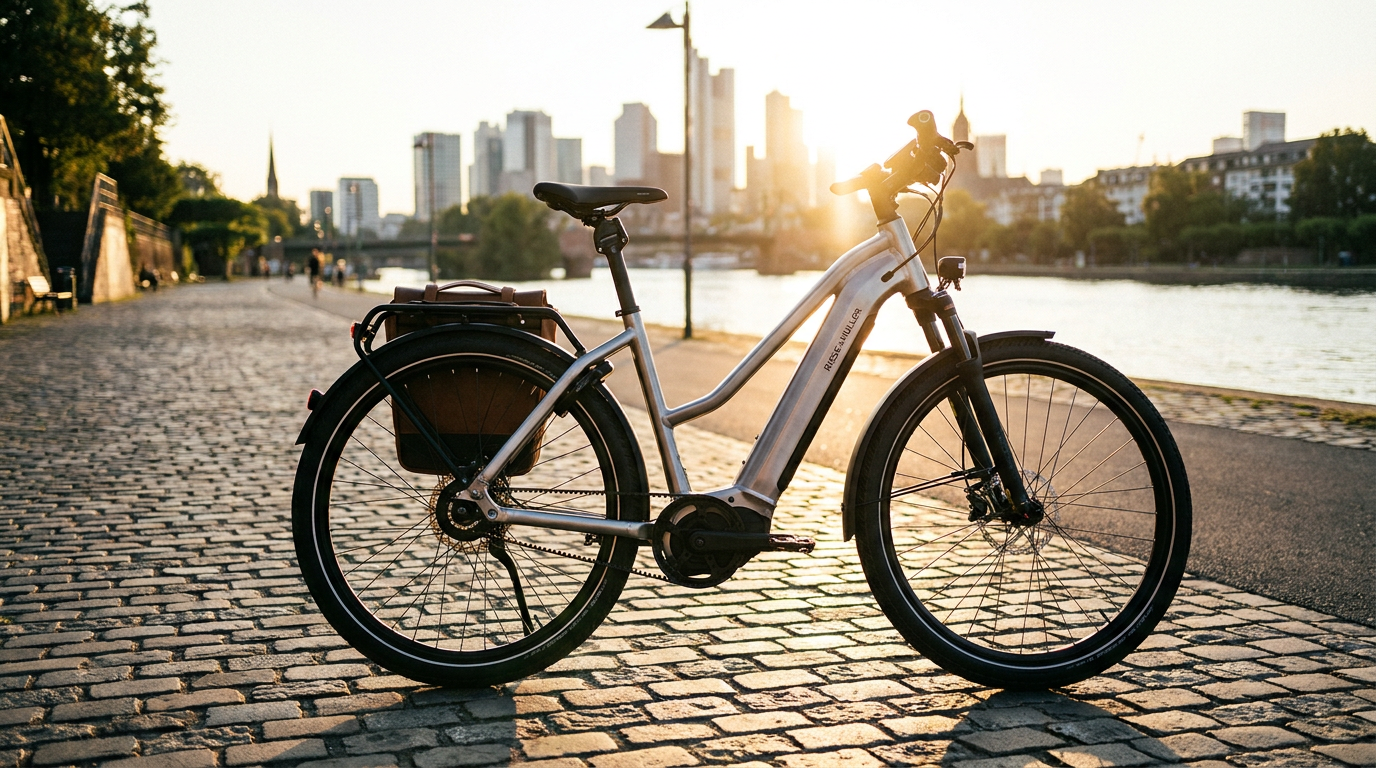
The first and most crucial step is defining your primary use case. A bike built for carrying groceries across town looks and rides very differently from one designed to tackle mountain trails. Urban commuters generally prioritize utility, seeking out models with integrated lights, cargo racks, and fenders to handle varied weather conditions and daily wear-and-tear.[5]
Conversely, recreational riders and mountain bikers need durability, suspension, and a motor that feels like a natural extension of their own pedaling. By pinpointing exactly how and where you plan to ride, you can immediately eliminate dozens of unsuitable models and focus on the features that actually matter to your daily routine and riding environment.[6]
Once you know your use case, you must navigate the three-class system that governs e-bikes in the United States and many other regions. Class 1 e-bikes are pedal-assist only, meaning the motor only engages when you are actively pedaling, and it stops providing assistance at 20 miles per hour. These are widely accepted on most traditional bike paths and multi-use trails.[1]
Class 2 e-bikes introduce a throttle, allowing the bike to move forward even if you are not pedaling, though they also cap out at 20 mph. This feature is particularly popular among commuters who might need a quick burst of speed to get through an intersection from a dead stop, or who want a brief break from pedaling on a steep hill.[1]
Finally, Class 3 e-bikes are designed for speed, offering pedal assistance up to 28 mph. Because of their higher top speed, Class 3 models are often restricted from dedicated bike paths and are better suited for riding in the street alongside vehicular traffic. Understanding these classes is vital, as local laws dictate where each type can be legally ridden.[1][7]

Finally, Class 3 e-bikes are designed for speed, offering pedal assistance up to 28 mph.
The heart of any e-bike is its motor, and buyers must choose between two primary designs: hub-drive and mid-drive. Hub motors are located in the center of either the front or rear wheel. They are generally more affordable and provide a distinct pushing sensation, making them a staple on entry-level and commuter models.[4]
Mid-drive motors, on the other hand, are positioned at the bike's bottom bracket, directly between the pedals. This placement keeps the center of gravity low and balanced, which dramatically improves handling on uneven terrain. More importantly, mid-drive motors leverage the bike's existing drivetrain and gears, making them vastly superior for climbing steep hills and providing a smooth, natural riding feel that mimics traditional cycling.[4][6]

Power is another critical metric, but buyers should focus on torque rather than just top speed or wattage. Torque, measured in Newton-meters (Nm), is the pulling power that gets you moving from a standstill. High torque is your best friend when starting at a green light or tackling a sudden incline, making the bike feel punchy and responsive.[3]
Attached to that motor is the battery, whose capacity is measured in watt-hours (Wh). For standard city commuting, a battery in the 400 to 500 Wh range is usually sufficient, offering a theoretical range of 40 to 100 kilometers. However, buyers must approach manufacturer range claims with a healthy dose of skepticism.[6]
Real-world range is heavily influenced by rider weight, terrain, tire pressure, and the level of assistance used. Industry experts advise expecting only 60 to 70 percent of the advertised maximum range under normal riding conditions. If a manufacturer claims a 50-mile range, planning for 30 to 35 miles is a much safer bet for your daily commute.[5]

Beyond performance, battery safety has become the defining issue of the 2026 e-bike market. With the rise of low-cost, uncertified electronics flooding direct-to-consumer websites, lithium-ion battery fire risks have prompted strict new regulations. Buyers must ensure their prospective e-bike carries a recognized safety certification, such as UL 2849 in North America or EN 15194 in Europe, which guarantees the entire electrical system has been rigorously stress-tested.[1][3]
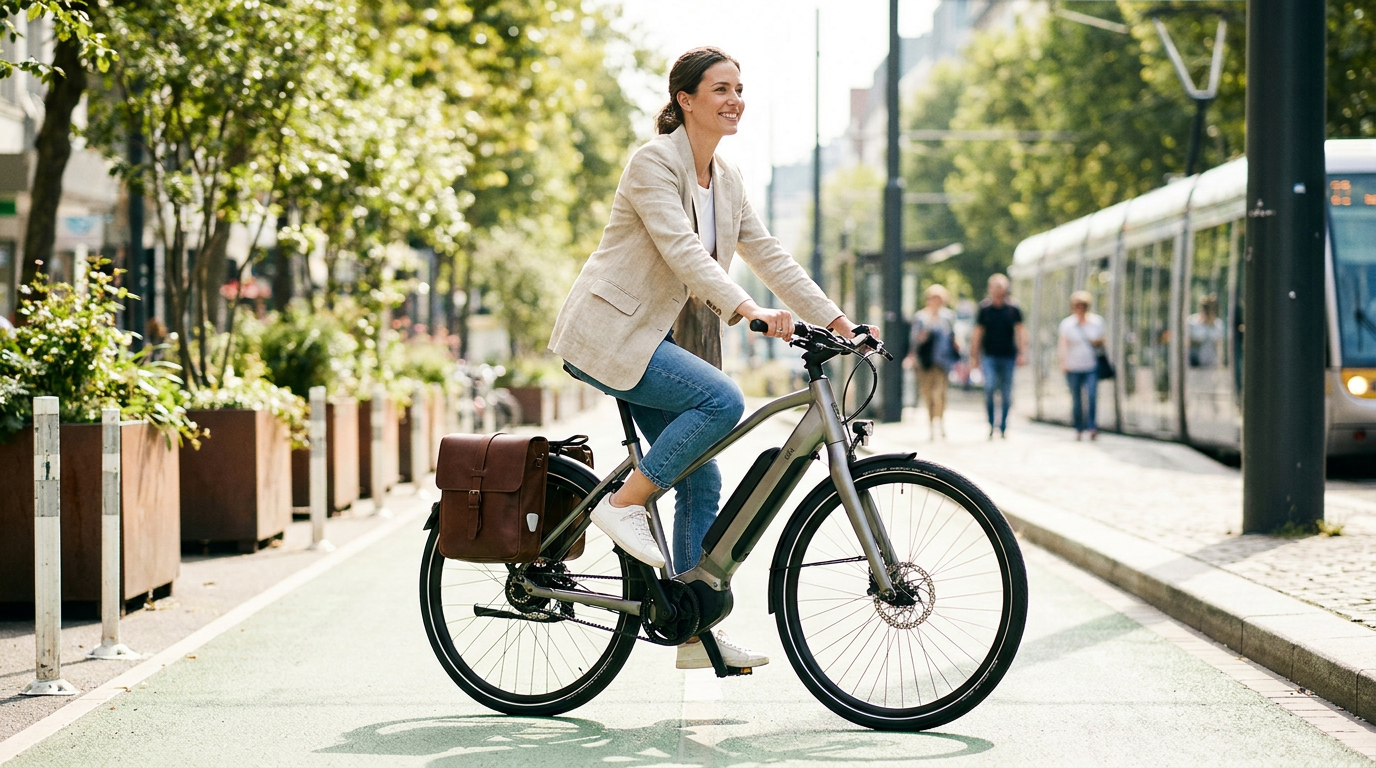
Frame design also plays a massive role in day-to-day usability. While traditional diamond frames offer a sporty feel, step-through frames have surged in popularity. By removing the high top tube, step-through models make mounting and dismounting effortless, which is a game-changer for commuters wearing work clothes, seniors, or anyone carrying heavy cargo on the rear rack.[4][5]
Component quality cannot be overlooked, particularly when it comes to stopping a heavy electric bicycle. E-bikes typically weigh between 45 and 70 pounds, significantly more than a standard analog bicycle. Because of this added mass and higher speeds, hydraulic disc brakes are strongly recommended over mechanical or rim brakes, as they offer superior stopping power and require less maintenance.[5][6]

Finally, buyers must consider the long-term serviceability of their investment. While direct-to-consumer online brands often boast lower upfront prices, they can be difficult to repair if they use proprietary electronic parts that local mechanics cannot source. Purchasing from a local bike shop ensures proper assembly, access to warranty support, and a reliable source for firmware updates and mechanical service down the road.[3][5]
Ultimately, an e-bike is a long-term investment in mobility and health. By prioritizing certified safety standards, choosing the right motor and frame for your specific needs, and ensuring local serviceability, you can confidently navigate the market and find a machine that will deliver years of reliable, joyful riding.[7]
Viewpoints in depth
Urban Commuters
Riders focused on replacing car trips with efficient, practical micro-mobility.
For the urban commuter, an e-bike is a utility vehicle first and foremost. This camp prioritizes step-through frames for easy mounting in work attire, integrated lighting systems for dark mornings, and robust cargo racks for laptops and groceries. They tend to favor Class 2 or Class 3 bikes, utilizing throttles to quickly clear busy intersections and higher top speeds to keep pace with city traffic. Range anxiety is less of an issue here, provided the battery can comfortably handle a daily 10-to-20-mile round trip.
Recreational & Trail Riders
Enthusiasts seeking a natural cycling experience with an added boost for hills and distance.
Recreational riders view the e-bike as a way to expand their physical limits rather than replace pedaling entirely. This group heavily favors Class 1 e-bikes with mid-drive motors, which utilize torque sensors to seamlessly amplify the rider's own effort. By keeping the center of gravity low and utilizing the bike's mechanical gears, mid-drive systems provide the balanced handling required for gravel paths and mountain trails. For these riders, suspension and frame geometry take precedence over cargo capacity.
Safety Advocates & Regulators
Organizations focused on battery fire prevention and trail etiquette.
As the market has flooded with cheap, direct-to-consumer imports, safety advocates have sounded the alarm over lithium-ion battery fires. This camp strongly pushes for mandatory UL 2849 or EN 15194 certification for all e-bikes sold, ensuring the entire electrical system has been stress-tested. Additionally, they advocate for clear trail etiquette and strict adherence to the class system, arguing that heavy, high-speed Class 3 bikes should be kept off crowded pedestrian paths to maintain public support for micro-mobility.
What we don't know
- How local municipalities will adapt their multi-use trail regulations as high-speed Class 3 e-bikes become more prevalent.
- Whether solid-state battery technology will reach the consumer e-bike market soon enough to significantly reduce weight and fire risks in the next few years.
Key terms
- Watt-hours (Wh)
- A measure of battery capacity that indicates how much energy the battery holds; a higher number generally translates to a longer riding range.
- Torque (Nm)
- The rotational force produced by the motor, measured in Newton-meters, which determines how quickly the bike accelerates and how easily it climbs hills.
- Step-through Frame
- A bicycle frame design lacking a high top tube, allowing the rider to easily step through the frame to mount the bike rather than swinging a leg over the seat.
- Pedal-Assist
- A system where the electric motor only provides power while the rider is actively pedaling, seamlessly amplifying their physical effort.
- Hydraulic Disc Brakes
- A braking system that uses fluid pressure to clamp the brake pads against a rotor, offering superior stopping power and reliability for heavier e-bikes.
Frequently asked
What is the difference between a hub motor and a mid-drive motor?
A hub motor is located in the center of the wheel and pushes the bike, while a mid-drive motor is positioned between the pedals. Mid-drives leverage the bike's gears, making them better for climbing hills and providing a more natural riding feel.
How far can an e-bike actually go on a single charge?
While manufacturers often claim 50+ miles, real-world range is typically 60 to 70 percent of the advertised maximum. Factors like rider weight, hills, wind, and the level of motor assistance heavily impact battery life.
Why is UL certification important for e-bikes?
UL 2849 and similar certifications ensure that the e-bike's battery and electrical system have been rigorously tested to prevent electrical failures and fire hazards, a growing concern with uncertified models.
Do I need a license to ride an e-bike?
In most jurisdictions, Class 1, 2, and 3 e-bikes are legally classified as bicycles, meaning they do not require a driver's license, registration, or insurance. However, local laws dictate which classes are allowed on specific bike paths.
Sources
Source coverage
7 outlets
3 viewpoints surfaced






[1]Bicycle ColoradoSafety Advocates
E-Bike Buying Guide
Read on Bicycle Colorado →[2]Electric Bike AdvisorRecreational & Trail Riders
The Beginner's E-Bike Buying Guide (2026 Edition)
Read on Electric Bike Advisor →[3]BikelineSafety Advocates
E-bike buying guide for beginners
Read on Bikeline →[4]JoybuyUrban Commuters
2026 City E-Bike Buying Guide: Key Technical Criteria for Your Choice
Read on Joybuy →[5]Riding 5Urban Commuters
How to choose an e-bike guide 2025/2026
Read on Riding 5 →[6]SahkopyoratRecreational & Trail Riders
How to choose an electric bike? A comprehensive guide
Read on Sahkopyorat →[7]Factlen Editorial Team
Synthesis by Factlen editorial team
Read on Factlen Editorial Team →
More in shopping
See all 5 stories →

Every angle. Every day.
Get shopping stories with full source coverage and perspective breakdowns delivered to your inbox.