
US-Iran Deal to Reopen Strait of Hormuz Sends Oil Tumbling, But Economic Scars Will Linger
A preliminary agreement to end the blockade of the world's most critical oil chokepoint has sent crude prices tumbling, but economists warn that supply chains and inflation will take months to normalize.
By Factlen Editorial Team
- Energy Markets & Traders
- Focuses on the immediate unwinding of the geopolitical risk premium and falling oil prices.
- Macroeconomists
- Cautions that supply chain scars and inflation will take months to heal despite the deal.
- Asian Importers
- Views the reopening as a critical lifeline for energy-dependent economies in the East.
- Geopolitical Analysts
- Emphasizes the fragility of the 60-day ceasefire and the pending nuclear negotiations.
What's not represented
- · Environmental Groups
- · Alternative Energy Sector
Why this matters
The reopening of the Strait of Hormuz directly impacts the price of gasoline, global shipping costs, and the trajectory of central bank interest rates, offering a potential lifeline to an inflation-weary global economy.
Key points
- The US and Iran reached a preliminary agreement to halt hostilities and reopen the Strait of Hormuz after a three-month blockade.
- Brent crude prices fell nearly 5 percent to around $82 a barrel, while global equity markets rallied to record highs.
- The deal includes a 60-day ceasefire to negotiate broader issues, including Iran's nuclear program and sanctions relief.
- Economists warn that inflation will remain sticky, as it will take weeks to clear mines and months to restore full oil production.
- Asian economies, which absorb over 80 percent of the energy transiting the Strait, stand to benefit the most from the reopening.
After more than 100 days of unprecedented disruption to global energy supplies, the United States and Iran have reached a preliminary agreement to halt hostilities and reopen the Strait of Hormuz. The breakthrough, brokered with the help of Pakistani mediators, promises to end a blockade that has choked off roughly one-fifth of the world's crude oil supply since late February. The closure of the vital maritime chokepoint had triggered a historic energy shock, forcing the rerouting of global shipping and sending inflation soaring across major economies.[2][3]
The immediate financial reaction to the diplomatic breakthrough was swift and dramatic. Brent crude, the international oil benchmark, tumbled nearly 5 percent to around $82 a barrel—its lowest level since the early days of the conflict. Global equity markets surged in response, with the Dow Jones Industrial Average hitting a record high and Asian indices, including Japan's Nikkei 225 and South Korea's Kospi, climbing by more than 5 percent as investors priced in the prospect of lower energy costs.[1][5][8]
Under the framework announced by U.S. President Donald Trump and Iranian officials, the two nations are scheduled to sign a formal memorandum of understanding in Switzerland this Friday. The pact establishes a 60-day ceasefire across all fronts, during which the United States will lift its naval blockade of Iranian ports. In return, Iran has agreed to allow "toll-free" commercial navigation through the Strait of Hormuz, effectively unwinding the most economically damaging aspect of the recent war.[2][3]
But while financial markets are pricing in an immediate unwinding of the geopolitical risk premium, the physical reality of global shipping tells a more complicated story. The Strait of Hormuz is the world's most vital artery for energy shipments, typically handling millions of barrels of oil and a significant share of global liquefied natural gas every single day. Restoring that massive logistical operation is a complex undertaking that extends far beyond the signing of a political document.[4][7]

Turning the energy spigot back on will not happen overnight. Shipping analysts and industry executives caution that the maritime corridor must first be thoroughly cleared of mines—a meticulous process that could take several weeks. Furthermore, ship captains, fleet owners, and maritime insurers will demand concrete, verifiable assurances that the threat of attack has genuinely receded before committing billion-dollar vessels and their crews to the transit lanes.[6][7]
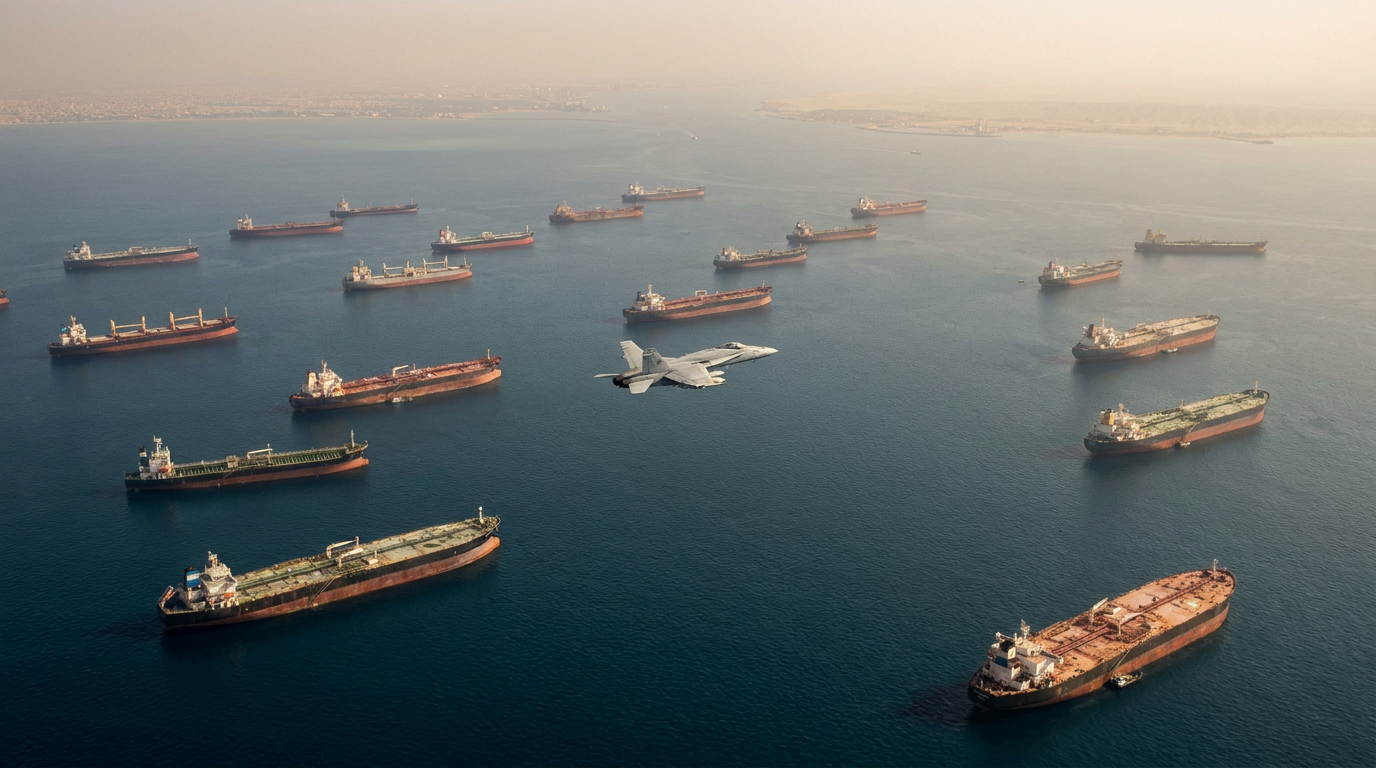
"Operationally, the sector is not rushing back," noted shipping data analysts, emphasizing that the return to internationally recognized transit lanes requires stringent safety prerequisites. Hundreds of cargo ships and tankers that have been trapped in the Persian Gulf or forced to take massive detours will need time to navigate the narrow chokepoint safely. The sheer backlog of maritime traffic guarantees that the resumption of normal flows will be a gradual, staggered process.[6]
Hundreds of cargo ships and tankers that have been trapped in the Persian Gulf or forced to take massive detours will need time to navigate the narrow chokepoint safely.
Beyond the logistics of moving ships, there is the formidable challenge of restoring actual oil production. Gulf producers that throttled back their output during the blockade will need time to ramp up their extraction and refining operations. Energy economists estimate that even under the most optimistic scenarios, it could take until September for energy flows through the Strait of Hormuz to reach 80 percent of their pre-war levels.[6][7]
The global economy also faces a massive inventory deficit that will keep upward pressure on prices. Over the past three months, global oil reserves have shrunk by more than one billion barrels as nations tapped into their emergency stockpiles to keep their economies running during the blockade. Buyers will now race to refill those heavily depleted reserves, a dynamic that is expected to keep a floor under crude prices, likely holding them between $80 and $90 a barrel through the end of the year.[3][7]

For consumers hoping for immediate relief at the gas pump or the grocery store, economists urge patience. The energy shock has already bled deeply into global supply chains, pushing inflation to multi-year highs in several major economies and forcing businesses to pass elevated transportation costs onto their customers. Because energy contracts and liquefied natural gas prices often operate with a three- to six-month lag, the inflationary pressures tied to the disruption will prove remarkably sticky.[4][6]
"Even if the deal reopens the strait immediately, it will not prevent inflation from rising a bit further in the near term," noted Neil Shearing, group chief economist at Capital Economics. Central banks, which had been forced to reconsider planned interest rate cuts due to the sudden spike in energy costs, are expected to maintain a cautious stance. Policymakers will likely wait until the physical flow of oil is verifiably restored before making any dovish pivots.[5][6]
The economic stakes of the reopening are perhaps highest in Asia, which typically absorbs more than 80 percent of the petroleum and liquefied natural gas transiting the Strait. Asian currencies have plummeted and industrial production has faced severe bottlenecks during the three-month closure. If the agreement holds, the region stands to receive a massive, externally generated economic stimulus in the form of lower energy costs, stabilized trade routes, and improved financial conditions.[4][7]

Yet, the durability of the peace remains the ultimate wildcard for global markets. The 60-day ceasefire is explicitly designed to provide a window for negotiating a broader, more permanent treaty. Those upcoming talks must address highly contentious issues, including the future of Iran's nuclear program, the lifting of international sanctions, and the potential release of billions of dollars in frozen Iranian assets.[2][3]
U.S. officials have stressed that any economic benefits or reconstruction funds for Iran will be strictly tied to verifiable performance and the dismantling of its highly enriched uranium stockpile. Conversely, Iranian authorities have indicated that their continued compliance with the maritime reopening hinges on the swift removal of economic sanctions, creating a delicate diplomatic tightrope for the weeks ahead.[3][5]
For now, the global economy is breathing a collective sigh of relief. The worst-case scenarios of a prolonged, multi-year energy crisis appear to have been averted. While the scars of the supply shock will take months to heal, the existential dread that gripped energy markets has been replaced by the more manageable challenges of logistical recovery and diplomatic negotiation.[3][7]
How we got here
Late February 2026
Conflict erupts following joint U.S.-Israeli strikes, leading Iran to effectively blockade the Strait of Hormuz.
March - May 2026
Global oil prices surge, shipping is rerouted, and inflation spikes across major economies.
June 14, 2026
U.S. and Iranian officials announce a preliminary agreement to halt hostilities and reopen the Strait.
June 15, 2026
Global markets rally and Brent crude prices tumble nearly 5 percent in response to the announcement.
June 19, 2026
Scheduled signing of the formal memorandum of understanding in Switzerland, initiating a 60-day ceasefire.
Viewpoints in depth
Energy Markets & Traders
Focuses on the immediate unwinding of the geopolitical risk premium and falling oil prices.
Traders reacted instantly to the news by dumping oil futures, betting that the worst of the supply shock is over. This camp views the 60-day ceasefire as sufficient to flood the market with enough crude to prevent a summer shortage, driving equities to record highs on the assumption that inflation will cool.
Macroeconomists
Cautions that supply chain scars and inflation will take months to heal despite the deal.
Economic analysts emphasize the lag between wholesale oil prices and consumer inflation. They point out that global inventories are depleted by over a billion barrels, and rebuilding them will keep a floor under prices. This camp expects central banks to delay aggressive interest rate cuts until the physical flow of oil is verifiably restored.
Asian Importers
Views the reopening as a critical lifeline for energy-dependent economies in the East.
For nations like Japan, South Korea, and India, the Hormuz blockade was an existential economic threat. This perspective highlights that 80 percent of the Strait's exports head East, meaning the peace deal acts as an immediate, externally generated economic stimulus that will stabilize plummeting Asian currencies and ease industrial bottlenecks.
Shipping & Logistics Industry
Prioritizes physical safety and maritime insurance over political declarations.
Fleet owners and maritime insurers remain highly skeptical of the immediate timeline. They argue that until the waters are thoroughly swept for mines and the threat of arbitrary seizure is eliminated, billion-dollar vessels will not rush back into the transit lanes, regardless of the political agreements signed in Switzerland.
What we don't know
- Whether the 60-day ceasefire will hold long enough to secure a permanent treaty regarding Iran's nuclear program.
- Exactly how long it will take to clear the transit lanes of mines and convince maritime insurers the route is safe.
- Whether Iran will attempt to impose new transit fees or tolls on commercial shipping once the Strait reopens.
Key terms
- Strait of Hormuz
- A narrow maritime chokepoint between the Persian Gulf and the Gulf of Oman, serving as the only sea passage from the Persian Gulf to the open ocean.
- Brent Crude
- The primary international benchmark price for purchases of oil worldwide.
- Geopolitical Risk Premium
- The extra amount investors pay for an asset due to the risk of conflict or political instability disrupting supply.
- Liquefied Natural Gas (LNG)
- Natural gas that has been cooled to a liquid state for easier and safer storage and transport, heavily reliant on maritime shipping.
Frequently asked
When will the Strait of Hormuz officially reopen?
The U.S. and Iran are scheduled to sign a formal memorandum of understanding on Friday, June 19, which will initiate the reopening process, though physical transit will take longer due to mine clearing.
How much of the world's oil goes through the Strait?
Before the conflict, roughly 20 percent of the world's crude oil consumption and a significant portion of its liquefied natural gas (LNG) passed through the waterway.
Will gas prices drop immediately?
No. Economists warn that it will take weeks or months for oil flows to normalize, and the need to refill depleted global reserves will likely keep consumer energy prices elevated in the near term.
What happens after the 60-day ceasefire?
The 60-day window is intended for negotiating a broader agreement regarding Iran's nuclear program and the potential lifting of U.S. economic sanctions.
Sources
Source coverage
8 outlets
4 viewpoints surfaced








[1]BloombergEnergy Markets & Traders
Oil Holds Losses After Iran Deal Spurs Stock Rally: Markets Wrap
Read on Bloomberg →[2]ReutersGeopolitical Analysts
Oil hits 3-month low as US, Iran reach peace deal to reopen Strait of Hormuz
Read on Reuters →[3]The GuardianGeopolitical Analysts
Global markets rise as US-Iran peace deal eases energy, inflation fears
Read on The Guardian →[4]The Business TimesAsian Importers
Strait of Hormuz reopening would offer relief for Asia, but economic scars will remain
Read on The Business Times →[5]CBS NewsMacroeconomists
Oil prices tumble after President Trump says U.S. reaches deal to reopen Strait of Hormuz
Read on CBS News →[6]PBSMacroeconomists
When will oil start flowing again through the Strait of Hormuz?
Read on PBS →[7]Lombard OdierMacroeconomists
US-Iran accord frees up Hormuz shipping
Read on Lombard Odier →[8]AxiosEnergy Markets & Traders
Oil prices fall on US, Iran deal announcement
Read on Axios →


Every angle. Every day.
Get business stories with full source coverage and perspective breakdowns delivered to your inbox.