
Major Federal Student Loan Overhaul Takes Effect July 1: What Borrowers Need to Know
Sweeping changes to the federal student loan system, including the end of the SAVE plan and new borrowing caps, will go into effect in July under the One Big Beautiful Bill Act. Millions of borrowers face imminent deadlines to consolidate loans or select new repayment options.
By Factlen Editorial Team
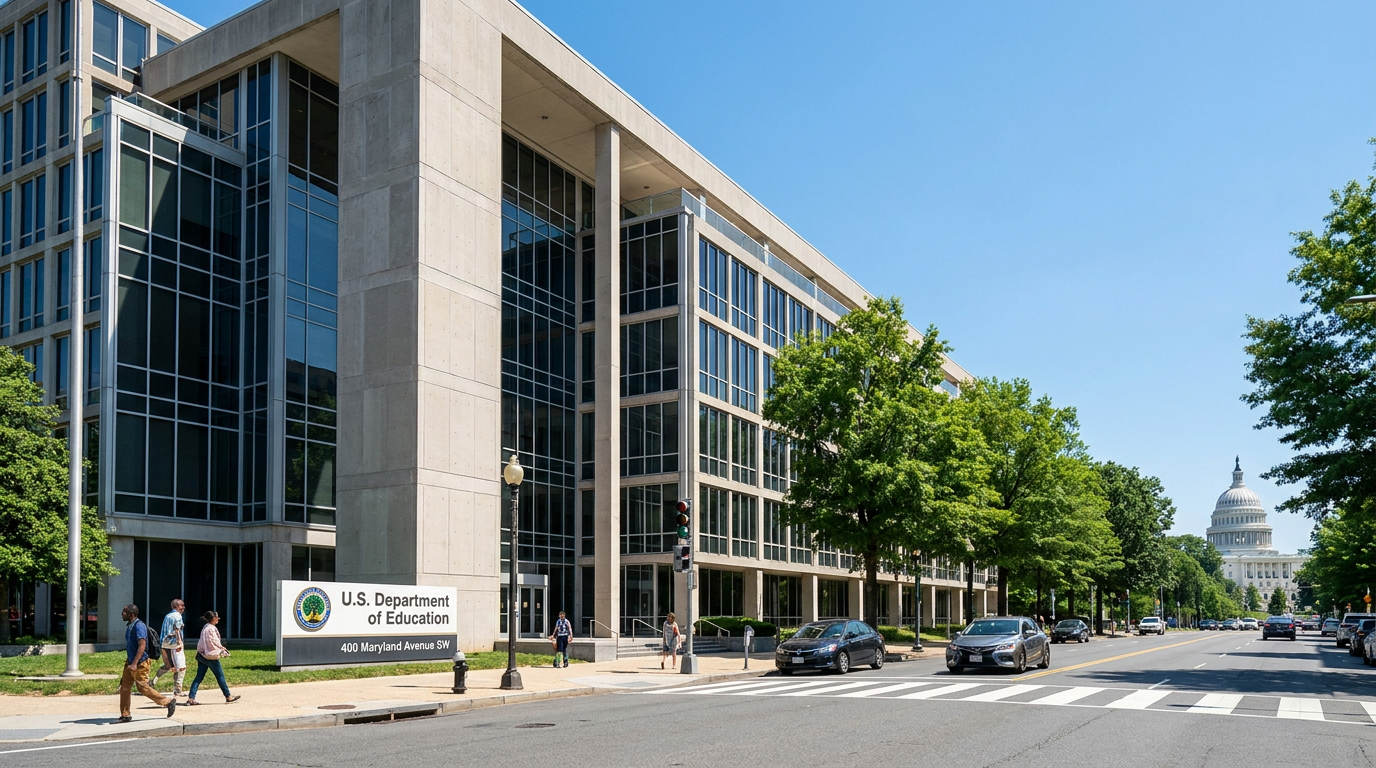
- Federal Policymakers
- Argue the reforms simplify a broken system, prevent runaway debt, and protect students from over-borrowing.
- Higher Education Administrators
- Worry that strict borrowing caps will force graduate and professional students into the private loan market.
- Student Advocates & Counselors
- Express concern over the 30-year forgiveness timeline and the loss of critical safety nets like unemployment deferment.
- Independent Analysts
- Focus on the immediate deadlines and the mechanical shifts in how loans will be processed and repaid.
What's not represented
- · Private Student Lenders who may see a surge in demand due to the new federal borrowing caps.
- · Current high school students who have not yet navigated the financial aid system.
Why this matters
With the elimination of the SAVE plan and the introduction of strict new borrowing limits, millions of current and future college students will see their monthly payments, total debt capacity, and forgiveness timelines fundamentally altered. Borrowers have only weeks to consolidate existing loans if they wish to retain access to legacy repayment options.
Key points
- The One Big Beautiful Bill Act overhauls federal student loans starting July 1, 2026.
- The SAVE, PAYE, and ICR plans are being replaced by the Repayment Assistance Plan (RAP) and Tiered Standard plan.
- RAP requires 30 years of qualifying payments for loan forgiveness but waives unpaid monthly interest.
- Graduate borrowing is now capped at $20,500 annually, and Parent PLUS loans are capped at $20,000 per dependent.
- Borrowers must consolidate existing loans by June 30, 2026, to retain access to legacy repayment plans.
- Deferment for unemployment and economic hardship will be eliminated for new loans starting in July 2027.
The federal student loan landscape is undergoing its most significant and far-reaching transformation in decades, promising to reshape the financial futures of millions of American families. Starting July 1, 2026, the sweeping provisions of the One Big Beautiful Bill Act (OBBBA)—frequently referred to by policymakers as the Working Families Tax Cuts Act—will officially take effect. Passed in July 2025, the legislation fundamentally alters how students borrow money for higher education and how they will be required to repay it. The overhaul represents a hard pivot away from the complex forgiveness pathways that defined recent years, moving instead toward strict upfront borrowing caps and simplified, longer-term repayment structures. For current students, prospective undergraduates, and parents alike, the impending changes mean that the traditional calculus of financing a college degree must be entirely reevaluated before the new academic year begins.[2][6]
At the heart of the July 1 overhaul is the complete elimination of the confusing patchwork of existing income-driven repayment options. For years, borrowers have navigated a maze of acronyms—including the recently introduced SAVE plan, Pay As You Earn (PAYE), and Income-Contingent Repayment (ICR). The Department of Education is sunsetting these programs for all new borrowers, replacing them with just two streamlined options: the Repayment Assistance Plan (RAP) and the Tiered Standard repayment plan. By condensing the menu of choices, federal officials aim to reduce the overwhelming complexity that historically left more than 70 percent of borrowers confused about their obligations. However, the consolidation of these plans also means that future borrowers will have far less flexibility to tailor their repayment strategies to their specific financial circumstances, forcing them to adapt to the rigid parameters of the new two-plan system.[2][4]
The new Repayment Assistance Plan (RAP) serves as the sole income-driven option for new borrowers, calculating monthly payments at between 1 percent and 10 percent of a borrower's adjusted gross income. To provide some relief for families, the formula includes a $50 monthly deduction for each dependent. Crucially, RAP introduces a mechanism to waive any remaining unpaid monthly interest, effectively preventing the runaway negative amortization that has historically trapped low-income borrowers in ballooning debt spirals. However, this interest protection comes with a significant trade-off: RAP extends the timeline for total loan forgiveness to 30 years of qualifying payments, or 360 months. This represents a substantial increase from previous income-driven plans, which often offered forgiveness after 20 or 25 years, meaning that lower-income graduates could be tethered to their student debt for the vast majority of their working lives.[2][5]

For borrowers who prefer a predictable schedule or who opt out of income-driven models, the new Tiered Standard repayment plan offers fixed monthly payments over a sliding scale of 10 to 25 years. The exact length of the repayment term is determined automatically based on the total amount borrowed. This tiered approach replaces the old, rigid 10-year standard plan, which often saddled recent graduates with unaffordable monthly bills if they had accumulated significant debt. By automatically granting borrowers with larger balances more time to repay, the Tiered Standard plan aims to make base payments more manageable without requiring the borrower to navigate a complex loan consolidation process. However, extending the repayment term up to 25 years also means that borrowers will ultimately pay significantly more in total interest over the life of the loan compared to the traditional 10-year window.[2][3]
Beyond overhauling repayment, the legislation imposes strict new caps on how much students can borrow in the first place, targeting the graduate and professional levels where debt has historically skyrocketed. The Graduate PLUS loan program—which previously allowed students to borrow up to the full cost of attendance—is being eliminated entirely for new borrowers. Instead, graduate students will be limited to taking out $20,500 annually in Direct Unsubsidized Loans, with a hard lifetime cap of $100,000. Professional students enrolled in specific high-cost programs, such as medical (MD), dental (DDS), or law (JD) schools, face a slightly higher threshold: a $50,000 annual limit and a $200,000 lifetime cap. Financial aid administrators warn that these hard caps may fail to cover the true cost of advanced degrees, potentially forcing students to turn to the private loan market to bridge the gap.[3][5]

The Graduate PLUS loan program—which previously allowed students to borrow up to the full cost of attendance—is being eliminated entirely for new borrowers.
Parents financing their children's undergraduate education will also face unprecedented constraints under the new regulatory framework. Parent PLUS loans, which previously had no hard cap other than the institution's cost of attendance, will now be strictly limited to $20,000 per year and a maximum of $65,000 in total per dependent student. Furthermore, the repayment rules for parents are becoming significantly more restrictive. Any Parent PLUS loans disbursed on or after July 1, 2026, will be restricted exclusively to the new Tiered Standard plan. This means that parents will entirely lose access to income-driven repayment options and, by extension, will no longer be eligible for Public Service Loan Forgiveness (PSLF), fundamentally altering the financial strategy for families who rely on public-sector employment to manage their educational debt.[3][4]
Despite the sweeping nature of the reforms, current students are not entirely left in the cold, provided they meet specific criteria. A "legacy provision" built into the legislation allows borrowers who received a federal loan disbursement for their current degree program prior to July 1, 2026, to continue borrowing under the old, higher limits. This grandfather clause permits eligible students to access the previous borrowing thresholds for up to three additional academic years, or until they complete their current program—whichever comes first. This provision is designed to prevent mid-degree students from suddenly finding themselves unable to afford their final years of tuition, though university financial aid offices are urging students to verify their legacy status immediately to avoid unexpected shortfalls in the fall semester.[3][5]
For millions of existing borrowers, the clock is rapidly ticking to lock in older, more favorable repayment plans before the new rules take over. Anyone who wishes to consolidate their federal loans must complete the application process by June 30, 2026. Any new loans or consolidations issued on or after the July 1 deadline will permanently classify the individual as a "new borrower" under the eyes of the Department of Education. This reclassification restricts the borrower entirely to the RAP or the Tiered Standard plan, permanently cutting off access to legacy programs like SAVE or PAYE. Because the consolidation process can take four to six weeks to finalize, consumer advocates are warning that borrowers who wait until the last minute may miss the window entirely, inadvertently subjecting themselves to the new 30-year forgiveness timelines.[1][4]

Looking slightly further ahead, the legislation also dismantles several traditional safety nets that borrowers have long relied upon during periods of financial distress. Starting July 1, 2027, the government will officially eliminate deferment options for unemployment and economic hardship for all newly issued loans. Furthermore, the use of general forbearance will be strictly limited to a maximum of nine months every two years. While these changes do not take effect until next summer, they signal a broader tightening of the federal loan apparatus, removing the flexibility that previously allowed borrowers to pause their payments without penalty when they lost a job or faced a medical emergency. Critics argue that stripping away these protections will inevitably drive more vulnerable borrowers into delinquency and default during future economic downturns.[5]
Ultimately, the July 1 overhaul represents a profound philosophical shift in federal education policy, prioritizing upfront borrowing limits and simplified administration over the expansive safety nets of the past. Proponents argue that capping loans and waiving unpaid interest will protect a new generation of students from predatory debt spirals, while critics warn that the 30-year forgiveness timeline and the elimination of Grad PLUS loans will disproportionately harm lower-income professionals. As the implementation date looms, financial aid offices, loan servicers, and consumer protection agencies are scrambling to educate the public. Borrowers are strongly encouraged to log into their Federal Student Aid accounts, review their disbursement histories, and make immediate decisions about consolidation before the June 30 deadline permanently closes the door on the old system.[6][7]
How we got here
July 2025
Congress passes the One Big Beautiful Bill Act (OBBBA), setting the stage for a massive overhaul of federal financial aid.
March 2026
The Department of Education officially eliminates the SAVE repayment plan for new enrollments.
June 30, 2026
Final deadline for borrowers to consolidate existing loans to maintain access to legacy income-driven repayment plans.
July 1, 2026
New borrowing limits, the Repayment Assistance Plan (RAP), and the Tiered Standard plan officially take effect for all new loans.
July 1, 2027
Unemployment and economic hardship deferments will be eliminated for all newly issued loans.
Viewpoints in depth
Federal Policymakers
Argue the reforms simplify a broken system and prevent runaway debt.
Proponents of the One Big Beautiful Bill Act emphasize that the previous system of 40+ repayment and discharge options left 70% of borrowers overwhelmed. By capping upfront borrowing and waiving unpaid monthly interest under RAP, they argue the government is protecting students from predatory lending and the psychological burden of negatively amortizing loans. They view the strict caps as a necessary mechanism to force universities to rein in tuition inflation, particularly at the graduate level.
Student Advocates & Counselors
Express concern over the 30-year forgiveness timeline and loss of safety nets.
Borrower advocacy groups warn that extending the forgiveness timeline to 30 years under RAP will keep lower-income graduates in debt for most of their working lives. They also raise alarms about the impending 2027 elimination of unemployment deferment, arguing that removing these safety nets will drive vulnerable borrowers into default during economic downturns. Advocates stress that the new rules disproportionately harm those who pursue lower-paying public interest careers but can no longer access PSLF through Parent PLUS loans.
Higher Education Administrators
Worry that strict borrowing caps will limit access to graduate and professional degrees.
University financial aid administrators caution that eliminating the Grad PLUS loan and capping professional borrowing at $50,000 annually may force students to turn to higher-interest private loans. They argue these limits fail to account for the true cost of medical or law school, potentially locking lower-income students out of advanced professional fields and exacerbating existing shortages in critical healthcare and legal sectors.
What we don't know
- How the Department of Education will handle the administrative backlog of borrowers rushing to consolidate before the June 30 deadline.
- Whether the strict new borrowing caps will lead to a surge in high-interest private student lending for graduate and professional students.
- The exact criteria the government will use to define which specific programs qualify for the higher $50,000 'professional' borrowing limit beyond MD, JD, and DDS degrees.
Key terms
- Repayment Assistance Plan (RAP)
- A new income-driven repayment plan that charges 1% to 10% of a borrower's income and offers forgiveness after 30 years.
- Tiered Standard Plan
- A new fixed-payment plan that automatically extends the repayment term from 10 to 25 years based on the total amount borrowed.
- Parent PLUS Loan
- A federal student loan available to the parents of dependent undergraduate students to help pay for educational expenses.
- Legacy Provision
- A rule allowing students who borrowed before July 1, 2026, to continue borrowing under the old, higher limits for up to three more years.
- Negative Amortization
- When a borrower's monthly payment is too low to cover the interest, causing the total loan balance to grow over time.
Frequently asked
Can I still apply for the SAVE plan?
No. The SAVE plan has been eliminated. Borrowers taking out new loans will only have access to the Repayment Assistance Plan (RAP) or the Tiered Standard plan.
What happens if I already have a Grad PLUS loan?
If your loan was disbursed before July 1, 2026, you fall under a legacy provision. You can continue borrowing under the old limits for your current degree program for up to three additional years.
Will my Parent PLUS loan still qualify for Public Service Loan Forgiveness?
Parent PLUS loans disbursed on or after July 1, 2026, will be restricted to the Tiered Standard plan and will no longer be eligible for PSLF or income-driven repayment.
Does the new RAP plan forgive loans faster?
No. RAP requires 30 years (360 months) of qualifying payments before any remaining balance is forgiven, which is longer than previous income-driven plans.
Sources
Source coverage
7 outlets
4 viewpoints surfaced







[1]ForbesIndependent Analysts
3 Big Dates For Student Loans Are In Just Weeks As Reforms Take Effect
Read on Forbes →[2]Federal RegisterFederal Policymakers
Reimagining and Improving Student Education-Federal Student Loan Program Final Regulations
Read on Federal Register →[3]New York UniversityHigher Education Administrators
Revisions to Federal Student Loans in the One Big Beautiful Bill Act
Read on New York University →[4]Mass.govStudent Advocates & Counselors
Student Loan Assistance
Read on Mass.gov →[5]PHEAAHigher Education Administrators
One Big Beautiful Bill Act: Graduate & Professional Students
Read on PHEAA →[6]NASFAAHigher Education Administrators
One Big Beautiful Bill Act Web Center
Read on NASFAA →[7]Factlen Editorial TeamIndependent Analysts
Synthesis by Factlen editorial team
Read on Factlen Editorial Team →

More in news politics
See all 6 stories →Electoral Reform
Evidence Pack: Does Ranked-Choice Voting Actually Reduce Political Polarization?
0 sources
US-Iran Deal
US and Iran Reach Historic Deal to End War and Reopen Strait of Hormuz
0 sources

US-Iran Relations
US and Iran Sign Peace Agreement to End War and Reopen Strait of Hormuz
0 sources

US-Iran Deal
US and Iran Reach Deal to End War and Reopen Strait of Hormuz as Israel Vows to Maintain Buffer Zones
0 sources

Every angle. Every day.
Get news politics stories with full source coverage and perspective breakdowns delivered to your inbox.