
The Science of Creatine: Why the Ultimate Muscle Supplement is Now a Brain and Longevity Tool
Long dismissed as a bodybuilding supplement, creatine monohydrate is gaining mainstream medical recognition for its cognitive, bone, and longevity benefits.
By Factlen Editorial Team
- Sports Scientists
- Focus on ATP regeneration, power output, and physical recovery.
- Cognitive & Longevity Researchers
- Focus on neuroprotection, memory under stress, and bone density preservation in aging populations.
- Clinical Nephrologists
- Focus on the safety profile, debunking the kidney damage myth, and clarifying blood test artifacts.
What's not represented
- · General Practitioners (who often misinterpret creatinine tests)
- · High School Athletic Directors (navigating supplement policies)
Why this matters
If you are aging, eating a plant-based diet, or dealing with mental fatigue, this inexpensive supplement might be the most evidence-backed tool you are not currently using to protect your physical and cognitive health.
Key points
- Creatine monohydrate is the most extensively researched sports supplement, proven to safely increase high-intensity exercise capacity.
- Beyond muscle growth, emerging research shows creatine improves memory and cognitive processing, especially during sleep deprivation or mental fatigue.
- Vegetarians and vegans experience the most pronounced benefits from supplementation due to their lower natural dietary intake.
- The supplement shows promise in aging populations by increasing bone-forming cell activity and combating age-related muscle loss.
- The persistent myth that creatine damages kidneys stems from a misunderstanding of harmlessly elevated creatinine levels on standard blood tests.
- A simple maintenance dose of 3 to 5 grams daily is sufficient to saturate tissues, without the need for a heavy loading phase.
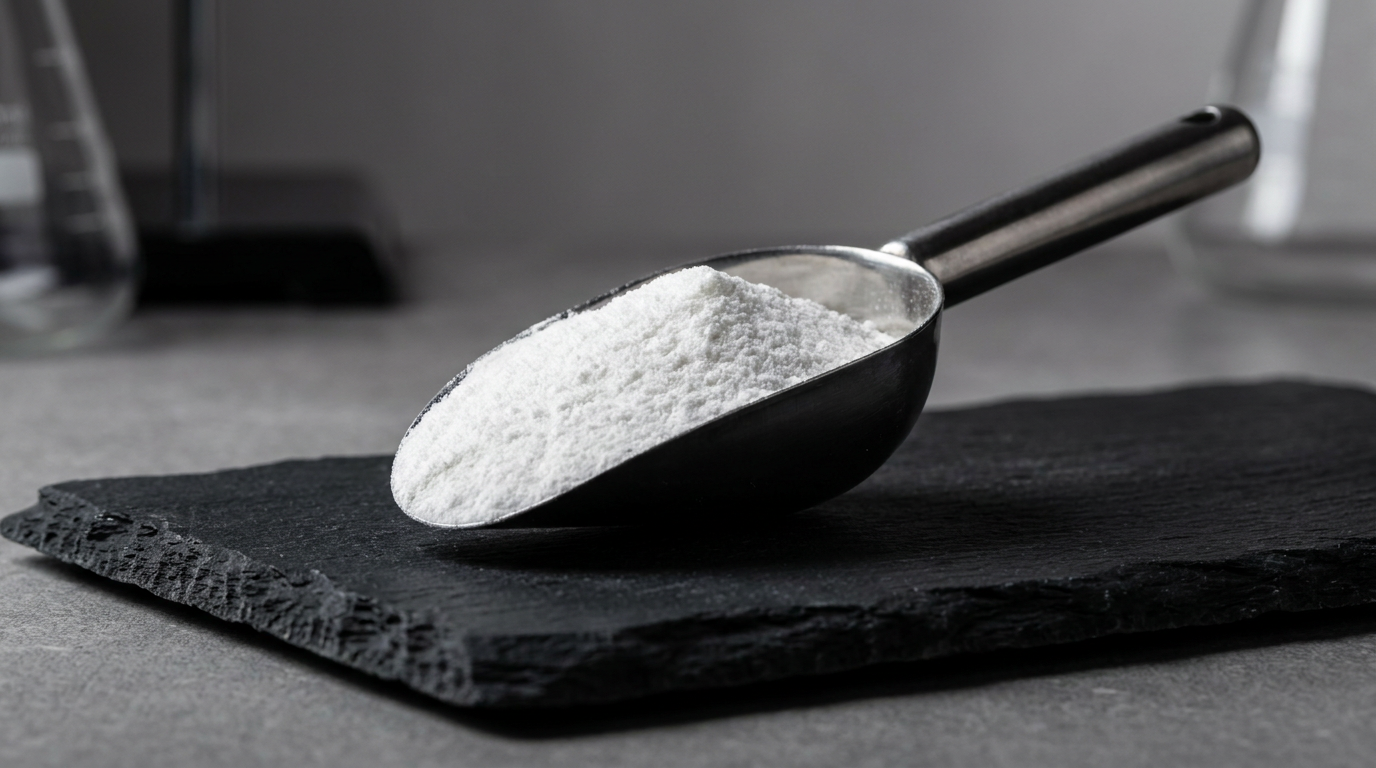
For decades, creatine monohydrate has suffered from a profound branding problem. Relegated to the locker rooms of bodybuilders and the shelves of aggressive sports nutrition stores, the white powder was widely viewed by the general public as a muscle-swelling shortcut—one that likely carried hidden health risks. It was associated with "gym bro" culture, water retention, and whispered rumors of kidney damage. But over the last ten years, the scientific consensus has quietly and decisively shifted. Today, creatine is not only recognized as the most extensively researched and effective sports supplement in human history, but it is also crossing over into mainstream medicine. Researchers are no longer just looking at how it affects biceps and sprint times; they are investigating its profound impact on the brain, bone density, and the aging process.
To understand why creatine is experiencing this clinical renaissance, it is necessary to understand how the body manages energy. The fundamental currency of cellular energy is a molecule called adenosine triphosphate, or ATP. Whenever a cell performs work—whether that is a muscle fiber contracting during a heavy deadlift or a neuron firing to recall a memory—it breaks off a phosphate molecule from ATP, converting it into adenosine diphosphate (ADP). The problem is that cells can only store a few seconds' worth of ATP at any given time. Once those stores are depleted, performance drops off a cliff. This is where creatine steps in.
The human body naturally produces creatine in the liver and kidneys, storing the vast majority of it in muscle tissue as phosphocreatine. When energy demands spike and ATP is rapidly consumed, phosphocreatine acts as an emergency cellular buffer. It instantly donates its phosphate molecule to the depleted ADP, regenerating it back into functional ATP. By supplementing with creatine monohydrate, individuals can increase their cellular phosphocreatine stores by up to 20 percent. In the context of athletics, this translates to a measurable increase in high-intensity exercise capacity, allowing an athlete to squeeze out an extra repetition or maintain a sprint for a fraction of a second longer.[1][2]

But skeletal muscle is not the only tissue that relies on this rapid energy-buffering system. Despite accounting for only about two percent of total body weight, the human brain consumes roughly twenty percent of the body's resting energy. The brain is an extraordinarily energy-intensive organ, and its billions of synapses require a constant, uninterrupted supply of ATP to function properly, communicate, and repair themselves. Recognizing this immense metabolic demand, neuroscientists began to ask a logical question: if creatine supplementation safely increases energy capacity and delays fatigue in skeletal muscles, could it perform the exact same function for the brain?[3]
The emerging data suggests the answer is a resounding yes. A growing body of systematic reviews and clinical trials has demonstrated that creatine supplementation can significantly improve cognitive function, particularly under conditions of acute stress. When the brain is operating under optimal conditions, the cognitive boost from creatine is subtle. However, when the brain is metabolically taxed—such as during periods of sleep deprivation, mental fatigue, or oxygen deprivation (hypoxia)—creatine acts as a neuroprotective energy reserve. Studies have shown that supplementing with creatine during these stressful windows improves working memory, processing speed, and executive function.[2][6]
These cognitive and physical benefits are not distributed equally across the population. Because the primary dietary sources of natural creatine are red meat and seafood, vegetarians and vegans consistently exhibit lower baseline levels of muscle and brain creatine compared to omnivores. When plant-based eaters begin supplementing with creatine monohydrate, they do not just catch up to their meat-eating peers; they often experience a much more pronounced and dramatic improvement in both cognitive test scores and physical power output. For those adhering to strict plant-based diets, creatine is increasingly viewed not as an optional performance enhancer, but as a crucial dietary bridge.[3][4]

These cognitive and physical benefits are not distributed equally across the population.
Beyond the brain, longevity researchers are investigating creatine's potential to combat two of the most debilitating physical declines associated with aging: sarcopenia (the loss of muscle mass) and osteoporosis (the loss of bone density). As individuals age, maintaining lean tissue becomes critical for metabolic health and fall prevention. Recent clinical trials have shown that when older adults combine creatine supplementation with resistance training, they experience greater gains in muscle mass than with exercise alone. Furthermore, creatine appears to increase the activity of osteoblasts—the specialized cells responsible for forming new bone—suggesting it could play a vital role in preserving skeletal integrity in aging populations.[2][3]
Despite this overwhelming wave of positive data, a stubborn myth continues to shadow the supplement: the belief that long-term creatine use damages the kidneys. This misconception is so pervasive that it remains the most common question fielded by sports dietitians and general practitioners alike. The fear traces its origins back to a single, highly publicized case report published in 1998, which detailed renal dysfunction in a young man taking massive doses of creatine. What the headlines often omitted was that the patient was also consuming illegal anabolic steroids, which are well-documented to cause severe organ damage.[5]
The medical confusion is further compounded by how kidney function is routinely tested. Doctors measure kidney health by looking at blood levels of creatinine, a natural waste product that the kidneys filter out of the body. Crucially, creatinine is the direct metabolic byproduct of creatine. When a healthy person supplements with creatine, their body naturally produces more creatinine, which elevates their blood levels. On a standard lab test, this harmless elevation triggers a false alarm, mimicking the blood profile of a failing kidney. It is a diagnostic artifact, not a sign of actual organ damage.[4][5]

To settle the debate, the International Society of Sports Nutrition (ISSN) conducted an exhaustive review of the literature, culminating in a definitive position stand. Their conclusion was unequivocal: there is no compelling scientific evidence that the short- or long-term use of creatine monohydrate has any detrimental effects on otherwise healthy individuals. The society noted that clinical populations have safely consumed up to 30 grams per day for five years without adverse effects. The consensus among nephrologists and sports scientists is that, for individuals with healthy kidneys, creatine is exceptionally safe.[1][5]
For those looking to integrate creatine into their routine, the protocol has been vastly simplified over the years. In the early days of sports nutrition, users were instructed to endure a "loading phase"—consuming 20 grams a day for a week to rapidly saturate the muscles, often resulting in gastrointestinal distress. Today, experts agree that a simple maintenance dose of 3 to 5 grams per day is perfectly sufficient. While it may take three to four weeks to fully saturate the tissues, this slow-dosing method completely avoids stomach discomfort while delivering the exact same long-term benefits.[1][4]
Consumers should also be wary of the supplement industry's relentless drive to reinvent the wheel. Walk into any health food store, and you will find shelves lined with "advanced" formulations—creatine hydrochloride, creatine ethyl ester, and buffered creatine—all promising superior absorption, less bloating, and faster results at a significantly premium price. The scientific literature simply does not support these marketing claims. The International Society of Sports Nutrition and independent researchers consistently affirm that standard creatine monohydrate remains the most extensively studied, clinically effective, and cost-efficient form of the supplement available. The newer, more expensive variants offer no measurable advantage in tissue uptake or performance.[1]
The story of creatine monohydrate is a rare example of a supplement actually exceeding its marketing hype. By shedding its exclusive association with bodybuilding, it has emerged as a foundational tool for general wellness. Whether it is a sleep-deprived student facing an exam, a vegan looking to close a dietary gap, or an older adult fighting to preserve their independence and bone density, the applications are vast. At a cost of just pennies a day, this simple molecule is proving that the line between sports performance and long-term health is much thinner than we thought.[1][2][7]
How we got here
1832
French scientist Michel Eugène Chevreul first discovers and extracts creatine from skeletal muscle.
1992
Creatine gains global attention after several gold-medal-winning British track and field athletes use it at the Barcelona Olympics.
1998
A flawed case report links creatine to kidney damage in a steroid user, sparking a decades-long medical myth.
2007
The International Society of Sports Nutrition publishes its first definitive position stand confirming creatine's safety and efficacy.
2020s
Research focus shifts significantly from athletic performance to creatine's neuroprotective, cognitive, and longevity benefits.
Viewpoints in depth
Sports Scientists
Focus on ATP regeneration, power output, and physical recovery.
For decades, sports scientists have viewed creatine primarily through the lens of athletic performance and muscle bioenergetics. Their research focuses on how elevating intramuscular phosphocreatine stores allows athletes to sustain high-intensity efforts, such as sprinting or weightlifting, for longer durations. This camp emphasizes that creatine is not a stimulant; rather, it fundamentally expands the cell's capacity to do mechanical work by rapidly recycling ATP. They also highlight its role in enhancing post-exercise recovery and mitigating muscle damage.
Cognitive & Longevity Researchers
Focus on neuroprotection, memory under stress, and bone density preservation in aging populations.
This emerging camp of researchers looks beyond skeletal muscle, treating creatine as a vital tool for cellular health across the lifespan. They point to data showing that the brain relies heavily on the phosphocreatine system during periods of acute metabolic stress, such as sleep deprivation or hypoxia. Furthermore, longevity experts advocate for creatine as a countermeasure against age-related decline, citing its ability to stimulate bone-forming osteoblasts and, when paired with resistance training, stave off the debilitating effects of sarcopenia.
Clinical Nephrologists
Focus on the safety profile, debunking the kidney damage myth, and clarifying blood test artifacts.
Medical professionals focused on kidney health are primarily concerned with separating diagnostic artifacts from actual organ damage. They emphasize that while creatine supplementation predictably raises blood creatinine levels—because creatinine is the natural breakdown product of creatine—this does not indicate a drop in glomerular filtration rate or kidney function. This camp works to educate general practitioners that elevated creatinine in a supplementing patient is a harmless metabolic reality, not a sign of renal failure, provided the patient has no pre-existing kidney disease.
What we don't know
- Whether creatine supplementation can meaningfully slow the progression of neurodegenerative diseases like Parkinson's or Alzheimer's.
- The exact optimal dosing protocols specifically tailored for cognitive enhancement rather than muscle saturation.
- How long-term creatine use interacts with pre-existing, chronic kidney disease, as most safety studies focus on healthy individuals.
Key terms
- ATP (Adenosine Triphosphate)
- The primary molecule that stores and transfers energy within cells.
- Phosphocreatine
- A stored form of creatine in the body that rapidly donates a phosphate molecule to regenerate ATP during high energy demand.
- Creatinine
- A harmless waste product created by the normal breakdown of muscle creatine, filtered out by the kidneys.
- Osteoblasts
- Specialized cells responsible for the formation of new bone tissue.
- Sarcopenia
- The age-related loss of skeletal muscle mass and strength.
Frequently asked
Do I need to do a 'loading phase' to see benefits?
No. While taking 20 grams a day for a week will saturate your muscles faster, taking a standard 3 to 5 grams daily will achieve the exact same saturation over three to four weeks without the risk of stomach discomfort.
Will creatine cause me to gain fat?
No. Creatine draws water into the muscle cells, which can cause a slight increase in scale weight (typically 1 to 3 pounds of intracellular water), but it does not increase body fat.
Is creatine safe for teenagers?
The International Society of Sports Nutrition states that creatine is safe and acceptable for younger athletes who are involved in serious training and understand proper dosing, offering a safe alternative to dangerous performance-enhancing drugs.
Do I need to buy expensive forms like creatine HCL?
No. Scientific consensus confirms that standard creatine monohydrate is the most effective, most extensively studied, and most cost-efficient form available.
Sources
Source coverage
7 outlets
3 viewpoints surfaced






[1]International Society of Sports Nutrition (ISSN)Sports Scientists
International Society of Sports Nutrition position stand: safety and efficacy of creatine supplementation in exercise, sport, and medicine
Read on International Society of Sports Nutrition (ISSN) →[2]Gatorade Sports Science InstituteSports Scientists
Creatine Supplementation: New Insights and Perspectives on Bone and Brain Health
Read on Gatorade Sports Science Institute →[3]Nutrition InsightCognitive & Longevity Researchers
More than a sports supplement? Creatine's studied benefits extend to brain health
Read on Nutrition Insight →[4]Mayo ClinicClinical Nephrologists
Creatine: Safety, side effects and benefits
Read on Mayo Clinic →[5]MDPI NutrientsClinical Nephrologists
Creatine Supplementation and Kidney Health: A Narrative Review
Read on MDPI Nutrients →[6]National Institutes of HealthCognitive & Longevity Researchers
Effects of creatine supplementation on cognitive function of healthy individuals: A systematic review of randomized controlled trials
Read on National Institutes of Health →[7]Factlen Editorial TeamCognitive & Longevity Researchers
Synthesis by Factlen editorial team
Read on Factlen Editorial Team →

Every angle. Every day.
Get fitness stories with full source coverage and perspective breakdowns delivered to your inbox.