
The Science of Koji: How a Domesticated Mold is Rewriting Global Cuisine
For millennia, the fungus Aspergillus oryzae has been the invisible engine behind soy sauce and miso. Now, its unique enzymatic power is revolutionizing modern fine dining and plant-based cooking.
By Factlen Editorial Team
- Food Science & Biology
- Fascinated by the genetic domestication of a toxic mold into a safe, industrial workhorse with potential health benefits.
- Traditional Culinary Arts
- Values koji as the sacred, centuries-old foundation of Japanese staples like sake, miso, and soy sauce.
- Modern Haute Cuisine
- Views koji as a versatile, boundary-pushing tool for extracting novel flavors and accelerating the aging process of meats.
- Culinary Innovators
- Utilizes koji to replicate the savory depth and umami traditionally found only in meat and dairy, advancing plant-based cooking.
What's not represented
- · Commercial Soy Sauce Manufacturers
- · Home Fermentation Hobbyists
Why this matters
Understanding koji demystifies the complex flavors of both traditional Asian staples and modern haute cuisine. As fermentation becomes a cornerstone of sustainable and plant-based eating, this ancient microbe offers a natural blueprint for creating deep, satisfying flavors without relying on animal products.
Key points
- Koji (Aspergillus oryzae) is a domesticated fungus that serves as the foundation for soy sauce, miso, and sake.
- The mold secretes enzymes that break down starches into sugars and proteins into umami-rich amino acids.
- Modern fine-dining chefs use koji to accelerate meat aging and extract deep flavors from local ingredients.
- Plant-based kitchens rely on koji to create savory, meaty flavor profiles without using animal products.
- Thousands of years of human cultivation stripped the mold of its toxic, aflatoxin-producing capabilities.
In the pantheon of culinary ingredients, few possess the transformative power of a microscopic, filamentous fungus known as Aspergillus oryzae. Known colloquially as koji, this mold is the invisible engine behind the most profound flavors in global cuisine.[6]
For millennia, koji has been the bedrock of Japanese gastronomy, so revered that it was officially declared the country's "national fungus" in 2006. It is the biological catalyst responsible for the foundational pillars of the Japanese pantry, including soy sauce, miso, sake, and mirin.[2][4]
Yet, over the past two decades, koji has migrated far beyond traditional East Asian kitchens. It has infiltrated the fermentation labs of the world's most acclaimed fine-dining establishments, fundamentally altering how modern chefs approach flavor development, meat aging, and plant-based cooking.[3][8]
To understand koji's culinary dominance, one must look at its biological mechanism. Koji is cultivated by inoculating cooked grains—typically rice, barley, or soybeans—with Aspergillus oryzae spores. The mixture is then held at an optimal temperature of roughly 30°C in a highly humid environment for two to three days.[2]

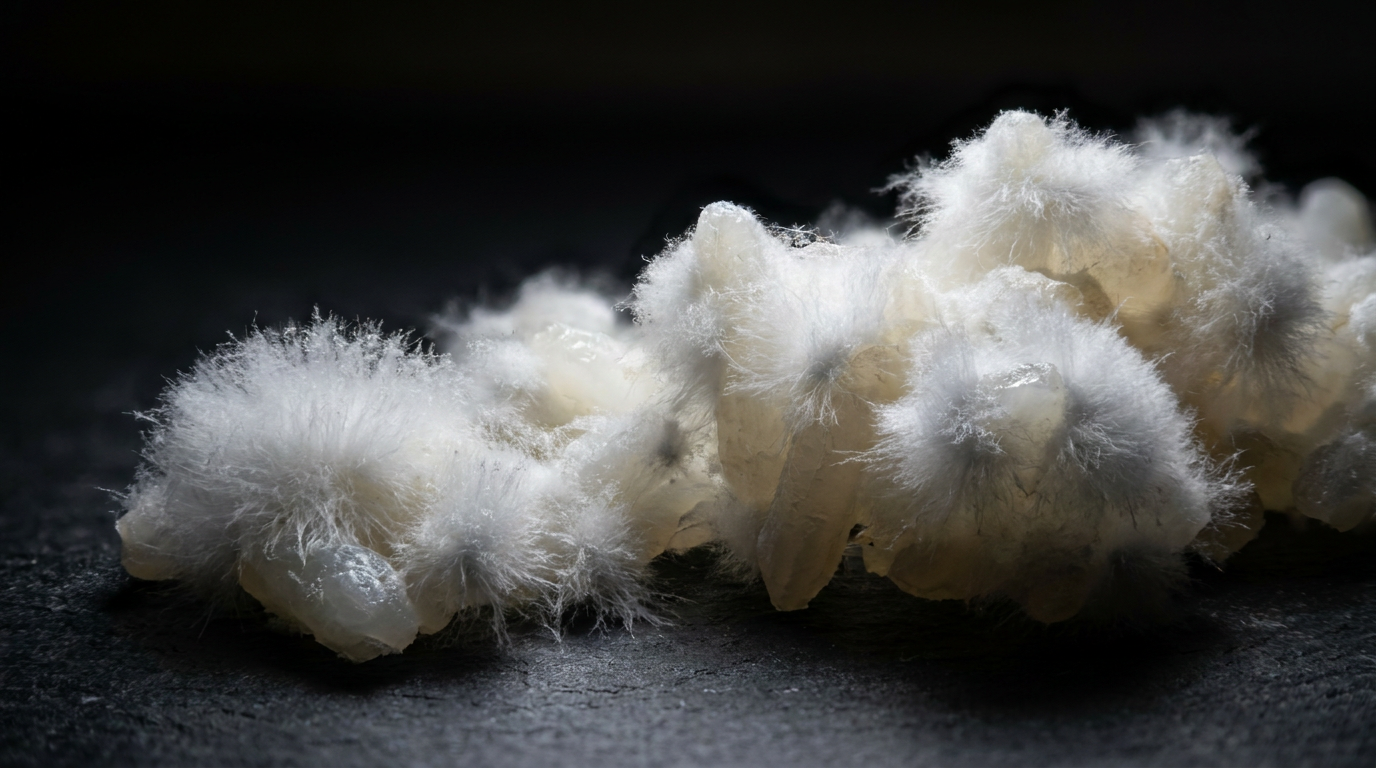
During this brief incubation period, the mold grows a dense web of fungal cells called hyphae, which physically penetrate the grains. To digest its food source, the fungus secretes a potent, wide-ranging cocktail of enzymes, primarily amylase, protease, and lipase.[5]
These enzymes are the literal architects of flavor. Amylase breaks down complex, tasteless starches into simple, sweet sugars. Simultaneously, protease cleaves long, rigid protein chains into individual amino acids, most notably glutamate—the chemical compound directly responsible for umami, the deeply savory "fifth taste."[2][5]
This enzymatic breakdown is what allows koji to transform raw, unremarkable ingredients into complex flavor bombs. When applied to a mixture of soybeans and roasted wheat, it yields the salty depth of soy sauce; when applied to polished rice, it creates the fermentable sugars necessary to brew sake.[2]
This enzymatic breakdown is what allows koji to transform raw, unremarkable ingredients into complex flavor bombs.
The safety and efficacy of this process are the result of an ancient, accidental domestication. Evolutionary biologists estimate that nearly 9,000 years ago, early humans began taming a wild, highly toxic mold called Aspergillus flavus, which produces deadly aflatoxins known to cause liver cancer.[1]

Through countless generations of selective breeding in human-made environments, the fungus underwent a radical genetic overhaul. While Aspergillus oryzae still possesses the specific gene cluster required to produce aflatoxins, those genes have been rendered entirely non-functional. It traded its toxicity for an unparalleled ability to thrive on cultivated grains.[1][4]
Today, the modern culinary world has weaponized this safe, domesticated mold for entirely new applications. The vanguard of this movement was Noma, the Copenhagen restaurant that repeatedly claimed the title of "World's Best Restaurant." Noma's dedicated fermentation lab used koji not to make traditional Japanese products, but to unlock unprecedented flavors in local Nordic ingredients.[7][8]
This "gourmandization" of koji has sparked a global trend across high-end kitchens. Chefs now routinely use koji spores to dramatically accelerate the dry-aging of meats. By rubbing the fungus directly onto steaks, the protease enzymes break down muscle fibers in a matter of days rather than weeks, resulting in profoundly tender, nutty, and umami-rich cuts.[3][8]

Koji is also revolutionizing the rapidly expanding world of plant-based cuisine. Because vegan cooking often lacks the savory depth naturally found in aged meats and dairy cheeses, chefs are turning to koji to bridge the gap. By fermenting vegetables, legumes, and grains, plant-based kitchens can generate complex, meaty flavor profiles entirely from the microbe up.[3]
Beyond the palate, food scientists are increasingly interested in koji's health implications. The fermentation process essentially pre-digests food, increasing the bioavailability of essential vitamins and minerals before they even enter the human digestive tract.[5]
Furthermore, recent studies suggest that specific compounds found in koji, such as glycosylceramides, act as powerful prebiotics. These compounds actively promote the growth of beneficial gut bacteria, linking the ancient fungus to modern metabolic and digestive health.[5]

Despite its widespread adoption, certain historical and scientific uncertainties remain. The exact geographic origins of koji's domestication—whether the crucial genetic leap first occurred in China or Japan—is still a subject of intense scholarly debate. Additionally, while the short-term benefits of koji-fermented foods are well-documented, the long-term impacts of a hyper-fermented, modern haute-cuisine diet on the human microbiome require further clinical study.[1][4]
How we got here
7000 BCE
Early humans in East Asia begin domesticating wild fungi, leading to the divergence of Aspergillus oryzae from its toxic ancestors.
1200s CE
The commercial 'seed-koji' (moyashi-ya) industry emerges in Japan, standardizing the cultivation of the fungus.
2006
The Brewing Society of Japan officially declares Aspergillus oryzae the 'national fungus' of Japan.
2018
Noma publishes 'The Noma Guide to Fermentation,' cementing koji's status as a foundational tool in global fine dining.
Viewpoints in depth
Traditional Japanese fermenters
Focuses on preserving the centuries-old techniques that define Japan's culinary identity.
For traditional artisans, koji is not a trendy kitchen hack but a revered cultural inheritance. The meticulous cultivation of Aspergillus oryzae on steamed rice, barley, or soybeans is viewed as an art form requiring precise temperature and humidity control. This camp emphasizes that the subtle, regional variations in traditional sake, miso, and shoyu are the direct result of generational knowledge regarding koji's behavior, arguing that these foundational applications remain the mold's highest calling.
Modern haute cuisine chefs
Views koji as a versatile, boundary-pushing tool for extracting novel flavors from local ingredients.
In the world of high-end gastronomy, koji is treated as a biological skeleton key. Chefs in Copenhagen, New York, and Tokyo are less interested in making traditional Japanese condiments and more focused on the mold's enzymatic power. By applying koji to indigenous vegetables, dairy, or meats, they can rapidly synthesize complex, aged flavor profiles that would otherwise take months to develop, effectively decoupling umami from its traditional sources.
Evolutionary biologists
Fascinated by the genetic domestication of a toxic mold into a safe, industrial workhorse.
From a scientific perspective, Aspergillus oryzae represents one of humanity's greatest, yet least understood, triumphs of domestication. Researchers study the fungus to understand how early humans managed to selectively breed a highly toxic organism—Aspergillus flavus—into a benign food-production tool. The fact that the modern koji genome still contains the broken, non-functional remnants of its aflatoxin-producing past provides a living fossil record of early biotechnology.
Plant-based culinary innovators
Utilizes koji to replicate the savory depth and umami traditionally found only in meat and dairy.
For vegan and plant-based chefs, koji solves the cuisine's most persistent problem: the lack of deep, satisfying savouriness. By harnessing the protease enzymes secreted by the mold, these innovators can break down plant proteins into glutamate, creating rich, meaty flavor profiles without animal agriculture. This camp views koji as essential to the future of sustainable eating, proving that complex umami can be built entirely from the microbe up.
What we don't know
- Whether the initial domestication of Aspergillus oryzae first occurred in ancient China or Japan remains a subject of debate among historians and geneticists.
- The long-term impacts of a hyper-fermented, modern haute-cuisine diet on the human gut microbiome have not been extensively studied in clinical trials.
Key terms
- Aspergillus oryzae
- A domesticated filamentous fungus used for centuries in East Asia to ferment foods.
- Amylase
- An enzyme secreted by koji that breaks down complex starches into simple, sweet-tasting sugars.
- Protease
- An enzyme that cleaves long protein chains into individual amino acids, creating savory flavors.
- Umami
- The deeply savory 'fifth taste,' primarily driven by the amino acid glutamate, which is unlocked during koji fermentation.
- Shio Koji
- A traditional Japanese marinade made from fermented koji rice, salt, and water, used to tenderize and season ingredients.
Frequently asked
Is koji safe to eat?
Yes. While it evolved from a toxic mold, thousands of years of domestication have rendered its harmful genes completely non-functional.
Can I use koji at home?
Absolutely. Home cooks can purchase dried koji rice or shio koji to use as a marinade, tenderizer, or base for homemade ferments.
Does koji contain gluten?
Koji itself is gluten-free when grown on rice or soybeans, but it is often grown on barley or wheat for certain types of miso and soy sauce.
Why do fine-dining restaurants use it?
Chefs use koji's enzymes to rapidly develop complex, aged flavors and tenderize meats in a fraction of the time traditional methods require.
Sources
Source coverage
8 outlets
4 viewpoints surfaced








[1]Knowable MagazineFood Science & Biology
The domestication of Aspergillus oryzae
Read on Knowable Magazine →[2]MasterClassTraditional Culinary Arts
What Is Koji? 5 Common Koji Uses
Read on MasterClass →[3]Soil DiningCulinary Innovators
Koji Fermentation: Time as Ingredient
Read on Soil Dining →[4]U.S. Environmental Protection AgencyFood Science & Biology
Final Risk Assessment of Aspergillus oryzae
Read on U.S. Environmental Protection Agency →[5]ResearchGateFood Science & Biology
Aspergillus oryzae in food industry
Read on ResearchGate →[6]Factlen Editorial TeamCulinary Innovators
Synthesis by Factlen editorial team
Read on Factlen Editorial Team →[7]Amateur GourmetModern Haute Cuisine
Dining at Noma: The Koji Experience
Read on Amateur Gourmet →[8]National Institutes of HealthModern Haute Cuisine
The Gourmandization of Koji
Read on National Institutes of Health →
Every angle. Every day.
Get food drink stories with full source coverage and perspective breakdowns delivered to your inbox.