
US and Iran Reach Framework Agreement to End War and Reopen Strait of Hormuz
The United States and Iran have digitally signed a memorandum of understanding to extend a ceasefire and reopen the Strait of Hormuz. The framework agreement initiates a 60-day window for complex negotiations over Iran's nuclear program and sanctions relief.
By Factlen Editorial Team
- U.S. Administration
- Argues the framework agreement is a massive diplomatic win that immediately reopens global shipping lanes and lowers oil prices without giving up financial leverage.
- Iranian Leadership
- Frames the memorandum as a tactical victory that breaks the U.S. naval blockade, insisting on full sovereignty over the Strait of Hormuz and early access to frozen assets.
- Israeli Government
- Views the bilateral U.S.-Iran pact with deep suspicion, refusing to be bound by the ceasefire in Lebanon and maintaining readiness to strike Iranian nuclear sites.
- U.S. Congressional Skeptics
- Expresses profound concern over the lack of transparency, fearing the administration may have made secret concessions regarding Iranian reconstruction funds.
What's not represented
- · European Shipping Companies
- · Lebanese Civilians
Why this matters
The reopening of the Strait of Hormuz immediately eases global energy prices and restores a critical artery for international trade. However, the deal's fragility means the threat of a wider Middle East conflict—and its economic fallout—remains high if the upcoming 60-day nuclear negotiations collapse.
Key points
- The US and Iran digitally signed a memorandum of understanding to end the 2026 war.
- The agreement immediately lifts the US naval blockade and reopens the Strait of Hormuz.
- A 60-day ceasefire extension will allow for complex negotiations over Iran's nuclear program.
- US and Iranian officials publicly disagree on whether Iran will receive early access to frozen funds.
- Israel stated it is not bound by the agreement and will continue its military operations in Lebanon.
The United States and Iran have reached a preliminary framework agreement to end the 2026 Iran War, marking a sudden diplomatic breakthrough after months of devastating conflict. The pact, officially a memorandum of understanding (MOU), was brokered by Pakistan, Qatar, Saudi Arabia, and Turkey. It establishes a 60-day ceasefire extension and sets the stage for complex negotiations over Iran's nuclear program.[3][7]
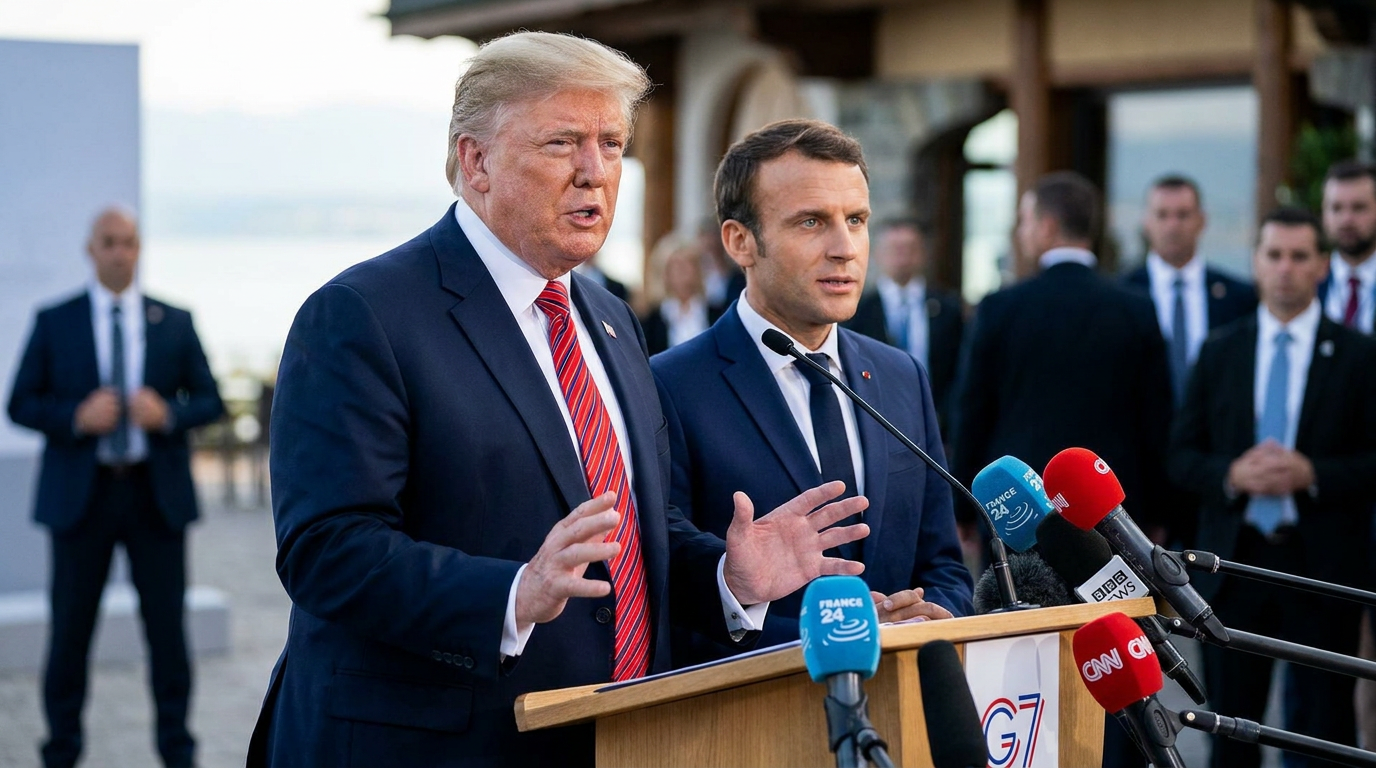
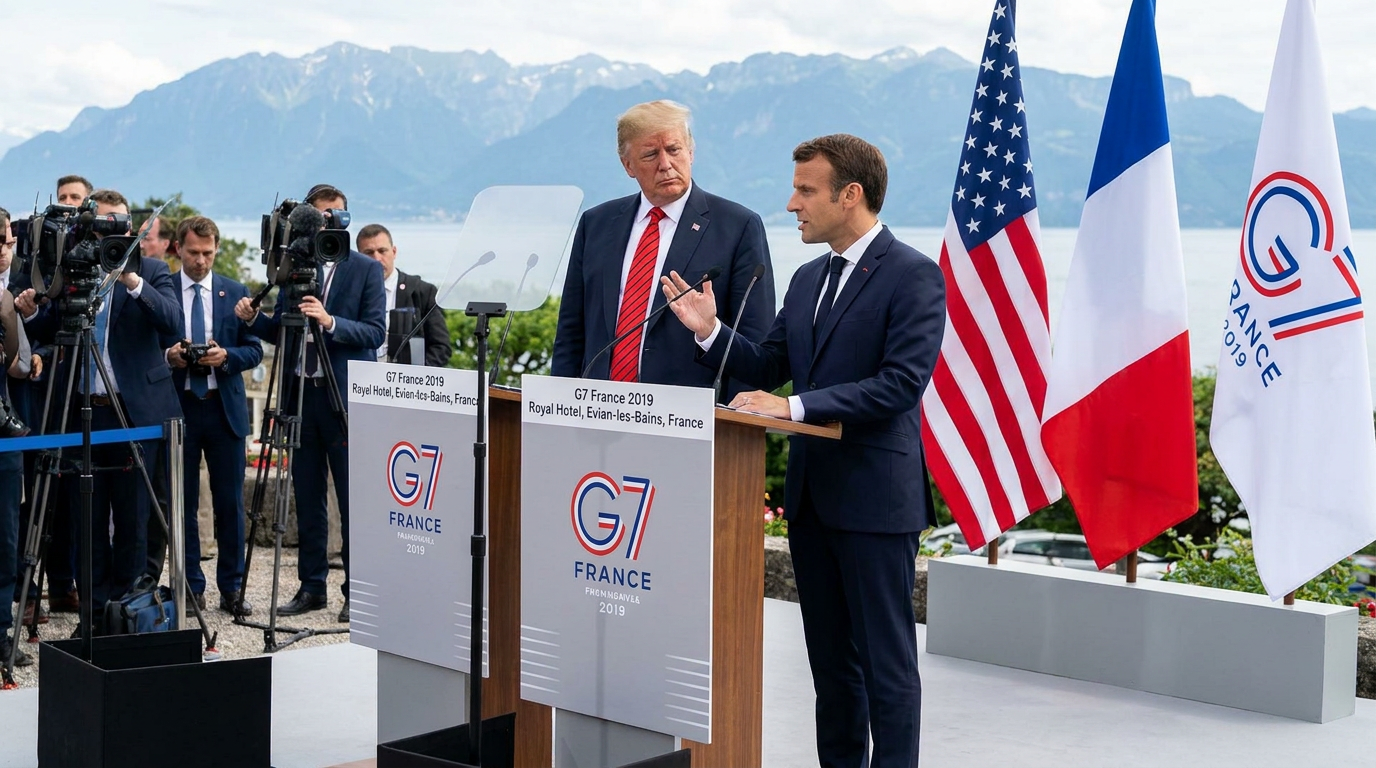
President Donald Trump announced the agreement alongside French President Emmanuel Macron at the Group of Seven (G7) summit in Evian-les-Bains, France. Trump declared that the deal was "all signed" and predicted that it would bring immediate relief to global energy markets. "I think a lot of great things are going to happen in the Middle East right now, and very importantly the oil is plummeting down and the stock market is shooting up like a rocket today," Trump told reporters.[1][4]
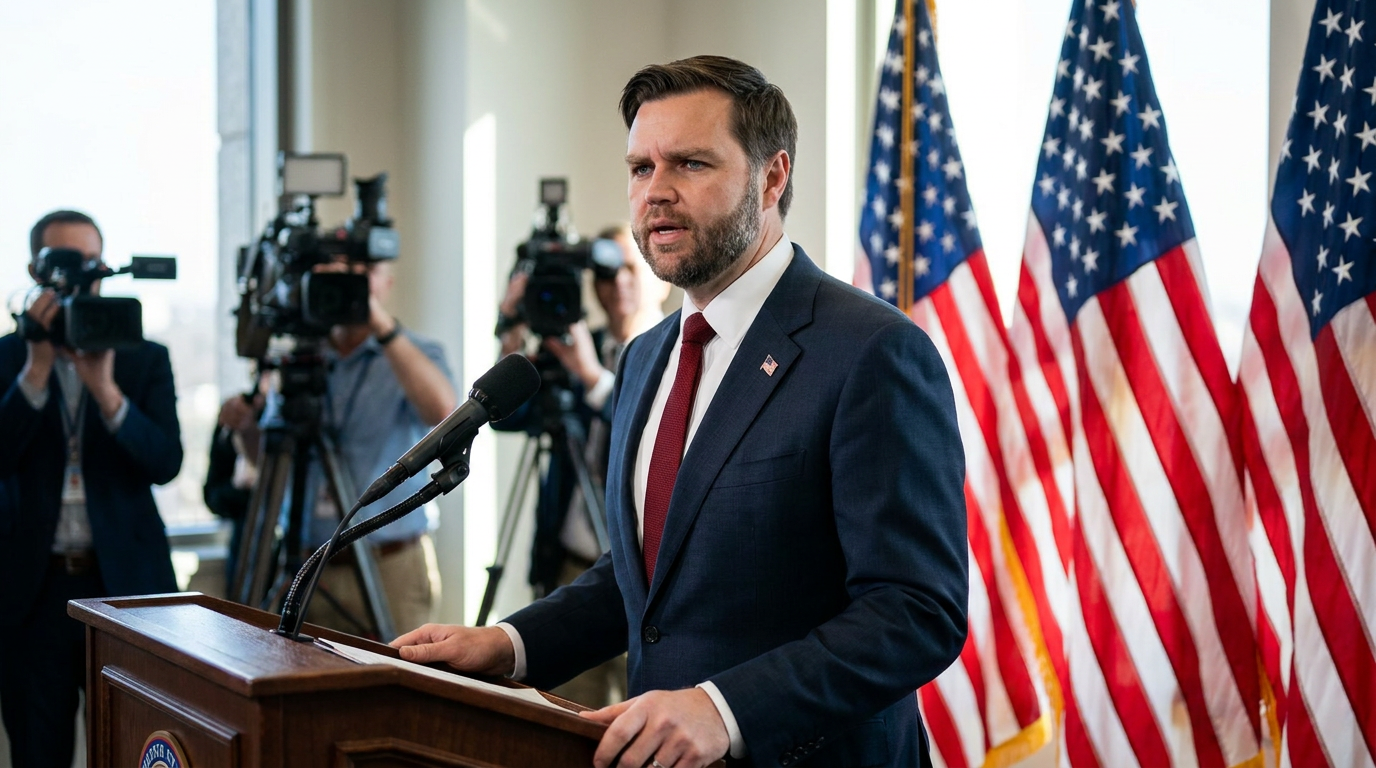
Vice President JD Vance confirmed that the MOU was digitally signed by the U.S. and Iranian Parliament Speaker Mohammad-Bagher Ghalibaf over the weekend. A formal, ceremonial signing is expected to take place in Geneva, Switzerland, on Friday. The immediate provisions of the agreement focus on de-escalation: the U.S. will lift its naval blockade on Iranian ports, and Iran will allow the reopening of the Strait of Hormuz to commercial shipping.[3][4]

The Strait of Hormuz, a critical maritime chokepoint through which roughly one-fifth of the world's oil and natural gas supply passes, has been effectively closed due to the conflict and the U.S. blockade. Its reopening is the centerpiece of the immediate ceasefire phase. However, the exact terms governing the waterway have already sparked public disagreement between Washington and Tehran.[5][7]
Trump insisted at the G7 that the Strait of Hormuz would be "permanently toll-free" and fully open by Friday. In stark contrast, Iranian Foreign Minister Abbas Araghchi stated on Iranian state media that the strait remains under Iranian and Omani sovereignty, and that both nations intend to collect fees and manage the maritime traffic. This discrepancy over a potential tolling system has alarmed European leaders committed to freedom of navigation.[1][6]
The most contentious aspect of the MOU involves financial relief. Iran's Islamic Revolutionary Guard Corps (IRGC) and state media claim the agreement guarantees that Iran will receive half of its roughly $24 billion in long-frozen overseas assets before the final nuclear negotiations even begin. Reports have also circulated regarding a proposed $300 billion reconstruction fund for Iran, financed by private companies or Gulf allies.[2][3][6]

The most contentious aspect of the MOU involves financial relief.
U.S. officials have vehemently denied these claims. Vice President Vance stated categorically that no money has been released and that any future sanctions relief or access to funds will be strictly performance-based. "I've seen $24 billion going from the United States to Iran. That number is totally false, totally made up," Vance said, emphasizing that Iran will not receive financial benefits until it demonstrates verifiable compliance with the upcoming nuclear terms.[2][3]
The 60-day ceasefire window is designed to give negotiators time to tackle the root cause of the conflict: Iran's nuclear program. The framework agreement defers the hardest issues, including the dismantlement of Iran's enriched uranium stockpiles and the extent of permanent sanctions relief, to these technical talks. Trump has maintained that the ultimate goal is to ensure Iran never acquires a nuclear weapon, though the specific mechanisms for verifying this remain unresolved.[1][5][7]
Back in Washington, the announcement was met with deep skepticism from lawmakers in both parties. Senate Republicans, many of whom had just returned to the Capitol, expressed frustration over a lack of transparency. Senate Majority Leader John Thune noted that he had not been personally briefed on the deal, while Senate Minority Leader Chuck Schumer warned that "the devil is in the details" and pressed the White House to release the full text of the memorandum.[1][3]

The geopolitical ripples of the agreement are already complicating the broader Middle East security picture. Israeli Prime Minister Benjamin Netanyahu quickly distanced his government from the U.S.-Iran pact. While not outright denouncing the deal, Netanyahu stated that Israel has its own interests and is not bound by the ceasefire regarding its ongoing military operations against Hezbollah in Lebanon.[1][3]
"With an agreement or without an agreement, Iran will not have nuclear weapons—not today and not tomorrow," Netanyahu declared. Israeli Defense Minister Israel Katz reinforced this stance, confirming that the Israel Defense Forces (IDF) will not withdraw from Lebanese territory despite the U.S. and Iranian claims that the MOU includes a cessation of hostilities on all fronts.[1][2]

European allies at the G7 expressed cautious optimism mixed with concern over the deal's fragility. French President Macron offered to deploy a Franco-British maritime taskforce, including mine-clearing vessels and frigates, to help secure the Strait of Hormuz within days. However, Iran's insistence on managing the strait and its rejection of foreign naval interference leaves the status of this European mission in doubt.[1][4]
As the Friday signing ceremony in Geneva approaches, the success of the Islamabad Memorandum hinges on whether the two sides can bridge massive gaps in interpretation. If the 60-day technical talks fail to produce a comprehensive treaty on uranium enrichment and sanctions, the ceasefire could easily collapse, plunging the region back into a war that has already reshaped global trade.[6][7]
How we got here
April 2025
The U.S. and Iran begin nuclear peace negotiations mediated by Oman.
June 2025
Negotiations collapse, leading to Israeli strikes against Iran and igniting a broader regional conflict.
February 2026
The U.S. and Israel launch large-scale strikes on Iran, marking the official start of the 2026 Iran War.
April 2026
The U.S. imposes a strict naval blockade on Iran after ceasefire talks in Islamabad fail to produce an agreement.
June 14, 2026
The U.S. and Iran digitally sign a memorandum of understanding to extend a ceasefire and reopen the Strait of Hormuz.
Viewpoints in depth
The U.S. Administration
Argues the framework agreement is a massive diplomatic win that immediately reopens global shipping lanes and lowers oil prices.
U.S. officials, led by President Trump and Vice President Vance, view the memorandum as a successful strategy of maximum pressure yielding diplomatic results. They emphasize that the immediate reopening of the Strait of Hormuz stabilizes the global economy and isolates Iran militarily. The administration maintains that it gave up no financial leverage, insisting that all sanctions relief and access to frozen funds will be strictly tied to verifiable nuclear compliance during the upcoming 60-day window.
The Iranian Government
Frames the memorandum as a tactical victory that successfully breaks the U.S. naval blockade.
Iranian officials and state media portray the agreement as a necessary step to relieve economic pressure while maintaining national dignity. They insist that Iran retains full sovereignty over the Strait of Hormuz—including the right to charge transit fees—and claim the deal guarantees early access to billions in frozen assets. For Tehran, the 60-day window is an opportunity to rebuild its economy before making any permanent concessions on its nuclear infrastructure.
The Israeli Government
Views the bilateral U.S.-Iran pact with deep suspicion, arguing it fails to address Iran's funding of proxy militias.
Israeli leadership, including Prime Minister Benjamin Netanyahu, has explicitly stated they are not bound by the ceasefire. They argue that any deal that leaves Iran's proxy network intact is fundamentally flawed. Israel refuses to withdraw its forces from Lebanon and maintains its readiness to strike Iranian nuclear sites unilaterally if it determines Tehran is using the 60-day window to accelerate weapons development.
U.S. Congressional Skeptics
Expresses profound concern over the lack of transparency surrounding the deal and potential secret concessions.
Lawmakers from both parties fear the administration may have made unverified concessions regarding Iranian reconstruction funds or uranium enrichment limits to secure a quick diplomatic win. Congressional leaders are demanding full, classified briefings before the final treaty is signed, warning that any agreement that provides Iran with billions of dollars without permanent, irreversible dismantlement of its nuclear program will face fierce opposition on Capitol Hill.
What we don't know
- Whether Iran will actually halt its uranium enrichment during the 60-day negotiation window.
- How the U.S. will respond if Iran attempts to charge tolls or fees to commercial ships in the Strait of Hormuz.
- Whether the promised $24 billion in frozen assets will be released in tranches or held until a final nuclear treaty is signed.
Key terms
- Memorandum of Understanding (MOU)
- A formal agreement establishing a framework for future negotiations, used here to pause the war while technical details are finalized.
- Strait of Hormuz
- A narrow, highly strategic waterway between the Persian Gulf and the Gulf of Oman that facilitates roughly 20% of global oil and gas shipments.
- Naval Blockade
- A military operation where naval forces prevent ships from entering or leaving a country's ports, which the U.S. had imposed on Iran.
- Sanctions Relief
- The reduction or removal of economic penalties imposed on a country, which Iran is demanding in exchange for limiting its nuclear program.
Frequently asked
What is the Islamabad Memorandum?
It is a framework agreement between the U.S. and Iran, brokered by Pakistan, that establishes a 60-day ceasefire and reopens the Strait of Hormuz.
Has Iran agreed to give up its nuclear weapons program?
The current memorandum defers the specifics of Iran's nuclear program to a 60-day negotiation window, though the U.S. insists the final goal is permanent dismantlement.
Is Israel participating in the ceasefire?
No. Israeli Prime Minister Benjamin Netanyahu stated that Israel is not bound by the agreement and will continue its military operations against Hezbollah in Lebanon.
Will Iran receive billions of dollars in frozen funds?
This is heavily disputed. Iranian media claims they will receive early access to $24 billion, while U.S. officials insist no money will be released until Iran proves compliance with nuclear terms.
Sources
Source coverage
7 outlets
4 viewpoints surfaced







[1]The GuardianIsraeli Government
Trump declares US-Iran peace deal 'all signed' as G7 leaders battle to tie up loose ends
Read on The Guardian →[2]Fox NewsU.S. Administration
Vance warns Trump would resume bombing Iran if regime breaks deal obligations
Read on Fox News →[3]CBS NewsU.S. Congressional Skeptics
Memorandum of understanding signed digitally by U.S. and Iran, senior administration official says
Read on CBS News →[4]AP NewsU.S. Administration
Trump says 'great things are going to happen' as he discusses Iran deal at G7
Read on AP News →[5]AxiosU.S. Congressional Skeptics
What's in the Iran deal Trump says he's ready to sign
Read on Axios →[6]Institute for the Study of WarIranian Leadership
Iran Update, June 13, 2026
Read on Institute for the Study of War →[7]Council on Foreign RelationsU.S. Congressional Skeptics
What to Know About the U.S.-Iran Memorandum of Understanding
Read on Council on Foreign Relations →
More in news politics
See all 5 stories →US-Iran Peace Deal
US and Iran Reach Preliminary Agreement to End War and Reopen Strait of Hormuz
0 sources
US-Iran Relations
US and Iran Sign Preliminary Peace Agreement as Republicans Demand Details on Financial Terms
0 sources
US-Iran Deal
The US-Iran Peace Framework: What's in the Deal to End the War
0 sources

Every angle. Every day.
Get news politics stories with full source coverage and perspective breakdowns delivered to your inbox.