
US and Iran Sign Preliminary Peace Agreement as Republicans Demand Details on Financial Terms
The Trump administration and Iran have digitally signed a memorandum of understanding to end hostilities and reopen the Strait of Hormuz, but Republican lawmakers are voicing skepticism over unreleased details and potential sanctions relief.
By Factlen Editorial Team
- Trump Administration
- Argues the preliminary deal successfully reopens global trade routes and sets the stage for dismantling Iran's nuclear program through performance-based incentives.
- Congressional Republicans
- Expresses deep skepticism over the lack of transparency, demanding the full text and opposing any upfront financial relief for Tehran.
- Iranian Leadership
- Frames the agreement as a victory that ends the US blockade and secures immediate economic relief and unfreezing of assets.
- Geopolitical Analysts
- Warns that the brief MOU leaves the most difficult nuclear and regional proxy issues unresolved, making a lasting peace highly uncertain.
What's not represented
- · European Allies
- · Lebanese Government
- · Global Shipping Industry
Why this matters
The agreement aims to end a major global conflict and reopen a critical artery for the world's oil supply, but domestic political opposition and disputes over the terms could threaten the fragile ceasefire before a final deal is reached.
Key points
- The US and Iran digitally signed a preliminary MOU to end hostilities and reopen the Strait of Hormuz.
- A formal in-person signing ceremony is scheduled for Friday in Geneva, Switzerland.
- Senate Republicans are demanding the full text of the agreement, expressing skepticism over potential financial concessions.
- Iran claims it will receive immediate access to frozen funds, a timeline the White House vehemently denies.
- The 1.5-page document establishes a 60-day window to negotiate a comprehensive agreement on Iran's nuclear program.
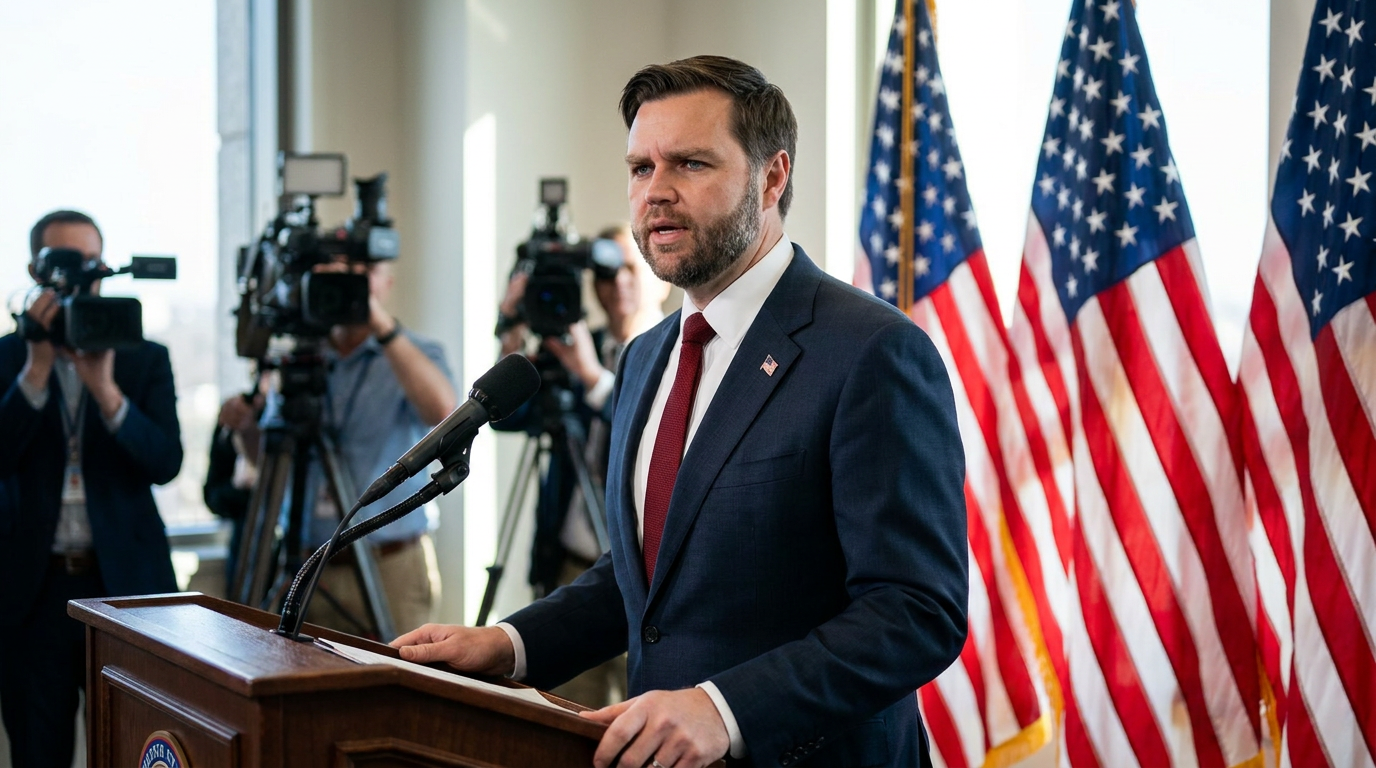
The United States and Iran have digitally signed a preliminary agreement to end their months-long war, setting the stage for a formal diplomatic ceremony in Geneva this Friday. The memorandum of understanding (MOU), signed Sunday by President Donald Trump, Vice President JD Vance, and Iranian Parliament Speaker Mohammad Bagher Ghalibaf, centers on lifting the US naval blockade and reopening the Strait of Hormuz to global shipping. The breakthrough marks a sudden de-escalation in a conflict that has rattled global markets and drawn in multiple regional actors since joint US-Israeli strikes on Iran began in February. By securing a digital signature from Ghalibaf, the Trump administration has locked in a preliminary commitment from Tehran to halt hostilities, though the brevity of the document leaves the most complex geopolitical hurdles unresolved.[1][3][4]
Despite the administration's framing of the deal as a historic peacemaking achievement, the White House is already facing significant pushback from its own party. Senate Republicans returned to Washington this week demanding answers, citing a glaring lack of transparency and expressing deep skepticism over potential financial concessions to Tehran. Senate Majority Leader John Thune noted he had not been personally briefed on the pact, telling reporters that even lawmakers who follow national security closely remain entirely in the dark about the specific terms. Senator Thom Tillis echoed the widespread frustration within the GOP caucus, questioning how Congress could be expected to take a "secret deal" seriously when the underlying text has yet to be shared with the legislative branch.[2][7]
The MOU itself is remarkably brief, serving more as a roadmap for future talks than a comprehensive peace treaty. Vice President Vance described the text as a "very general document" spanning roughly a page and a half. This preliminary framework establishes a 60-day window for further technical negotiations, effectively kicking the most difficult and entrenched issues down the road. Chief among these unresolved issues is the future of Iran's nuclear program and its stockpile of highly enriched uranium. The International Atomic Energy Agency has been unable to verify the status of Iran's nuclear facilities since the conflict escalated, making the upcoming 60-day negotiation period a high-stakes race to establish a new verification regime before the fragile ceasefire collapses.[1][3][6]

The most fiercely contested element of the preliminary framework is the timeline for financial relief. Iran's powerful Revolutionary Guard publicly claimed the agreement guarantees Tehran will receive half of its roughly $24 billion in frozen assets before the 60-day nuclear negotiation period even begins. This narrative is being heavily promoted within Iranian state media as a major diplomatic victory that breaks the back of the US sanctions regime. For the Iranian leadership, securing immediate access to these funds is critical for stabilizing a domestic economy that has been battered by months of war, naval blockades, and crippling inflation.[3][6]
The most fiercely contested element of the preliminary framework is the timeline for financial relief.
The White House, however, vehemently denies the Iranian timeline for sanctions relief. Vice President Vance insisted during multiple television interviews that Iran will not receive "a dime" until it takes verifiable steps to eliminate its stockpile of highly enriched uranium and allows international nuclear inspectors to return to their facilities. Vance emphasized that any financial incentives are strictly tied to performance benchmarks, pushing back against conservative critics who accused the administration of surrendering to Tehran. The stark divergence between Washington's and Tehran's public descriptions of the deal highlights the fragility of the MOU, raising questions about whether both sides actually agreed to the same sequencing of events.[4][5][8]

Adding to the political turbulence are swirling rumors regarding a massive postwar reconstruction fund. Reports surfaced over the weekend suggesting the agreement could pave the way for a $300 billion investment fund to help rebuild Iran's war-battered infrastructure. President Trump quickly took to social media to dismiss the $300 billion figure as "fake news" propagated by his political opponents. Nevertheless, senior US officials briefing reporters on Monday acknowledged that broad financial incentives—potentially funded by Gulf allies rather than US taxpayers—are indeed on the table if Tehran meets strict performance benchmarks regarding its nuclear program and regional proxy networks.[3][5]
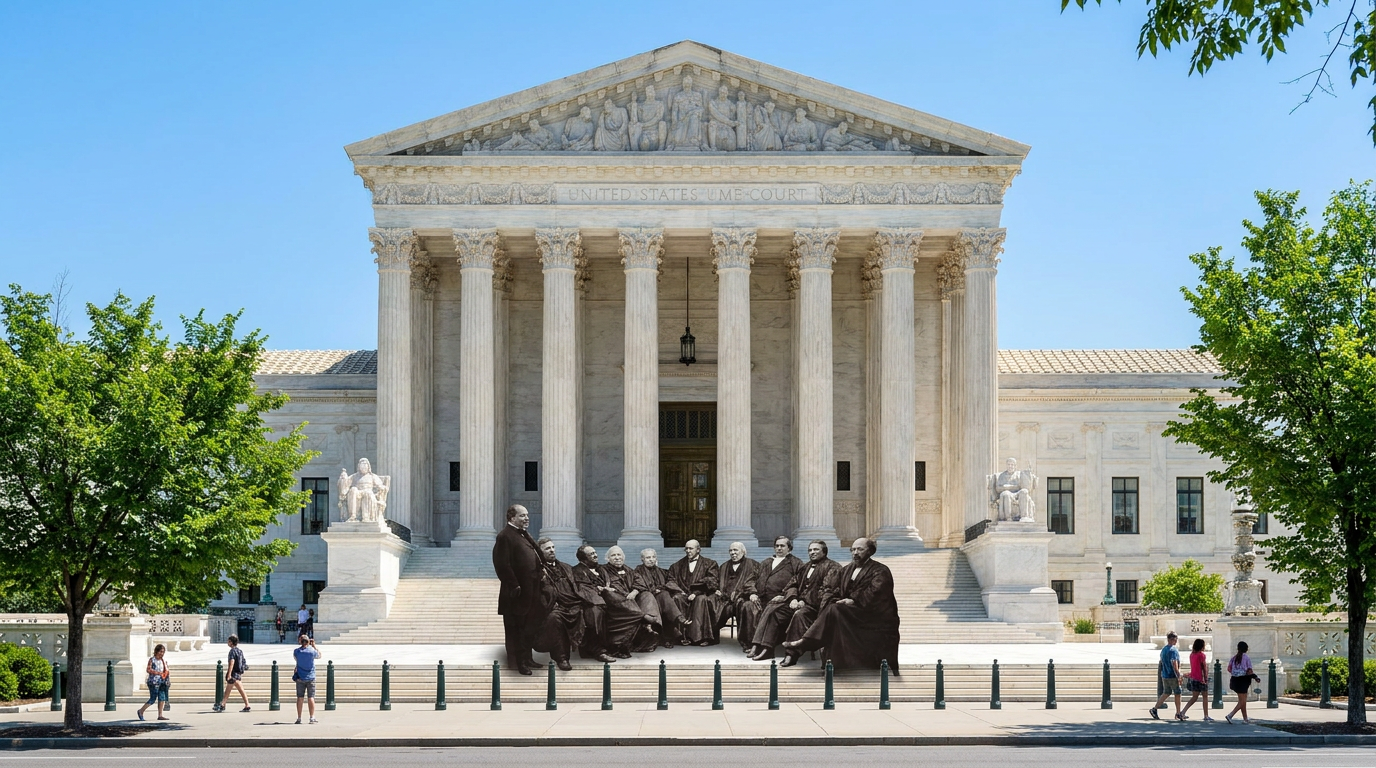
Despite the political confusion in Washington, the agreement has delivered immediate and tangible relief to global energy markets. Oil prices dropped by $4 per barrel following the announcement, easing fears of a prolonged economic shock that had been weighing heavily on the global economy. Trump celebrated the market reaction, declaring that the Strait of Hormuz—a critical maritime choke point for nearly one-fifth of the world's oil supply—will be "completely open" and toll-free by Friday's signing ceremony. The administration is banking on this economic relief to build domestic support for the deal, betting that lower gas prices and stabilized supply chains will outweigh the national security concerns raised by foreign policy hawks.[5][6]

Another major complication looms over the deal's scope regarding the broader Middle East conflict. Iranian and Lebanese officials, along with the Pakistani diplomats who helped mediate the talks, assert that the agreement includes a comprehensive cessation of hostilities on all fronts, including the ongoing conflict in Lebanon. Israel, however, has explicitly rejected this interpretation. Prime Minister Benjamin Netanyahu's government stated unequivocally that Israeli forces will remain in southern Lebanon and are not bound by the bilateral US-Iran MOU. Vance acknowledged the rift between Washington and Jerusalem but predicted that Israel would eventually "buy in" to the agreement as its implementation neutralizes the Iranian nuclear threat. The administration has promised to release the full text of the 14-point MOU later this week to quell the mounting skepticism.[1][3][4][6][7]
How we got here
February 2026
The US and Israel launch joint military strikes on Iran, sparking a months-long war and the closure of the Strait of Hormuz.
June 14, 2026
President Trump and Iranian leaders digitally sign a preliminary memorandum of understanding to end hostilities.
June 15, 2026
Senate Republicans return to Washington and demand the full text of the agreement, expressing skepticism over potential financial concessions.
June 19, 2026
A formal, in-person signing ceremony for the MOU is scheduled to take place in Geneva, Switzerland.
Viewpoints in depth
The Trump Administration's view
The preliminary deal successfully reopens global trade routes and sets the stage for dismantling Iran's nuclear program.
Vice President JD Vance and other administration officials argue that the MOU achieves the immediate goal of reopening the Strait of Hormuz, which will lower global energy prices and provide economic relief. They maintain that the US retains all its leverage, as no frozen assets or sanctions relief will be granted until Iran allows international inspectors back into the country and verifiably dismantles its highly enriched uranium stockpile.
Congressional Republicans' view
The agreement lacks transparency and risks repeating past mistakes by offering financial incentives to Tehran.
Lawmakers, including Senate Majority Leader John Thune, are withholding support until they can review the full text of the agreement. Hawks within the party fear that the 60-day negotiation window gives Iran time to regroup, and they are deeply skeptical of any framework that includes a potential $300 billion reconstruction fund or the release of $24 billion in frozen assets, arguing such funds will inevitably be funneled to proxy militant groups.
The Iranian Leadership's view
The agreement is a victory that ends the US blockade and secures immediate economic relief.
Iranian officials, including the powerful Revolutionary Guard, are projecting the MOU to their domestic audience as a capitulation by the United States. They claim the agreement guarantees the unfreezing of billions of dollars before the 60-day nuclear negotiations even commence, and they assert that the deal forces a comprehensive ceasefire that protects their regional allies, including Hezbollah in Lebanon.
What we don't know
- Whether Iran will actually agree to dismantle its nuclear program during the 60-day negotiation window.
- The exact conditions required for Iran to access its $24 billion in frozen assets.
- How the agreement will impact Israel's ongoing military operations in southern Lebanon.
Key terms
- Memorandum of Understanding (MOU)
- A formal agreement between two or more parties that outlines the broad terms of a deal before a final, detailed contract is negotiated and drafted.
- Strait of Hormuz
- A critical maritime choke point between the Persian Gulf and the Gulf of Oman, through which nearly 20% of the world's oil supply passes.
- Highly Enriched Uranium
- Uranium that has been processed to increase the concentration of the U-235 isotope, making it capable of being used in nuclear weapons.
Frequently asked
What is in the US-Iran memorandum of understanding?
The 1.5-page document outlines a ceasefire, the reopening of the Strait of Hormuz, the lifting of the US naval blockade, and establishes a 60-day window to negotiate a comprehensive nuclear agreement.
Will Iran receive immediate financial relief?
This is highly contested. Iranian officials claim they will receive billions in frozen assets upfront, while the US insists no funds will be released until Iran takes verifiable steps to dismantle its nuclear program.
Does the agreement end the fighting in Lebanon?
Iran and Hezbollah claim the deal includes a comprehensive ceasefire across all fronts. However, Israel maintains it is not bound by the US-Iran agreement and will keep its forces in southern Lebanon.
Sources
Source coverage
8 outlets
4 viewpoints surfaced








[1]The GuardianIranian Leadership
Vance says details of US-Iran agreement still to be worked out amid scepticism from Republicans
Read on The Guardian →[2]AP NewsTrump Administration
Republicans on Capitol Hill say they need more information about Trump's Iran agreement
Read on AP News →[3]CBS NewsIranian Leadership
What to know about the Iran war today: U.S.-Iran deal signed electronically
Read on CBS News →[4]Times of IsraelTrump Administration
Vance: Trump may release full text of US-Iran agreement before Friday
Read on Times of Israel →[5]ReutersCongressional Republicans
Trump's Iran deal faces Republican skepticism, allied questions
Read on Reuters →[6]Council on Foreign RelationsGeopolitical Analysts
Trump's Iran Deal: What We Know, What's Contested, and What Remains Unresolved
Read on Council on Foreign Relations →[7]SemaforCongressional Republicans
Republicans withhold support for Trump's Iran agreement
Read on Semafor →[8]Arab NewsTrump Administration
Trump may release US-Iran agreement before Friday, Vance says
Read on Arab News →

More in news politics
See all 6 stories →US-Iran Deal
US and Iran Reach Framework Peace Deal to End 15-Week War, Reopen Strait of Hormuz
0 sources
Title IX
Supreme Court strikes down federal Title IX gender identity mandate in 5-4 ruling
0 sources
US-Iran Peace Deal
U.S. and Iran Reach Framework Peace Deal to End 15-Week War and Reopen Strait of Hormuz
0 sources
Irish Asylum Reform
Ireland Implements Sweeping Asylum Overhaul Under New International Protection Act
0 sources
Every angle. Every day.
Get news politics stories with full source coverage and perspective breakdowns delivered to your inbox.