
Supreme Court strikes down federal Title IX gender identity mandate in 5-4 ruling
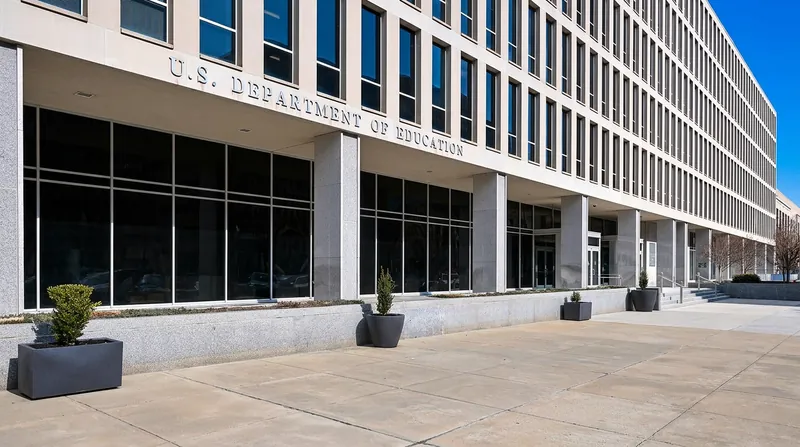
The Supreme Court has ruled that the Department of Education overstepped its authority by expanding Title IX to include gender identity, effectively allowing states to enforce their own policies on school sports and facilities.
By Anaya Sharma

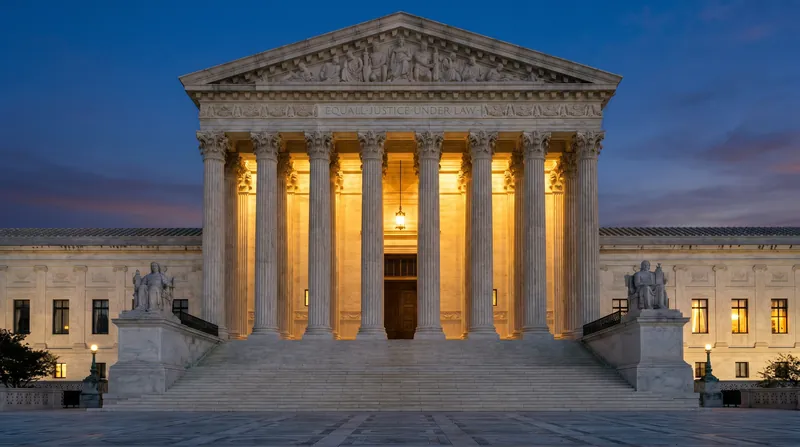
The Supreme Court has delivered a historic 5-4 decision striking down the Department of Education’s expanded Title IX regulations, ruling that the federal government cannot compel schools to accommodate students based on gender identity. The ruling effectively dismantles the sweeping 2024 overhaul of the 1972 civil rights law, which sought to explicitly protect transgender students from discrimination in federally funded educational programs.[1][2]
Writing for the conservative majority, Chief Justice John Roberts argued that the text of Title IX, which prohibits discrimination "on the basis of sex," was historically understood to mean biological sex at the time of its passage. He asserted that executive agencies cannot unilaterally rewrite foundational statutes without explicit congressional authorization.[1][4]
"The Department's interpretation transforms a statute designed to ensure equal opportunity for women into a mandate that fundamentally redefines the categories it was meant to protect," Roberts wrote, adding that such a sweeping societal shift must come from the legislative branch.[1][3]
The immediate practical effect is massive: 24 states that had previously passed laws restricting transgender women and girls from participating in female public school sports, or mandating bathroom use by biological sex, can now enforce those laws without fear of losing billions in federal education funding. Prior to this ruling, those states faced intense legal pressure and the threat of federal defunding.
Justice Elena Kagan, joined by the court's three other liberal justices, issued a blistering dissent. She argued that the majority was ignoring the precedent set by the 2020 Bostock v. Clayton County decision, which established that discrimination based on sexual orientation or gender identity is inherently a form of sex discrimination in the workplace.[1][6]
"Today's decision strips vulnerable students of federal protection, leaving their civil rights to the whims of state legislatures and effectively sanctioning state-sponsored discrimination in our public schools," Kagan wrote, warning of the psychological and educational toll on transgender youth.[2][6]
Conservative legal groups and Republican attorneys general, who led the multi-state lawsuit that culminated in Tuesday's decision, celebrated the ruling as a victory for states' rights and the integrity of women's sports. They have long argued that allowing transgender women to compete in female categories undermines the core purpose of Title IX.[3][4]
"This is a monumental win for female athletes who have fought to maintain fair competition and for parents who want common-sense privacy policies in local schools," said Tennessee Attorney General Jonathan Skrmetti, who spearheaded the coalition of states challenging the federal mandate.[3]
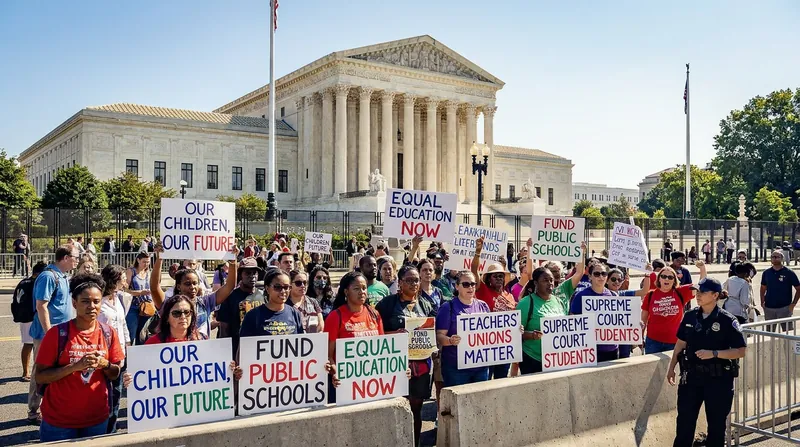
Conversely, LGBTQ+ advocacy groups and teachers' unions warned of immediate harm to transgender youth, who already face disproportionately high rates of bullying and mental health crises. Several advocacy organizations announced emergency town halls to help families navigate the new legal reality.[6]
"The Supreme Court has just told thousands of students that the federal government will not protect them when they walk through the schoolhouse doors," a spokesperson for the National Education Association stated, announcing plans to mobilize legal defense funds for affected families and educators.[5]
School administrators now face a chaotic compliance landscape. While schools in conservative states have clear legal cover to enforce restrictions, districts in blue states with their own state-level gender identity protections must navigate conflicting local mandates and federal funding guidelines, creating a logistical nightmare for interstate sports competitions.[4]
Education Week reports that district superintendents are already consulting legal counsel, as the ruling does not explicitly ban gender identity accommodations nationwide, but rather removes the federal mandate requiring them. This leaves local school boards to shoulder the burden of policy creation.
The decision also throws a wrench into ongoing lower court battles over specific district policies, such as whether schools must use a student's preferred pronouns or notify parents of a student's gender transition, likely triggering a new wave of localized, district-by-district litigation.[5]
Looking ahead, the ruling shifts the battleground entirely to state legislatures and the ballot box. Political analysts note that the decision ensures school board elections and state superintendent races will remain highly polarized flashpoints in the upcoming November midterms, as voters directly decide the civil rights frameworks of their local schools.[2]
Viewpoints in depth
Conservative & State Officials
Argue the ruling restores the original intent of Title IX and protects biological females in sports.
Conservative legal advocates and Republican state attorneys general view this decision as a necessary correction to executive overreach. They argue that Title IX was explicitly designed in 1972 to create equal opportunities for biological women, particularly in athletics, and that allowing transgender women to compete in female categories fundamentally undermines that goal. By returning the power to the states, they believe local communities can now enact common-sense privacy and fairness policies without the looming threat of federal defunding.
Civil Rights Advocates
Argue the decision abandons vulnerable youth and violates recent civil rights precedents.
LGBTQ+ advocacy groups and civil rights organizations see the ruling as a devastating blow to student safety. They point to the Supreme Court's own 2020 Bostock decision, arguing that it is logically impossible to discriminate against someone for being transgender without inherently discriminating against them based on sex. Advocates warn that this ruling will embolden state legislatures to pass increasingly hostile laws targeting transgender youth, exacerbating an already severe mental health crisis among LGBTQ+ students.
Education & Legal Analysts
Focused on the logistical nightmare of compliance and the resulting patchwork of state laws.
For school administrators and education law experts, the primary concern is operational chaos. Because the ruling does not establish a national ban on gender identity accommodations, but merely removes the federal mandate, the US education system is now fractured. Districts in blue states will continue to enforce state-level protections, while neighboring red states enforce bans. Analysts warn this will create massive logistical hurdles for interstate sports competitions, federal grant applications, and the transfer of student records across state lines.
Key points
- The Supreme Court ruled 5-4 to strike down federal rules mandating gender identity protections under Title IX.
- The conservative majority argued that redefining sex discrimination requires an act of Congress, not an executive agency.
- The ruling validates laws in 24 states that restrict transgender participation in female sports.
- Liberal justices dissented, arguing the decision strips vulnerable students of federal civil rights protections.
What we don’t know
- How the NCAA and other national athletic associations will adjust their cross-state competition rules in response to the fragmented legal landscape.
- Whether the Department of Education will attempt to draft a narrower set of rules to protect transgender students without triggering another Supreme Court challenge.
- How lower courts will rule on related issues, such as mandatory pronoun usage and parental notification policies.
How we got here
1972
Title IX is passed to prohibit sex-based discrimination in federally funded education.
2020
The Supreme Court rules in Bostock that federal employment protections cover gender identity.
2024
The Department of Education issues new rules explicitly expanding Title IX to cover gender identity.
2024-2025
A coalition of 24 states sues the federal government, halting the rule's implementation in half the country.
June 2026
The Supreme Court strikes down the federal mandate in a 5-4 decision.
- Conservative & State Officials
- Argue the ruling restores the original intent of Title IX, protects biological females in sports, and rightfully returns educational policy to state control.
- Civil Rights Advocates
- Argue the decision abandons vulnerable youth, violates recent civil rights precedents, and creates a hostile educational environment for transgender students.
- Education & Legal Analysts
- Focused on the logistical nightmare of compliance, noting that the patchwork of state laws makes federal funding applications and interstate sports incredibly complex.
Perspectives this story doesn't cover
- Transgender students directly affected by the ruling
- Collegiate athletic associations (NCAA)
Sources
Source coverage
6 outlets
3 viewpoints surfaced






- [1]SCOTUSblogEducation & Legal Analysts
Divided court blocks Biden administration's Title IX expansion
Read on SCOTUSblog → - [2]The New York TimesCivil Rights Advocates
Supreme Court Rejects Federal Protections for Transgender Students Under Title IX
Read on The New York Times → - [3]Fox NewsConservative & State Officials
The states that still allow trans athletes in women's sports face questions after Supreme Court ruling
Read on Fox News → - [4]The Wall Street JournalConservative & State Officials
Supreme Court Curbs Federal Power in Title IX Gender-Identity Case
Read on The Wall Street Journal → - [5]PoliticoEducation & Legal Analysts
SCOTUS ruling throws school compliance into chaos ahead of midterms
Read on Politico → - [6]The Washington PostCivil Rights Advocates
In 5-4 ruling, Supreme Court rolls back federal transgender student protections
Read on The Washington Post →
More in News & Politics
See all →School Choice
Supreme Court Rules Federal Education Funds Can Follow Students to Private Schools
6 sources
Student Loans
Sweeping Federal Student Loan Overhaul Takes Effect July 1, Ending SAVE Plan and Capping Borrowing
3 sources

Student Privacy
Supreme Court Declines New Parental Notification Case, Leaving Schools in Legal Limbo Over Gender Identity
4 sources
Higher Education Finance
The Capacity Crunch: Why Abolishing University Tuition Excludes Working-Class Students
9 sources

Comments
Every angle. Every day.
Get News & Politics stories with full source coverage and perspective breakdowns, free every day.