
How Local AI Tools Are Turning Everyday Laptops Into Private, Offline Assistants
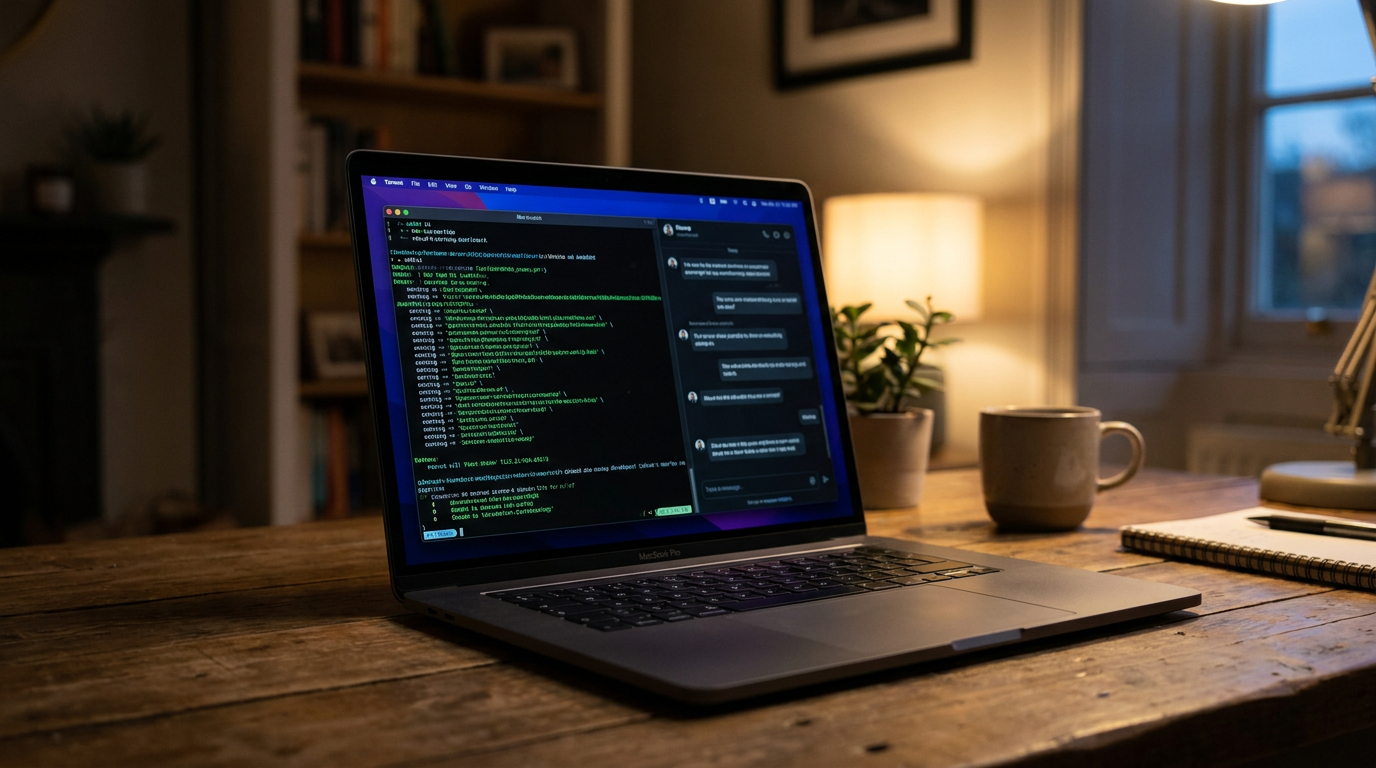
Advancements in open-weight models and user-friendly software have made it easier than ever to run powerful AI locally in 2026. Tools like LM Studio and Ollama are empowering users to bypass cloud subscriptions, ensuring complete data privacy and offline access.
By Factlen Editorial Team
- Privacy Advocates
- Focusing on data sovereignty and the risks of cloud computing.
- Open-Source Developers
- Valuing freedom, flexibility, and the elimination of API costs.
- Everyday Users
- Prioritizing accessibility, ease of use, and offline capabilities.
What's not represented
- · Cloud AI Providers
- · Enterprise IT Administrators
Why this matters
Running AI locally frees users from monthly subscriptions and ensures complete data privacy by keeping all prompts on-device. This shift democratizes access to powerful technology, allowing anyone to utilize advanced AI offline without relying on corporate cloud servers.
Key points
- Local AI allows users to run powerful language models entirely offline, ensuring complete data privacy.
- Tools like LM Studio and Ollama have simplified the setup process, requiring no coding knowledge.
- Apple Silicon's unified memory architecture provides a significant advantage for running large models on consumer laptops.
- Running models locally eliminates recurring API costs and $20 monthly cloud subscriptions.
- A standard laptop with 16GB of RAM can comfortably run highly capable 12-billion parameter models.
In 2026, the artificial intelligence revolution is quietly migrating from massive, energy-hungry data centers directly onto the laptops of everyday users. For years, interacting with top-tier AI meant paying a monthly subscription and sending every keystroke to a corporate cloud server, raising significant concerns about data ownership and privacy. Today, a rapidly maturing ecosystem of open-weight models and highly streamlined software has made 'local AI' a practical, everyday reality for anyone with a modern computer. This transition is fundamentally shifting the balance of technological power back to the individual, allowing users to harness cutting-edge capabilities without relying on external infrastructure.[5]
The shift is driven by a combination of hardware capabilities catching up with software efficiency. Running a Large Language Model (LLM) locally means downloading the model's neural network weights directly to your hard drive and executing the computations—known as inference—entirely on your own silicon. Because the data never leaves the device, it offers a level of privacy and autonomy that cloud-based services fundamentally cannot match. Users no longer have to worry about their proprietary code, sensitive legal documents, or personal health questions being ingested into a tech giant's future training data.[3][6]
At the heart of this transition are two wildly popular tools that have successfully democratized access: Ollama and LM Studio. Before these platforms existed, running an AI model locally required navigating complex Python environments, managing obscure dependencies, and troubleshooting command-line errors. Now, the barrier to entry has been lowered to a simple software download, bringing local AI out of the developer niche and into the mainstream. These tools act as the bridge between raw, open-weight models and the everyday consumer, abstracting away the technical friction that previously kept local inference out of reach.[2][5]
LM Studio has emerged as the go-to solution for everyday users seeking a frictionless experience. It operates as a highly polished desktop application with a graphical user interface that feels instantly familiar to anyone who has used a modern chat application. Users can browse a built-in directory of models, download them with a single click, and start chatting immediately. The software automatically detects the computer's available hardware, seamlessly routing the computational workload to the GPU or CPU as needed, making it an ideal starting point for those who want powerful AI without the technical headache.[2][4]

For developers and power users, Ollama has become the undisputed industry standard, recently surpassing 100,000 stars on GitHub. Operating primarily through a lightweight command-line interface, Ollama allows users to pull models with a single line of code and instantly spins up a local API server. This means developers can build their own applications, integrate coding assistants, or design automated workflows that ping a local AI instead of paying for OpenAI or Anthropic's API. It provides the foundational infrastructure needed to build private, agentic systems that run entirely in the background of a user's machine.[4][5]
The viability of local AI in 2026 is heavily reliant on a mathematical compression technique known as quantization. Uncompressed AI models require massive amounts of memory, often exceeding the capacity of even the most expensive consumer hardware. Quantization solves this by reducing the precision of the model's internal numbers—often compressing them from 16-bit down to 4-bit formats. This drastically shrinks the file size and memory footprint of the model, allowing it to fit comfortably inside a standard laptop with only a negligible, often imperceptible, drop in the quality of its generated outputs.[1][3]
When it comes to hardware requirements, the most critical bottleneck is not the speed of the central processor, but the size of the memory—specifically the VRAM (Video RAM) located on a dedicated graphics card. The entire AI model must be loaded into memory to generate text quickly and efficiently. If a model is too large for the GPU and spills over into standard system RAM, the generation speed slows to an agonizing crawl, producing only a few words per second and rendering the experience largely unusable for real-time interaction.[5]

The entire AI model must be loaded into memory to generate text quickly and efficiently.
This strict memory requirement has made Apple Silicon—specifically the M1 through M4 series chips—an unexpected powerhouse for local AI inference. Unlike traditional PC architectures that rigidly separate standard system RAM and dedicated GPU VRAM, Apple's chips utilize a 'unified memory' architecture. A Mac equipped with 64GB of unified memory can dynamically allocate nearly all of it to the GPU, allowing it to run massive 70-billion parameter models that would otherwise require multiple expensive, power-hungry Nvidia graphics cards on a traditional desktop PC.[3][4]
However, you do not need a high-end workstation or a top-tier Mac to participate in this ecosystem. The 2026 landscape of open-weight models has been heavily optimized to run efficiently on standard consumer hardware. A basic, budget-friendly laptop equipped with just 8GB of RAM can comfortably run highly capable 3-billion to 7-billion parameter models. Options like Microsoft's Phi-4 Mini or Mistral 7B are remarkably fast and surprisingly adept at handling everyday tasks, proving that local AI is no longer a luxury reserved for those with expensive hardware.[1][5]
For users equipped with 16GB of RAM, the sweet spot in 2026 is the highly competitive 12-billion parameter class. Models like Google's Gemma 4 (12B) and Alibaba's Qwen3.5 offer a remarkable balance of performance, speed, and efficiency. These mid-sized models are sophisticated enough to handle complex coding tasks, draft professional emails, and accurately summarize long, dense documents. In many benchmarks, these locally run 12B models now rival or exceed the performance of the massive, cloud-based flagship models from just a few years ago.[1][5]
The primary driver pushing both individuals and enterprises toward these local setups is the absolute guarantee of data privacy. When utilizing a cloud provider, proprietary code, sensitive legal contracts, and personal health queries are inherently transmitted to external servers. For enterprise workers, healthcare professionals, and privacy advocates, local inference ensures that sensitive information never touches the internet. This completely eliminates the risk of data breaches, unauthorized access, or the unsettling possibility of a user's private data being ingested to train a future iteration of a corporate AI model.[5][6]

Cost reduction is another massive factor accelerating the adoption of local AI. Heavy AI users, independent developers, and enterprise teams can easily spend thousands of dollars annually on recurring API fees and $20 monthly subscriptions. Once a user invests in the initial hardware—which many already own for gaming or professional work—running local models is entirely free. There are no rate limits, no token quotas, and no unexpected overage charges, allowing users to experiment and generate text as much as they want without watching a meter.[3][5]
Furthermore, local AI provides absolute reliability and uninterrupted access. Because the models run entirely offline, they are completely immune to server outages, internet connectivity drops, or sudden changes in a corporate provider's terms of service. A developer working on a cross-country flight, a researcher stationed in a remote location, or a student in an area with spotty Wi-Fi has the exact same access to their AI tools as they would in a corporate office with gigabit internet, ensuring productivity is never halted by external factors.[3][5]
Despite these overwhelming advantages, local AI is not without its inherent limitations. The most advanced, cutting-edge reasoning tasks—such as solving complex novel mathematical problems, conducting deep scientific research, or managing massive, multi-step agentic workflows—still heavily favor the trillion-parameter behemoths running in massive cloud data centers. Local models serve as highly capable, everyday assistants, but they cannot yet match the sheer intellectual breadth and deep contextual understanding of the largest frontier models maintained by companies like OpenAI and Google.[6]

Additionally, running AI locally is a highly resource-intensive process that takes a physical toll on consumer hardware. Generating text pushes a computer's processor and graphics card to their absolute limits, resulting in significant battery drain and thermal throttling on laptops. Users running heavy inference tasks will quickly find their cooling fans spinning at maximum speed, their laptops growing uncomfortably warm, and their battery life cut in half, making it less than ideal for extended use away from a power outlet.[3]
Ultimately, the future of artificial intelligence is likely to be a hybrid approach. Routine tasks, drafting, coding assistance, and the handling of sensitive data will increasingly default to local, on-device models, while users will seamlessly fall back to cloud providers for the heaviest computational lifting. But in 2026, the paradigm has undeniably shifted. The tools to run powerful, private, and entirely offline AI on your own terms are finally accessible, completely free, and sitting right on your desktop.[4][6]
How we got here
Early 2023
Meta's LLaMA model is leaked, sparking the open-source AI movement.
Late 2023
Tools like Ollama and LM Studio launch, providing user-friendly interfaces.
2024
Apple Silicon's unified memory architecture becomes the gold standard for consumer inference.
Mid 2026
12-billion parameter models become highly optimized, running comfortably on standard 16GB laptops.
Viewpoints in depth
Privacy Advocates
Focusing on data sovereignty and the risks of cloud computing.
Privacy advocates argue that sending sensitive documents, proprietary code, or personal health queries to cloud providers is an unacceptable risk. They emphasize that local AI ensures prompts never leave the machine, fundamentally changing the power dynamic between users and tech giants by eliminating the possibility of data harvesting or unauthorized model training.
Open-Source Developers
Valuing freedom, flexibility, and the elimination of API costs.
For developers, the appeal of local AI lies in the ability to build applications without being tethered to a corporate API. They value the flexibility to swap models, customize parameters, and avoid vendor lock-in. Furthermore, running models locally eliminates unpredictable rate limits and the recurring costs associated with heavy API usage.
Everyday Users
Prioritizing accessibility, ease of use, and offline capabilities.
Everyday users are drawn to the democratization of AI. They appreciate the lack of subscription fees and the ability to use AI offline, relying on polished GUI tools like LM Studio that require no coding knowledge. For this group, local AI is about having a powerful, reliable assistant available at all times, regardless of internet connectivity.
What we don't know
- How quickly the hardware requirements for frontier reasoning models will shrink to fit on consumer devices.
- Whether cloud providers will introduce hybrid local-cloud models to compete with fully offline open-source tools.
Key terms
- Inference
- The process of an AI model generating a response or prediction based on a user's prompt.
- Quantization
- A compression technique that reduces the precision of an AI model's numbers, allowing it to run on consumer hardware with minimal quality loss.
- VRAM (Video RAM)
- The dedicated memory on a graphics card, crucial for holding AI models during local inference.
- Unified Memory
- An architecture used in Apple Silicon where the CPU and GPU share the same pool of memory, making Macs highly efficient for local AI.
- Open-weight Model
- An AI model whose underlying parameters are freely available to download and run, though its training data may remain private.
Frequently asked
Do I need internet to use a local LLM?
No. Once the model is downloaded to your device, it runs entirely offline without any network connection.
Will running AI locally drain my laptop battery?
Yes. Generating text requires heavy GPU or CPU usage, which will drain your battery significantly faster than normal web browsing.
Is a local model as smart as ChatGPT?
Local models are highly capable for everyday tasks like summarizing, coding, and drafting, but the largest cloud models still hold an edge in complex reasoning.
Can I run local AI on a standard Windows laptop?
Yes. If you don't have a dedicated graphics card, tools like LM Studio will use your CPU, though responses will generate more slowly.
Sources
Source coverage
7 outlets
3 viewpoints surfaced







[1]PinggyOpen-Source Developers
Top 5 Local LLM Tools in 2026
Read on Pinggy →[2]CorsairEveryday Users
Ollama vs LM Studio: Which Local LLM Tool Should You Use?
Read on Corsair →[3]Yuv AIEveryday Users
What is Run AI Locally? The 2026 Guide
Read on Yuv AI →[4]TechsyOpen-Source Developers
The best tools to run LLMs locally in 2026
Read on Techsy →[5]MediumPrivacy Advocates
What Is the Best Local LLM for Coding in 2026?
Read on Medium →[6]Vitalik Buterin's BlogPrivacy Advocates
Incorporating remote AI with care
Read on Vitalik Buterin's Blog →[7]Factlen Editorial Team
Synthesis by Factlen editorial team
Read on Factlen Editorial Team →


Every angle. Every day.
Get ai stories with full source coverage and perspective breakdowns delivered to your inbox.