
The US-Iran Ceasefire Deal: What the 60-Day Truce Means for Global Security and the Economy
A preliminary agreement in Geneva has paused direct military hostilities between the US and Iran and reopened the Strait of Hormuz, but experts warn the underlying conflict remains unresolved. The fragile 60-day truce faces immediate tests from regional allies and ongoing global economic fallout, including stubbornly high energy prices.
By Factlen Editorial Team
- Skeptical Security Analysts
- Views the 60-day truce as a tactical error that allows the Iranian regime to repair damaged infrastructure and prepare for a protracted asymmetric conflict.
- US Administration & Allies
- Argues that targeted military pressure successfully forced Iran to the negotiating table and secured the vital Strait of Hormuz without committing to a permanent ground war.
- Economic Pragmatists
- Evaluates the deal primarily through the lens of market stability, emphasizing that even a temporary pause is necessary to prevent a global recession driven by runaway inflation.
- Regional Middle Eastern Actors
- Expresses deep concern that bilateral US-Iran talks ignore ongoing proxy conflicts in the Levant, leaving allied nations vulnerable to continued regional instability.
What's not represented
- · Commercial shipping insurers
- · Iranian civilian population
Why this matters
The reopening of the Strait of Hormuz prevents a catastrophic global energy shortage, but the lingering threat of renewed conflict means inflation, gas prices, and interest rates will continue to squeeze household budgets worldwide. If the 60-day diplomatic window fails, a return to direct military confrontation could trigger a severe global recession.
Key points
- The US and Iran have agreed to a preliminary 60-day ceasefire extension in Geneva.
- The deal reopens the Strait of Hormuz to commercial shipping, easing immediate supply fears.
- Global oil prices remain high around $128/bbl due to damaged infrastructure and insurance costs.
- The Bank of Japan raised interest rates to a 31-year high to combat conflict-driven inflation.
- Israel's reluctance regarding a Lebanon ceasefire complicates the broader US-Iran diplomatic track.
- Failure to reach a comprehensive agreement within 60 days could trigger a resumption of hostilities.
The ink is drying on a preliminary agreement in Geneva, marking the first significant pause in direct military hostilities between the United States and Iran since the conflict escalated sharply in late February. The deal, set to be formally signed on Friday, temporarily halts a war that has severely disrupted global energy markets, strained international alliances, and reshaped Middle Eastern security dynamics over the past four months. While diplomats in Washington and European capitals are framing the development as a crucial de-escalation that averts a wider regional conflagration, the reality on the ground remains highly volatile. The agreement does not represent a comprehensive peace treaty or a normalization of relations, but rather a fragile, highly conditional cessation of violence designed to allow for further, more complex negotiations.[1]
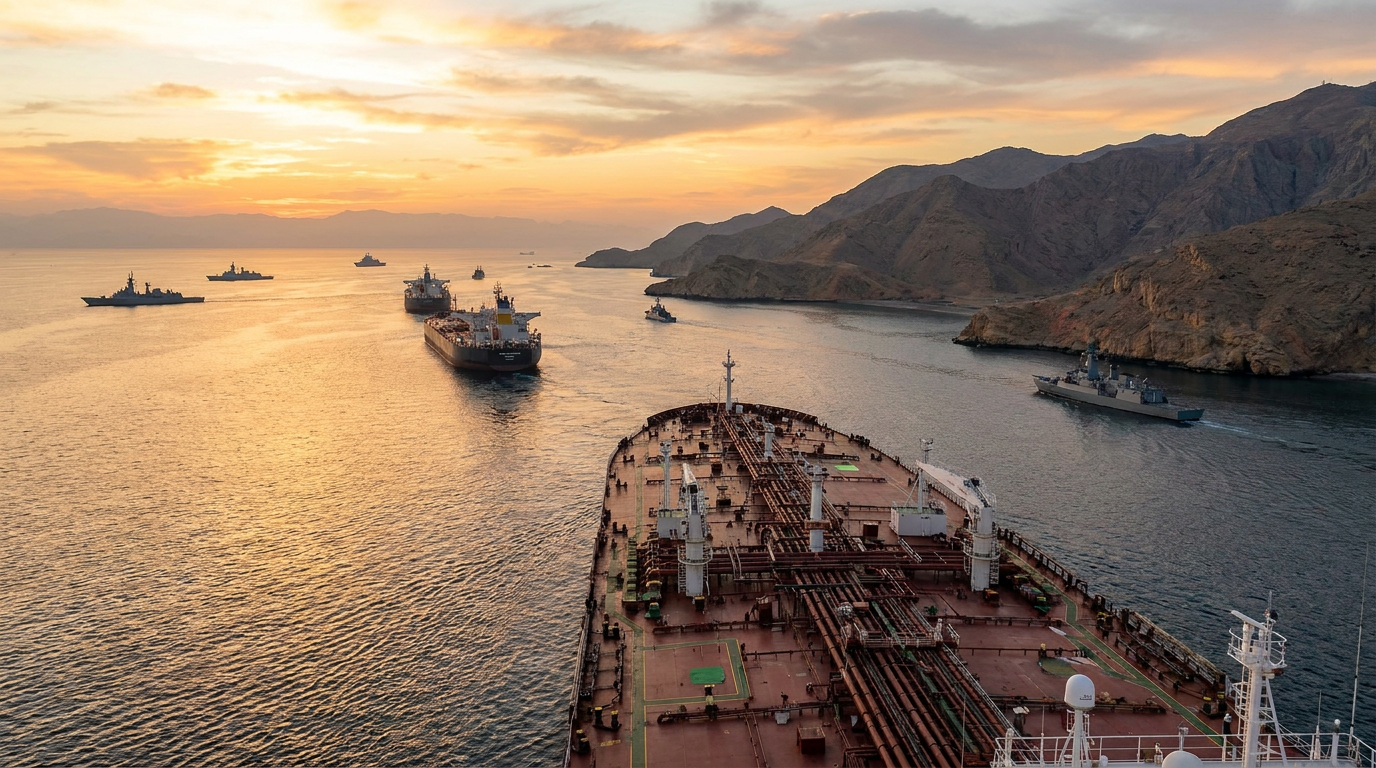
The most immediate and tangible outcome of the Geneva talks is the reopening of the Strait of Hormuz to commercial maritime traffic. This narrow waterway, which connects the Persian Gulf to the Gulf of Oman, is a critical chokepoint through which roughly a fifth of the world's daily oil consumption typically flows. Its closure during the height of the conflict triggered widespread panic in global energy markets, stranded millions of barrels of crude oil, and forced international shipping companies to reroute massive cargo vessels around the Cape of Good Hope. This logistical nightmare added weeks to global transit times, disrupted deeply integrated supply chains, and exponentially increased freight costs for everything from raw industrial materials to consumer electronics.[1][6]
Despite the resumption of shipping, security analysts and geopolitical experts caution against viewing the preliminary deal as a definitive end to the conflict. The agreement is fundamentally structured as a 60-day extension of an existing, informal ceasefire rather than a permanent resolution to the underlying geopolitical disputes. It provides a narrow, highly pressurized window for diplomats to address deeply entrenched disagreements, including the operational status of Iran's heavily fortified nuclear program and the funding mechanisms for its regional proxy networks. If a broader, more durable consensus is not reached within this strict two-month timeframe, both Washington and Tehran retain the forward-deployed military posture necessary to resume immediate, high-intensity hostilities.[1]

The current diplomatic framework represents a significant shift from the initial objectives articulated by the Trump administration at the onset of the military campaign. When US forces launched targeted strikes against Iranian nuclear facilities in February—a move compared by some commentators to the World War II race to stop atomic weapons development—the stated goal was the complete dismantling of Iran's military capabilities and the instigation of a popular uprising. The administration had previously indicated it would only accept an unconditional surrender from Tehran, making the current compromise a notable pivot in strategy.[1][3]
The transition from demanding unconditional surrender to accepting a 60-day truce reflects the complex realities of sustained military engagement in the Persian Gulf. The conflict has proven economically exhausting for the global community and militarily complex, with Iranian forces demonstrating a resilient capacity to disrupt regional infrastructure even while under heavy bombardment. The Geneva deal suggests a pragmatic recognition by Washington that a prolonged, open-ended war carries unacceptable risks for the global economy and domestic political stability, necessitating a diplomatic off-ramp.[1][3]
For the global economy, the cessation of direct military strikes has not translated into immediate financial relief, particularly at the consumer level. Energy markets remain highly sensitive to the underlying geopolitical fragility, pricing in a significant risk premium. Brent crude, the international benchmark for oil prices, continues to hover around $128 per barrel, a level that sustains intense inflationary pressure on importing nations. The expectation that a ceasefire announcement would immediately crash oil prices has been met with the sober reality of physical market constraints and lingering uncertainty.[2][7]

For the global economy, the cessation of direct military strikes has not translated into immediate financial relief, particularly at the consumer level.
The persistence of high energy costs stems from two primary factors: severe physical damage to regional extraction and refining infrastructure, and the exorbitant insurance premiums still required for vessels navigating the Persian Gulf. While the Strait of Hormuz is technically open, maritime insurers continue to classify the area as a high-risk conflict zone. These elevated insurance costs are passed directly down the supply chain, ensuring that the price of gasoline at the pump remains stubbornly high for consumers in the United States, Europe, and Asia, regardless of the diplomatic progress in Geneva.[2]
This sustained energy shock is forcing the hand of central banks worldwide, complicating their efforts to manage post-pandemic economic recoveries. The inflationary wave triggered by the Iran conflict has proven far more resilient than initial forecasts suggested. In a historic and highly indicative move, the Bank of Japan recently raised its short-term interest rates to a 31-year high. This aggressive tightening of monetary policy was explicitly driven by the need to dampen inflationary pressures exacerbated by the Middle Eastern conflict and the resulting surge in import costs.[4]
The Bank of Japan's decision underscores how deeply geopolitical shocks in the Persian Gulf reverberate through the global financial system. While the US Federal Reserve and the Bank of England are currently expected to hold their respective rates steady, the pressure to resume rate hikes is mounting. If energy prices remain elevated throughout the 60-day ceasefire window, central banks in Western economies may be forced to abandon their planned rate cuts, risking broader economic stagnation in order to keep inflation from spiraling out of control.[4]
Beyond the macroeconomic fallout, the diplomatic framework faces severe regional headwinds that threaten to derail the Geneva agreement before the 60-day window expires. A major sticking point is the interconnected nature of Middle Eastern conflicts, where local disputes are deeply intertwined with the broader US-Iran rivalry. The preliminary deal focuses primarily on direct bilateral hostilities, leaving the status of regional proxy engagements dangerously ambiguous and subject to miscalculation by non-state actors.[5][8]

Specifically, the ongoing conflict in the Levant presents a critical vulnerability to the broader detente. Israel's reported reluctance to agree to a parallel ceasefire in Lebanon complicates the US-Iran diplomatic track. Iranian negotiators have historically tied their regional security posture to the actions of their allied networks, including Hezbollah in Lebanon. If hostilities continue to escalate on Israel's northern border, Tehran may face internal pressure to abandon the Geneva framework and resume its broader regional military campaign in solidarity with its proxy forces.[5][8]
The uncertainty is further compounded by the opaque nature of Iran's internal politics following months of intense military pressure and economic isolation. While the theocratic government has agreed to the temporary truce, hardline factions within the Islamic Revolutionary Guard Corps (IRGC) may view the concessions as a sign of weakness. The internal debate in Tehran over whether to use the 60-day window to negotiate a lasting settlement or simply to rebuild degraded military infrastructure remains a critical unknown for Western intelligence agencies monitoring the situation.[1][3]

As the 60-day clock ticks down, international diplomats face the daunting task of converting a fragile military pause into a durable security architecture. The immediate priority is establishing robust verification mechanisms to ensure neither side uses the ceasefire to covertly advance their strategic positions. This includes monitoring maritime traffic in the Strait of Hormuz, assessing the repair of damaged energy infrastructure, and verifying the status of Iran's nuclear facilities, which were the initial catalyst for the February escalation.[1][6]
Ultimately, the Geneva agreement is less a resolution than a highly conditional reprieve. It has successfully pulled the global economy back from the brink of a catastrophic energy shortage, but it leaves the fundamental drivers of the conflict entirely unresolved. For policymakers, market analysts, and consumers worldwide, the next two months will be defined by a tense waiting game, as the structural stability of the Middle East hangs on the outcome of closed-door negotiations and the fragile discipline of regional military forces.[1][2][7]
How we got here
Late Feb 2026
US launches targeted military strikes against Iranian nuclear facilities, sharply escalating the conflict.
March 2026
The Strait of Hormuz is effectively closed to commercial traffic, sending global energy markets into turmoil.
May 2026
Informal, temporary ceasefires begin to take hold as economic pressures mount globally.
June 16, 2026
A preliminary agreement is reached in Geneva, extending the ceasefire for 60 days and reopening the Strait of Hormuz.
Viewpoints in depth
US Administration's View
Focuses on the success of military pressure in forcing Iran to the table and securing the Strait of Hormuz.
Proponents of the administration's strategy argue that the initial military strikes in February successfully degraded Iran's nuclear capabilities and demonstrated American resolve. By transitioning from demands for unconditional surrender to a pragmatic 60-day truce, they contend the US has secured its primary economic objective—reopening the Strait of Hormuz—without committing to a protracted, unwinnable ground war in the Middle East. This view frames the ceasefire as a tactical victory that places the burden of compliance squarely on Tehran.
Skeptical Security Analysts
Argues the 60-day truce is a tactical error that allows the Iranian regime to regroup and repair infrastructure.
Defense analysts and skeptical geopolitical observers warn that the 60-day window primarily benefits Iran. They argue that the pause in US airstrikes provides the Islamic Revolutionary Guard Corps (IRGC) with critical time to repair damaged military infrastructure, disperse surviving assets to harder-to-hit locations, and coordinate with regional proxy forces. From this perspective, the Geneva agreement is not a step toward peace, but a dangerous concession that squanders the military advantage the US had built over the previous four months.
Global Energy Markets
Views the deal through the lens of market stability, emphasizing the necessity of preventing a global recession.
For economic pragmatists and market analysts, the geopolitical nuances of the deal are secondary to the immediate need for macroeconomic stability. They emphasize that the global economy simply could not sustain a prolonged closure of the Strait of Hormuz. With Brent crude already hovering at $128 per barrel and central banks like the Bank of Japan taking historic measures to curb inflation, this camp argues that any diplomatic off-ramp—however flawed or temporary—was absolutely necessary to prevent a severe, conflict-driven global recession.
Regional Allies (Israel & Gulf States)
Expresses deep concern that bilateral US-Iran talks ignore the ongoing proxy conflicts threatening their borders.
Middle Eastern allies view the bilateral Geneva talks with significant trepidation. They argue that focusing exclusively on direct US-Iran hostilities ignores the broader regional threat posed by Iran's proxy networks in Lebanon, Syria, and Yemen. For nations like Israel, which remains entangled in border conflicts with Hezbollah, a US-Iran detente that does not explicitly dismantle these proxy forces is viewed as incomplete and potentially destabilizing, leaving allied nations to manage the regional fallout alone.
What we don't know
- Whether Iran will use the 60-day window to negotiate a lasting settlement or to rebuild its degraded military infrastructure.
- How quickly commercial shipping insurance premiums will normalize to allow for a drop in global gas prices.
- If regional proxy forces in Lebanon and Yemen will abide by the terms of the bilateral US-Iran ceasefire.
Key terms
- Strait of Hormuz
- A narrow, strategically vital waterway between the Persian Gulf and the Gulf of Oman, through which roughly 20% of the world's daily oil consumption passes.
- Brent crude
- A major trading classification of sweet light crude oil that serves as the primary benchmark price for purchases of oil worldwide.
- Proxy network
- Local militia groups and political factions funded and directed by a larger foreign power to advance its interests without direct military engagement.
Frequently asked
Is the war between the US and Iran officially over?
No. The current agreement is a 60-day extension of a temporary ceasefire, not a permanent peace treaty. If negotiations fail, hostilities could resume.
Why haven't gas prices dropped if the Strait of Hormuz is open?
Prices remain high due to severe damage to regional energy infrastructure and exorbitant insurance premiums for ships navigating what is still considered a high-risk conflict zone.
What happens after the 60-day ceasefire expires?
If a broader diplomatic consensus is not reached within the two-month window, both sides retain the military capability and forward-deployed posture to resume direct hostilities immediately.
Sources
Source coverage
8 outlets
4 viewpoints surfaced







[1]The GuardianSkeptical Security Analysts
So is the Iran war with Iran over? In a word: no
Read on The Guardian →[2]The New York TimesEconomic Pragmatists
Gas Prices May Remain High Despite US-Iran Deal
Read on The New York Times →[3]Fox NewsUS Administration & Allies
MORNING GLORY: Trump and the radical theocrats of Iran
Read on Fox News →Bank of Japan raises interest rates to 31-year high amid Iran war inflation pressures
Read on The Guardian →[5]NPRRegional Middle Eastern Actors
Morning news brief
Read on NPR →[6]ReutersEconomic Pragmatists
Commercial shipping cautiously resumes in Strait of Hormuz amid 60-day truce
Read on Reuters →[7]BloombergEconomic Pragmatists
Brent crude holds near $128 as markets weigh fragile Geneva ceasefire
Read on Bloomberg →[8]Al JazeeraSkeptical Security Analysts
Regional allies express skepticism over US-Iran preliminary agreement
Read on Al Jazeera →

More in news politics
See all 7 stories →Election Integrity
How Cryptographic Provenance and Invisible Watermarks Are Securing the 2026 Elections
0 sources

Information Science
The Science of Debunking: Which Fact-Checking Methods Actually Work
0 sources

Drone Security
FBI Thwarts Explosive-Drone Plot Targeting White House UFC Event
0 sources
Nuclear Diplomacy
Iran Enters 60-Day Nuclear Talks Claiming Victory Despite Military Setbacks
0 sources
Every angle. Every day.
Get news politics stories with full source coverage and perspective breakdowns delivered to your inbox.