
How Anime Conquered the Global Box Office
Driven by canonical storytelling and Sony's aggressive global distribution strategy, anime feature films have evolved from niche fan events into billion-dollar theatrical juggernauts.
By Factlen Editorial Team
- Studio Executives
- Anime is a scalable, global IP engine that can rival legacy Hollywood franchises.
- Box Office Analysts
- Anime provides a vital, highly engaged audience for a struggling theatrical sector.
- Streaming Audiences
- Theatrical windowing disrupts the communal, accessible nature of anime fandom.
What's not represented
- · Independent theater owners
- · Non-franchise anime directors
Why this matters
The explosion of anime at the global box office is reshaping how the entertainment industry funds and distributes animation. For audiences, it means the biggest moments of their favorite shows are now premium theatrical events, fundamentally changing how stories are consumed.
Key points
- Anime films have transitioned from non-canon side stories to essential, canonical chapters of television series.
- Demon Slayer: Infinity Castle became the highest-grossing Japanese film in history, earning $790.5 million globally in 2025.
- Sony's vertical integration, including its $1.18 billion acquisition of Crunchyroll, has created a massive global distribution pipeline.
- Theatrical exclusivity has frustrated some streaming-only fans who must wait months to follow the main storyline.
For decades, anime theatrical releases followed a predictable, low-stakes formula that rarely captured the attention of the broader public. Animation studios would routinely churn out "recap films"—heavily condensed versions of existing television seasons—or standalone side adventures that had absolutely no bearing on the main storyline. They were niche offerings, designed primarily to extract a few extra dollars from the most dedicated domestic fans while the animation teams prepared the next television season. Today, that model has been entirely inverted. Anime features are no longer alternative programming relegated to limited weekend screenings; they are global box office juggernauts that routinely outperform legacy Hollywood franchises. This shift has transformed the medium from a subcultural export into a central pillar of modern cinema.[2]
The catalyst for this unprecedented transformation was a fundamental shift in narrative strategy: bringing canonical, must-watch story arcs directly to the big screen. The 2020 release of Demon Slayer: Kimetsu no Yaiba – The Movie: Mugen Train proved that adapting a core, sequential chapter of a television series into a cinematic event could drive massive, urgent turnout. Rather than offering a skippable side quest, the studio made the film essential viewing for anyone who wanted to understand the next season of the show. That blueprint has now become the industry standard, transforming casual viewers into reliable moviegoers who must buy a ticket to keep up with their favorite characters and ongoing plotlines.[2]
The financial results of this canonical adaptation strategy reached a historic zenith in 2025. Demon Slayer: Infinity Castle, the highly anticipated continuation of the sword-fighting fantasy franchise, grossed an estimated $790.5 million worldwide. It shattered nearly every box office threshold for animated releases, officially becoming the highest-grossing Japanese film in history. By treating the climax of a television show as a global theatrical event, the franchise proved that anime can command the exact same scale, marketing coordination, and international revenue as a tentpole Marvel blockbuster. It signaled to the industry that the ceiling for animated features is far higher than previously imagined.[1][5]

Crucially, this phenomenon is not limited to a single breakout franchise. In late 2025, Chainsaw Man - The Movie: Reze Arc opened at number one in United States theaters, grossing over $108 million globally in its opening window and beating out domestic superhero releases. Similarly, Haikyuu!! The Dumpster Battle, a cinematic continuation of a beloved volleyball anime, generated massive domestic and international returns, briefly overtaking the Demon Slayer franchise at the Japanese box office. These films are consistently beating legacy American franchises, filling the void left by superhero fatigue and offering theaters a highly reliable stream of ticket sales from a deeply engaged, younger demographic.[2][4][6]
Behind this rapid global expansion is a deliberate, vertically integrated corporate strategy, spearheaded largely by Sony Group Corporation. Over the last five years, Sony has aggressively consolidated its anime footprint to capture revenue at every stage of the lifecycle. The company owns Aniplex, a major anime production studio, and purchased the global streaming platform Crunchyroll for $1.18 billion in 2020. This unique infrastructure allows Sony to control the entire pipeline—from funding the initial animation to distributing the film in theaters worldwide, and finally hosting it exclusively on their proprietary streaming service. It is a closed-loop ecosystem designed for maximum profitability.[3][4][5]
Behind this rapid global expansion is a deliberate, vertically integrated corporate strategy, spearheaded largely by Sony Group Corporation.
Sony executives are explicit about their ambitions for the medium. Toshimoto Mitomo, Sony's Chief Strategy Officer, recently compared the company's current position in the anime industry to the "take-off phase" of the original PlayStation console in the 1990s. Just as the PlayStation transformed video games from a niche hobby into a mainstream global entertainment pillar, Sony intends to use its distribution muscle to make anime a cornerstone of its broader entertainment portfolio. This aggressive push into theatrical anime has already begun offsetting financial losses in Sony's traditional live-action film and visual effects divisions, proving the medium's immense corporate value.[3][5]

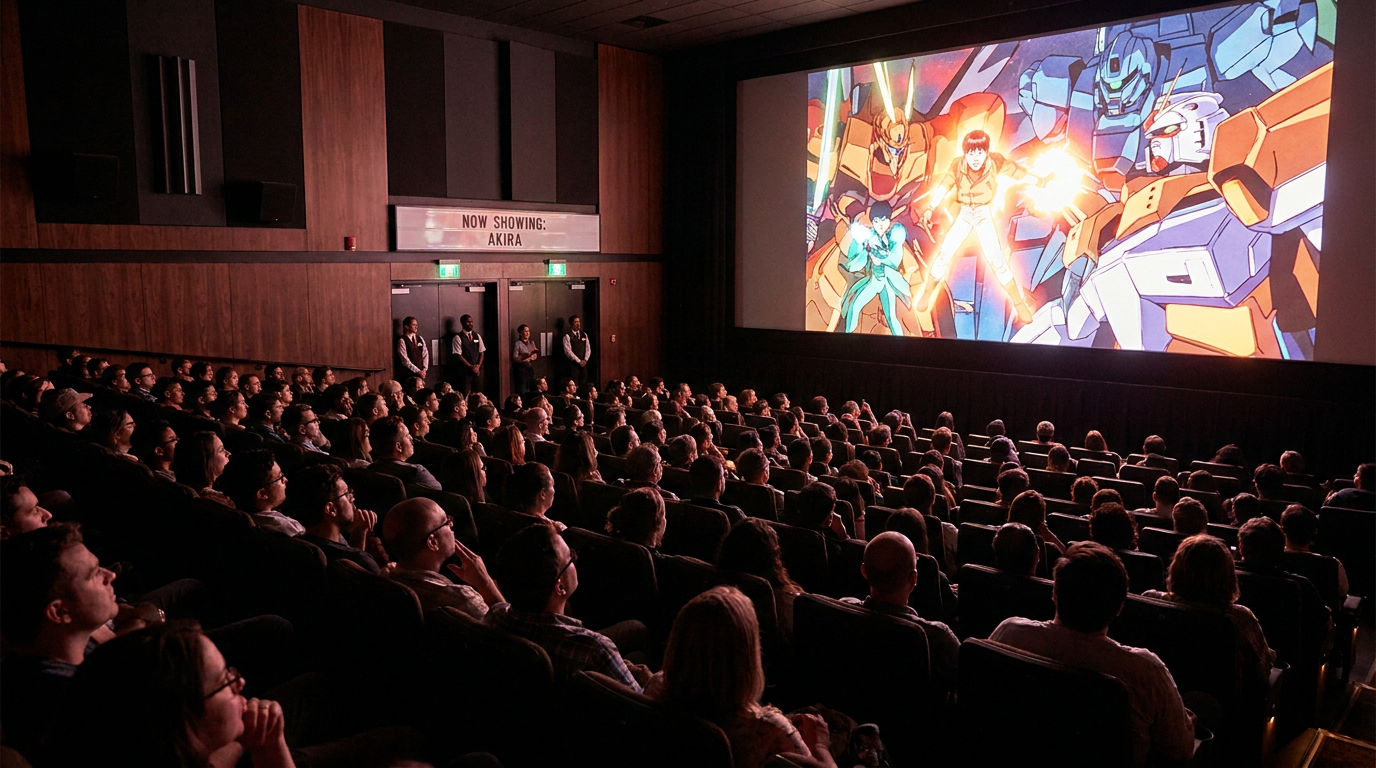
To convert this box office momentum into a regular consumer habit, distributors are rapidly expanding their theatrical footprints and event programming. Crunchyroll has launched initiatives like "Anime Nights," a monthly theatrical program designed to keep audiences returning to cinemas even when a massive blockbuster isn't on the marquee. By partnering directly with major theater chains globally, they are ensuring that anime films receive premium IMAX and Dolby screens, elevating the medium from a specialized, limited-run screening to a premium cinematic experience. This strategy normalizes anime as a permanent fixture of the local multiplex.[1]
However, the "canon movie" strategy introduces significant new friction for the audience. While box office analysts and theater owners celebrate the reliable revenue, traditional anime fans have expressed mounting frustration over the fragmentation of television seasons. Because these films are essential to the overarching plot, viewers who cannot access a theater—or who simply prefer the convenience of streaming—are forced to wait months for the movie to appear on platforms like Crunchyroll or Netflix. This creates a staggered viewing experience that can disrupt the communal, weekly conversation that typically drives anime fandom, leading to concerns that the industry is prioritizing box office premiums over audience accessibility.[7]

Furthermore, there is lingering uncertainty among industry analysts about the ultimate limits of this theatrical boom. The current wave of box office dominance is heavily reliant on established "shonen" properties—action-oriented series aimed at young demographics, backed by years of manga sales and television momentum. It remains to be seen whether original anime films without a pre-existing television fanbase can achieve the same global scale, or if the billion-dollar ceiling is strictly reserved for legacy intellectual property. If the bubble is tied exclusively to a handful of mega-franchises, the industry could face a contraction once those specific stories conclude.[1][2]
Despite these structural questions, the underlying economics of the anime industry are undeniable. The global anime market is now estimated to be worth over $23 billion, with more than half of that revenue generated outside of Japan. As Hollywood continues to recalibrate its approach to theatrical releases amid shifting consumer habits, Japanese animation has provided a vital, stabilizing force for global cinemas. By successfully bridging the gap between serialized television and event cinema, anime has proven that the future of the blockbuster may very well be drawn by hand.[7]
How we got here
2016
Makoto Shinkai's 'Your Name' becomes a massive global hit, signaling the international box office potential of anime.
2020
Sony acquires Crunchyroll for $1.18 billion; 'Demon Slayer: Mugen Train' proves the viability of canonical theatrical adaptations.
2024
'Haikyuu!! The Dumpster Battle' dominates the Japanese box office, further cementing the trend of TV-to-film continuations.
2025
'Demon Slayer: Infinity Castle' grosses nearly $800 million globally, becoming the highest-grossing Japanese film in history.
Viewpoints in depth
Studio Executives' view
Anime is a scalable, global IP engine that can rival legacy Hollywood franchises.
For conglomerates like Sony, anime is no longer a niche sub-division; it is the blueprint for their future entertainment empire. Executives view the medium as a highly efficient intellectual property engine, capable of generating massive theatrical returns, streaming subscriptions, and merchandising revenue simultaneously. By controlling both the production studios and the distribution platforms, they can orchestrate global release events that rival the scale of traditional Hollywood blockbusters, offsetting volatility in other sectors like video games or live-action film.
Box Office Analysts' view
Anime provides a vital, highly engaged audience for a struggling theatrical sector.
Market analysts see Japanese animation as a crucial lifeline for the theatrical industry. While traditional superhero franchises have experienced diminishing returns and unpredictable audience turnout, anime films boast a deeply engaged, built-in fanbase that treats theatrical releases as mandatory viewing. Analysts note that these films often over-perform in their opening weekends and sustain momentum through premium formats like IMAX, providing theaters with reliable revenue during otherwise slow cinematic corridors.
Streaming Audiences' view
Theatrical windowing disrupts the communal, accessible nature of anime fandom.
While the box office numbers are celebrated by executives, a vocal segment of the anime fandom views the theatrical shift with skepticism. Because these films adapt essential, canonical story arcs, fans who rely on streaming services are left behind, forced to dodge spoilers for months until the movie hits digital platforms. This staggered access disrupts the weekly, communal viewing experience that helped popularize anime in the first place, leading to concerns that the industry is prioritizing box office premiums over audience accessibility.
What we don't know
- Whether original anime films without a pre-existing television fanbase can achieve the same billion-dollar box office scale.
- How streaming platforms will adapt if studios continue to withhold the most crucial story arcs for exclusive theatrical windows.
Key terms
- Canon
- Events and storylines that are officially part of the main, overarching narrative of a series, rather than standalone or filler content.
- Shonen
- A demographic of Japanese manga and anime primarily aimed at young teen males, typically characterized by high-action, serialized storytelling.
- Recap Film
- A movie that condenses the events of a previously aired television season into a single feature, often with minor new animation.
- Vertical Integration
- A business strategy where a single company owns multiple stages of production and distribution, such as Sony owning both the animation studios and the streaming platforms.
Frequently asked
Why are anime movies suddenly making so much money?
Studios shifted from making non-canon side stories to adapting essential, canonical chapters of popular television shows, forcing fans to buy a ticket to follow the plot.
What is the highest-grossing anime film?
As of 2025, Demon Slayer: Infinity Castle holds the record, grossing an estimated $790.5 million worldwide.
Does Sony own Crunchyroll?
Yes, Sony purchased the anime streaming platform Crunchyroll in 2020 for $1.18 billion to consolidate its global distribution pipeline.
Are these movies available on streaming?
Eventually, yes. However, they are given exclusive theatrical windows first, meaning streaming audiences must wait months to see canonical story developments.
Sources
Source coverage
7 outlets
3 viewpoints surfaced







[1]Outlook RespawnBox Office Analysts
2025 Highest Grossing Anime Films Worldwide Box Office
Read on Outlook Respawn →[2]The Japan TimesBox Office Analysts
Anime isn't competing with Hollywood — it's beating it
Read on The Japan Times →[3]GizmodoStudio Executives
Sony Wants Its Anime Boom to Be as Big as the PlayStation 2
Read on Gizmodo →[4]ForbesStudio Executives
Anime Succeeds At Box Office: 'Chainsaw Man' Latest Hit After 'Demon Slayer'
Read on Forbes →[5]Cartoon BrewStudio Executives
Anime Growth Helps Offset Sony Losses From Pixomondo Shutdown, Bungie Troubles
Read on Cartoon Brew →[6]ScreenRantStreaming Audiences
A Beloved Shonen Anime Beats Demon Slayer: Hashira Training at the Japanese Box Office
Read on ScreenRant →[7]MediumStreaming Audiences
Anime — The Surprise Genre Quietly Dominating Netflix and Powering a $200B Global Boom
Read on Medium →

More in entertainment
See all 5 stories →Physical Media Revival
The Physical Music Revival: How Gen Z and the 'Superfan' Economy Are Reshaping Artist Revenue in 2026
0 sources

Box Office
Original Cinema Triumphs at the Summer Box Office as 'Disclosure Day' and 'Obsession' Shatter Records
0 sources
Parkinson's Research
Michael J. Fox Foundation Crosses $3 Billion in Research Funding, Launching New Precision Medicine Era for Parkinson's
0 sources

Every angle. Every day.
Get entertainment stories with full source coverage and perspective breakdowns delivered to your inbox.