
How Solid-State Batteries Will Transform Electric Vehicles
Solid-state batteries replace flammable liquid electrolytes with solid materials, promising to double EV range, slash charging times, and eliminate fire risks. While mass production remains a challenge, recent breakthroughs suggest commercialization is closer than ever.
By Factlen Editorial Team
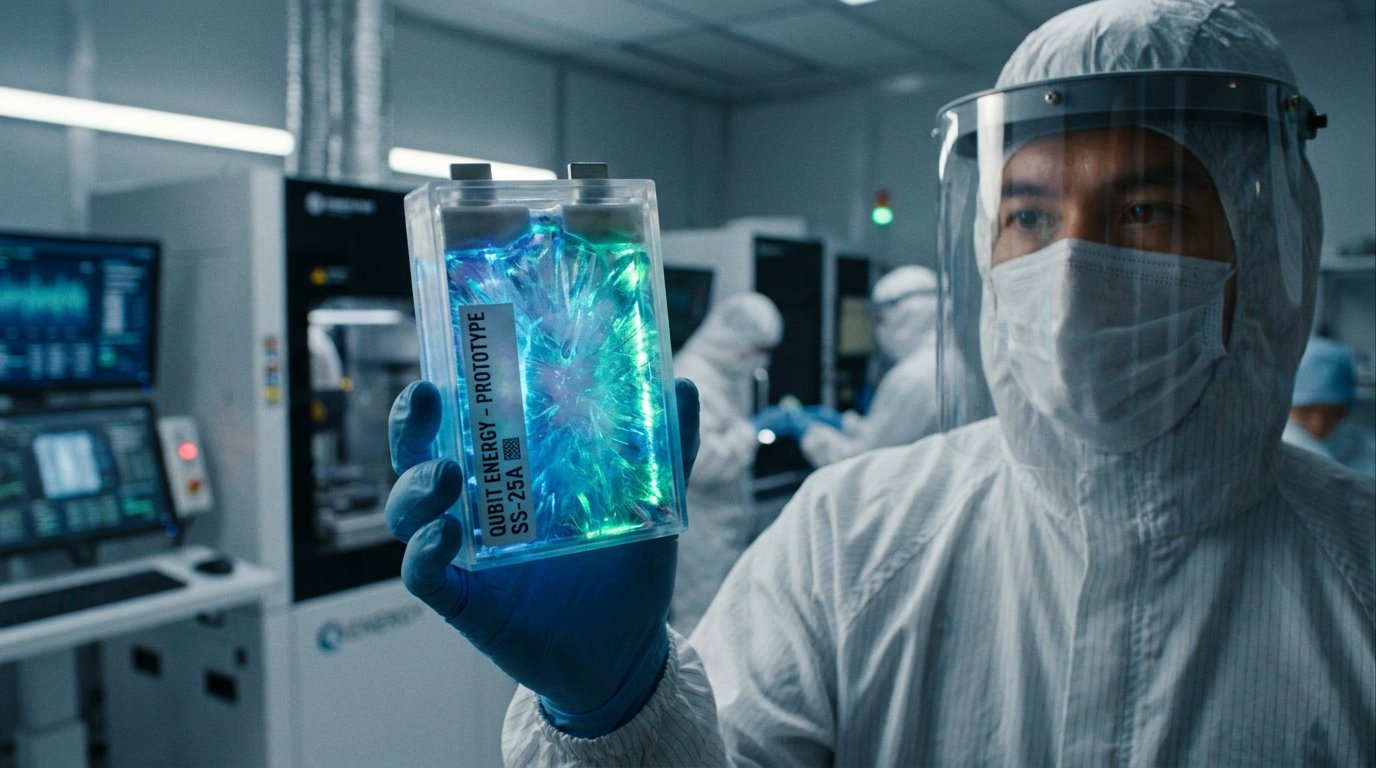
- Battery Engineers & Researchers
- Focuses on the fundamental chemistry, the challenge of dendrite formation, and the physical limits of energy density.
- Automakers & Commercializers
- Prioritizes scaling production, securing supply chains, and bringing the technology to market ahead of competitors.
- Consumer & Industry Analysts
- Evaluates the technology based on its potential to eliminate range anxiety, reduce charging times, and lower long-term ownership costs.
What's not represented
- · Raw Material Miners
- · Oil & Gas Industry
Why this matters
Solid-state batteries promise to eliminate the biggest compromises of electric vehicle ownership—range anxiety, long charging times, and fire risks. By doubling energy density and slashing charge times to 15 minutes, this technology could finally make EVs as convenient as gas-powered cars.
Key points
- Solid-state batteries replace flammable liquid electrolytes with solid ceramics, sulfides, or polymers.
- The technology could double EV range to 800 miles without increasing battery size.
- Charging times could drop to 10-15 minutes by allowing higher electrical currents safely.
- Manufacturing at scale remains the primary hurdle, with dendrite formation posing engineering challenges.
- Automakers like Toyota and startups like QuantumScape target commercial launches between 2026 and 2028.
Electric vehicles have conquered the early adopter market, but mainstream consumers still harbor three stubborn reservations: range anxiety, long charging times, and the rare but highly publicized risk of battery fires. For decades, the automotive industry has relied on lithium-ion batteries to power the EV revolution. While this technology has improved incrementally, it is approaching its theoretical limits. To truly replace the internal combustion engine, the industry needs a fundamental leap forward. Enter the solid-state battery, a technology widely considered the "Holy Grail" of energy storage.[1][7]
To understand why solid-state batteries are so revolutionary, one must first understand the limitations of the technology they aim to replace. In a conventional lithium-ion battery, energy is stored and released as lithium ions move back and forth between a positive electrode, known as the cathode, and a negative electrode, known as the anode. These ions travel through a liquid electrolyte—a highly conductive but volatile and flammable organic solvent that permeates the physical separator between the two sides. While this liquid medium is excellent at shuttling ions quickly, its chemical instability creates a hard ceiling on how much energy the battery can safely hold.[1][4][5]
This liquid electrolyte is the Achilles' heel of modern electric vehicles. Because the organic solvent is inherently flammable, lithium-ion battery packs require heavy, complex thermal management systems and thick protective armor to prevent thermal runaway in the event of a crash, a puncture, or severe overheating. Furthermore, the liquid medium limits how fast the battery can be charged. If a driver attempts to push too much electrical current into the battery too quickly, the liquid can overheat, degrade the internal components, or even risk catching fire. This physical limitation is why fast-charging a modern EV still takes significantly longer than filling a gas tank.[1][3][5]
Solid-state batteries solve this fundamental bottleneck by replacing the liquid solvent entirely with a solid material—typically a specialized advanced ceramic, a glass compound, a sulfide, or a solid polymer. This solid electrolyte acts as both the conductive highway for the lithium ions and a rigid physical separator between the anode and the cathode. By eliminating the flammable liquid from the equation, the battery becomes inherently safer. It practically eliminates the risk of catastrophic fires or explosions, even if the battery cell is punctured, crushed, or exposed to extreme temperatures during an accident.[1][3][4][5]

But safety is only the beginning of the solid-state value proposition. The rigid, stable structure of a solid electrolyte unlocks a massive upgrade in the battery's energy density. In traditional lithium-ion batteries, the anode is typically made of graphite, a heavy and bulky carbon material that is necessary to safely absorb and house the lithium ions during charging. Because a solid electrolyte is physically strong enough to block unwanted chemical reactions and structural degradation, engineers can completely remove the bulky graphite and replace it with a pure lithium metal anode.[1][4]
A pure lithium metal anode can store significantly more energy in a much smaller physical footprint. According to battery researchers and early prototype testing, solid-state cells can achieve an energy density two to two-and-a-half times higher than today's absolute best lithium-ion batteries. For the everyday consumer, this translates directly to driving range. Vehicles that currently max out at 300 miles per charge could easily surpass 600 to 800 miles on a single charge, all without increasing the physical size, weight, or footprint of the vehicle's battery pack.[4][6]
Charging speeds are poised for a similar, paradigm-shifting revolution. The liquid electrolytes in today's electric vehicles become highly unstable when subjected to ultra-fast charging currents, which is why a typical fast-charge session still takes 30 to 40 minutes to reach an 80 percent state of charge. Solid-state materials, however, can handle extreme electrical currents without overheating or degrading. Developers project that solid-state EVs will be able to safely charge from zero to 80 percent in just 10 to 15 minutes, finally matching the speed and convenience of a traditional gas station visit.[1][6]
Charging speeds are poised for a similar, paradigm-shifting revolution.
Longevity and durability represent another major advantage. Traditional batteries inevitably degrade over time as the liquid electrolyte chemically reacts with the electrodes, slowly eating away at the battery's total capacity with every charge cycle. Solid electrolytes, by contrast, are far more chemically stable. Early laboratory testing suggests that solid-state cells can endure thousands of rapid charge cycles with minimal capacity degradation. Toyota, a pioneer in the solid-state space, has stated that its architecture is being designed for an astonishing lifespan of up to 40 years, which would fundamentally alter the economics of vehicle ownership and the used car market.[4][6]

If the technology is so vastly superior across every metric, why aren't solid-state electric vehicles dominating the roads today? The primary hurdle is the immense difficulty of manufacturing these cells at a global scale. Building a perfect, coin-sized solid-state battery in a pristine, highly controlled laboratory environment is one thing; mass-producing millions of large-format cells reliably, quickly, and affordably is another challenge entirely. The automotive and tech industries have collectively burned through billions of dollars in research and development trying to transition these breakthroughs from lab benches to factory floors.[3][4]
One of the most persistent engineering challenges in this transition is the formation of dendrites. When a battery charges, lithium ions can clump together and form microscopic, needle-like metallic structures called dendrites. In liquid batteries, these dendrites can grow long enough to pierce the separator and cause a catastrophic short circuit. While solid electrolytes are specifically designed to be physically tough enough to block dendrite growth, researchers have found that under extreme pressure and repeated cycling, dendrites can still find microscopic cracks or grain boundaries in ceramic or sulfide materials, eventually causing the cell to fail.[4][7]
Different companies are betting on different chemical solutions to solve this durability puzzle. Sulfide-based solid electrolytes offer excellent ionic conductivity, but they react poorly with moisture in the air, requiring highly controlled, moisture-free, and expensive manufacturing environments. Oxide-based ceramics are highly stable and safe but can be brittle, risking microscopic fractures during the physical expansion and contraction that occurs during charging cycles. Polymer-based solid electrolytes are much easier and cheaper to manufacture using existing factory equipment, but they often require elevated operating temperatures to conduct ions efficiently.[3][6]
Despite these formidable engineering hurdles, the race to commercialization is accelerating rapidly across the globe. Toyota currently holds the largest patent portfolio in the solid-state space and has been quietly developing the technology for over a decade. The Japanese automaker is targeting 2027 or 2028 for the mass-market introduction of its first solid-state electric vehicles, focusing heavily on sulfide-based electrolytes. Nissan is also building a pilot manufacturing plant in Japan, aiming for a commercial launch of its own in-house solid-state technology by 2028.[2][6]

In the United States, well-funded startups backed by major legacy automakers are making significant strides toward production. QuantumScape, backed heavily by Volkswagen, recently inaugurated its 'Eagle Line' pilot production facility in California. The company has demonstrated prototype cells capable of retaining high capacity over hundreds of aggressive fast-charge cycles. Meanwhile, Factorial Energy has partnered with Karma Automotive to launch a solid-state production program for passenger vehicles, signaling that American firms are pushing hard to ensure they are not left behind in the next generation of battery tech.[2][6]
Chinese manufacturers are aggressively pushing the timeline forward, eager to maintain their current dominance in the global battery supply chain. Greater Bay Technology, a startup backed by Chinese automaker GAC, claims it will achieve scalable production of a composite solid-state battery by the end of 2026. Chery Automobile is also scheduled to conduct pilot testing of solid-state vehicles in 2026. These rapid developments signal that the technology is finally crossing the critical threshold from theoretical academic research to practical, road-ready application.[2][3]
When solid-state batteries do finally arrive in showrooms, they will not instantly replace all existing lithium-ion cells overnight. Industry analysts predict a tiered, multi-chemistry market for the next decade. Because early solid-state batteries will be complex and expensive to produce, they will almost certainly debut exclusively in premium, high-performance luxury vehicles where buyers are willing to pay a significant premium for extreme range, ultra-fast charging, and cutting-edge technology. This top-down approach mirrors the early days of the EV market, allowing automakers to recoup their massive research and development costs before scaling the technology down to cheaper models.[2][7]

Meanwhile, mid-range and budget electric vehicles will continue to rely on highly refined versions of current technology, such as lithium-iron-phosphate (LFP) batteries. LFP cells are incredibly cheap to produce, use abundant materials, and offer more than adequate range for daily commuting and city driving. Over time, however, as manufacturing techniques improve, defect rates drop, and economies of scale take hold, the cost of solid-state cells is expected to plummet, eventually trickling down to become the standard power source for the global mass market.[2][7]
The transition to solid-state batteries represents the most significant leap in automotive technology since the invention of the lithium-ion cell itself. By definitively solving the fundamental bottlenecks of range anxiety, slow charging speeds, and safety concerns, solid-state technology promises to remove the final psychological and practical barriers to global EV adoption. As automakers and tech startups race to conquer the final manufacturing hurdles, the dream of a truly post-combustion transportation network is finally coming into sharp, undeniable focus. The next few years will determine which companies lead this revolution, but the ultimate winner will be the consumer, who will soon have access to vehicles that are cleaner, safer, and vastly more capable than anything on the road today.[1][6][7]
How we got here
19th Century
Solid electrolytes are first discovered, but practical applications remain elusive due to material limitations.
Late 20th Century
Renewed interest in solid-state technology emerges for small electronics and medical devices like pacemakers.
2020
QuantumScape announces major breakthroughs in solid-state lithium-metal cells, drawing massive investments.
2024
QuantumScape inaugurates its "Eagle Line" pilot production facility in California.
2026
Automakers like Chery and GAC begin pilot testing solid-state cells in prototype vehicles.
2027–2028
Toyota and Nissan target the launch of their first commercial EVs equipped with solid-state batteries.
Viewpoints in depth
Battery Engineers & Researchers
Focuses on the fundamental chemistry, the challenge of dendrite formation, and the physical limits of energy density.
For materials scientists, the solid-state transition is a battle against microscopic physics. While the theoretical benefits of pure lithium metal anodes are undeniable, researchers remain hyper-focused on the mechanical stresses of charging. They point out that solid electrolytes must maintain perfect contact with the electrodes as they expand and contract. If microscopic gaps form, or if lithium dendrites manage to penetrate the ceramic layers under high pressure, the battery fails. For this camp, the timeline to commercialization is dictated entirely by solving these atomic-level durability issues, not by marketing schedules.
Automakers & Commercializers
Prioritizes scaling production, securing supply chains, and bringing the technology to market ahead of competitors.
Legacy automakers and well-funded startups view solid-state technology as the ultimate competitive moat. Companies like Toyota and QuantumScape are pouring billions into pilot production lines, betting that whoever masters scalable manufacturing first will dominate the next century of transportation. This camp acknowledges the chemical challenges but believes that engineering workarounds—such as applying external pressure to the battery packs or using composite polymer-ceramic blends—will bridge the gap between lab prototypes and factory-floor reality.
Consumer & Industry Analysts
Evaluates the technology based on its potential to eliminate range anxiety, reduce charging times, and lower long-term ownership costs.
Market analysts and consumer advocates see solid-state batteries as the catalyst that will finally push EV adoption past the tipping point. They argue that the current compromises of EV ownership—planning road trips around 40-minute charging stops and worrying about battery degradation—are unacceptable to the average car buyer. By delivering a product that mimics the convenience of a gas station visit while offering double the range, this camp believes solid-state technology will effectively render the internal combustion engine obsolete.
What we don't know
- Exactly how much the first generation of solid-state EVs will cost consumers.
- Whether sulfide, oxide, or polymer-based electrolytes will become the dominant industry standard.
- How quickly global supply chains can adapt to the new material requirements of pure lithium anodes.
Key terms
- Solid Electrolyte
- A solid material, such as a ceramic or polymer, that conducts ions between the anode and cathode, replacing flammable liquids.
- Dendrites
- Microscopic, needle-like lithium structures that can grow inside a battery during charging, potentially piercing the separator and causing short circuits.
- Energy Density
- The amount of energy a battery can store relative to its physical weight or volume.
- Anode
- The negative electrode of a battery, where current flows in from the outside circuit during discharge.
- Cathode
- The positive electrode of a battery, where current flows out during discharge.
Frequently asked
Will solid-state batteries make EVs cheaper?
Initially, they will likely be more expensive and reserved for premium vehicles. However, as manufacturing scales up over the next decade, costs are expected to drop significantly.
Are solid-state batteries completely fireproof?
While they eliminate the highly flammable liquid electrolyte found in traditional batteries—making them vastly safer—extreme conditions or severe physical damage could still pose some risks.
When can I buy a car with a solid-state battery?
Pilot programs and premium models are expected to launch between 2026 and 2028, with broader mass-market adoption likely occurring in the early 2030s.
Sources
Source coverage
7 outlets
3 viewpoints surfaced







[1]Car and DriverConsumer & Industry Analysts
What Are Solid-State Batteries, and Why Do They Matter for Electric Vehicles?
Read on Car and Driver →[2]CleanTechnicaAutomakers & Commercializers
Solid-State Batteries For EVs: Progress & Timelines
Read on CleanTechnica →[3]AutoblogAutomakers & Commercializers
Is 2026 the year EVs get fire-proof batteries?
Read on Autoblog →[4]WikipediaBattery Engineers & Researchers
Solid-state battery
Read on Wikipedia →[5]EcoFlowBattery Engineers & Researchers
Solid State vs Lithium-Ion Batteries
Read on EcoFlow →[6]Future Green TechAutomakers & Commercializers
Toyota, Samsung SDI, and QuantumScape are racing to commercialize solid-state batteries
Read on Future Green Tech →[7]Factlen Editorial TeamConsumer & Industry Analysts
Synthesis by Factlen editorial team
Read on Factlen Editorial Team →
Every angle. Every day.
Get guides stories with full source coverage and perspective breakdowns delivered to your inbox.