
How Accurate Are Sleep Trackers? The 2026 Evidence Review
A wave of new systematic reviews and clinical validation studies compares commercial sleep trackers like Oura, Whoop, and Apple Watch against medical-grade polysomnography. While overall sleep detection is highly accurate, precise sleep staging and age-related reliability remain mixed.
By Factlen Editorial Team
- Consumer Tech Reviewers
- Analysts focused on user experience, actionable coaching, and relative accuracy.
- Clinical Sleep Researchers
- Medical professionals who view polysomnography as the only definitive diagnostic tool.
- Quantified Self Advocates
- Athletes and biohackers who use continuous data to optimize daily performance.
What's not represented
- · Algorithm developers and data scientists who design the proprietary sleep staging models
- · Patients with diagnosed sleep disorders who attempt to use consumer wearables for symptom management
Why this matters
Millions of consumers use wearables to make decisions about their health, recovery, and daily readiness. Understanding exactly which metrics are scientifically validated—and which are educated guesses—helps users avoid unnecessary anxiety and get the most value from their devices.
Key points
- Consumer sleep trackers demonstrate 91% to 95% accuracy for basic sleep and wake detection compared to clinical sleep studies.
- Wearables consistently underestimate REM sleep by 4 to 6 minutes and struggle to detect brief micro-awakenings.
- Accuracy meaningfully decreases in older adults, with devices sometimes underestimating total sleep time by up to 75 minutes.
- Heart Rate Variability (HRV) and resting heart rate metrics are highly accurate and scientifically validated for tracking recovery.
- Experts recommend using sleep data to track macro behavioral trends rather than fixating on a single night's sleep score.
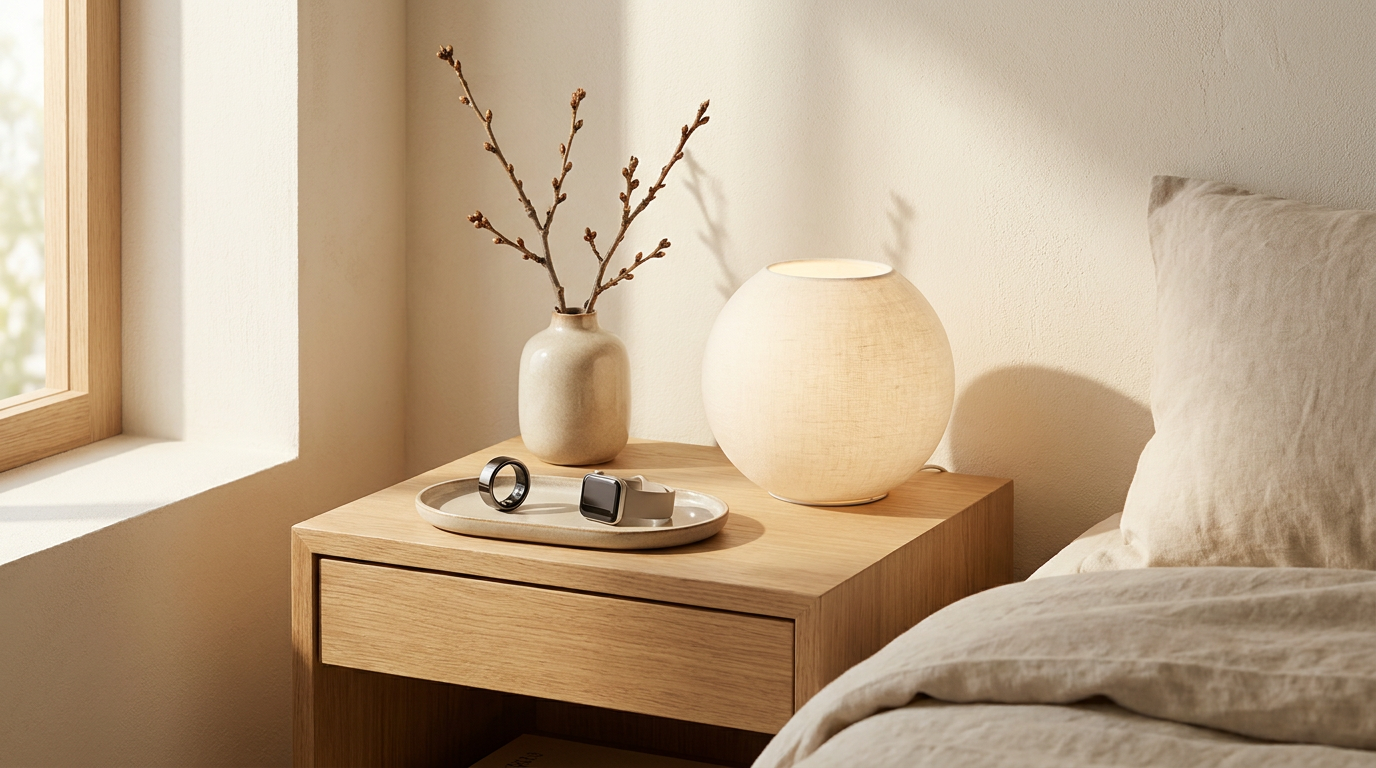
The consumer sleep tracking market has reached a new level of maturity in 2026, dominated by sophisticated wearables like the Oura Ring 4, Whoop 5.0, and Apple Watch Series 10. As these devices transition from simple pedometers to comprehensive health monitors, they increasingly market their ability to decode the mysteries of human rest. Yet, for the millions of consumers relying on daily "sleep scores" to dictate their training intensity or bedtime routines, a critical question remains: how closely does a consumer wearable match the clinical reality of a medical sleep lab?[1][3][4][6]
To evaluate the scientific validity of these devices, researchers compare them against polysomnography (PSG), the undisputed gold standard in sleep medicine. A clinical PSG setup involves wiring a patient with electroencephalography (EEG) to measure brain waves, electrooculography (EOG) for eye movements, and electromyography (EMG) for muscle tension. In contrast, consumer wearables must infer sleep states from the outside in, relying primarily on photoplethysmography (PPG) to track heart rate variability, accelerometers to measure wrist or finger movement, and skin temperature sensors.[7][8]

The strongest evidence supporting consumer sleep trackers lies in their ability to detect basic sleep and wake states. A comprehensive 2025 meta-analysis published in the Journal of Clinical Sleep Medicine, which aggregated 24 studies and nearly 800 patients, found that modern wrist-worn and finger-worn devices are highly reliable for tracking general sleep patterns. When it comes to simply knowing whether a user is asleep or awake, premium devices routinely demonstrate between 91.7 percent and 95 percent alignment with clinical PSG. For measuring total time in bed and overall sleep duration, the evidence is robust enough that researchers consider top-tier consumer devices clinically useful for tracking macro trends.[1][6][7]
However, the evidence becomes significantly more mixed when evaluating sleep staging—the breakdown of light, deep (N3), and rapid eye movement (REM) sleep. Because wearables cannot measure brain waves, their algorithms must guess the sleep stage based on cardiovascular shifts and movement lulls. Independent validation studies reveal that while deep sleep detection is reasonably accurate, REM sleep is consistently underestimated by four to six minutes on average across major platforms. Furthermore, consumer trackers frequently miss brief micro-awakenings lasting under three minutes, which a clinical PSG would easily catch.[6][7][8]

The specific hardware form factor plays a surprisingly secondary role to the proprietary algorithms processing the data. In recent independent testing, the Oura Ring 4 has emerged with the strongest body of peer-reviewed validation for sleep staging precision, supported by a 2024 Brigham and Women's Hospital study and a 2025 systematic review in OTO Open. Meanwhile, the Whoop 5.0, which captures data 26 times per second, has demonstrated exceptional accuracy in tracking total sleep time and translating that data into actionable recovery metrics for athletes. Smartwatches like the Apple Watch Series 10 also perform admirably, particularly benefiting from Apple's massive data sets to refine its sleep-stage classification.[1][2][5][6]
The specific hardware form factor plays a surprisingly secondary role to the proprietary algorithms processing the data.
Beyond basic sleep staging, the latest generation of trackers places a heavy emphasis on recovery metrics, utilizing Heart Rate Variability (HRV) and overnight skin temperature. The scientific consensus on these secondary metrics is highly positive. Because PPG sensors are exceptionally good at measuring the time between heartbeats, the HRV data collected by devices like the Whoop strap and Oura ring closely mirrors clinical electrocardiogram (ECG) readings. This makes their "readiness" or "recovery" scores highly scientifically grounded, offering users a reliable window into their central nervous system's response to stress, alcohol, or intense exercise.[1][2][3][4]
A fascinating caveat to this overall accuracy has emerged in recent demographic research. A 2026 validation study published in SLEEP Advances highlighted a notable age gap in wearable reliability. When comparing devices like the Oura Ring and Fitbit against PSG, researchers found that accuracy meaningfully decreased in older adults aged 56 to 80. In this older demographic, trackers tended to underestimate total sleep time by up to 75 minutes per night while simultaneously overestimating deep sleep. Sleep scientists attribute this discrepancy to age-related changes in cardiovascular baselines and naturally shifting sleep architecture, suggesting that algorithms are primarily optimized for the physiology of younger adults.[9]

The clinical consensus is clear that consumer wearables should not be used to diagnose complex sleep disorders like sleep apnea or narcolepsy, though some devices now feature FDA-cleared alerts for breathing disturbances. The algorithms are trained on healthy sleepers, and their accuracy degrades when monitoring patients with significant sleep fragmentation or irregular cardiac rhythms. For these individuals, a medical-grade sleep study remains the only definitive diagnostic tool, as consumer devices often misinterpret restless tossing and turning as light sleep.[5][6][8]
There is also a psychological component to consider when evaluating the utility of these devices. Sleep researchers increasingly warn about "orthosomnia," a condition where users become so fixated on achieving a perfect sleep score that the anxiety itself causes insomnia. When a device inaccurately reports a lack of REM sleep, a user might wake up feeling artificially fatigued due to the nocebo effect, despite having actually experienced a restorative night of rest. This highlights the danger of treating consumer algorithms as infallible medical truth.[3][4][7]
Ultimately, the scientific literature suggests that consumers should shift how they interact with their sleep data. Rather than fixating on the absolute precision of a single night's REM cycle percentage—which is likely flawed—users should focus on the macro trends. Wearables excel at highlighting behavioral consistency, such as stable bedtimes, overall sleep duration, and deviations in baseline resting heart rate that might indicate overtraining or impending illness. By treating the tracker as a directional compass rather than a flawless medical instrument, users can harness the data to build genuinely healthier sleep habits.[1][3][4][6][7]
How we got here
2020
Early validation studies show consumer wearables struggle significantly with sleep staging compared to clinical polysomnography.
2024
Major algorithm updates and validation studies for Oura and Whoop demonstrate vastly improved accuracy for total sleep time.
2025
A comprehensive meta-analysis confirms that modern wearables are highly reliable for basic sleep/wake detection but still lag in REM staging.
2026
New demographic research reveals that tracker accuracy drops significantly for older adults, prompting calls for age-adjusted algorithms.
Viewpoints in depth
Clinical Sleep Researchers
Medical professionals who view polysomnography as the only definitive diagnostic tool.
Clinical researchers emphasize that consumer wearables cannot diagnose sleep disorders like apnea or insomnia. Because these devices lack EEG sensors to measure brain activity, their sleep staging is fundamentally an educated guess based on cardiovascular proxies. They caution against 'orthosomnia,' where users become so obsessed with their wearable's sleep score that it induces anxiety and worsens their actual rest.
Consumer Tech Reviewers
Analysts focused on user experience, actionable coaching, and relative accuracy.
Tech reviewers argue that absolute clinical precision is less important than behavioral modification. Devices like the Oura Ring and Whoop strap excel at identifying macro trends—such as the negative impact of late-night alcohol or the benefits of consistent bedtimes. For the average consumer, a device that is 90% accurate but highly actionable is far more valuable than a 100% accurate clinical test that happens once a decade.
Quantified Self Advocates
Athletes and biohackers who use continuous data to optimize daily performance.
This camp values the continuous, longitudinal data that wearables provide. They focus heavily on secondary metrics like Heart Rate Variability (HRV) and resting heart rate, which are highly accurate on modern devices. For these users, the sleep tracker is an essential tool for modulating training load, preventing overtraining, and measuring the central nervous system's recovery over months and years.
What we don't know
- How accurately next-generation sensors, such as continuous blood pressure monitors, will improve sleep staging algorithms.
- Whether software updates can fully bridge the accuracy gap for older adults whose cardiovascular baselines differ from younger cohorts.
- The long-term psychological impact of widespread consumer reliance on daily, algorithm-generated 'readiness' scores.
Key terms
- Polysomnography (PSG)
- A comprehensive medical sleep study that measures brain waves, oxygen levels, heart rate, and breathing to diagnose sleep disorders.
- Photoplethysmography (PPG)
- An optical sensor technology used in wearables that shines light into the skin to measure blood flow and heart rate.
- Heart Rate Variability (HRV)
- The measure of the time variation between consecutive heartbeats, used as a key indicator of physical recovery and nervous system stress.
- Orthosomnia
- An unhealthy obsession with achieving perfect sleep metrics on a wearable device, which can paradoxically cause anxiety and insomnia.
- Sleep Architecture
- The cyclical pattern of sleep as it shifts between different stages, including light, deep, and REM sleep, throughout the night.
Frequently asked
Are sleep trackers as accurate as a medical sleep study?
No. While they are highly accurate at detecting whether you are asleep or awake, they cannot measure brain waves and are less precise at determining specific sleep stages like REM or deep sleep.
Which sleep tracker is the most accurate?
Independent validation studies in 2025 and 2026 highlight the Oura Ring 4 and Whoop 5.0 as having the strongest peer-reviewed evidence for overall accuracy, alongside the Apple Watch Series 10.
Can a sleep tracker diagnose sleep apnea?
Consumer wearables cannot officially diagnose sleep apnea, though devices like the Apple Watch and Samsung Galaxy Watch now feature FDA-cleared alerts that can detect breathing disturbances and suggest when to see a doctor.
Why does my sleep tracker say I get no REM sleep?
Wearables consistently underestimate REM sleep because they rely on heart rate and movement rather than brain waves. If you feel rested, it is likely an algorithm error rather than a true lack of REM sleep.
Sources
Source coverage
9 outlets
3 viewpoints surfaced








[1]Tom's GuideConsumer Tech Reviewers
Best sleep trackers 2026
Read on Tom's Guide →[2]Evident HealthQuantified Self Advocates
Best Sleep Trackers 2026 — 5 Tested & Ranked
Read on Evident Health →[3]CNETConsumer Tech Reviewers
The Best Sleep Trackers of 2026: Watches, Rings and Mats
Read on CNET →[4]Sleep FoundationConsumer Tech Reviewers
Best Sleep Trackers of 2026: Expert-Approved Wearables
Read on Sleep Foundation →[5]WareableConsumer Tech Reviewers
Best sleep trackers 2026: Tested and rated options from our reviews
Read on Wareable →[6]JCVitalQuantified Self Advocates
Smart Band Sleep Tracking: Does It Actually Work? (2026 Research Review)
Read on JCVital →[7]Journal of Clinical Sleep MedicineClinical Sleep Researchers
Accuracy of wearable sleep trackers in healthy adults: a systematic review and meta-analysis
Read on Journal of Clinical Sleep Medicine →[8]PubMed CentralClinical Sleep Researchers
A Comprehensive Review of Home Sleep Monitoring Technologies
Read on PubMed Central →[9]Heal Nourish GrowQuantified Self Advocates
Fitbit Air vs Oura Ring 4 (2026): I Tested Both for Two Weeks
Read on Heal Nourish Grow →

Every angle. Every day.
Get shopping stories with full source coverage and perspective breakdowns delivered to your inbox.