
The Rise of Cozy Fantasy: Why Low-Stakes Fiction is Dominating Publishing
Driven by a collective desire for emotional safety, 'cozy fantasy' has traded world-ending battles for coffee shops and found families, becoming one of the publishing industry's most lucrative new genres.
By Factlen Editorial Team
- Comfort Readers & Authors
- View the genre as a necessary form of active comfort and emotional healing in an increasingly stressful world.
- Publishing Industry Analysts
- Focus on the lucrative economics of the trend, noting the intense series loyalty and crossover appeal of low-stakes fiction.
- Traditional Fantasy Purists
- Argue that without life-or-death stakes, fantasy narratives lack the necessary momentum and structural tension to be compelling.
What's not represented
- · Literary critics analyzing the prose style of the genre
- · Booksellers managing physical shelf space for new subgenres
Why this matters
The explosion of low-stakes fiction reveals a profound shift in how we consume media to manage modern anxiety. It proves that millions of readers are actively seeking out 'active comfort' and emotional healing over traditional, stress-inducing entertainment.
Key points
- Cozy fantasy prioritizes emotional healing, community building, and low-stakes conflict over epic battles.
- The modern trend exploded during the pandemic as readers sought 'active comfort' to manage real-world stress.
- Major publishers are now heavily investing in the genre, driven by intense reader loyalty and series potential.
- The genre's success is expanding the definition of escapism, proving that fiction doesn't need to be stressful to be meaningful.
For decades, the fantasy genre was defined by a singular, exhausting mandate: save the world. From Frodo Baggins marching toward Mount Doom to Jon Snow facing down armies of the undead, the stakes were almost always apocalyptic. The battles were bloody, the politics were treacherous, and the heroes were perpetually traumatized. But in recent years, a quiet rebellion has taken over the publishing industry. Instead of slaying dragons, today's fantasy protagonists are more likely to open a bakery, brew magical tea, or manage a seaside inn. Welcome to the era of 'cozy fantasy,' a subgenre that has traded world-ending peril for low-stakes comfort, and in the process, fundamentally rewired what millions of readers expect from escapist fiction.[6]
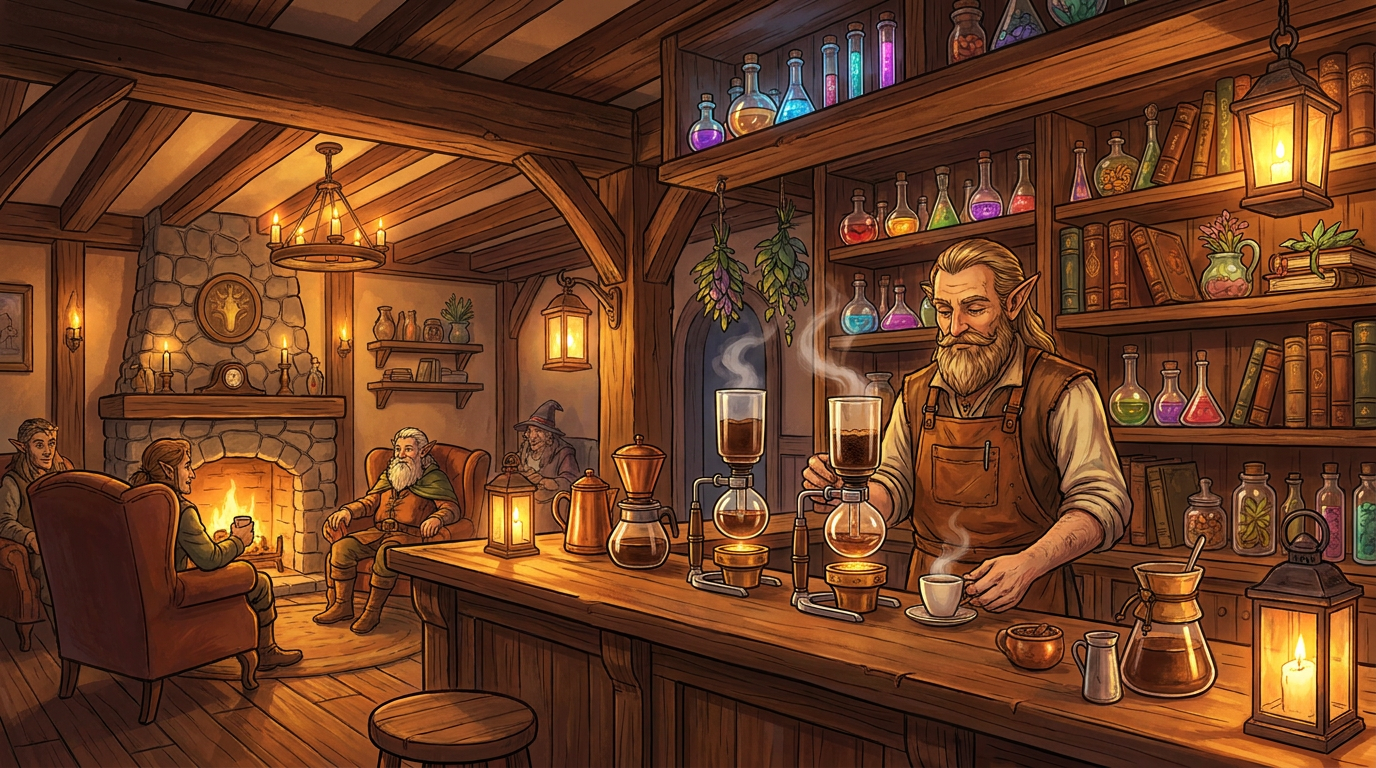
At its core, cozy fantasy is characterized by high emotional resonance and distinctly low stakes. It takes the sprawling, magical worldbuilding of traditional high fantasy—complete with orcs, elves, magic systems, and mythical creatures—and zooms in on the mundane, everyday lives of its inhabitants. If epic fantasy is about a monarch fighting a continent-spanning war, cozy fantasy is about the local tavern owner trying to perfect a new recipe for cinnamon rolls while dealing with a leaky roof. The genre relies heavily on 'slice-of-life' narratives, prioritizing character relationships, community building, and personal healing over combat and political intrigue.[1][2]
The appeal of these stories lies in their predictability and their promise of safety. Readers who turn to cozy fantasy expect a comforting atmosphere where perilous battles and gruesome events are entirely absent. Instead of tense, life-or-death scenes, the narrative momentum is driven by moments of whimsy, joy, and small, hard-won victories. Authors in this space frequently utilize subtle, quirky humor and playful banter to keep the tone light, ensuring that the primary goal of the text is to make the reader smile and provide a relaxing experience, even when the protagonist's plans go awry.[2]
The modern explosion of this genre can be traced directly to the collective trauma and isolation of the early 2020s. When the real world began to feel increasingly dystopian, unpredictable, and dangerous, readers rapidly lost their appetite for fictional apocalypses. The sudden influx of existential dread created a perfect storm: readers desperately searched for stories that offered hope and comfort, while writers simultaneously scrapped their darker projects in favor of developing stories that allowed them to feel joy and peace. The events of the external world catalyzed a massive shift toward optimistic escapism.[1][3]

This shift was perfectly crystallized by Travis Baldree, the author of the trailblazing 2022 novel Legends & Lattes. Baldree famously noted that during the height of the pandemic, he lost his taste for grim, violent media. He didn't want to watch characters get beheaded; he wanted to watch baking shows and home renovation programs to feel a sense of control and calm. Channeling that desire, he wrote a story about a retired orc mercenary who hangs up her broadsword to open the first coffee shop in a fantasy city. The book became a viral sensation, essentially codifying the modern 'high fantasy, low stakes' formula.[3]
The success of Legends & Lattes revealed a deep, enduring hunger for what industry analysts call 'active comfort.' These are not readers seeking mindless, passive escape; they want deep engagement with rich worldbuilding, clever plots, and meaningful character development, but they want it wrapped in an impenetrable layer of safety. They want the intellectual stimulation of a fantasy novel without the cortisol spike of a thriller. This desire has transformed cozy fantasy from a quirky internet niche into a recognized, highly lucrative category within the broader publishing ecosystem.[1][5]
What began as a grassroots movement on platforms like BookTok and self-publishing forums has rapidly matured into a traditional publishing goldmine. Major publishing houses are now actively acquiring cozy fantasy manuscripts, recognizing the immense commercial appeal of magical stories that comfort rather than stress their audiences. Advances for established authors pivoting into this space are climbing steadily, particularly for writers who can build enduring series with recurring, comforting settings like magical bookshops, enchanted inns, or bustling tea rooms.[4][5]
The economics of the genre are driven by intense reader loyalty. Market research indicates that fans of cozy fantasy are voracious consumers who treat these books as a form of self-care. When readers discover an author they can trust to provide consistent emotional comfort, they become fiercely loyal repeat customers. This dynamic has led to a surge in series production, as publishers seek to capitalize on audiences who want to return to the same safe, magical communities book after book. Recent market scans have identified over 1,300 genuine cozy fantasy titles actively competing in the space.[4][5]

The economics of the genre are driven by intense reader loyalty.
Retailers have also been forced to adapt to the genre's explosive growth. Platforms like Amazon have introduced dedicated categories specifically for cozy fantasy, acknowledging that it has distinct tropes and audience expectations that separate it from traditional epic fantasy or urban fantasy. This institutional recognition further legitimizes the genre, making it easier for readers to find new authors and for publishers to market their titles directly to a hungry, highly targeted demographic.[4]
Writing a successful cozy fantasy, however, requires a delicate balancing act that is often underestimated by critics. Authors cannot simply remove the plot and expect the book to work; a story without momentum or conflict is merely a static setting. Instead, the conflict must be carefully scaled down to a deeply personal, relatable level. A protagonist might struggle to overcome past trauma, navigate the awkward early stages of a new romance, or figure out how to save a beloved local business from financial ruin.[2][6]
These micro-stakes are what make the genre so emotionally resonant. While the fate of the universe is an abstract concept that is difficult for a reader to truly internalize, the fear of losing a job, failing at a new passion project, or being rejected by a new friend is universally understood. By grounding fantastical characters in mundane, highly relatable anxieties, cozy fantasy authors create a bridge of empathy between the reader and the text, allowing the magical setting to enhance, rather than distract from, the emotional core of the story.[6]
To support these intimate stakes, cozy fantasy relies heavily on sensory-rich worldbuilding. Because the narrative isn't rushing from one battle to the next, authors have the space to linger on the details that make a setting feel like home. Pages are dedicated to the smell of roasting coffee beans, the warmth of a crackling hearth, the texture of a hand-knitted blanket, or the precise, methodical steps of brewing a perfect cup of tea. This fixation on food and domesticity explores themes of living in the moment and finding joy in small things.[1][2]

Furthermore, the genre is notably inclusive, frequently featuring diverse casts and queer romances that are allowed to exist without the burden of systemic prejudice or tragic endings. A central pillar of cozy fantasy is the 'found family' trope, where characters who have been marginalized, orphaned, or simply misunderstood come together to form a supportive, loving community. This focus on empathy, kindness, and nontoxic relationships provides a sanctuary for readers who may feel isolated in their own lives.[1]
Despite its massive commercial success and devoted fanbase, the genre is not without its detractors. Some traditional fantasy purists and literary critics argue that without life-or-death stakes, these narratives fundamentally lack the narrative thrust that defines compelling fiction. They dismiss cozy fantasy as overly saccharine, structurally stagnant, or merely a passing fad fueled by social media aesthetics. For readers accustomed to the sprawling, high-stakes political maneuvering of authors like George R.R. Martin or Brandon Sanderson, a 300-page book about an orc learning to bake croissants can feel entirely pointless.[6]
However, defenders of the genre counter that emotional stakes are just as valid—and often more difficult to write effectively—as physical ones. Crafting a compelling, page-turning story without relying on the easy crutch of violence, murder, or apocalyptic threats requires immense skill in characterization and pacing. Advocates argue that the dismissal of cozy fantasy often stems from a broader cultural bias that equates 'dark and gritty' with 'serious and important,' while dismissing stories about domesticity, healing, and joy as frivolous.[5][6]
As the market inevitably saturates with coffee-shop AUs and magical bakeries, the genre is already beginning to evolve. Authors are pushing the boundaries of what 'cozy' can mean, blending its comforting ethos with other genres. We are now seeing the rise of 'cozy sci-fi,' where ragtag crews explore the galaxy without the threat of hostile alien invasions, and even 'cozy mystery,' where the focus is on community problem-solving rather than the gruesome details of a crime.[5]

This expansion proves that 'cozy' is no longer just a quirky subgenre; it is a fundamental approach to storytelling. It is a lens through which any narrative can be viewed—one that prioritizes healing over harm, resolves conflicts through connection rather than violence, and maintains a steadfast hope that problems can be solved through care and community. It challenges the decades-old assumption that fiction must be stressful to be meaningful.[6]
The lasting impact of the cozy fantasy movement will likely be felt across the entire publishing industry for years to come. It has expanded the boundaries of speculative fiction, proving that wonder, community, and small-scale problem-solving can be just as commercially viable and emotionally satisfying as epic warfare. It has given permission to a new generation of writers to focus on the light rather than the dark.[5][6]
Ultimately, the rise of cozy fantasy represents a profound shift in the cultural zeitgeist. It proves that escapism doesn't have to mean fleeing into a war zone or a dystopian wasteland. Sometimes, the most powerful and necessary escape is simply retreating to a quiet room, surrounded by friends, with a warm cup of tea in hand, knowing that for a few hundred pages, everything is going to be okay.[6]
How we got here
1986
Diana Wynne Jones publishes Howl's Moving Castle, laying the early groundwork for domestic, comforting fantasy.
March 2020
The onset of the global pandemic shifts reader and writer appetites away from apocalyptic fiction toward comforting escapism.
February 2022
Travis Baldree self-publishes Legends & Lattes, which goes viral on BookTok and codifies the modern 'high fantasy, low stakes' formula.
2024–2026
Major traditional publishers aggressively acquire cozy fantasy titles, and dedicated retail categories are established to meet surging demand.
Viewpoints in depth
Comfort Readers & Authors
View the genre as a necessary form of active comfort and emotional healing in an increasingly stressful world.
For readers and authors in this camp, cozy fantasy is a direct response to the exhaustion of modern life. They argue that traditional epic fantasy, with its relentless focus on war, trauma, and political betrayal, often adds to a reader's cognitive load rather than relieving it. By shifting the focus to domesticity, found family, and small-scale problem-solving, cozy fantasy provides a safe space where readers can engage their imaginations without triggering anxiety. They view the genre not as a rejection of complex storytelling, but as a necessary evolution of escapism that prioritizes mental well-being.
Publishing Industry Analysts
Focus on the lucrative economics of the trend, noting the intense series loyalty and crossover appeal of low-stakes fiction.
Industry analysts view cozy fantasy through the lens of market viability, noting that it has successfully bridged the gap between traditional fantasy readers and fans of romance or cozy mysteries. They point to the genre's incredible retention rates; readers who find a comforting setting are highly likely to purchase every subsequent book in a series. This predictability makes cozy fantasy an incredibly safe bet for traditional publishers, leading to higher advances and dedicated marketing pushes. Analysts also note that the genre's aesthetic translates perfectly to visual social media platforms like BookTok, creating a self-sustaining marketing engine.
Traditional Fantasy Purists
Argue that without life-or-death stakes, fantasy narratives lack the necessary momentum and structural tension to be compelling.
A vocal contingent of traditional fantasy fans and literary critics remain skeptical of the cozy trend. They argue that conflict is the engine of narrative, and that by artificially lowering the stakes to the level of a burnt batch of cookies or a misunderstood conversation, the stories become structurally stagnant. This camp often views cozy fantasy as overly saccharine or emotionally simplistic, suggesting that true character growth requires characters to be tested in the crucible of high-stakes adversity. They worry that the publishing industry's pivot toward comfort will crowd out more ambitious, challenging works of speculative fiction.
What we don't know
- Whether the genre will maintain its current explosive growth or settle into a stable, smaller niche.
- How the influx of traditional publishing money might alter the grassroots, indie-driven origins of the genre.
Key terms
- Cozy Fantasy
- A subgenre of fantasy fiction characterized by low stakes, high emotional resonance, and a focus on community and personal healing over epic conflict.
- Grimdark
- A subgenre of speculative fiction with a tone, style, or setting that is particularly dystopian, amoral, or violent—the exact opposite of cozy fantasy.
- Slice-of-Life
- A storytelling technique that presents a seemingly arbitrary sample of a character's everyday life, often lacking a central, world-altering plot.
- Found Family
- A common literary trope where characters who are not biologically related choose to support and love one another as a family unit.
Frequently asked
What was the first cozy fantasy book?
While comforting fantasy has existed for decades (such as Diana Wynne Jones's 1986 novel Howl's Moving Castle), the modern trend was largely ignited by Travis Baldree's 2022 self-published hit Legends & Lattes.
Does cozy fantasy have no plot?
No. While the stakes are lower—such as saving a local business or navigating a relationship—successful cozy fantasies still feature character growth, personal conflict, and narrative momentum.
Is cozy fantasy only for young adults?
Actually, the core audience overlaps significantly with cozy mystery readers, primarily adults aged 25 to 55 who are seeking optimistic, low-stress escapism.
Sources
Source coverage
6 outlets
3 viewpoints surfaced






[1]Paste MagazineComfort Readers & Authors
Why Cozy Fantasy is Currently a Very Large Trend in Publishing
Read on Paste Magazine →[2]ReedsyPublishing Industry Analysts
The 5 Main Elements of Cozy Fantasy
Read on Reedsy →[3]MediumComfort Readers & Authors
Where did cozy fantasy come from? Cozy fantasy as an antidote to the grimdark days
Read on Medium →[4]K-lyticsPublishing Industry Analysts
The K-lytics Cozy Fantasy Market Seminar
Read on K-lytics →[5]Novelists, Inc.Publishing Industry Analysts
Cozy Fantasy is Expanding What Readers Expect
Read on Novelists, Inc. →[6]Factlen Editorial TeamTraditional Fantasy Purists
Synthesis by Factlen editorial team
Read on Factlen Editorial Team →


Every angle. Every day.
Get entertainment stories with full source coverage and perspective breakdowns delivered to your inbox.