
The Rise of the 'Dumbphone': Why Millions Are Ditching Social Media for Digital Minimalism
Driven by screen fatigue and algorithmic overwhelm, a growing movement of users is swapping their smartphones for minimalist devices to reclaim their focus and mental health.
By Factlen Editorial Team
- Digital Minimalists
- Advocates who believe that removing addictive technology entirely is the only way to reclaim mental clarity.
- Tech Pragmatists
- Users who seek a middle ground, modifying their existing smartphones to reduce distractions while keeping essential modern tools.
- Hardware Manufacturers
- Companies capitalizing on the digital detox trend by designing premium, purpose-built minimalist devices.
What's not represented
- · App Developers
- · Social Media Executives
Why this matters
As algorithmic feeds increasingly dominate daily life, the shift toward 'dumbphones' offers a practical blueprint for reclaiming focus. Understanding how to intentionally limit digital distractions can help you reduce anxiety, improve your attention span, and build a healthier relationship with technology.
Key points
- Commodore announced the Callback 8020, a retro flip phone that runs essential apps but hard-blocks social media and web browsers.
- A growing 'digital minimalism' movement is driving users to abandon hyper-connected smartphones in favor of basic utility devices.
- Psychologists note that constant smartphone connectivity keeps the nervous system in a state of arousal, leading to decision fatigue.
- Many users are 'dumbing down' their existing smartphones using grayscale modes, app blockers, and minimalist launchers.
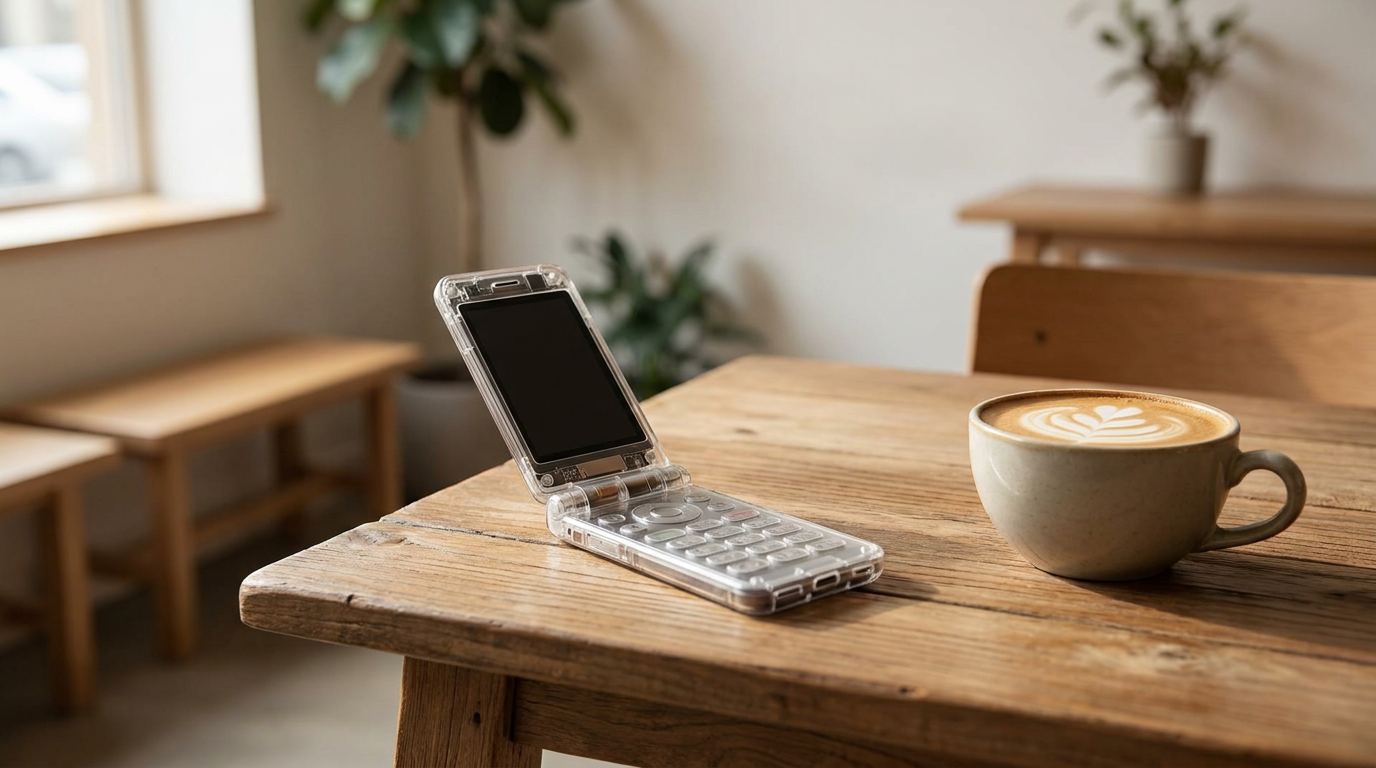
Perhaps the most surprising consumer technology announcement of the year comes from a brand steeped in 1980s computing nostalgia. Commodore has officially unveiled the Callback 8020, a retro-styled flip phone that exudes Y2K charm with its transparent casing and tactile T9 keyboard. But beneath its vintage exterior lies a highly intentional modern device. The Callback 8020 runs on a Linux-based Sailfish operating system, granting it compatibility with 99 percent of Android applications.[1][2]
The catch, however, is what the phone explicitly refuses to do. At the system level, the Callback 8020 hard-blocks the installation of any web browsers or social media applications. It is designed to run essential utilities—like WhatsApp, Google Maps, and Spotify—while entirely eliminating the possibility of infinite scrolling. According to Commodore's leadership, the device was born out of a personal journey to cure smartphone addiction, aiming to find the perfect middle ground between a "dumb" brick and an overwhelming supercomputer.[2][3]
The Callback 8020 is not an isolated novelty. It arrives at the crest of a massive cultural shift in 2026: the "dumbphone" revolution. Driven largely by Generation Z and millennials, this movement—often dubbed "Analog 2026" or "digital minimalism"—is a direct and organized rejection of algorithm-driven feeds, constant notifications, and the expectation of 24/7 connectivity.[4][5][6]
For years, the standard advice for screen fatigue was to attempt a temporary "digital detox" or to set app time limits. But consumers are increasingly realizing that relying on sheer willpower to ignore a device engineered by thousands of designers to be addictive is a losing battle. The gym-goer trying to eat healthier does not leave open bags of potato chips on their desk; similarly, those seeking mental clarity are realizing they cannot keep a portal to infinite distraction in their pockets.[5]

Instead of fighting the software, a growing demographic is changing the hardware. The market for minimalist phones has exploded, offering a wide array of devices that strip away the noise while preserving modern necessities. These devices are not technological regressions, but rather highly specialized tools designed for intentional living.[5]
Leading the charge are premium minimalist devices like the Light Phone III, the Mudita Kompakt, and the Punkt MP02. These phones often feature soft, paper-like e-ink displays that eliminate the harsh glare and blue light of traditional OLED screens. They provide calls, texts, alarms, and perhaps a basic navigation tool or music player, but absolutely no access to the broader internet.[5]
The psychological toll of hyper-connectivity is the primary catalyst for this hardware shift. Clinical psychologists note that processing the sheer volume of information, outrage, and sensory input on a modern smartphone keeps the human nervous system in a constant state of stimulation and arousal. This chronic digital exposure pushes the brain toward decision fatigue and emotional overwhelm.[4]
The psychological toll of hyper-connectivity is the primary catalyst for this hardware shift.
By removing the option to be distracted, users report a profound shift in their daily lives. Without the constant pull of notifications or the temptation to check social media during every idle moment, individuals are regaining their depth of focus, their attention spans, and a deep sense of calm. The dumbphone forces the user back into the physical world, exchanging the fleeting dopamine of digital "likes" for genuine presence.[4][6]

Recent data underscores the scale of this behavioral shift. A 2026 study published in the journal Digital Media revealed that a growing number of adults are actively trimming the number of social platforms they use. The research found that 12 percent of adults aged 65 and older, and 7 percent of adults aged 18 to 29, now use zero social media whatsoever.[6]
However, going "full brick" and abandoning the smartphone entirely is not practical for everyone. Modern society is deeply intertwined with mobile technology. Navigating daily life often requires scanning QR codes, utilizing two-factor authentication for work, accessing mobile banking, or hailing a rideshare.[4][6]
Enter the "dumbed-down" smartphone. For those who cannot afford to disconnect completely, a massive trend has emerged around repurposing $1,000 iPhones and Android devices into highly restricted, boring utility tools. Users are taking deliberate steps to strip the slot-machine appeal out of their supercomputers.[4]
The most common method is a ruthless culling of applications. Users are deleting all social media, news aggregators, and streaming video apps from their devices, leaving only essential tools like maps, messaging, and ride-hailing services. If they wish to check social media, they force themselves to do so on a desktop computer, reintroducing friction into the process.[4][6]

Another highly effective tactic involves the device's accessibility settings. By switching their vibrant, high-definition displays to grayscale mode, users instantly remove the colorful visual triggers that prompt compulsive checking. Without the bright red notification badges and vivid imagery, the phone becomes significantly less stimulating to the brain.[4]
The software ecosystem has also adapted to support this digital sobriety. Third-party minimalist launchers are surging in popularity on app stores. These applications replace colorful grids of app icons with simple, plain-text menus, reducing cognitive load and hiding time-wasting apps from immediate view.[4]
Physical friction is also making a comeback. Tools like the Unpluq tag allow users to block distracting apps on their existing smartphones. These apps remain locked until the user physically taps a dedicated NFC tag against the phone. By leaving the tag at home while at work, the user completely eliminates the temptation to scroll, as the apps are physically impossible to open.[5]

What was once seen as a technological downgrade has fundamentally morphed into a modern status symbol. In the early 2000s, possessing the newest, most connected gadget signaled importance and wealth. Today, the paradigm has inverted.[6]
In a hyper-connected economy where everyone is expected to be "always on," the ultimate luxury is the ability to be unreachable. The dumbphone—whether a dedicated device like the Commodore Callback 8020 or a heavily restricted iPhone—signals that a user has successfully opted out of the algorithmic rat race. They have reclaimed the rarest commodity in the modern world: their own undivided attention.[6]
How we got here
Early 2000s
Basic cell phones and flip phones dominate the market, serving primarily as tools for calling and texting.
2007 - 2015
The smartphone era begins, leading to the rapid rise of app ecosystems, social media platforms, and always-on connectivity.
2020 - 2023
Screen time surges globally, prompting early discussions about 'digital detoxes' and the psychological toll of doomscrolling.
2024 - 2025
The 'dumbphone' market sees a resurgence, with companies releasing premium minimalist devices aimed at reducing digital distractions.
June 2026
Commodore announces the Callback 8020, a retro flip phone that runs essential apps but hard-blocks social media, cementing digital minimalism as a mainstream lifestyle trend.
Viewpoints in depth
Digital Minimalists
Advocates who believe that removing addictive technology entirely is the only way to reclaim mental clarity.
This camp argues that willpower is insufficient against algorithms designed by thousands of engineers to capture human attention. By switching to 'dumb' hardware, users eliminate the temptation at the source. Proponents report significantly lower anxiety, deeper focus, and a renewed appreciation for offline hobbies, arguing that true connection happens away from a screen.
Tech Pragmatists
Users who seek a middle ground, modifying their existing smartphones to reduce distractions while keeping essential modern tools.
This group acknowledges that going 'full brick' is nearly impossible in a modern society that requires QR codes, mobile banking, and two-factor authentication. Instead of abandoning the smartphone, they champion software solutions—like grayscale modes, app blockers, and minimalist launchers—to turn their supercomputers into boring, utilitarian tools that serve the user rather than the algorithm.
Hardware Innovators
Companies capitalizing on the digital detox trend by designing premium, purpose-built minimalist devices.
Brands like Commodore, Light, and Punkt are proving that 'dumb' doesn't have to mean cheap or outdated. They are designing high-end, aesthetically pleasing devices that offer a carefully curated selection of features—such as high-quality audio, e-ink displays, or tactile keyboards—catering to consumers who are willing to pay a premium for peace of mind and intentional design.
What we don't know
- Whether the shift toward dumbphones will remain a niche lifestyle choice or fundamentally alter how major tech companies design future smartphones.
- How the widespread adoption of digital minimalism might impact the advertising revenues and user metrics of dominant social media platforms.
Key terms
- Digital Minimalism
- A philosophy of technology use in which individuals intentionally curate their digital tools to focus only on what adds value to their lives, discarding distractions.
- Dumbphone
- A basic mobile phone designed primarily for voice calls and text messaging, lacking the advanced internet and app capabilities of a smartphone.
- Grayscale Mode
- An accessibility setting on smartphones that removes all color from the screen, making the interface less visually stimulating and reducing the urge to compulsively check the device.
- E-ink Display
- A screen technology that mimics the appearance of ordinary ink on paper, reducing eye strain and eliminating the harsh blue light emitted by standard OLED or LCD screens.
Frequently asked
What exactly is a dumbphone?
A dumbphone is a mobile device that offers basic functionalities like calling and texting, intentionally omitting features like web browsers, social media apps, and infinite-scrolling feeds.
Can I still use WhatsApp or Spotify on a minimalist phone?
It depends on the model. Devices like the new Commodore Callback 8020 run a modified OS that supports essential utility apps like Spotify and WhatsApp, while strictly blocking browsers and social media.
How can I 'dumb down' my current smartphone?
You can simplify your smartphone by deleting social media apps, turning the display to grayscale in your accessibility settings, and using minimalist launcher apps that replace colorful icons with plain text.
Why are younger generations switching to flip phones?
Many Gen Z and millennial users are experiencing 'algorithm fatigue' and are seeking ways to reduce screen time, protect their mental health, and reclaim their attention from highly addictive digital platforms.
Sources
Source coverage
6 outlets
3 viewpoints surfaced






[1]EngadgetHardware Manufacturers
Commodore made a social media-banishing flip phone
Read on Engadget →[2]Tom's HardwareHardware Manufacturers
Commodore announces Linux-based flip phone with 'no social media, no browser'
Read on Tom's Hardware →[3]Time ExtensionHardware Manufacturers
Commodore's Next Hardware Release Is Dumb, And Proud Of It
Read on Time Extension →[4]NewsweekDigital Minimalists
How To Instantly Dumb Down Your Smartphone for a Scrolling Detox in 2026
Read on Newsweek →[5]ViceTech Pragmatists
Best Dumbphones for Smarter Phone Use or a Digital Detox
Read on Vice →[6]AxiosDigital Minimalists
Why Gen Z and Boomers Are Ditching Social Media: The Rise of Dumbphones in 2026
Read on Axios →
Every angle. Every day.
Get technology stories with full source coverage and perspective breakdowns delivered to your inbox.