
Solid-State EV Batteries Move From Lab to Road in 2026
After years of development, solid-state batteries are entering real-world vehicle testing and pilot production, promising to double EV range and slash charging times to 10 minutes.
By Factlen Editorial Team
- Incumbent Automakers
- Focusing on in-house development and 2028 mass-market scale.
- Pure-Play Battery Developers
- Pushing aggressive 2026 validation and licensing models.
- Manufacturing Realists
- Highlighting the immense industrial and cost hurdles of scaling.
What's not represented
- · Lithium-ion gigafactory operators facing potential obsolescence
- · Raw material suppliers for sulfide and ceramic precursors
Why this matters
Solid-state batteries are the technological leap required to make electric vehicles universally practical. By eliminating fire risks, doubling driving range, and allowing cars to charge as fast as pumping gas, this technology removes the final barriers to mass EV adoption.
Key points
- Solid-state batteries replace flammable liquid electrolytes with solid materials, drastically improving safety.
- The technology allows for pure lithium-metal anodes, nearly doubling current energy density.
- Automakers project ranges exceeding 1,000 kilometers and charge times under 10 minutes.
- Major companies like QuantumScape, Toyota, and Nissan are moving into real-world vehicle testing in 2026.
- Mass manufacturing remains the primary hurdle, requiring ultra-dry cleanrooms and new supply chains.
- Initial rollouts will focus on luxury and high-performance vehicles before scaling to commuter cars.
For a decade, solid-state batteries have been the "holy grail" of the electric vehicle industry—a transformative technology that always seemed perpetually five years away. But in 2026, the narrative is definitively shifting from laboratory press releases to factory floors and test tracks. Major automakers and specialized battery startups are crossing critical validation thresholds, moving their next-generation cells out of controlled research environments and into real-world prototype vehicles. This transition marks one of the most significant inflection points in the history of automotive engineering, signaling that the fundamental limitations of current electric vehicles may soon be obsolete.[1][5]
To understand why the automotive world is investing billions into this transition, one must look at the constraints of current technology. Lithium-ion batteries have successfully catalyzed the global shift away from internal combustion engines, but they are brushing up against their absolute chemical limits. To push electric vehicles into true ubiquity—eliminating range anxiety, slashing charge times to match a trip to the gas station, and ensuring absolute safety under extreme conditions—a fundamental architectural shift is required at the cellular level.[6][7]
At the heart of this architectural shift is the electrolyte. In a conventional lithium-ion battery, lithium ions swim back and forth between the cathode and the anode through a liquid electrolyte solvent. While this liquid is highly effective at facilitating ion transfer, it is also inherently volatile and flammable. Under extreme stress, such as a severe impact, overcharging, or intense heat, this liquid can ignite, leading to the thermal runaway fires that occasionally make headlines and necessitate heavy, complex cooling systems within the vehicle's battery pack.[5][6]
Solid-state batteries solve this vulnerability by replacing the liquid solvent with a solid material—typically a specialized ceramic, polymer, or sulfide glass. This simple material swap unlocks a cascade of engineering benefits, the most immediate of which is safety. Solid electrolytes are entirely non-flammable. Comparative testing has demonstrated that thermal events in solid-state systems do not begin until internal temperatures reach nearly 250 degrees Celsius, compared to just 90 degrees Celsius for conventional liquid cells. This inherent stability allows engineers to strip away heavy protective casing and cooling infrastructure.[1][5]

Beyond safety, the true prize of the solid-state architecture is a massive leap in energy density. Because the solid electrolyte acts as a rigid, impenetrable physical barrier, battery engineers can finally utilize a pure lithium-metal anode instead of the bulky graphite anodes used today. In traditional liquid batteries, using pure lithium metal is dangerous because it tends to form "dendrites"—microscopic, needle-like metallic spikes that grow during charging, eventually piercing the separator and causing catastrophic short circuits. The rigid solid electrolyte physically suppresses these dendrites, safely unlocking the highest possible energy capacity.[3][5][6]
The resulting leap in performance is staggering. Today's best commercial lithium-ion cells max out at an energy density of roughly 250 to 300 watt-hours per kilogram. The solid-state cells entering vehicle validation in 2026 are targeting 400 to 500 watt-hours per kilogram. For the consumer, this translates directly to electric vehicles capable of traveling over 1,000 kilometers (roughly 620 miles) on a single charge, all while utilizing a battery pack that is significantly lighter and takes up less physical space in the vehicle's chassis.[1][4][5][7]
Furthermore, the solid architecture allows for vastly superior ion transfer rates at high voltages, which fundamentally changes the charging equation. Automakers are projecting fast-charge times of 10 minutes or less to replenish the battery from 10 percent to 80 percent capacity. By effectively mirroring the time a driver currently spends at a traditional gas station, solid-state technology removes one of the final, most stubborn psychological barriers to widespread electric vehicle adoption for consumers who lack access to home charging infrastructure.[4][7]

Furthermore, the solid architecture allows for vastly superior ion transfer rates at high voltages, which fundamentally changes the charging equation.
This year marks the critical transition from prototype to tangible product for several major players in the battery space. QuantumScape, a prominent California-based battery developer backed heavily by Volkswagen, has entered a crucial testing phase, putting its solid-state cells into real vehicles for validation in 2026. Their engineering focus has been on perfecting an anode-free lithium-metal design that utilizes a proprietary ceramic separator. By eliminating the traditional anode entirely, they save space and weight, but they must prove that their unique chemistry can withstand the rigorous cycle life required for automotive applications—meaning thousands of rapid charge and discharge cycles—without degrading over the lifespan of the vehicle.[2][3]
Meanwhile, the pace of development in the Chinese market is accelerating rapidly. Greater Bay Technology, a battery manufacturer backed by the GAC Group, recently announced a major milestone with its A-sample all-solid-state cells rolling off the production line. The company is aggressively targeting gigawatt-hour-level mass production and in-vehicle use by the end of 2026. Their cells have reportedly passed extreme needle penetration and thermal shock tests without incident, signaling that the technology is ready to move from the laboratory to the assembly line.[1]
The legacy automotive giants are certainly not ceding the space to startups. Toyota, which has quietly amassed thousands of patents in solid-state technology over the past decade, is utilizing 2026 to rapidly scale its advanced battery infrastructure. Partnering with the Japanese petroleum refiner Idemitsu Kosan to secure a steady supply of solid sulfide electrolytes, Toyota is laying the massive industrial groundwork required for a commercial launch of solid-state electric vehicles in the 2027 to 2028 window, targeting a 745-mile range.[4][7]
Nissan is following a similarly aggressive trajectory. Having opened a dedicated prototype production facility at its Yokohama plant, the automaker recently confirmed it had successfully stacked 23 battery layers into a single prototype pack—a crucial engineering step for achieving automotive scale. Nissan aims to bring its in-house solid-state technology to the mass market by 2028, noting that the dramatic increase in energy density will finally allow them to viably electrify larger, heavier vehicles like full-size pickup trucks and large family SUVs.[1][6]

Real-world validation of these ambitious claims is already underway on public roads. Factorial Energy, working in deep partnership with Mercedes-Benz, recently demonstrated the viability of its solid-state technology when a modified EQS sedan drove over 1,200 kilometers across Europe on a single charge. These real-world stress tests are absolutely vital for the industry. It is one thing for a battery to perform well on a test bench, but proving that the delicate new chemistries can withstand the daily rigors of highway driving, varied weather climates, and the constant physical vibration of the road is what ultimately gives automakers the confidence to greenlight mass production.[5]
Despite the palpable momentum and successful road tests, significant hurdles remain before these batteries reach the average consumer's driveway. The primary challenge for the industry has decisively shifted from fundamental chemistry to the brutal realities of mass manufacturing. Building a perfect, coin-sized solid-state cell in a pristine research laboratory is largely a solved problem; however, manufacturing millions of large-format automotive cells with a 99.9 percent yield rate is an entirely different, highly complex industrial challenge. It requires entirely new assembly techniques, novel machinery, and quality control standards that far exceed what is currently used in traditional lithium-ion gigafactories.[3][5]
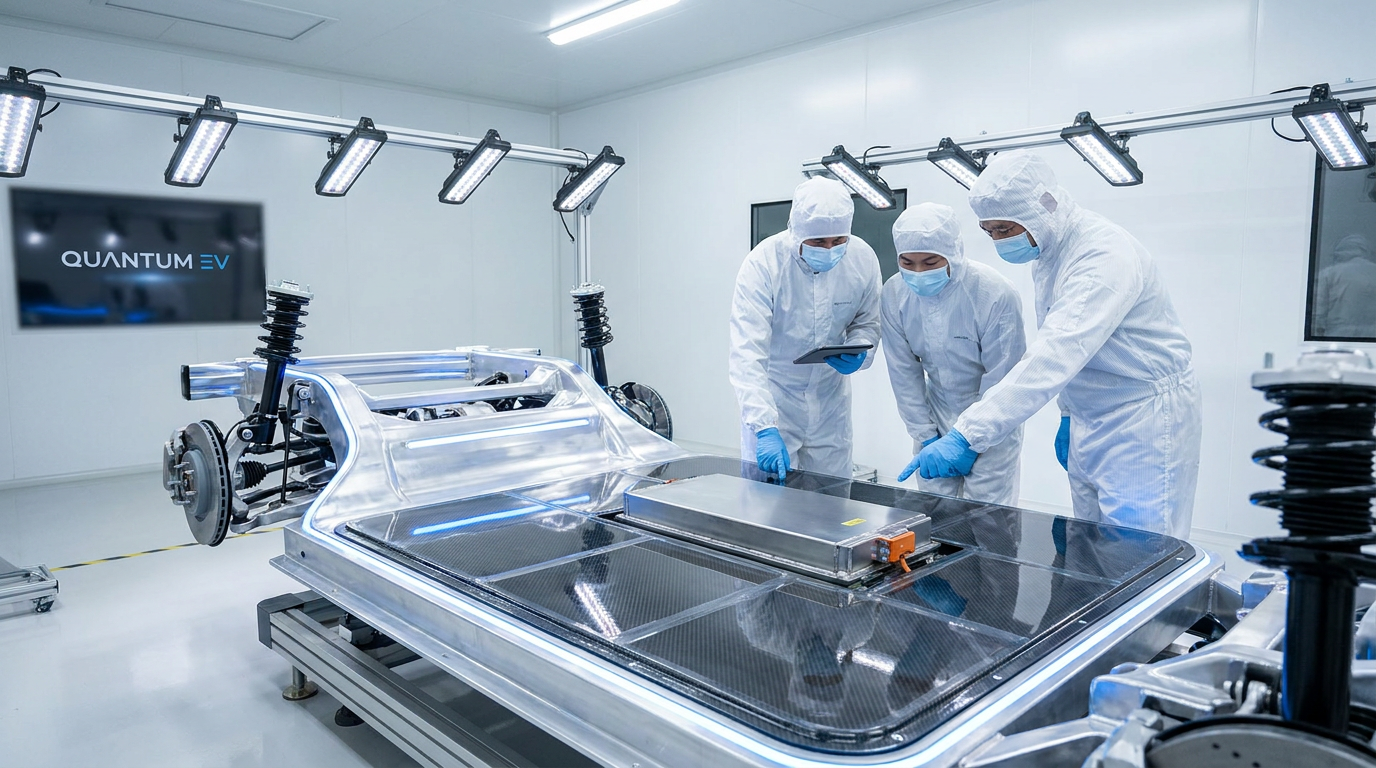
The solid electrolytes themselves present unique handling challenges. Particularly the highly conductive sulfide-based variants favored by several major automakers, these materials require incredibly controlled, moisture-free manufacturing environments. Exposure to even trace amounts of ambient humidity can degrade the materials and ruin the cell. This necessitates massive capital expenditures to build specialized ultra-dry cleanrooms at an industrial scale. Furthermore, the global supply chains for these new precursor materials are still in their infancy, meaning that the initial waves of solid-state batteries will carry a significant price premium over mature lithium-ion technology until the supply base matures.[3][6]
Because of this steep initial cost curve, consumers should not expect solid-state batteries to debut in entry-level commuter cars immediately. The rollout strategy across the automotive industry will see the technology first introduced in flagship luxury sedans, high-performance sports cars, and heavy-duty commercial vehicles. In these premium segments, the high cost of the advanced battery pack can be more easily absorbed into the vehicle's overall sticker price. Buyers in this demographic are typically willing to pay a premium for the extreme range, reduced vehicle weight, and cutting-edge charging performance that solid-state technology provides, effectively subsidizing the technology's early development.[4][5]

However, the long-term trajectory for the technology is clear and overwhelmingly positive. Just as the cost of traditional lithium-ion batteries plummeted over the last decade due to relentless manufacturing optimization and global scaling, solid-state manufacturing will eventually achieve similar economies of scale. The critical milestones being crossed in 2026 represent the tipping point for the industry. As pilot production lines spin up and real-world vehicle testing concludes, the internal combustion engine's final, most enduring advantages—unlimited range and five-minute refueling speeds—are officially on borrowed time, paving the way for a fully electrified future.[1][5][7]
How we got here
2023-2024
Automakers and startups reveal working multi-layer prototype cells and secure manufacturing partnerships.
2025
Pilot production lines open, including Nissan's Yokohama plant and early QuantumScape lines.
2026
The critical validation year; solid-state cells enter real-world vehicle testing and low-volume production.
2027-2028
Targeted launch window for the first mass-market flagship EVs equipped with solid-state batteries.
Viewpoints in depth
Incumbent Automakers
Legacy brands view solid-state batteries as the key to unlocking new vehicle segments and maintaining market dominance.
Companies like Toyota and Nissan are investing billions in in-house development and deep joint ventures. For them, solid-state technology isn't just about longer range; it's a strategic lever to electrify heavy-duty trucks and large SUVs that currently struggle with the weight of lithium-ion packs. They are generally targeting the 2027-2028 window, prioritizing absolute reliability and massive scale over being the first to market with a low-volume prototype.
Pure-Play Battery Developers
Startups and specialized tech firms are pushing aggressive timelines to license their breakthrough chemistries.
Firms like QuantumScape, Factorial, and Greater Bay Technology operate with a different mandate. Unburdened by legacy manufacturing lines, they are racing to validate their A-sample cells in 2026. Their business model relies on proving the technology works in real-world conditions now, so they can license their proprietary solid electrolytes and anode-free designs to multiple automakers, effectively becoming the 'Intel Inside' of the next-generation EV market.
Manufacturing Realists
Industry analysts caution that lab breakthroughs do not immediately translate to cheap, mass-market availability.
While the chemistry is proven, manufacturing experts emphasize that the industrialization phase is notoriously brutal. Building solid-state cells requires entirely new supply chains for materials like sulfide electrolytes, as well as ultra-dry cleanroom environments. These realists argue that while 2026 will see successful vehicle integration, the high capital expenditures mean solid-state batteries will remain a luxury-tier feature until at least 2030, when economies of scale finally drive down the cost per kilowatt-hour.
What we don't know
- Exactly how long it will take for solid-state battery costs to reach parity with traditional lithium-ion cells.
- Which specific solid electrolyte chemistry (sulfide, polymer, or oxide) will ultimately dominate the mass market.
- How quickly the global supply chain can scale up the specialized precursor materials required for mass production.
Key terms
- Solid Electrolyte
- A non-flammable solid material, such as a ceramic or sulfide glass, that conducts ions between the battery's anode and cathode, replacing flammable liquids.
- Lithium-Metal Anode
- An anode made of pure lithium metal rather than graphite, which drastically increases energy density but is only safely possible when paired with a solid electrolyte.
- Dendrites
- Microscopic, needle-like metallic structures that can grow inside liquid batteries and cause short circuits; solid electrolytes are designed to physically block them.
- Energy Density (Wh/kg)
- A measure of how much energy a battery can store relative to its weight. Higher density means lighter cars or longer driving range.
Frequently asked
When can I actually buy a car with a solid-state battery?
While some niche vehicles and motorcycles are testing them in 2026, major automakers like Toyota and Nissan are targeting 2027 to 2028 for their first mass-market solid-state EVs.
Why are solid-state batteries safer?
They replace the flammable liquid electrolyte found in traditional lithium-ion batteries with a stable, non-flammable solid material, drastically reducing the risk of fire or thermal runaway.
Will this make electric vehicles cheaper?
Eventually, yes. While initial solid-state batteries will be expensive and reserved for luxury models, their simplified pack design and higher efficiency are expected to drive down overall vehicle costs at scale.
Sources
Source coverage
7 outlets
3 viewpoints surfaced







[1]ElectrekPure-Play Battery Developers
Nissan's solid-state EV batteries reach key targets as China ramps up production
Read on Electrek →[2]InsideEVsPure-Play Battery Developers
QuantumScape aims to hit the market by the end of the decade
Read on InsideEVs →[3]Battery Tech OnlinePure-Play Battery Developers
QuantumScape Updates Solid-State Battery Strategy
Read on Battery Tech Online →[4]CarScoopsIncumbent Automakers
Toyota's 620-Mile Solid-State EV Plan Just Got A Major Boost
Read on CarScoops →[5]EleportManufacturing Realists
Solid-State: now out of the labs and on our roads
Read on Eleport →[6]Nissan GlobalIncumbent Automakers
Nissan's all-solid-state battery development
Read on Nissan Global →[7]Toyota UKIncumbent Automakers
Toyota Details Next-Gen EV Batteries
Read on Toyota UK →
Every angle. Every day.
Get automotive stories with full source coverage and perspective breakdowns delivered to your inbox.