
Inside Europe's €500 Billion Plan to Replace Short-Haul Flights with High-Speed Rail
The European Union is accelerating a massive infrastructure overhaul to double high-speed rail traffic by 2030, reviving sleeper routes and slashing cross-border travel times.
By Factlen Editorial Team
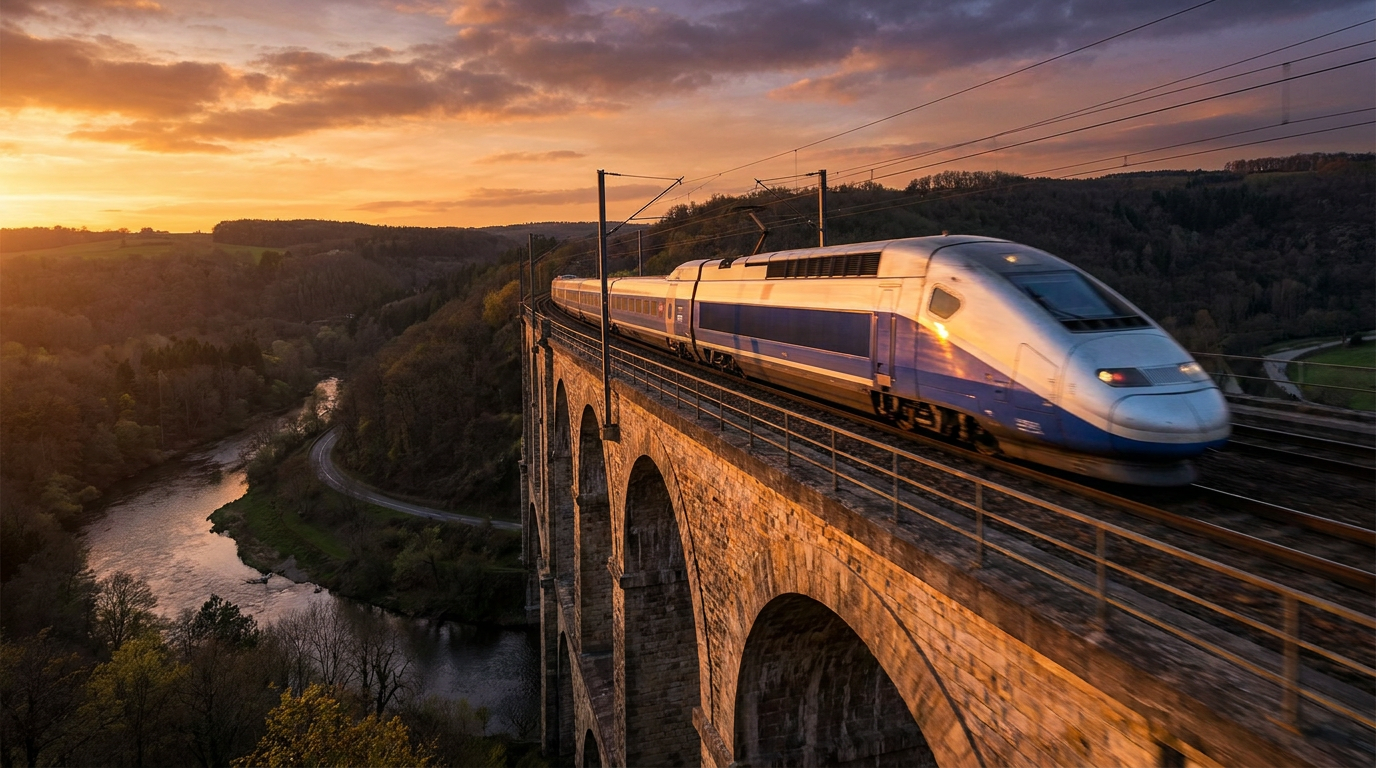
- EU Policymakers & Environmentalists
- Argue that a unified, high-speed rail network is essential for meeting 2050 climate goals and replacing short-haul flights.
- Aviation Industry & Pragmatists
- Caution that rail expansion is slow, carbon-intensive to build, and only addresses a small fraction of total transport emissions.
- Consumer Rail Advocates
- Focus on grassroots solutions and unified ticketing to revive practical, affordable cross-border routes.
What's not represented
- · Local communities affected by new high-speed rail construction
- · Budget airline executives
Why this matters
A unified European rail network promises to fundamentally change how millions of people travel, offering a viable, low-stress, and highly sustainable alternative to the friction of modern air travel.
Key points
- The EU plans to double high-speed rail traffic by 2030 and triple it by 2050.
- New infrastructure aims to halve travel times on major routes, like Berlin to Copenhagen.
- Sleeper trains are experiencing a major revival, with new routes launching in 2026.
- Taking a train can reduce a passenger's carbon footprint by up to 90% compared to flying.
- The EU is mandating unified digital signaling and cross-border ticketing platforms.
- Aviation advocates argue rail expansion is too costly and only addresses a fraction of emissions.
The romance of European rail is meeting the urgency of modern climate policy. In late 2025, the European Commission unveiled a sweeping High-Speed Rail Action Plan designed to fundamentally rewire how the continent moves. The objective is highly ambitious: to double high-speed rail traffic by 2030 and triple it by 2050, effectively replacing short-haul flights with a seamless, electrified ground network.[1][2]
The core of the strategy is to make train travel a faster, greener, and more affordable alternative for cross-border journeys. The plan targets a 49,400-kilometer core network connecting all major EU capitals at speeds exceeding 250 kilometers per hour. By breaking down national silos, the EU hopes to create a system where taking the train is the default choice for any journey under a thousand kilometers.[2]
The immediate consumer impact of this rail renaissance is already visible in the revival of the sleeper train. After years of steady decline, overnight routes are surging back into fashion. Dutch operator European Sleeper recently confirmed it will revive the popular Paris-Berlin night train in early 2026, stepping in to fill the void after French state operator SNCF withdrew from the route due to subsidy cuts.[3]
This grassroots revival is being matched by state-backed expansions across the continent. Polish state rail operator PKP is launching the EN Carpatia service connecting Warsaw to Vienna, Budapest, and Munich, while Swiss Federal Railways is preparing a new sleeper link from Basel to Copenhagen. These rolling hotels eliminate the need for a night's accommodation while entirely bypassing the friction of airport security and baggage claims.[3][7]
But the broader EU strategy relies on daytime speed. The Commission's blueprint promises to halve travel times on key international corridors. By 2030, the journey from Berlin to Copenhagen is projected to drop from seven hours to just four. By 2035, new links will connect Sofia and Athens in six hours, while a massive southwestern corridor will allow passengers to travel from Paris to Lisbon via Madrid in roughly nine hours.[1]

The environmental evidence driving this massive infrastructure shift is overwhelming. Transportation remains a stubborn hurdle in the EU's pledge to achieve climate neutrality by 2050, with aviation emissions growing rapidly in the years leading up to the pandemic. Independent research commissioned by Eurostar found that taking a high-speed train between London and Paris cuts a passenger's carbon footprint by a staggering 90% compared to flying.[2][4]
Trains are inherently more energy-efficient, consuming roughly 0.15 kWh per passenger-kilometer—about four times less energy than an aircraft requires. Furthermore, because high-speed rail networks in countries like France, Switzerland, and Austria are powered largely by low-carbon or renewable electricity grids, the operational emissions are a tiny fraction of those produced by kerosene-burning jets.[4][7]

Trains are inherently more energy-efficient, consuming roughly 0.15 kWh per passenger-kilometer—about four times less energy than an aircraft requires.
Yet, the mechanism for achieving a unified European network is fraught with historical and technical friction. Historically, rail has been a fiercely national enterprise. Cross-border travel is currently hampered by a patchwork of different track gauges, incompatible signaling systems, and varying rolling stock specifications that force trains to stop or change locomotives at national borders.[2]
To fix this fragmentation, the EU is not proposing a single centralized megaproject, but rather a corridor-based approach under the Trans-European Transport Network (TEN-T). By 2026, the bloc will revise rules to simplify train driver certification across borders and mandate the rollout of the European Rail Traffic Management System (ERTMS) to harmonize digital signaling across all member states.[1]
The most visible hurdle for consumers, however, is cost. A comprehensive study by Greenpeace analyzed over 100 routes and found that taking the train in Europe is, on average, twice as expensive as flying. On routes involving the UK, where budget airlines dominate, rail can be up to four times more expensive than a low-cost flight.[6]
This price disparity is largely driven by uneven state subsidies. The European aviation sector benefits from an estimated €34 billion in tax breaks—including sweeping exemptions on kerosene fuel—compared to just €12 billion allocated to rail. Low-cost airlines exploit these structural advantages to offer fares that national rail operators, who must pay track access charges and VAT, simply cannot match.[6]

The EU's new plan attempts to address this by proposing legislation to improve cross-border ticketing systems, forcing operators to share data so passengers can book multi-country journeys on a single platform. The Commission is also pushing to ban the anticompetitive scrapping of older rolling stock, fostering a second-hand market to lower barriers to entry for new rail startups.[1]
Not everyone agrees that rail is the ultimate silver bullet for transport emissions. The aviation industry, represented by bodies like Eurocontrol, cautions that shifting flights under 1,000 kilometers to rail would only reduce total aviation CO2 emissions by 2% to 4%, as the vast majority of emissions come from long-haul intercontinental flights.[5]
Eurocontrol argues that building thousands of kilometers of new high-speed track carries its own massive carbon footprint in concrete and steel, alongside significant land-use and biodiversity impacts. Instead of a zero-sum "plane versus train" battle, they advocate for multimodal complementarity—using trains to feed long-haul airline hubs while aviation focuses its capital on decarbonizing through Sustainable Aviation Fuel.[5]

The ultimate test of Europe's rail renaissance will be funding. Completing the TEN-T high-speed network by 2040 is estimated to cost €345 billion, and tripling the network could push the price tag to €546 billion. While the expected societal benefits are modeled at €750 billion, cash-strapped national governments often prioritize local commuter lines over flashy international links.[1][2]
Despite the financial and bureaucratic hurdles, the momentum is undeniable. With binding timelines set for 2027 to eliminate cross-border bottlenecks, and a new generation of travelers actively seeking low-carbon, high-comfort alternatives, Europe is laying the groundwork for a future where the train is once again the default way to cross the continent.[1][7]
How we got here
2021
The European Commission sets an initial goal to double high-speed rail traffic by 2030.
Late 2025
The EU unveils its comprehensive High-Speed Rail Action Plan to eliminate cross-border bottlenecks.
March 2026
Dutch operator European Sleeper is scheduled to revive the Paris-Berlin night train.
2027
Deadline for the EU to establish binding timelines for removing major cross-border rail bottlenecks.
2030
Target date for major travel time reductions, including a four-hour Berlin-Copenhagen route.
Viewpoints in depth
EU Policymakers & Environmentalists
Argue that a unified, high-speed rail network is essential for meeting 2050 climate goals and replacing short-haul flights.
This camp views the current fragmentation of European rail as a market failure that requires aggressive top-down intervention. They point to the massive disparity in subsidies—where aviation enjoys tax-free kerosene while rail operators pay track access charges—as the primary reason trains remain more expensive than budget airlines. By mandating unified signaling (ERTMS) and forcing operators to share ticketing data, they believe rail can capture the majority of the sub-1,000km travel market, drastically cutting the continent's carbon footprint.
Aviation Industry & Pragmatists
Caution that rail expansion is slow, carbon-intensive to build, and only addresses a small fraction of total transport emissions.
Aviation bodies like Eurocontrol argue that the "plane versus train" debate is a distraction. They highlight that flights under 500 kilometers account for less than 4% of aviation's total CO2 emissions. Furthermore, pouring hundreds of billions of euros into new concrete viaducts and steel tracks carries a massive upfront carbon cost and disrupts local biodiversity. Instead of trying to eliminate short-haul flights entirely, this camp advocates for "multimodal" travel—using existing rail to feed major airport hubs—while focusing heavy investment on Sustainable Aviation Fuels (SAF) to decarbonize long-haul routes.
Consumer Rail Advocates
Focus on grassroots, community-funded solutions to revive practical sleeper routes abandoned by state operators.
Independent operators like European Sleeper represent a bottom-up approach to the rail renaissance. Frustrated by state-owned monopolies that prioritize profitable daytime high-speed routes over overnight travel, these startups use community-based ownership models to lease second-hand rolling stock. They argue that passengers don't always need 250 km/h speeds; they simply need practical, comfortable overnight routes that save them the cost of a hotel and the hassle of an airport security line.
What we don't know
- Whether national governments will actually commit the estimated €546 billion required to complete the network.
- How quickly low-cost airlines will adjust their pricing strategies to compete with faster trains.
- If the EU can successfully force fiercely independent national rail operators to share ticketing data.
Key terms
- TEN-T (Trans-European Transport Network)
- A planned network of roads, railways, airports, and water infrastructure across the European Union designed to close geographical gaps.
- ERTMS (European Rail Traffic Management System)
- A single, interoperable digital signaling and speed-control system designed to replace Europe's fragmented national rail standards.
- Rolling Stock
- The locomotives, carriages, and other vehicles used on a railway.
- Track Access Charges
- Fees paid by train operators to national infrastructure managers for the right to run trains on their tracks.
Frequently asked
Why are trains in Europe often more expensive than flights?
Aviation benefits from massive tax exemptions, including untaxed kerosene fuel, while rail operators must pay track access charges and VAT. Low-cost airlines use these advantages to undercut train fares.
What is the EU doing to make cross-border train travel easier?
The European Commission is mandating unified ticketing platforms, standardizing train driver certifications, and rolling out a single digital signaling system to replace fragmented national networks.
Are sleeper trains making a comeback?
Yes. Independent startups like European Sleeper and state operators like Austria's ÖBB are launching new overnight routes, including a revived Paris-Berlin service scheduled for 2026.
Sources
Source coverage
7 outlets
3 viewpoints surfaced







[1]European CommissionEU Policymakers & Environmentalists
Commission launches plan to accelerate high-speed rail across Europe
Read on European Commission →[2]The GuardianEU Policymakers & Environmentalists
Expanded high-speed rail network part of vision for Europe, says EU's transport chief
Read on The Guardian →[3]The IndependentConsumer Rail Advocates
European Sleeper to revive popular Paris-Berlin night train next year
Read on The Independent →[4]Seat 61Consumer Rail Advocates
CO2 emissions: Train & ferry versus plane
Read on Seat 61 →[5]EurocontrolAviation Industry & Pragmatists
Plane and train: Getting the balance right
Read on Eurocontrol →[6]GreenpeaceEU Policymakers & Environmentalists
Ticket Prices of Planes Vs Trains: A Europe-wide Analysis
Read on Greenpeace →[7]Factlen Editorial TeamConsumer Rail Advocates
Synthesis by Factlen editorial team
Read on Factlen Editorial Team →
Every angle. Every day.
Get world stories with full source coverage and perspective breakdowns delivered to your inbox.