
The Rise of Astrotourism: Inside the World's Certified Dark Sky Sanctuaries
As global light pollution increases by 10% annually, travelers are flocking to certified 'Dark Sky Places' to experience pristine nightscapes. This booming astrotourism sector is injecting billions into rural economies while driving a new wave of nocturnal conservation.
By Factlen Editorial Team
- Conservationists & Ecologists
- Advocates focused on reversing light pollution to protect nocturnal ecosystems.
- Rural Economic Developers
- Municipalities and park services leveraging dark skies for financial revitalization.
- Hospitality & Travel Operators
- Hotels and tour companies capitalizing on the 'noctourism' consumer trend.
What's not represented
- · Local residents in gateway communities who may oppose strict new lighting ordinances on their private property.
- · Professional astronomers concerned about satellite interference from mega-constellations.
Why this matters
Light pollution is rapidly erasing the night sky for the majority of the global population. By traveling to certified dark sky destinations, tourists are financially incentivizing local governments to implement strict lighting ordinances, effectively funding the conservation of nocturnal ecosystems and our shared celestial heritage.
Key points
- Global light pollution is growing by 10% annually, driving a surge in travelers seeking out pristine night skies.
- DarkSky International has certified over 200 locations globally that meet strict criteria for darkness and lighting management.
- Astrotourism is projected to inject billions into rural economies by driving overnight stays and off-season travel.
- The hospitality industry is responding with specialized 'noctourism' offerings, including resident astronomers and DarkSky Approved lodging.
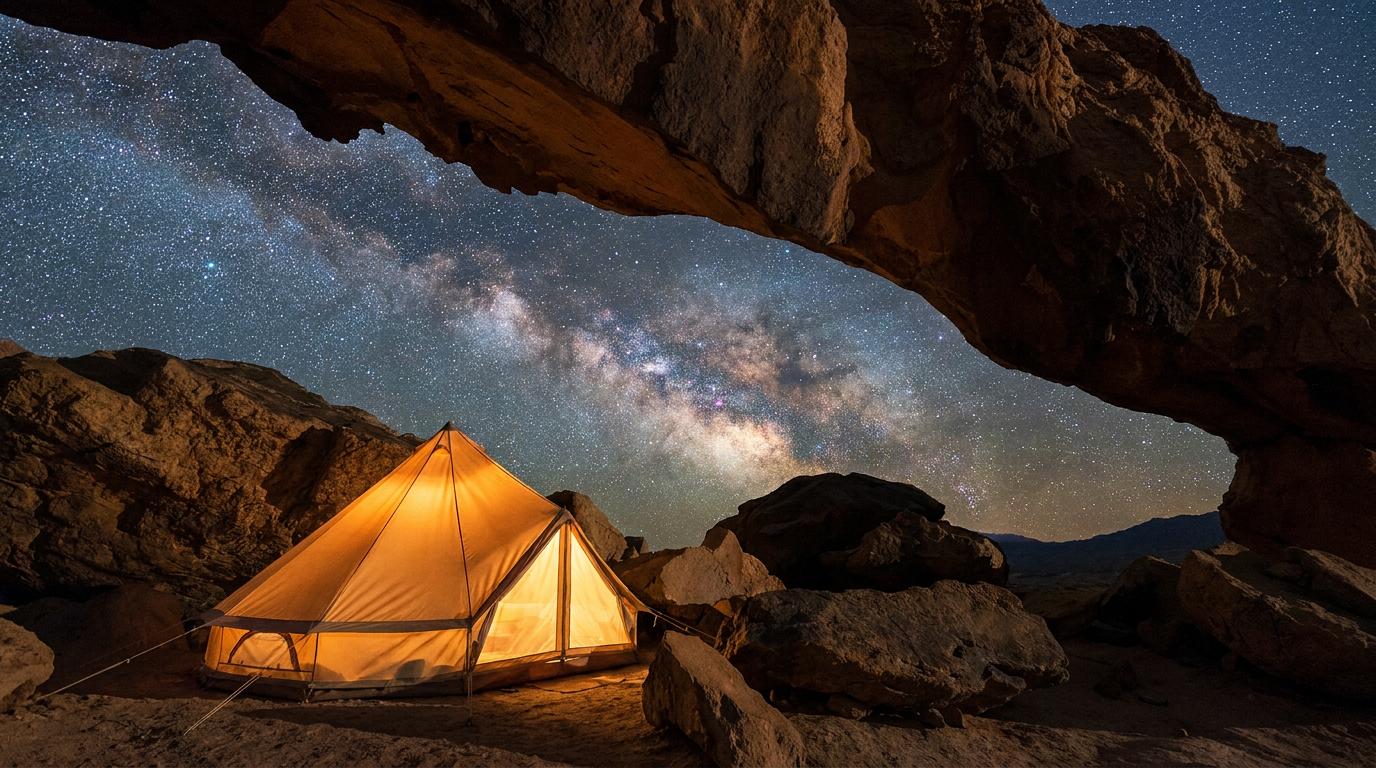
Standing under a starry sky is a foundational human experience, yet it is rapidly becoming a luxury. Global light pollution is increasing by roughly 10 percent every year, effectively erasing the cosmos for the majority of the world's population. In response, a powerful new travel movement has emerged: astrotourism. Rather than seeking out sun-drenched beaches or bustling cities, a growing demographic of travelers is actively chasing the dark, journeying to remote corners of the globe where the Milky Way is still visible to the naked eye.[1][2]
This niche interest has officially crossed into the mainstream travel industry. According to recent travel data, 62 percent of travelers are now expressing interest in darker-sky destinations and 'noctourism' experiences. The appeal is multifaceted—stargazing is increasingly recognized as a mindful activity that soothes the nervous system and forces a disconnection from overstimulated, screen-heavy lives. It requires travelers to slow down, adjust their vision, and engage with the natural world on a cosmic scale. For many, it is an antidote to the relentless pace of modern urban living.[1][2]
The year 2026 is acting as a massive catalyst for this trend. Astronomers have flagged it as one of the most spectacular years for skywatching in the decade. The current solar maximum is triggering exceptional northern lights that reach unusually far south, while a rare six-planet alignment and a total solar eclipse visible from Europe in August are driving unprecedented booking volumes for remote observatories and wilderness lodges. Travelers are planning their entire itineraries around the astronomical calendar, prioritizing clear skies over traditional tourist landmarks.[1][6]
At the center of this movement is DarkSky International, a conservation organization that acts as the global arbiter of nocturnal preservation. Modeled after the UNESCO World Heritage program, DarkSky's International Dark Sky Places (IDSP) program certifies locations that possess an exceptional quality of starry nights and have committed to protecting them. Today, there are over 200 certified places across 22 countries, serving as the gold standard for travelers seeking guaranteed darkness. These designations are not merely symbolic; they represent a rigorous, ongoing commitment to environmental stewardship and light mitigation.[1][3]

Achieving this coveted certification is a grueling, multi-year process. Destinations cannot simply be geographically remote; they must empirically prove their darkness using Sky Quality Meters (SQM) to measure 'skyglow.' Furthermore, applicants must implement stringent, legally binding lighting management plans. This involves retrofitting local municipal infrastructure with warm-hued bulbs (under 3000K), installing directional shielding to prevent light from spilling upward into the atmosphere, and committing to ongoing community education programs to ensure long-term compliance. Auditors regularly verify these metrics, meaning a destination can lose its status if light pollution begins to creep back in.[3]
The certifications are divided into distinct tiers based on the location's characteristics and conservation goals. 'Sanctuaries' are the most remote and fragile, often located in extreme wilderness areas with zero nearby threats. 'Reserves' feature a dark core surrounded by a populated periphery that agrees to strict lighting controls. 'Parks' are protected public or private conservation lands, while 'Communities' are towns or cities—like Flagstaff, Arizona—that have successfully implemented comprehensive dark-sky zoning codes despite their population density. This tiered system allows both isolated deserts and proactive municipalities to participate in the preservation effort.[2][3]
Beyond the romance of stargazing, astrotourism has proven to be a formidable economic engine, particularly for rural and gateway communities. Because observing the night sky inherently requires travelers to be present after dark, it virtually guarantees overnight stays. This dramatically increases local spending on lodging, food, and equipment compared to day-trippers who might only visit a national park for a few hours. The financial incentive to protect the night sky is becoming impossible for local governments to ignore. By monetizing darkness, these regions are finding a sustainable path to economic revitalization.[4][5]
Beyond the romance of stargazing, astrotourism has proven to be a formidable economic engine, particularly for rural and gateway communities.
A landmark economic study focusing on the Colorado Plateau—a region spanning parts of Arizona, Colorado, New Mexico, and Utah—quantified this massive financial impact. Researchers conservatively estimated that non-local tourists drawn specifically by dark skies will spend $5.8 billion in the region over a ten-year period. This influx of capital is projected to generate $2.4 billion in higher wages and support over 10,000 additional jobs annually, proving that conservation and economic growth can be deeply intertwined. These figures have caught the attention of tourism boards worldwide, prompting a rush to develop similar astrotourism infrastructure.[4][5]

Crucially, astrotourism also helps solve one of the travel industry's biggest logistical challenges: seasonality. Because the clearest skies and longest nights often occur during the colder, non-summer months, dark sky destinations see a flattening of the traditional tourist curve. This year-round visitation allows local businesses to maintain steady employment rather than relying on a frantic three-month summer rush, creating a more stable and resilient local economy that doesn't collapse when the weather turns cold. Winter stargazing, despite the chill, is becoming a premium experience for those willing to brave the elements for unparalleled cosmic clarity.[4][5]
The ecological benefits of the dark sky movement are equally profound, extending far beyond the tourism sector. Artificial light at night is a severe pollutant that disrupts nocturnal ecosystems, altering predator-prey dynamics, confusing migratory birds, and impacting insect reproduction. By incentivizing communities to dim their lights for tourist dollars, astrotourism inadvertently creates massive conservation zones that protect local wildlife. The same shielded, warm-hued lighting that allows tourists to see the Milky Way also allows nocturnal animals to navigate and thrive. In this way, the economic demands of astrotourism directly fund vital ecological restoration.[3][4]
The hospitality industry is rapidly adapting to this surge in demand. Telescopes in hotel rooms are no longer just decorative props; they are essential amenities. Luxury properties are hiring resident astronomers, building private observatories, and designing suites with glass ceilings. To standardize this trend, the new DarkSky Approved Lodging Program was recently launched, certifying properties like Under Canvas in Utah that meet strict lighting and educational criteria, ensuring guests receive an authentic, low-impact stargazing experience. These certified lodges serve as models for sustainable hospitality, proving that luxury and environmental responsibility can coexist.[1][3]

Globally, a few premier hotspots dominate the astrotourism map. Chile's Atacama Desert remains the undisputed capital, hosting roughly 70 percent of the world's astronomical observation capacity. The region's high altitude, bone-dry air, and complete lack of light pollution make it a mecca for both professional astronomers and tourists. Organized tour capacity in the Atacama has grown by over 50 percent in recent years, with visitors flocking to see the Magellanic Clouds and the center of the Milky Way in unprecedented detail. The sheer scale of the desert offers a humbling perspective that draws travelers back repeatedly.[1][6]
In New Zealand, the Aoraki Mackenzie International Dark Sky Reserve offers a deeply cultural approach to the cosmos. Here, astrotourism experiences at facilities like the Dark Sky Project blend western astronomy with Indigenous Māori science and celestial storytelling. This provides a holistic view of the universe that connects the stars to human heritage, teaching visitors how ancient navigators used the night sky to cross the Pacific. It is a powerful reminder that the stars are a shared cultural inheritance. This integration of Indigenous knowledge elevates the experience from simple observation to profound cultural immersion.[2][6]

North America also boasts a massive concentration of protected skies. Utah leads the continent with 28 certified dark sky communities and parks, creating a sprawling network of accessible stargazing sites. Meanwhile, Canada's Jasper National Park operates as one of the world's largest accessible dark sky preserves, spanning nearly 11,000 square kilometers. Here, visitors can frequently watch the aurora borealis reflect off glacial lakes, an experience that draws hundreds of thousands of dedicated astro-focused visitors annually. These vast North American reserves demonstrate that large-scale nocturnal conservation is possible even in highly developed nations.[1][6]
As astrotourism continues to scale, the ultimate challenge will be managing its success. The very nature of a Dark Sky Sanctuary requires 'gentle pacing'—these are fragile environments that cannot support mass, high-impact tourism without losing the pristine darkness that makes them valuable. For now, however, the movement represents a rare win-win: a travel trend that asks us to turn off the lights, look up, and leave the world a little wilder than we found it. If managed responsibly, astrotourism could be the key to preserving the night sky for generations to come.[2][7]
How we got here
2001
Flagstaff, Arizona becomes the world's first International Dark Sky Community.
2007
The first International Dark Sky Parks are certified in the US and Canada.
2024
The DarkSky Approved Lodging Program is launched to certify eco-friendly hotels.
2026
A solar maximum and major eclipses drive record mainstream demand for astrotourism.
Viewpoints in depth
Conservationists & Ecologists
Advocates focused on reversing light pollution to protect nocturnal ecosystems.
For environmental scientists and organizations like DarkSky International, astrotourism is a means to an end. Their primary objective is mitigating the ecological damage caused by artificial light at night (ALAN). They point to extensive research showing that skyglow disrupts migratory bird patterns, decimates insect populations, and alters predator-prey dynamics. By turning dark skies into a monetizable tourist attraction, conservationists can successfully lobby local governments to implement strict lighting ordinances that they otherwise would have ignored.
Rural Economic Developers
Municipalities and park services leveraging dark skies for financial revitalization.
Gateway communities near national parks often struggle with severe seasonal economic swings, relying entirely on summer day-trippers. Economic developers view astrotourism as a structural fix. Because stargazing requires darkness, it forces tourists to stay overnight, drastically increasing their spend on local lodging and dining. Furthermore, because the clearest skies occur in the winter, it drives off-season visitation, creating year-round economic stability and supporting thousands of permanent jobs in rural areas.
Hospitality & Travel Operators
Hotels and tour companies capitalizing on the 'noctourism' consumer trend.
The travel industry is rapidly pivoting to meet the demand of the 62% of travelers seeking low-light destinations. Luxury lodges are investing heavily in astrotourism infrastructure, from hiring resident astronomers to building on-site observatories and retrofitting properties to meet DarkSky Approved Lodging standards. For these operators, the night sky is a premium amenity that differentiates their properties in a crowded market, allowing them to offer transformational, wellness-adjacent experiences.
What we don't know
- Whether the rapid influx of tourists to fragile 'Dark Sky Sanctuaries' will eventually degrade the very environments they are coming to see.
- How the proliferation of low-earth orbit satellite mega-constellations will impact ground-based astrotourism in the coming decade.
Key terms
- Astrotourism
- A form of travel centered on observing celestial phenomena and experiencing nightscapes free from artificial light.
- Skyglow
- The brightening of the night sky over inhabited areas, caused by artificial light scattering in the atmosphere.
- Bortle Scale
- A nine-level numeric scale that measures the night sky's brightness and the astronomical observability of celestial objects.
- Solar Maximum
- The period of greatest solar activity in the sun's 11-year cycle, which dramatically increases the frequency and intensity of auroras.
Frequently asked
What is a Dark Sky Sanctuary?
It is the rarest and most remote tier of Dark Sky certification, awarded to fragile conservation areas with zero nearby light pollution threats.
How is light pollution measured?
Scientists and conservationists use a Sky Quality Meter (SQM) to measure 'skyglow,' or the luminance of the night sky, often referencing the Bortle Scale.
Why is 2026 a major year for astrotourism?
The year features a solar maximum producing intense northern lights, a rare six-planet alignment, and a total solar eclipse visible from Europe.
Does astrotourism only happen in the summer?
No, in fact, the clearest skies and longest nights occur during the winter months, making it a highly popular off-season travel activity.
Sources
Source coverage
7 outlets
3 viewpoints surfaced







[1]ForbesHospitality & Travel Operators
The Rise Of Astrotourism: 25 Hotels Leading The Stargazing Trend
Read on Forbes →[2]Outside MagazineHospitality & Travel Operators
Best Places for Stargazing and Astrotourism in 2026
Read on Outside Magazine →[3]DarkSky InternationalConservationists & Ecologists
Apply for Dark Sky Place certification
Read on DarkSky International →[4]U.S. National Park ServiceConservationists & Ecologists
An Economic Value - Night Skies
Read on U.S. National Park Service →[5]Missouri State UniversityRural Economic Developers
Dark sky tourism: economic impacts on the Colorado Plateau Economy
Read on Missouri State University →[6]PixidiaHospitality & Travel Operators
Astrotourism 2026: 10 Best Starry Skies & Dark Sky Reserves
Read on Pixidia →[7]Factlen Editorial TeamRural Economic Developers
Synthesis by Factlen editorial team
Read on Factlen Editorial Team →
Every angle. Every day.
Get travel stories with full source coverage and perspective breakdowns delivered to your inbox.