
US and Iran Reach Agreement to End War and Reopen Strait of Hormuz
The United States and Iran have agreed to a permanent ceasefire and the reopening of the Strait of Hormuz, ending a 15-week conflict that disrupted global energy markets. The deal, mediated by Pakistan and Qatar, is expected to be formally signed in Geneva on Friday.
By Factlen Editorial Team
- U.S. Administration
- Views the deal as a successful coercion campaign that neutralized threats and reopened global trade.
- Geopolitical Analysts
- Warns that while the immediate economic crisis is averted, the underlying structural conflicts remain unresolved.
- Iranian Perspective
- Frames the agreement as a victory of resistance that broke the U.S. naval blockade and secured economic relief.
- European Allies
- Relieved by the de-escalation but focused on securing freedom of navigation and containing future unilateral U.S. actions.
What's not represented
- · Israeli Government
- · Lebanese Civilians
- · Arab Gulf States
Why this matters
The reopening of the Strait of Hormuz immediately eases a severe global energy bottleneck, sending oil prices down and stabilizing markets. However, the fragile truce leaves unresolved questions about Israel's ongoing operations in Lebanon and the long-term status of Iran's nuclear program.
Key points
- The U.S. and Iran agreed to a permanent ceasefire, ending a 15-week war that began in late February.
- The deal requires the immediate reopening of the Strait of Hormuz and the lifting of the U.S. naval blockade.
- Mediated by Pakistan and Qatar, the agreement will be formally signed in Geneva on Friday.
- Global oil prices dropped 4% to roughly $84 a barrel following the announcement.
- Disagreements remain over whether the ceasefire forces Israel to halt its offensive in Lebanon.
- The truce initiates a 60-day negotiation period focused on Iran's nuclear program and sanctions relief.
The United States and Iran have reached a sweeping agreement to end their 15-week war, committing to a permanent ceasefire and the immediate reopening of the Strait of Hormuz. The breakthrough, mediated by Pakistan and Qatar, halts a conflict that began in late February and severely disrupted global energy markets. The cessation of hostilities marks a critical turning point in a war that began with U.S. and Israeli airstrikes—which killed Iranian Supreme Leader Ali Khamenei—and quickly escalated into a regional crisis involving naval blockades, drone swarms, and ballistic missile barrages across the Middle East.[1][2][4]
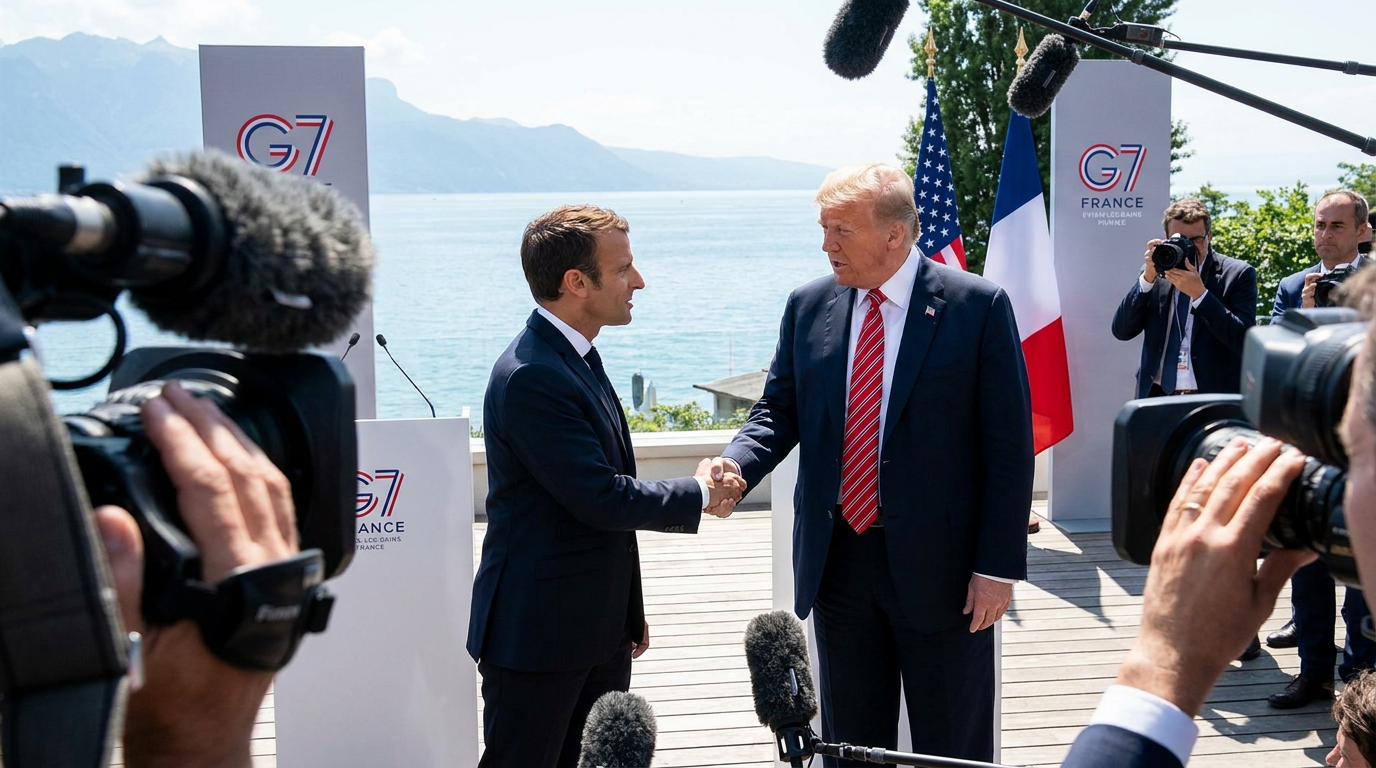
President Donald Trump announced the agreement while attending the Group of Seven (G7) summit in Evian-les-Bains, France, declaring that the deal is "all signed" and that the vital waterway is already partially open. Under the framework, the U.S. will lift its naval blockade on Iranian ports, while Tehran has agreed to cease military operations on all fronts. The formal signing of the memorandum of understanding is scheduled for Friday in Geneva, Switzerland, where representatives will cement the terms that took weeks of intense back-channel diplomacy in Islamabad and Doha to finalize.[1][2][3][6]

The economic relief was immediate and pronounced across global markets. Global oil prices slid 4 percent to roughly $84 a barrel at the start of trading on Monday, reflecting market optimism that the 20 percent of the world's daily crude supply that transits the Strait of Hormuz will soon flow freely again. The closure of the strait had triggered a severe global energy bottleneck, prompting fears of a prolonged recession and spiking inflation. Stock markets rallied on the news, with investors reacting positively to the prospect of stabilized supply chains and significantly reduced geopolitical risk premiums.[4][5]
Despite the celebratory tone in Evian-les-Bains, significant friction remains over the deal's implementation on the ground. A major sticking point is the status of Lebanon, where Israel has pushed its ground invasion deeper to target Hezbollah militants. Iranian officials insist the ceasefire covers all fronts, including Lebanon, but Israeli Prime Minister Benjamin Netanyahu has not agreed to withdraw forces from the occupied southern territory. Trump expressed frustration with the situation, telling reporters he was "not happy with the way Israel has handled themselves with Lebanon and with Hezbollah," suggesting a growing rift over the war's conclusion.[1][4][6][7]

Despite the celebratory tone in Evian-les-Bains, significant friction remains over the deal's implementation on the ground.
Another brewing conflict centers on the long-term control and management of the Strait of Hormuz. While U.S. Vice President JD Vance stated the waterway will be open "in a toll-free way for the long term," Iranian state media reported that Tehran only intends to pause "service fees" for 60 days before resuming charges on transiting vessels. European leaders at the G7, fiercely committed to freedom of navigation, have pushed back against any formulation that allows Iran to toll international shipping, viewing it as an unacceptable concession that could set a dangerous precedent for global maritime law.[3][8]
To help secure the strait and enforce the fragile agreement, French President Emmanuel Macron offered to dispatch fighter aircraft for observation flights and deploy France's nuclear-powered aircraft carrier, which is already stationed in the Middle East. The offer reflects a broader G7 effort to stabilize the region, even as several European leaders remain highly critical of Trump's unilateral decision to launch the war in February without consulting NATO allies. The European intervention aims to ensure the waterway remains open without relying solely on American naval power, which has been stretched thin by the recent blockade operations.[3][6]

The ceasefire agreement also paves the way for a critical 60-day window of technical negotiations regarding Iran's nuclear program. The talks will focus heavily on the status of Iran's highly enriched uranium stockpile, which remains a central driver of the broader conflict. Tehran is expected to repeat its pledges not to acquire nuclear weapons and will engage in detailed discussions with U.S. officials. In exchange for verifiable constraints on its nuclear ambitions, Iran is anticipated to receive significant economic incentives, including the release of billions of dollars in frozen assets and targeted sanctions relief.[4][8]
While the truce marks a massive de-escalation, geopolitical analysts warn that the underlying structural tensions mean the region remains highly volatile. Iran emerges from the conflict with a battered economy and degraded military capabilities, but its regime survived the initial decapitation strikes. As diplomats prepare for the Geneva signing, the success of the agreement will depend entirely on whether the U.S. and Iran can navigate the fraught 60-day nuclear negotiation window without triggering another cycle of retaliation, or allowing the ongoing Israeli operations on the Lebanon front to derail the broader peace framework.[4]
How we got here
Feb 28, 2026
U.S. and Israel launch surprise airstrikes against Iran, killing Supreme Leader Ali Khamenei and triggering the war.
April 8, 2026
A temporary two-week ceasefire is brokered by Pakistan, though tensions remain high over the closed Strait of Hormuz.
Mid-April 2026
The U.S. imposes a naval blockade on Iranian ports after direct talks in Islamabad fail to produce a lasting agreement.
June 14, 2026
Mediators announce a permanent ceasefire agreement, including the lifting of blockades and the reopening of the Strait.
June 15, 2026
President Trump confirms the deal is 'all signed' while attending the G7 summit in France.
June 19, 2026
The formal memorandum of understanding is scheduled to be signed in Geneva, Switzerland.
Viewpoints in depth
U.S. Administration's View
The White House frames the agreement as a decisive victory that neutralized a major threat and stabilized the global economy.
President Trump and his administration argue that the 15-week military campaign successfully degraded Iran's capabilities and forced Tehran to the negotiating table on American terms. By securing the reopening of the Strait of Hormuz and extracting commitments on the nuclear program, the administration claims it has achieved what previous diplomatic efforts could not, all while avoiding a prolonged ground occupation.
Iranian Government's View
Tehran portrays the ceasefire as a successful resistance that forced the U.S. to abandon its naval blockade.
Iranian state media and officials emphasize that the U.S. was 'forced to sign' the agreement to rescue the global economy from the energy crisis. They highlight the lifting of the naval blockade and the anticipated release of frozen assets as major concessions. Furthermore, hardliners within the regime maintain that Iran retains the right to manage the Strait of Hormuz, framing the 60-day pause on transit fees as a temporary goodwill gesture rather than a surrender of sovereignty.
European Allies' View
G7 leaders welcome the economic relief but remain deeply skeptical of the unilateral U.S. strategy that triggered the crisis.
European nations, particularly France, the UK, and Germany, are relieved that the immediate threat to global energy supplies is subsiding. However, they remain critical of the U.S. for launching the war without NATO consultation. Their current focus is on damage control—offering naval and air support to ensure the Strait of Hormuz remains a free international waterway, while pushing for a comprehensive, binding agreement on Iran's nuclear program to prevent future flare-ups.
What we don't know
- Whether Israel will agree to halt its military operations against Hezbollah in Lebanon as part of the broader ceasefire.
- How the U.S. and Europe will respond if Iran attempts to impose 'service fees' on ships transiting the Strait of Hormuz after 60 days.
- The specific technical concessions Iran will make regarding its stockpile of highly enriched uranium.
Key terms
- Strait of Hormuz
- A narrow, strategically vital waterway between the Persian Gulf and the Gulf of Oman through which roughly 20% of the world's oil supply passes.
- Naval Blockade
- A military operation in which the U.S. Navy prevented ships from entering or leaving Iranian ports to exert economic pressure.
- Highly Enriched Uranium
- Uranium that has been processed to a purity level close to what is required to build a nuclear weapon, a central issue in U.S.-Iran negotiations.
Frequently asked
When does the ceasefire take effect?
The cessation of hostilities is effective immediately, though the formal agreement will be signed on Friday, June 19, in Geneva.
Will oil prices go down?
Yes, global oil prices already dropped by 4% to around $84 a barrel in response to the news that the Strait of Hormuz will reopen.
Is the war in Lebanon over?
It remains unclear. Iran claims the ceasefire covers all fronts, including Lebanon, but Israel has not committed to withdrawing its forces.
Did Iran agree to give up its nuclear program?
Iran is expected to reiterate pledges not to acquire nuclear weapons, and the two sides will spend the next 60 days negotiating the technical details of its nuclear stockpile.
Sources
Source coverage
8 outlets
4 viewpoints surfaced








[1]PBS NewsHourGeopolitical Analysts
Deal is reached to end Iran war and Trump orders stop to U.S. naval blockade
Read on PBS NewsHour →[2]Al JazeeraIranian Perspective
US, Iran to sign a 'peace deal' on Friday: What we know
Read on Al Jazeera →[3]The GuardianEuropean Allies
Trump declares US-Iran peace deal 'all signed' as G7 leaders battle to tie up loose ends
Read on The Guardian →[4]CSISGeopolitical Analysts
The United States and Iran Announce a Deal to End the War | State of Play
Read on CSIS →[5]Financial TimesU.S. Administration
US, Iran agree ceasefire deal as Trump heads to G7 summit
Read on Financial Times →[6]Associated PressU.S. Administration
Live updates: Trump and other world leaders discuss Iran and Ukraine wars at G7 summit
Read on Associated Press →[7]ReutersEuropean Allies
Iran and Ukraine loom over G7 as France accommodates Trump
Read on Reuters →[8]ISWGeopolitical Analysts
Iran Update Special Report, June 15, 2026
Read on ISW →

More in news politics
See all 7 stories →US-Iran Relations
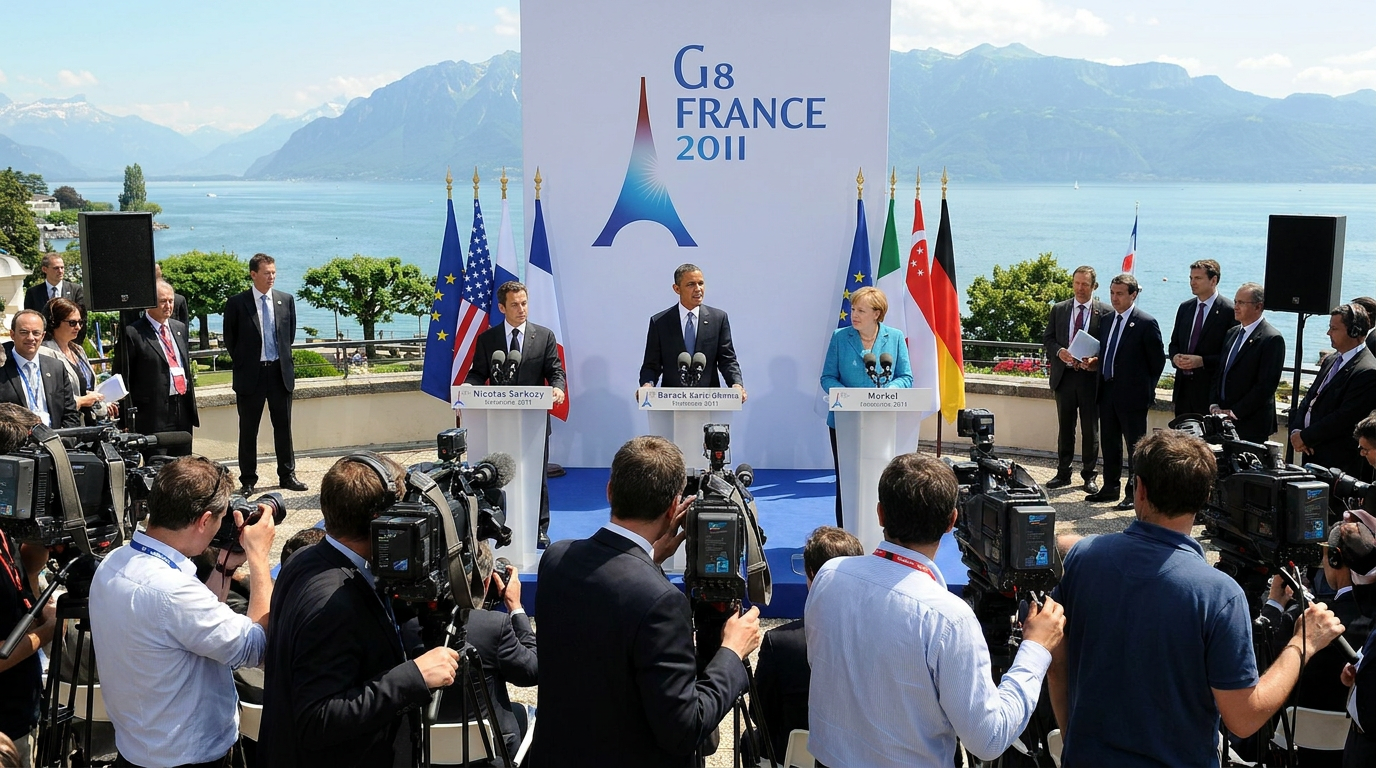
Senate Blocks War Powers Resolution as US-Iran Peace Deal Advances at G7
0 sources
Anti-ICE Protests
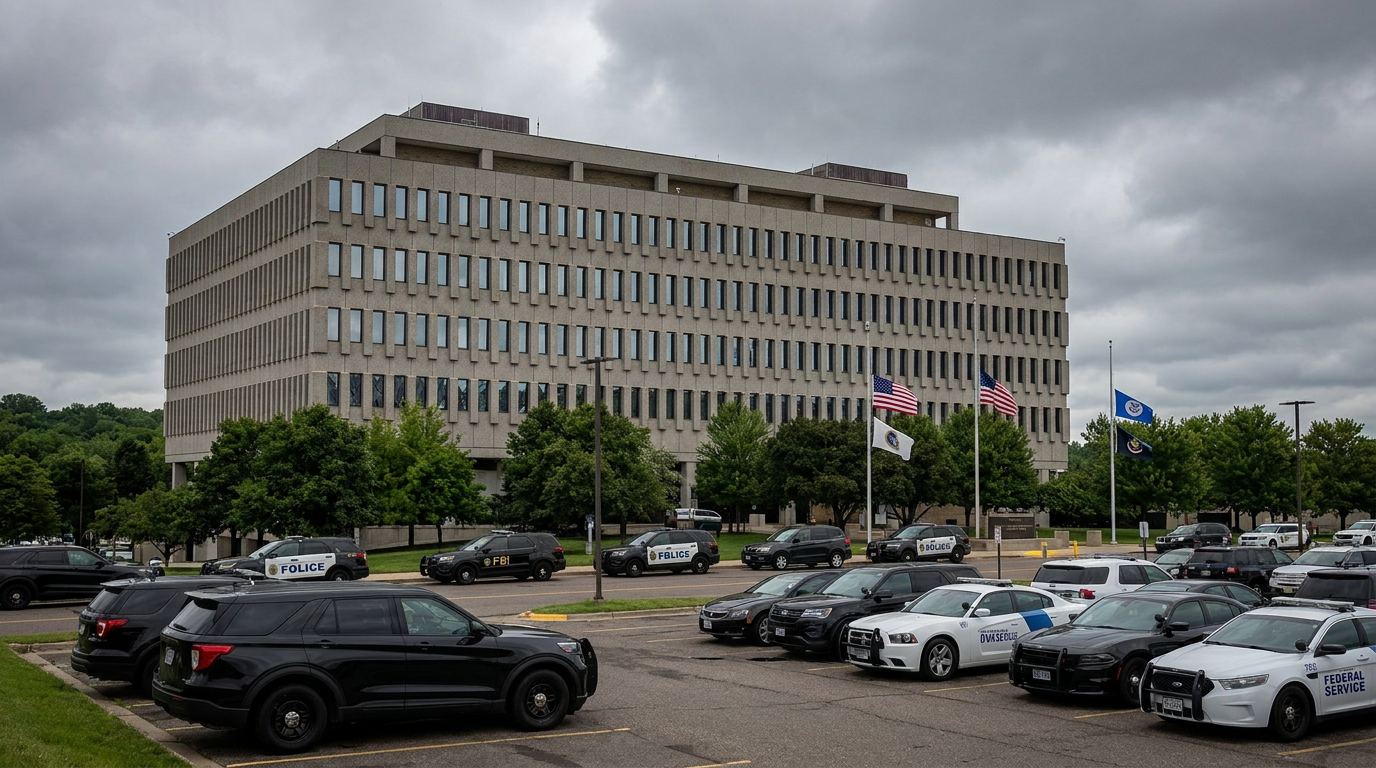
DOJ Charges 15 Minnesota Activists With Conspiring to Block ICE Operations
0 sources
Middle East Security
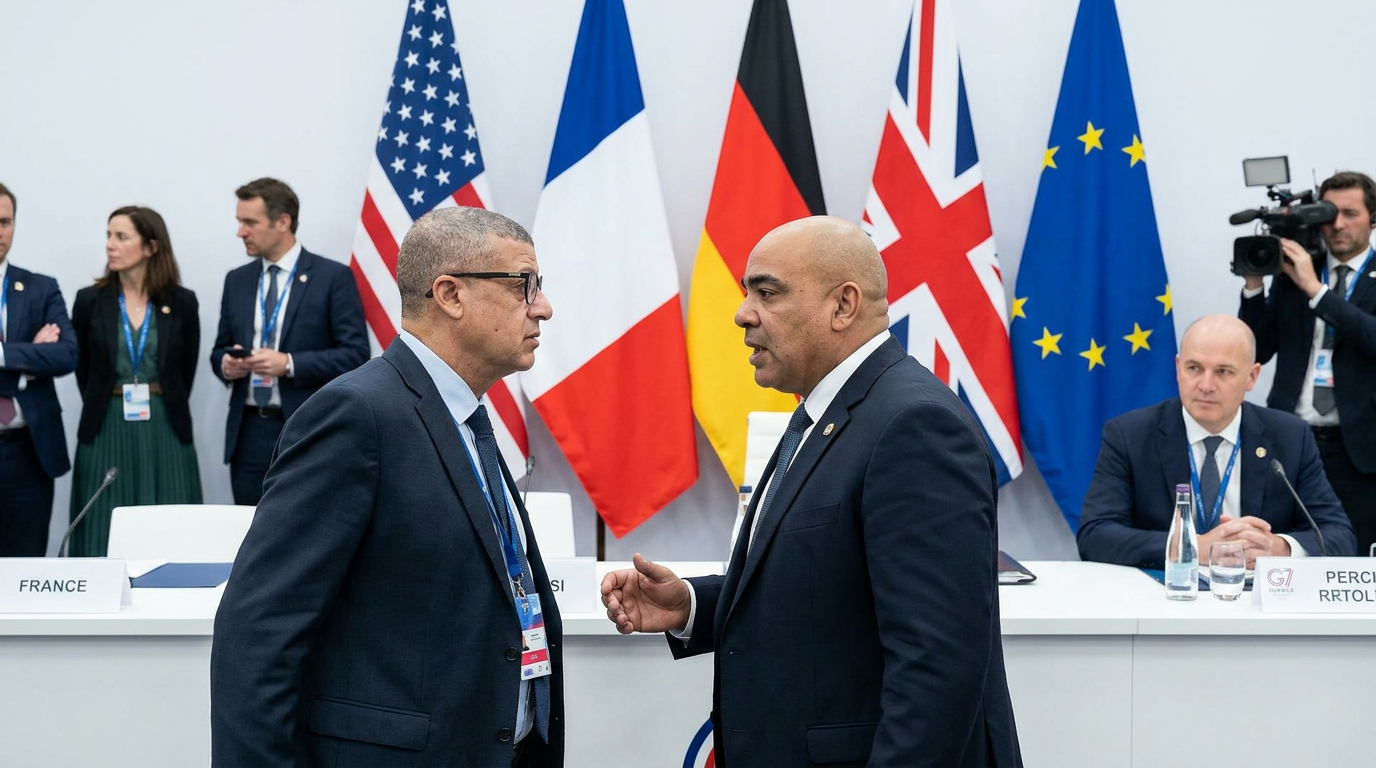
U.S. and Iran Reach Preliminary Peace Framework to End Conflict and Reopen Strait of Hormuz
0 sources
Climate Litigation
Trump Administration's Supreme Court Brief Clashes With EPA Climate Rollback
0 sources
Every angle. Every day.
Get news politics stories with full source coverage and perspective breakdowns delivered to your inbox.