
How Women's Professional Volleyball Finally Built a Billion-Dollar US Ecosystem
After decades of failed attempts, the United States now boasts two thriving professional women's volleyball leagues, backed by hundreds of millions in investment and record-breaking broadcast viewership.
By Factlen Editorial Team
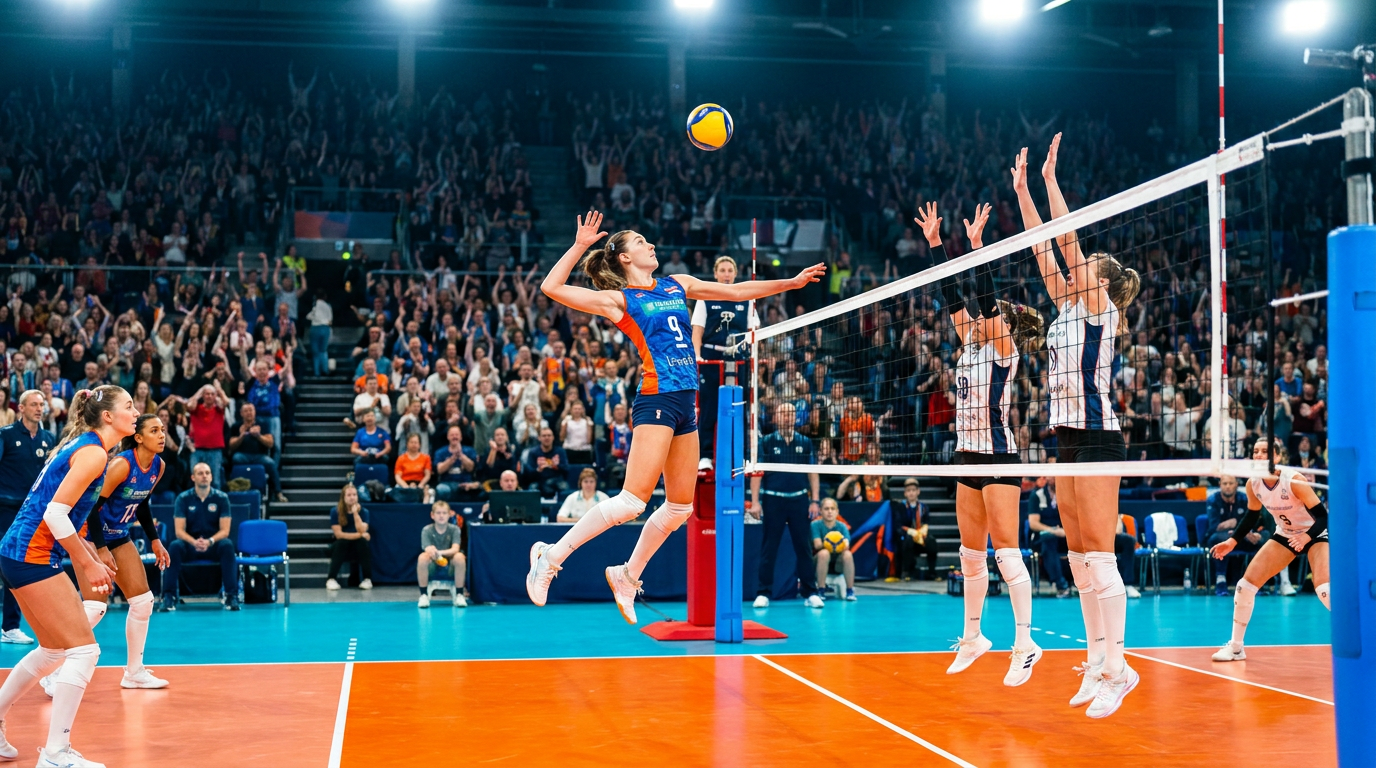
- Traditional Franchise Proponents
- Advocates for the MLV model, focusing on celebrity ownership and high-profile broadcast deals.
- Grassroots & Community Advocates
- Supporters of the LOVB 'club-up' model, which ties professional teams directly to youth organizations.
- Global Volleyball Executives
- International governing bodies viewing the US market as a massive commercial opportunity.
What's not represented
- · European club executives who are losing top American talent to the new domestic leagues.
- · NCAA collegiate coaches navigating how the new pro leagues affect player retention and NIL deals.
Why this matters
For decades, America's top female volleyball players were forced to move overseas to make a living. The sudden, massive success of domestic leagues means the US is finally retaining its homegrown talent, creating a lucrative new sports entertainment market and inspiring millions of youth players.
Key points
- The US now supports two major professional women's volleyball leagues: MLV and LOVB.
- MLV offers base salaries up to $175,000, backed by $100 million in celebrity and institutional investment.
- LOVB utilizes a 'club-up' model, connecting professional teams to massive youth volleyball organizations.
- MLV's 2026 All-Star Match on CBS saw a 36% year-over-year viewership increase, peaking at 672,000.
- The domestic boom perfectly positions the US to host the 2027 FIVB Women's World Cup.
For decades, the pipeline for elite American women's volleyball players ended with a plane ticket. After dominating the NCAA tournament in front of millions of television viewers, the country's best athletes were routinely forced to sign contracts in Italy, Turkey, or Brazil to earn a living wage. Previous attempts to build a sustainable professional indoor league in the United States routinely collapsed under the weight of poor capitalization and a lack of broadcast visibility.[7]
By the summer of 2026, that paradigm has entirely shattered. Women's sports are projected to generate over $2.3 billion globally this year, and indoor volleyball has emerged as one of the most powerful engines of that growth. The United States now hosts two thriving, heavily capitalized professional leagues—Major League Volleyball (MLV) and League One Volleyball (LOVB)—that are fundamentally rewriting the economics of the sport.[3][7]
The turning point arrived when investors realized that the massive grassroots participation in youth volleyball and the explosive television ratings of the NCAA tournament could be monetized at the professional level. Today, the American ecosystem is defined by two distinct business models competing for dominance, yet simultaneously proving that the market is large enough to support both.[7]
Major League Volleyball (MLV) represents the traditional franchise model. Originally launched in 2024 as the Pro Volleyball Federation (PVF), the league underwent a dramatic transformation ahead of the 2026 season. Following a brief ownership dispute in 2025, the PVF merged with a heavily funded rival faction to form MLV, backed by $100 million from a high-profile investor group that includes Sacramento Kings owner Vivek Ranadivé, Olympic gold medalist Kerri Walsh Jennings, and recording artist Jason Derulo.[1][6]
The capitalization has allowed MLV to offer unprecedented compensation for domestic players. The league's salary structure now provides a minimum of $60,000, with top-tier athletes earning base salaries up to $175,000. When combined with housing stipends, health benefits, and a revenue-sharing agreement, the total compensation package makes MLV one of the most lucrative destinations in global women's volleyball.[6][7]

This financial muscle has translated directly into broadcast success. During the 2026 season, MLV's All-Star Match broadcast on CBS drew an average of 562,000 viewers, peaking at 672,000. This represented a massive 36% year-over-year surge in national viewership, outpacing the regular-season averages of several established women's sports leagues and proving that the sport's mainstream appeal is accelerating.[3]
This financial muscle has translated directly into broadcast success.
Following its record-breaking third year, MLV announced further expansion into the lucrative Los Angeles market for 2027. The new franchise will be spearheaded by former U.S. Olympian Alisha Childress, a strategic move designed to leverage high-profile talent and brand recognition in one of the world's largest media markets.[4]

Running parallel to MLV is League One Volleyball (LOVB), which has taken a radically different approach to building a fanbase. Rather than relying solely on top-down franchise marketing, LOVB is built from the club up. The league has acquired and partnered with massive youth volleyball clubs across the country, creating a direct pipeline from grassroots participation to professional fandom.[7]
This community-driven model has proven incredibly attractive to institutional investors, allowing LOVB to amass $160 million in funding ahead of its launch. By tying local youth players to the professional teams in their cities, LOVB guarantees a built-in audience of highly engaged families and aspiring athletes who view the professionals as direct role models.[7]
LOVB's strategy has also secured premium broadcast real estate. The league signed a comprehensive distribution deal with ESPN for the 2026 season, placing 28 matches across ESPN's linear and digital platforms. The season opener featured a highly anticipated rematch between LOVB Atlanta and the defending champions, LOVB Austin, showcasing stars to a national audience.[2]

The presence of two well-funded leagues has sparked a golden age for American players. Athletes who previously spent ten months a year isolated in foreign countries can now play in front of their families, build domestic endorsement portfolios, and engage directly with the next generation of American talent. The competition between MLV and LOVB has driven up standards across the board, from travel accommodations to sports medicine.[7]
Global volleyball executives are watching the American boom with intense interest. The sport's international governing body, the FIVB, recognizes the United States as the final untapped frontier for commercial volleyball. In preparation for this, the FIVB awarded the hosting rights for the expanded 2027 Women's Volleyball World Cup to the United States and Canada.[5]

The 2027 World Cup will serve as a massive commercial showcase, featuring the world's top 32 national teams and acting as a direct qualifier for the Los Angeles 2028 Olympic Games. With the domestic professional leagues already cultivating a massive, engaged fanbase, the international tournaments are expected to shatter previous revenue and viewership records.[5][7]
While questions remain about whether the American market will eventually force a merger between MLV and LOVB, the current reality is undeniably positive. After decades of false starts, women's professional volleyball has finally cemented its place in the American sports landscape, offering world-class athletes the domestic stage—and the compensation—they have long deserved.[1][7]
How we got here
August 2023
Nebraska sets a global attendance record for women's sports, drawing 92,003 fans to a collegiate volleyball match, proving the sport's massive commercial potential.
January 2024
The Pro Volleyball Federation (PVF) launches its inaugural season, bringing traditional franchise volleyball back to the US.
August 2025
Following an ownership dispute, the PVF merges with a rival faction to form Major League Volleyball (MLV), backed by $100 million in new funding.
January 2026
League One Volleyball (LOVB) launches its inaugural season with a comprehensive ESPN broadcast deal.
April 2026
MLV reports a 36% year-over-year surge in national viewership for its All-Star broadcast.
Viewpoints in depth
Traditional Franchise Proponents
Advocates for the Major League Volleyball (MLV) model, focusing on celebrity ownership and high-profile broadcast deals.
This camp believes that volleyball must follow the proven blueprint of the NBA or NFL to succeed. By securing high-net-worth celebrity investors like Vivek Ranadivé and Jason Derulo, and focusing on major media markets, MLV aims to create a premium entertainment product. They argue that offering the highest possible base salaries ($175,000) is the only way to immediately legitimize the league and prevent top talent from signing with established European clubs.
Grassroots & Community Advocates
Supporters of the League One Volleyball (LOVB) 'club-up' model, which ties professional teams directly to youth organizations.
This perspective argues that top-down sports leagues often fail because they lack a built-in community. By acquiring massive youth volleyball clubs across the country, LOVB guarantees a dedicated fanbase of young players and their families. This camp believes that sustainable revenue comes from converting the millions of girls who play amateur volleyball into lifelong consumers of the professional product, creating a seamless pipeline from youth tournaments to the pro court.
Global Volleyball Executives
International governing bodies viewing the US market as a massive commercial opportunity.
For organizations like the FIVB, the sudden professionalization of American volleyball is a financial goldmine. Historically, the US has been a dominant force in Olympic volleyball but a dead zone for commercial league revenue. With the 2027 Women's World Cup and the 2028 LA Olympics approaching, international executives see the new US leagues as the perfect marketing engine to drive unprecedented global broadcast rights and sponsorship deals.
What we don't know
- Whether the American sports market can sustain two competing professional volleyball leagues long-term, or if a merger is inevitable.
- How European and Asian leagues will adjust their salary structures to prevent a mass exodus of international talent to the US.
Key terms
- League One Volleyball (LOVB)
- A US professional league built on a 'club-up' model that integrates youth volleyball clubs with professional franchises.
- Major League Volleyball (MLV)
- A traditional franchise-based US professional league formed from the merger and rebranding of the Pro Volleyball Federation.
- FIVB
- The Fédération Internationale de Volleyball, the international governing body for all forms of volleyball.
- Revenue Sharing
- An economic model where players receive a percentage of the league's overall income in addition to their base salaries.
Frequently asked
How much do professional volleyball players make in the US?
In Major League Volleyball (MLV), base salaries range from a minimum of $60,000 up to $175,000 for top players, plus housing, benefits, and bonuses.
What is the difference between MLV and LOVB?
MLV operates on a traditional city-based franchise model with celebrity owners, while LOVB uses a 'club-up' approach that directly links professional teams to massive youth volleyball organizations.
Where can I watch professional women's volleyball?
LOVB matches are broadcast across ESPN platforms, while MLV matches air on CBS Sports, Roku, and other streaming partners.
Sources
Source coverage
7 outlets
3 viewpoints surfaced







[1]Sports Business JournalTraditional Franchise Proponents
Pro Volleyball Federation, Major League Volleyball to merge for 2026 season
Read on Sports Business Journal →[2]ESPN Press RoomGrassroots & Community Advocates
ESPN and League One Volleyball Announce 2026 Broadcast Schedule
Read on ESPN Press Room →[3]BriefGlanceTraditional Franchise Proponents
Major League Volleyball's Ratings Spike Signals a New Power Player in Pro Sports
Read on BriefGlance →[4]ForbesTraditional Franchise Proponents
Major League Volleyball Reports Record Growth in Third Season, Expands to Los Angeles
Read on Forbes →[5]Volleyball WorldGlobal Volleyball Executives
Horizon Sports & Experiences named exclusive agency for 2027 FIVB Women's Volleyball World Cup
Read on Volleyball World →[6]Wikipedia
Major League Volleyball
Read on Wikipedia →[7]Factlen Editorial TeamGlobal Volleyball Executives
Synthesis by Factlen editorial team
Read on Factlen Editorial Team →

More in sports
See all 12 stories →Women's Soccer Boom
The Unprecedented Boom of U.S. Women's Soccer in 2026
0 sources
Centaur Chess
The Post-Engine Era: How AI Transformed Modern Chess Strategy
0 sources

Injury
Nebojsa Simić's Triumphant Return Highlights Handball's Grueling Injury Landscape
0 sources
Sports Business
Women's Soccer Enters the Billion-Dollar Era as Franchise Valuations Skyrocket in 2026
0 sources

Every angle. Every day.
Get sports stories with full source coverage and perspective breakdowns delivered to your inbox.