
Retinol vs. Bakuchiol: The Scientific Trade-Offs of Skincare's Top Anti-Aging Ingredients
Clinical data confirms the plant-based extract bakuchiol matches retinol's wrinkle-reducing efficacy without the harsh side effects, though retinol retains its crown for rapid, structural skin changes. Consumers are increasingly weighing the trade-offs between potency and tolerability.
By Factlen Editorial Team
- Clinical Dermatologists
- Prioritize decades of peer-reviewed data and view retinol as the unmatched gold standard for structural skin changes.
- Botanical Formulators
- Advocate for plant-based, gentle alternatives, emphasizing that bakuchiol achieves the same endpoints without compromising the skin barrier.
- Sensitive Skin Consumers
- Focus entirely on tolerability, seeking effective anti-aging solutions that do not cause painful purging or redness.
What's not represented
- · Prescription Retinoid Users
- · Acne-Specific Patients
Why this matters
Choosing the wrong active ingredient can lead to painful skin barrier damage or wasted money. Understanding the precise clinical trade-offs between these two compounds allows consumers to match the right tool to their specific skin type and tolerance.
Key points
- Retinol is a vitamin A derivative that aggressively stimulates cell turnover, making it highly effective but prone to causing irritation and peeling.
- Bakuchiol is a plant-based extract that activates the same collagen-producing genetic pathways as retinol without binding to irritation-causing receptors.
- A landmark 12-week clinical trial found both ingredients achieved a 20 to 30 percent reduction in wrinkles, proving equal efficacy for photoaging.
- Retinol remains the superior choice for resilient skin and severe acne, while bakuchiol is the definitive alternative for sensitive skin and pregnant individuals.
The skincare industry is increasingly divided between two distinct approaches to anti-aging and skin renewal. On one side stands retinol, the undisputed, decades-old champion of dermatology. On the other is bakuchiol, a rapidly rising botanical challenger promising similar results without the notorious side effects. For consumers navigating serums and night creams, understanding the precise trade-offs between these two active ingredients is essential for building an effective, personalized routine.[1][4]
When evaluating retinol, the arguments for its use center on its unparalleled, clinically proven potency. As a derivative of vitamin A, retinol works deep within the skin to accelerate cell turnover and stimulate collagen production. It does not merely improve the skin's surface; it initiates structural changes that smooth fine lines, fade hyperpigmentation, and clear acne. Dermatologists frequently refer to it as the gold standard because its biochemical pathways are thoroughly understood and documented.[1][7]
The arguments against retinol, however, are entirely rooted in its harshness. Because it aggressively forces cellular turnover, it frequently compromises the skin barrier. Users routinely experience a "purging" phase characterized by severe dryness, redness, flaking, and stinging. Furthermore, retinol increases photosensitivity, meaning it can only be safely applied at night, and it is strictly contraindicated for individuals who are pregnant or breastfeeding.[1][7]

The evidence supporting retinol is vast, spanning over forty years of peer-reviewed literature. Clinical trials consistently demonstrate that it is highly effective at reversing severe photoaging and maintaining skin elasticity. For individuals with resilient skin who can endure the initial adjustment period, the long-term structural benefits of retinol remain the benchmark against which all other ingredients are measured.[2][4]
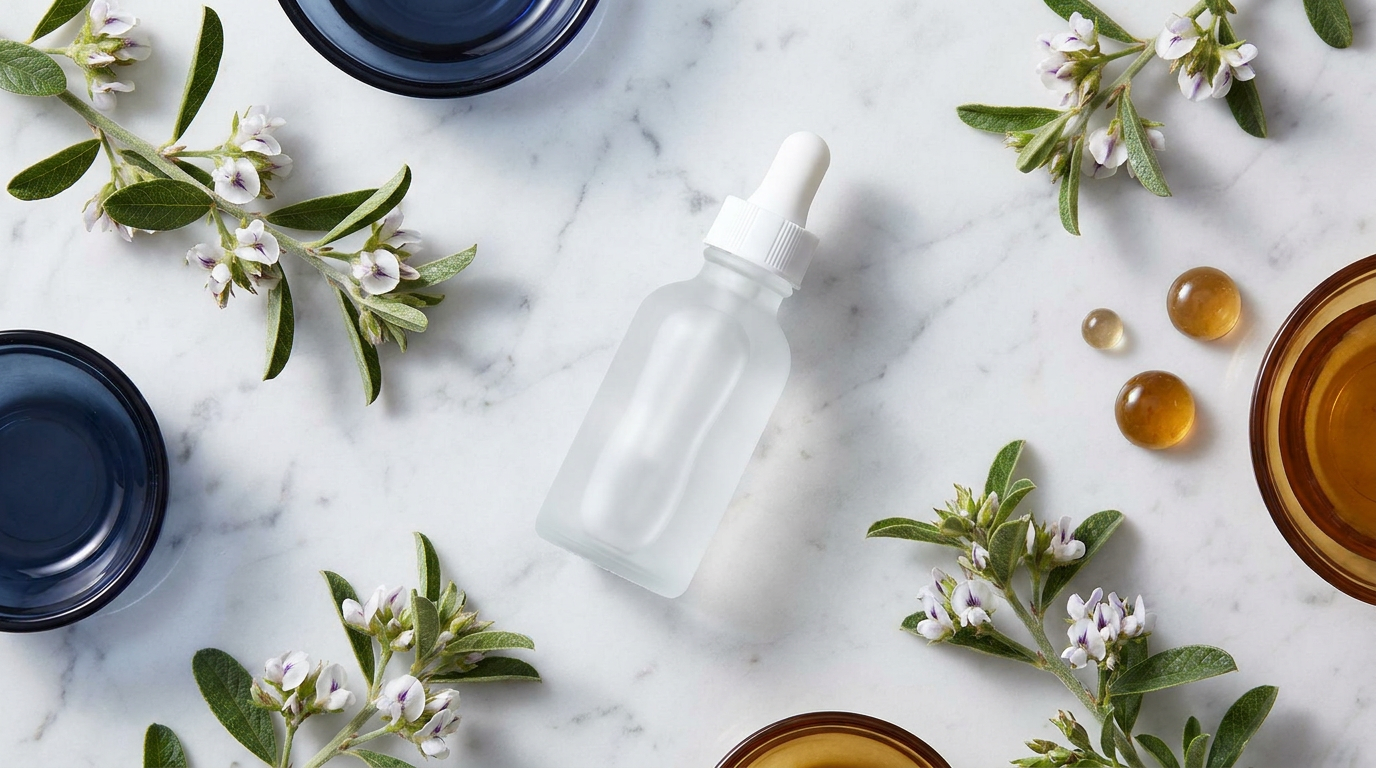
Conversely, bakuchiol has emerged as the premier natural alternative. It is a meroterpene phenol extracted from the seeds and leaves of the Psoralea corylifolia, or babchi plant, which has a long history of use in Ayurvedic and traditional Chinese medicine. While it bears no structural resemblance to vitamin A, modern cosmetic chemistry has identified it as a functional analog to retinol.[3][5]

The case for bakuchiol relies on its ability to deliver retinol-like benefits without the collateral damage. It activates many of the same genetic pathways—upregulating collagen and downregulating the enzymes that break down skin structure—but it does so without binding to the specific retinoic acid receptors that trigger irritation. It is entirely photostable, allowing for daytime use, and is widely considered safe during pregnancy.[3][5][6]
The case for bakuchiol relies on its ability to deliver retinol-like benefits without the collateral damage.
The arguments against bakuchiol point to its relative novelty in Western clinical settings and its milder nature. While the data is highly promising, it lacks the decades of exhaustive, multi-generational research that backs retinol. Furthermore, because it operates more gently, it may take longer to produce visible results, and dermatologists note that it is not a true substitute for treating severe, persistent acne.[1][4]
The most compelling evidence comparing the two comes from a landmark 2018 randomized, double-blind study published in the British Journal of Dermatology. Researchers assigned forty-four participants to apply either a 0.5 percent bakuchiol cream twice daily or a 0.5 percent retinol cream once daily for twelve weeks. The results provided the first definitive, head-to-head clinical validation of the botanical extract.[2][5]
Quantifying the trade-offs, the 2018 study revealed that both groups achieved a statistically significant 20 to 30 percent reduction in fine lines and wrinkles, alongside marked improvements in hyperpigmentation. Crucially, there was no statistical difference in efficacy between the two compounds. However, the side-effect profiles diverged sharply: the retinol users reported significantly more facial scaling, stinging, and redness, while the bakuchiol group experienced almost no irritation.[2][6]

Formulators emphasize that concentration matters when navigating these trade-offs. For retinol, beginners are advised to start with concentrations between 0.1 and 0.5 percent, applying a pea-sized amount only two nights a week to build tolerance. Bakuchiol, being inherently gentler, is typically formulated at 0.5 to 1.0 percent and can be used daily from the outset without a gradual phase-in period.[4][7]
Ultimately, the choice between the two ingredients is not about finding an objective winner, but rather matching the tool to the specific condition of the skin barrier. Dermatologists often compare retinol to a high-powered electric tool—fast and forceful—while bakuchiol is likened to a highly effective manual tool that achieves the same finish with more patience and less friction.[1][4]
Retinol fits well when the user has resilient, non-reactive skin, desires rapid and dramatic improvements in photoaging, and is willing to meticulously manage a nighttime routine with heavy moisturizers and strict daytime sun protection. It remains the superior choice for those whose primary secondary concern is active acne breakouts.[1][6]

Bakuchiol does not fit when the user expects overnight transformations or requires aggressive acne intervention. However, bakuchiol fits perfectly when the user has sensitive, eczema-prone, or rosacea-prone skin that cannot tolerate vitamin A. It is also the ideal choice for expectant mothers, individuals who prefer plant-based botanical formulations, and those seeking a low-maintenance active ingredient that can be applied morning and night without fear of irritation.[1][6][7]
How we got here
1980s
Retinoids become the gold standard in dermatology for treating severe acne and photoaging.
2007
Bakuchiol is first introduced to the commercial skincare market, though initially overlooked by mainstream brands.
2014
Early in vitro studies reveal bakuchiol functions as a retinol analog at the genetic level.
2018
The British Journal of Dermatology publishes the landmark 12-week double-blind study proving equal efficacy between the two compounds.
2023–Present
Bakuchiol surges in popularity as consumer demand for gentle, plant-based skincare peaks.
Viewpoints in depth
Clinical Dermatologists' view
Focus on the 40 years of longitudinal data proving retinol's efficacy.
For medical professionals, retinol is a known entity with decades of peer-reviewed backing. They acknowledge the irritation and purging phase but view it as a manageable, temporary side effect of a highly effective treatment. From this perspective, while bakuchiol is a welcome addition for sensitive patients, retinol remains the unmatched gold standard for inducing genuine structural changes in the skin.
Botanical Formulators' view
Emphasize that nature provides parallel pathways to the same destination.
Formulators working with plant-based ingredients argue that damaging the skin barrier to repair the skin is counterintuitive when gentler alternatives exist. They point to the genetic pathway data showing bakuchiol achieves the same collagen upregulation without triggering the retinoic acid receptors that cause inflammation, framing it as a more sophisticated, modern approach to anti-aging.
Sensitive Skin Consumers' view
Prioritize daily tolerability over maximum theoretical potency.
For consumers with eczema, rosacea, or generally reactive skin, a product is only effective if it can be used consistently. Retinol's harsh purging phase often leads to abandonment before benefits are realized. This camp views bakuchiol as practically superior, as its gentle nature allows for twice-daily compliance without the pain or unsightly peeling associated with vitamin A derivatives.
What we don't know
- While retinol has over forty years of longitudinal data tracking its effects over decades of continuous use, bakuchiol's long-term effects over a 20- or 30-year span remain unmapped.
- It is not yet fully understood if combining low-dose retinol with bakuchiol in a single formulation provides a synergistic effect that outperforms either ingredient used in isolation.
Key terms
- Retinoid
- A broad class of chemical compounds derived from vitamin A, used in skincare to promote rapid cell turnover.
- Photoaging
- Premature aging of the skin, including wrinkles and hyperpigmentation, caused by repeated exposure to ultraviolet radiation.
- Collagen
- The primary structural protein in the skin that provides firmness, elasticity, and a youthful appearance.
- Psoralea corylifolia
- A plant native to India, commonly known as babchi, from which the active compound bakuchiol is extracted.
- Purging
- A temporary phase of skin breakouts, flaking, and irritation that occurs when an active ingredient accelerates cell turnover.
Frequently asked
Can I use bakuchiol and retinol together?
Yes, some formulations combine them to maximize benefits while minimizing irritation, though it is best to alternate days if using separate serums.
Is bakuchiol actually safe during pregnancy?
Yes. Unlike vitamin A derivatives, which are strictly contraindicated, bakuchiol is considered safe for use during pregnancy, though consulting an OB-GYN is always recommended.
Do I need to wear sunscreen with bakuchiol?
While bakuchiol does not increase photosensitivity like retinol does, daily SPF is still essential for overall skin health and preventing further photoaging.
How long does it take to see results?
Clinical studies show significant improvements in fine lines and hyperpigmentation at the 12-week mark for both ingredients.
Sources
Source coverage
7 outlets
3 viewpoints surfaced





[1]PreventionClinical Dermatologists
Retinol Vs. Bakuchiol: A Dermatologist Explains Which You Should Use
Read on Prevention →[2]British Journal of DermatologyClinical Dermatologists
Prospective, randomized, double-blind assessment of topical bakuchiol and retinol for facial photoageing
Read on British Journal of Dermatology →[3]Journal of Integrative DermatologyBotanical Formulators
A comprehensive review of topical bakuchiol for the treatment of photoaging
Read on Journal of Integrative Dermatology →[4]Liz Earle WellbeingSensitive Skin Consumers
Retinol vs bakuchiol: which midlife skin booster is best?
Read on Liz Earle Wellbeing →[5]KashmirilBotanical Formulators
Bakuchiol vs Retinol: Natural Anti-Aging Alternative That Works
Read on Kashmiril →[6]Byra BeautyBotanical Formulators
Bakuchiol vs Retinol: The Complete Scientific Comparison
Read on Byra Beauty →[7]Alivu CosmeticsSensitive Skin Consumers
Retinol vs. Bakuchiol: Differences & Which Works Better
Read on Alivu Cosmetics →



Every angle. Every day.
Get shopping stories with full source coverage and perspective breakdowns delivered to your inbox.