
How Deep Sleep Physically Washes the Brain: The Science of the Glymphatic System
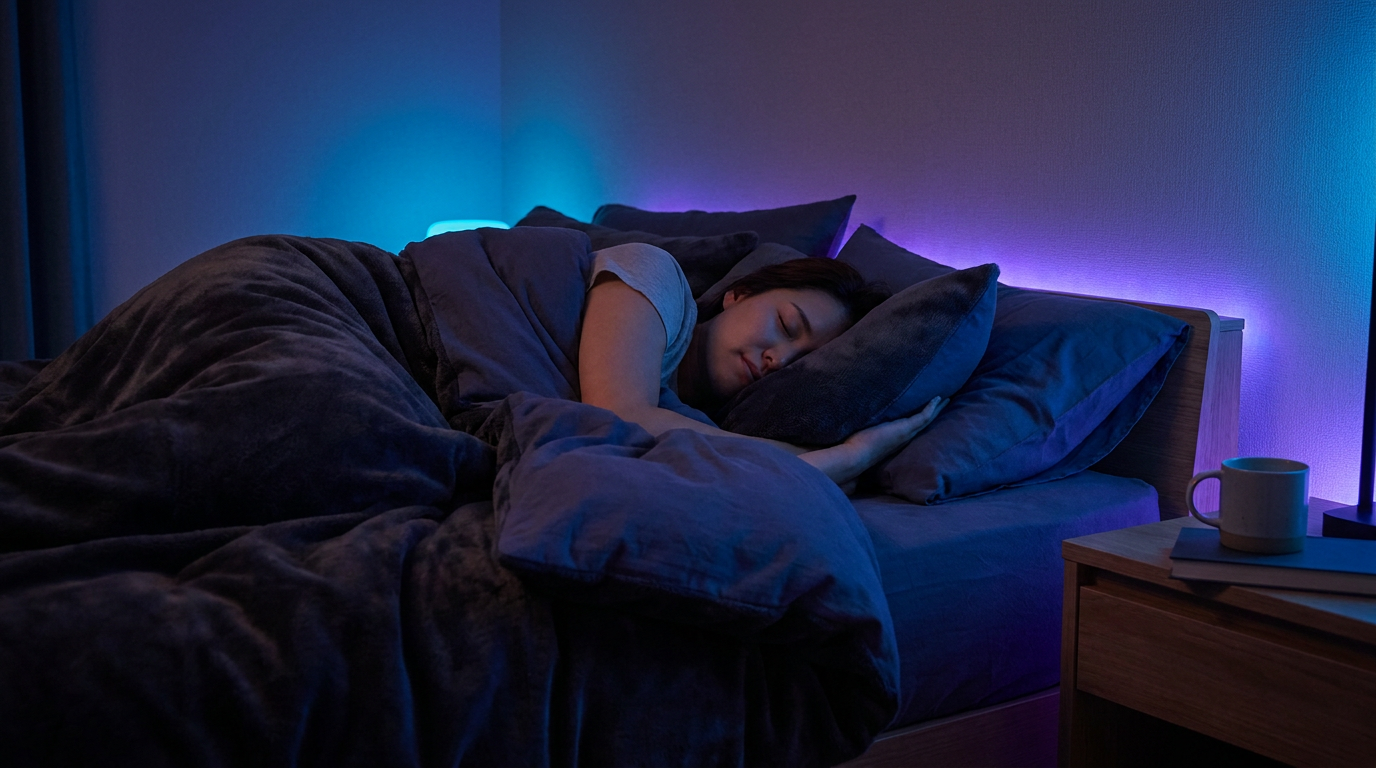
During deep sleep, the brain activates a unique plumbing network called the glymphatic system to flush out metabolic waste linked to neurodegeneration. Understanding this nightly 'wash cycle' offers a powerful, actionable tool for protecting long-term cognitive health.
By Factlen Editorial Team
- Neurobiology Researchers
- Focus on the mechanical and cellular pathways of the glymphatic system, studying how astrocytes and fluid dynamics clear proteins.
- Preventive Medicine Advocates
- View sleep optimization as a primary, modifiable lifestyle intervention to delay or prevent the onset of Alzheimer's and dementia.
- Sleep Clinicians
- Emphasize the diagnosis and treatment of sleep disruptors, like apnea and insomnia, to restore natural glymphatic function.
What's not represented
- · Shift workers
- · Individuals with chronic insomnia
Why this matters
Sleep is often viewed merely as a period of passive rest, but it is actually an active, critical maintenance phase for the brain. Prioritizing deep sleep is one of the most effective, accessible ways to reduce the risk of cognitive decline and improve daily mental clarity.
Key points
- The brain lacks a traditional lymphatic system and instead relies on the glymphatic system to clear cellular waste.
- During deep sleep, the space between brain cells expands by up to 60%, allowing cerebrospinal fluid to wash through the tissue.
- This nightly wash cycle clears out amyloid-beta, a toxic protein closely linked to Alzheimer's disease.
- The clearance process is highly dependent on slow-wave (deep) sleep, which occurs primarily in the first half of the night.
- Improving sleep hygiene and treating conditions like sleep apnea can directly enhance the brain's ability to protect itself from cognitive decline.
For decades, the biological imperative of sleep remained one of science's most stubborn mysteries. While researchers understood that sleep was restorative and essential for survival, the exact mechanical process of how the brain rejuvenated itself in the dark remained elusive. We knew that cognitive function plummeted after a single all-nighter, but the physical mechanism behind that brain fog was largely a black box.[1][8]
That paradigm shifted dramatically with the discovery of the glymphatic system. First identified in the early 2010s, the glymphatic system is a macroscopic waste clearance pathway that functions as the brain's dedicated plumbing network. It is responsible for flushing out the toxic metabolic byproducts that accumulate during our waking hours.[2][4]
To understand the profound importance of this system, one must look at the brain's unique architecture. Unlike the rest of the human body, the central nervous system lacks a traditional lymphatic system to clear away cellular waste. Because the brain is a highly active organ that consumes roughly 20 percent of the body's energy, it generates a massive amount of metabolic debris that needs somewhere to go.[4][8]
Instead of lymphatic vessels, the brain relies on cerebrospinal fluid (CSF)—the clear liquid that surrounds the brain and spinal cord—acting as a specialized cleaning solution. During waking hours, the brain's cells are packed tightly together, leaving very little room for this fluid to circulate deeply into the tissue. The brain is effectively closed for cleaning while we are awake and processing the world.[2][3]
But when we transition into sleep, a remarkable physical transformation occurs. Glial cells, specifically star-shaped cells called astrocytes, control the flow of CSF through specialized water channels known as aquaporin-4. As we lose consciousness and enter deeper stages of rest, these cells facilitate a dramatic structural shift.[4][7]
The interstitial space—the microscopic gaps between brain cells—expands by up to 60 percent. This sudden expansion acts like opening the floodgates of a dam, allowing cerebrospinal fluid to rush rapidly through the brain tissue. The fluid washes over the cells, collecting metabolic byproducts, and flushes them toward the circulatory system to be cleared by the liver.[2][3]

The most notorious of these metabolic byproducts is amyloid-beta. This is a protein that naturally accumulates in the brain as a result of daily neuronal activity. In a healthy brain, the glymphatic system efficiently sweeps away amyloid-beta every night. However, if this protein is not cleared, it can clump together to form sticky plaques.[3][5]
The most notorious of these metabolic byproducts is amyloid-beta.
These amyloid plaques are one of the primary biological hallmarks of Alzheimer's disease and other forms of dementia. The realization that sleep physically washes away the very proteins linked to neurodegeneration has revolutionized how medical science views the relationship between sleep and long-term cognitive health. It reframes sleep from a lifestyle luxury to a critical neurological defense mechanism.[1][5]
Crucially, this nightly "wash cycle" is not constant throughout the night; it is highly dependent on a specific phase of rest known as slow-wave sleep. Also referred to as deep sleep, this stage typically occurs in the first half of the night and is characterized by synchronized, low-frequency brain waves.[6][7]
During slow-wave sleep, the brain's electrical activity becomes highly coordinated. Neurons fire together and then fall silent together. During these silent periods, the brain's demand for oxygenated blood drops significantly. As blood volume in the brain decreases, it creates physical space within the rigid skull, allowing a pulse of cerebrospinal fluid to rush in.[7][8]

This mechanical relationship explains why fragmented sleep or sleep disorders are so detrimental to cognitive health. Conditions like obstructive sleep apnea, which repeatedly jolt the brain out of deep sleep to restore breathing, effectively short-circuit the glymphatic wash cycle. Without sustained periods of slow-wave sleep, the brain cannot fully clear its daily accumulation of waste.[5][6]
The implications of this mechanism are overwhelmingly positive, because deep sleep is a highly modifiable behavior. Unlike genetic predispositions to certain diseases, the efficiency of the glymphatic system can be actively supported through daily habits. We have direct agency over the environment in which our brain cleans itself.[1][8]
Optimizing sleep hygiene is the most effective way to enhance this process. Maintaining a cool bedroom temperature, adhering to a consistent sleep schedule, and engaging in regular cardiovascular exercise have all been shown to increase the duration and quality of slow-wave sleep. These simple interventions directly translate to better brain washing.[1][6]
Conversely, certain common habits severely blunt the glymphatic system. Alcohol, for instance, is a potent inhibitor of slow-wave sleep. While a nightcap might help someone lose consciousness faster, it fragments the sleep architecture, preventing the brain from reaching the deep, synchronized states required to open the aquaporin-4 channels.[4][6]

As research into the glymphatic system accelerates, pharmaceutical and technological interventions are being explored. Scientists are investigating whether specific acoustic tones played during sleep—known as pink noise—can artificially enhance slow brain waves and boost fluid clearance. Others are looking at drugs that might modulate astrocyte activity to keep the channels open longer.[4][7]
However, until such interventions are clinically validated, the foundational advice remains behavioral. The science of the glymphatic system provides a tangible, mechanical reason to prioritize rest. Every night offers an opportunity to actively protect the brain, washing away the debris of the day to wake up with a clean slate.[1][8]
How we got here
2012
Researchers at the University of Rochester Medical Center first identify and name the glymphatic system in mice.
2013
A landmark study in the journal Science proves that sleep physically drives metabolite clearance from the adult brain.
2019
Human neuroimaging studies confirm that cerebrospinal fluid pulses through the brain during slow-wave sleep.
Present
Ongoing clinical trials investigate whether enhancing slow-wave sleep can actively delay the onset of Alzheimer's disease.
Viewpoints in depth
Neurobiology Researchers
Focus on the mechanical and cellular pathways of the glymphatic system.
For neurobiologists, the discovery of the glymphatic system solved a fundamental mechanical puzzle. They focus on the precise cellular interactions—specifically how aquaporin-4 water channels on astrocytes regulate fluid dynamics. Their research is currently aimed at understanding how this system degrades with age, noting that the efficiency of cerebrospinal fluid flow naturally decreases as the brain gets older. They are exploring whether this mechanical degradation is the root cause of age-related cognitive decline, rather than just a symptom.
Preventive Medicine Advocates
View sleep optimization as a primary intervention to delay dementia.
Preventive medicine experts frame the glymphatic system as an empowering tool for public health. Because amyloid plaques can begin accumulating 10 to 20 years before the first symptoms of Alzheimer's appear, these advocates emphasize that sleep in one's 30s, 40s, and 50s is a critical window for intervention. They argue that public health messaging should elevate sleep hygiene to the same level of importance as diet and exercise in the fight against neurodegenerative diseases.
Sleep Clinicians
Emphasize the diagnosis and treatment of sleep disruptors to restore natural glymphatic function.
Clinical somnologists look at the glymphatic system through the lens of pathology and treatment. They highlight how common, treatable disorders like obstructive sleep apnea act as a mechanical roadblock to brain clearance. By repeatedly waking the patient to restore breathing, apnea prevents the sustained slow-wave sleep required for the wash cycle. For these clinicians, treating sleep disorders with CPAP machines or cognitive behavioral therapy for insomnia (CBT-I) is not just about reducing daytime fatigue—it is an active neurological rescue mission.
What we don't know
- Whether artificially inducing slow-wave sleep through acoustic stimulation or medication can fully replicate the natural glymphatic wash cycle.
- The exact degree to which sleeping position (such as sleeping on one's side) impacts the efficiency of fluid clearance in humans.
- How to reverse the natural, age-related decline in aquaporin-4 channel function that slows down the glymphatic system in older adults.
Key terms
- Glymphatic System
- The brain's macroscopic waste clearance system that utilizes cerebrospinal fluid to flush out metabolic byproducts during sleep.
- Cerebrospinal Fluid (CSF)
- A clear, colorless body fluid found in the brain and spinal cord that acts as a cushion and a cleaning agent.
- Slow-Wave Sleep
- The deepest phase of non-REM sleep, characterized by synchronized, low-frequency brain waves and physical restoration.
- Amyloid-Beta
- A metabolic waste protein produced by normal brain activity that, if not cleared, can clump into plaques associated with Alzheimer's disease.
- Astrocytes
- Star-shaped glial cells in the brain that help regulate the flow of cerebrospinal fluid during the sleep wash cycle.
Frequently asked
Can I catch up on deep sleep by napping?
Short naps rarely reach the slow-wave deep sleep stage required for glymphatic clearance. The brain needs consolidated, continuous sleep cycles to effectively flush out metabolic waste.
Does sleep medication help the brain clean itself?
Many traditional sleep medications induce a state of sedation rather than natural slow-wave sleep. While they help you lose consciousness, they do not always trigger the same efficient glymphatic clearance as natural deep sleep.
How much deep sleep do I actually need?
For most adults, deep sleep should make up about 15 to 20 percent of total sleep time, which equates to roughly 1.5 to 2 hours per night.
Does sleeping position affect brain clearance?
Some animal studies suggest that sleeping on your side (lateral position) may be the most efficient posture for glymphatic clearance, though more human research is needed to confirm this.
Sources
Source coverage
8 outlets
3 viewpoints surfaced








[1]Factlen Editorial TeamSleep Clinicians
Synthesis by Factlen editorial team
Read on Factlen Editorial Team →[2]ScienceNeurobiology Researchers
Sleep Drives Metabolite Clearance from the Adult Brain
Read on Science →[3]National Institutes of HealthPreventive Medicine Advocates
Brain may flush out toxins during sleep
Read on National Institutes of Health →[4]Nature Reviews NeuroscienceNeurobiology Researchers
The glymphatic system in central nervous system health and disease
Read on Nature Reviews Neuroscience →[5]Harvard Medical SchoolPreventive Medicine Advocates
Sleep and Alzheimer's disease
Read on Harvard Medical School →[6]Sleep FoundationSleep Clinicians
Deep Sleep: What It Is and How Much You Need
Read on Sleep Foundation →[7]Journal of NeuroscienceNeurobiology Researchers
Role of Slow-Wave Sleep in Glymphatic Clearance
Read on Journal of Neuroscience →[8]Scientific AmericanPreventive Medicine Advocates
Deep Sleep Gives Your Brain a Deep Clean
Read on Scientific American →


Every angle. Every day.
Get health stories with full source coverage and perspective breakdowns delivered to your inbox.