
Fintan McCarthy Returns from Back Injury for Bold Openweight Single Sculls Debut
Irish Olympic champion Fintan McCarthy is returning to the water after a months-long back injury, making a highly anticipated debut in the openweight single sculls as he targets the 2028 Los Angeles Games.
By Factlen Editorial Team
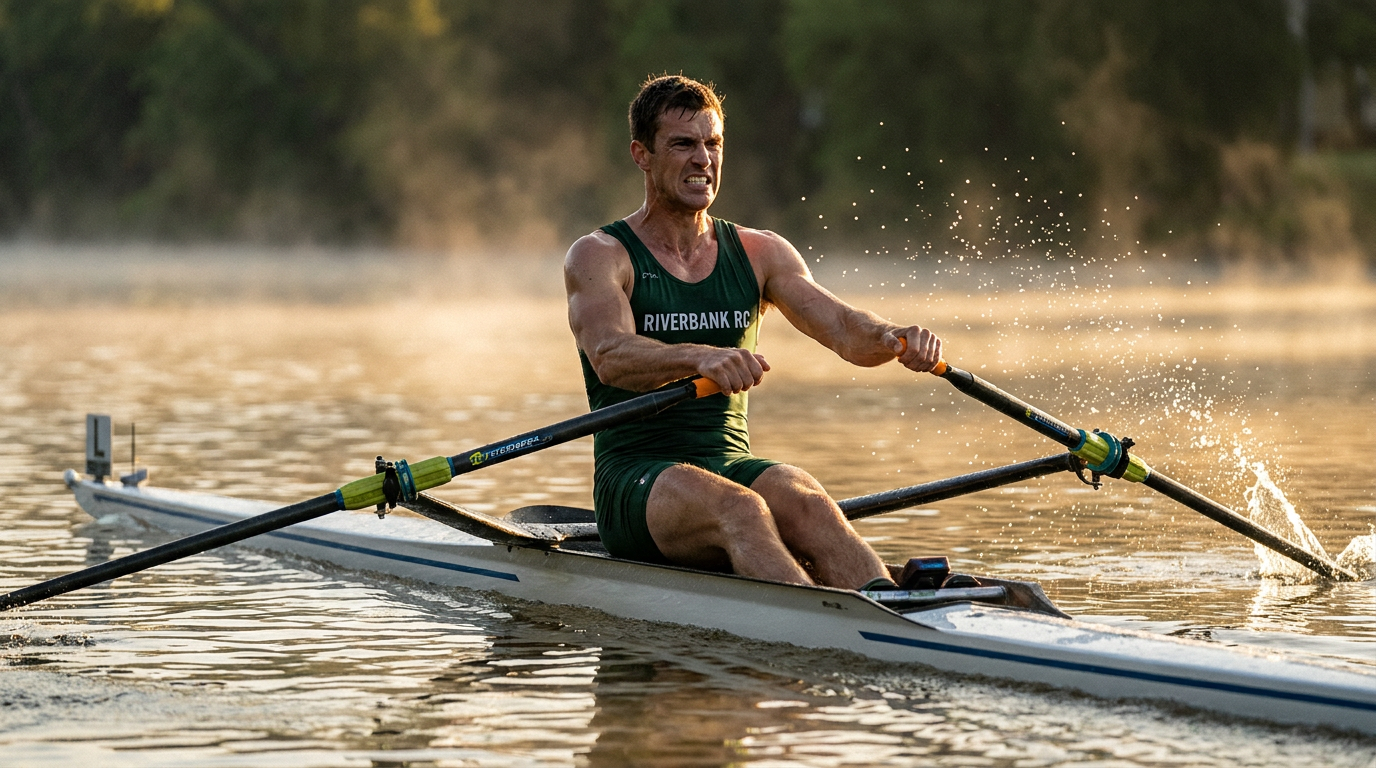
- Irish Rowing Management
- Focused on supporting McCarthy's transition to openweight and ensuring his long-term health for the LA 2028 cycle.
- Sports Science Analysts
- Intrigued by McCarthy's attempt to use superior biomechanics and aerobic fitness to overcome a significant weight and height disadvantage.
- Heavyweight Competitors
- Viewing the incoming lightweight champions as a new, unpredictable threat who bring different racing dynamics to the single sculls.
What's not represented
- · Medical professionals specializing in rowing injuries
- · Former lightweight rowers who successfully transitioned to openweight
Why this matters
With lightweight rowing removed from the Olympic program, McCarthy’s transition to the heavier openweight class—and his recovery from a significant back injury—serves as a crucial test case for whether smaller, elite lightweight rowers can successfully adapt and compete against larger athletes.
Key points
- Two-time Olympic gold medalist Fintan McCarthy is returning to competition after a two-month back injury.
- The injury forced McCarthy to train exclusively on a stationary bike, missing crucial winter water sessions.
- He is making his debut in the openweight single sculls at the World Rowing Cup in Seville.
- McCarthy is transitioning from his historic 69kg lightweight frame to a 78kg openweight physique.
- The move is necessitated by the removal of lightweight rowing from the 2028 Los Angeles Olympics.
- He aims to overcome a significant size disadvantage against 90kg+ heavyweights using superior biomechanics and aerobic capacity.
Fintan McCarthy, Ireland's two-time Olympic gold medalist and one of the most dominant lightweight rowers of his generation, is officially back on the water after a frustrating back injury derailed the start of his 2026 season. The champion rower has returned to international competition, making a highly anticipated and heavily scrutinized debut in the openweight single sculls. For McCarthy, the return is a massive relief after a winter defined by physical limitations and uncertainty. His reappearance at the World Rowing Cup in Seville signals that his rehabilitation has been successful, allowing him to finally test his speed against the world's best after months of forced isolation from the water.[1][2]
The back issue, sustained in February, forced McCarthy entirely out of the boat and onto a stationary bike for nearly two months. During a critical winter training block where elite rowers typically build their foundational water mileage, McCarthy missed crucial group time trials and was isolated from the main high-performance squad. Being sidelined during the early phases of an Olympic cycle is always a mental hurdle, but it was particularly challenging given the sheer scale of the transition McCarthy is attempting this year. He was forced to watch from the sidelines as his competitors laid down their early markers, relying entirely on cross-training to maintain his elite cardiovascular engine.[2][3]
Back injuries are notoriously difficult to manage in elite rowing, often requiring a delicate balance of rest and targeted rehabilitation. Sports medicine experts note that these injuries are frequently exacerbated by the "spinal creep" that occurs during long indoor ergometer sessions. This phenomenon dampens the spinal tissues' protective reflex activity, making the lower back highly vulnerable to inflammation and mechanical strain. For an athlete like McCarthy, whose success is built on flawless technique and immense power endurance, rushing a return to the boat could have jeopardized his entire season. The medical team opted for a conservative approach, keeping him off the rowing machine and utilizing the low-impact environment of the stationary bike to protect his lumbar spine.[4]
Despite the physical setback, McCarthy used the isolated training block to his advantage, building immense aerobic capacity without the repetitive strain of the rowing stroke. He recently noted that the long, grueling stint on the bike transferred exceptionally well to his overall rowing fitness, leaving him feeling the fittest he has been in a long time. By removing the technical load of rowing, he was able to push his cardiovascular system to new limits. When he finally returned to the water in mid-April, he reported experiencing "a few moments of magic," a clear indicator that his underlying physiology had not just survived the injury layoff, but had potentially improved.[2][3]

His comeback at the World Rowing Cup in Seville marks more than just a return to health; it is the beginning of a massive career pivot. For years, McCarthy was the undisputed king of the lightweight men's double sculls, a category defined by strict weight limits and razor-thin margins. Now, he is stepping into the openweight single sculls, a completely different racing dynamic where he will face athletes who are naturally much larger and more powerful. The Seville regatta is the first true test of whether his world-class lightweight speed can translate to the heavyweight ranks on the international stage.[1][5]
His comeback at the World Rowing Cup in Seville marks more than just a return to health; it is the beginning of a massive career pivot.
This dramatic shift is not entirely by choice. With the lightweight rowing categories officially eliminated from the upcoming 2028 Los Angeles Olympics, McCarthy and his peers are being forced to transition to the openweight class if they wish to keep their Olympic dreams alive. The removal of the lightweight division has fundamentally altered the landscape of international rowing, forcing smaller athletes to either retire or find a way to compete against giants. McCarthy has chosen the latter, embarking on a multi-year project to reinvent himself as an openweight contender.[1][6]
The physical transformation required for this move is staggering. Having historically raced at a lean 69 kilograms to meet lightweight requirements, McCarthy has spent the last year deliberately bulking up, currently tipping the scales at 78 kilograms. However, even with the added muscle mass, he remains significantly lighter and shorter than the traditional heavyweight scullers, who routinely exceed 90 kilograms and stand well over six feet tall. In a sport where leverage and raw wattage are highly correlated with physical size, McCarthy is facing a profound biomechanical disadvantage that he must overcome through superior technique and endurance.[1][2]
To bridge this substantial size gap, McCarthy and his coaching team have leaned heavily into cutting-edge sports science. They are focusing intently on biomechanics and physiology to maximize his power output, arguing that raw height and size are not the only paths to speed in modern rowing. By optimizing his stroke efficiency, minimizing drag, and leveraging his world-class aerobic engine, McCarthy aims to outlast the heavier rowers in the grueling second half of the 2,000-meter race. As he recently stated, the height and size advantage "is not all it's cracked up to be," signaling a quiet confidence in his data-driven approach.[1]

McCarthy's injury rehabilitation also coincided with a turbulent off-water period for Rowing Ireland, following a highly publicized investigation into the high-performance program's past management and coaching culture. The controversy surrounding former high-performance director Antonio Maurogiovanni cast a shadow over the national team just as athletes were trying to focus on the new Olympic cycle. For McCarthy, who was already dealing with the stress of a back injury and a weight-class transition, the external noise added another layer of complexity to an already challenging winter.[2][3]
Addressing the controversy, McCarthy acknowledged that the period was "pretty rough" and a "difficult time" to navigate while sidelined from the sport he loves. He admitted to being surprised by some of the revelations but maintained a pragmatic outlook, noting that the changes implemented were necessary to improve athlete welfare and centralize their voices in decision-making processes. With the investigation concluded and new structures in place, he emphasized that the national team's focus has now returned firmly to on-water performance and his own physical progression.[2][3]
The World Cup in Seville serves as the first major international benchmark for McCarthy's openweight experiment. The regatta places him directly against a stacked field of established heavyweights, including reigning Olympic and World Champions like Germany's Oliver Zeidler and Greece's Stefanos Ntouskos. Racing against these titans will provide a stark reality check on McCarthy's progress, revealing exactly how much ground he needs to make up over the next two years. It is a daunting challenge, but one that the fiercely competitive Irishman is embracing head-on.[1][6]

Regardless of the immediate podium results in Seville, McCarthy views this 2026 season as a foundational learning phase rather than a finished product. He has described the transition to openweight as giving him a "new lease of life" in the sport, reigniting his passion for learning and technical refinement. Free from the grueling weight-cutting protocols of his lightweight days, he is enjoying the process of building a stronger, more resilient body. The back injury may have delayed his start, but it has not dampened his ambition, setting the stage for a fascinating multi-year campaign toward LA 2028.[1][2]
How we got here
August 2024
Fintan McCarthy wins his second consecutive Olympic gold medal in the lightweight men's double sculls in Paris.
Late 2025
McCarthy begins his transition to the openweight category, medaling in the men's double at the World Championships.
February 2026
McCarthy sustains a back injury, forcing him out of the boat and onto a stationary bike.
Mid-April 2026
After two months of isolated rehab, McCarthy returns to on-water training.
May 2026
McCarthy makes his highly anticipated openweight single sculls debut at the World Rowing Cup in Seville.
Viewpoints in depth
Irish Rowing Management
Focused on long-term health and the LA 2028 cycle.
For Rowing Ireland and McCarthy's coaching staff, the immediate results in Seville are secondary to his long-term physical health. Navigating a back injury requires immense patience, and management was willing to sacrifice early-season water time to ensure his lumbar spine fully healed. Their primary objective is successfully transitioning his world-class aerobic engine into the openweight category over the next two years, building a sustainable foundation for the Los Angeles 2028 Olympics rather than chasing short-term World Cup medals.
Sports Science Analysts
Intrigued by the biomechanical challenge of overcoming a size deficit.
Rowing purists and sports scientists are watching McCarthy's openweight experiment with intense interest. Traditionally, openweight rowing is dominated by athletes who use their massive height and weight to generate leverage and raw wattage. Analysts argue that McCarthy's attempt to bridge a 10-to-15 kilogram weight gap relies entirely on superior stroke efficiency, minimizing boat drag, and utilizing an unmatched cardiovascular capacity. If he succeeds, it could challenge long-held assumptions about the absolute necessity of size in heavyweight sculling.
Heavyweight Competitors
Viewing the incoming lightweight champions as an unpredictable new threat.
Established openweight rowers are facing a unique disruption as former lightweight champions flood their category ahead of LA 2028. Competitors note that athletes like McCarthy bring a completely different racing dynamic to the single sculls—often rowing at higher stroke rates and possessing a devastating sprint capacity in the final 500 meters. While the heavyweights maintain a clear power advantage off the starting block, they are acutely aware that the lighter, highly efficient scullers pose a dangerous threat if the race comes down to an endurance battle.
What we don't know
- Whether McCarthy's back injury will require ongoing management throughout the season.
- How his top-end speed will compare to the world's best heavyweights in a full 2,000-meter race.
- If he will eventually partner with another rower for a double scull or remain in the single for the LA 2028 cycle.
Key terms
- Lightweight rowing
- A weight-restricted category in rowing (historically a maximum of 72.5kg for men) that is being phased out of the Olympic program after Paris 2024.
- Openweight
- The unrestricted weight category in rowing, typically dominated by taller, heavier athletes who can generate massive leverage.
- Single sculls
- A rowing event where a single athlete propels the boat using two oars, one in each hand.
- Spinal creep
- A temporary deformation of the spinal tissues that can occur during prolonged rowing or ergometer sessions, increasing the risk of lower back injuries.
- Ergometer
- An indoor rowing machine used extensively for winter training and fitness testing, notorious for placing heavy loads on the lower back.
Frequently asked
Why is Fintan McCarthy changing weight classes?
The lightweight rowing categories have been permanently removed from the Olympic program for the 2028 Los Angeles Games. To continue competing at the Olympics, lightweight rowers must transition to the openweight class.
How long was McCarthy injured?
He suffered a back injury in February 2026 and was restricted to training on a stationary bike for nearly two months before returning to the water in mid-April.
Will his smaller size be a disadvantage in openweight?
Traditionally, yes, as openweight rowers are much larger and generate more leverage. However, McCarthy is relying on advanced biomechanics, exceptional aerobic fitness, and a slight bulk-up to 78kg to compete against heavier rivals.
What event is he returning at?
McCarthy is making his return to international competition at the 2026 World Rowing Cup I in Seville, Spain, racing in the openweight single sculls.
Sources
Source coverage
6 outlets
3 viewpoints surfaced




[1]Row360Sports Science Analysts
2026 World Rowing Cup I Seville Preview
Read on Row360 →[2]Irish ExaminerIrish Rowing Management
Rowing scandal brought choppy waters for Fintan McCarthy to navigate
Read on Irish Examiner →[3]Irish MirrorIrish Rowing Management
Fintan McCarthy has his say on Irish rowing controversy that was 'pretty rough'
Read on Irish Mirror →[4]World RowingSports Science Analysts
Guide for managing low back pain in rowers
Read on World Rowing →[5]The Irish TimesHeavyweight Competitors
Fintan McCarthy and Philip Doyle claim bronze at World Rowing Championships
Read on The Irish Times →[6]Boating New ZealandHeavyweight Competitors
World Cup's wide-open opportunities
Read on Boating New Zealand →

More in sports
See all 11 stories →NWSL Expansion
NWSL's 2026 Expansion Season Shatters Attendance Records as Denver and Boston Draw Massive Crowds
0 sources
Standings
Global Skateboarding Standings Shake Up as LA 2028 Olympic Qualification Officially Opens
0 sources
Injury
WSL Injury Report: Ferreira Battles Through Knee Pain as Medina and Boukhiam Complete Epic Comebacks
0 sources
Standings
World Surf League Standings: Brazilian Men Dominate Top Spots as Tour Heads to Rio, While Carissa Moore Surges
0 sources
Every angle. Every day.
Get sports stories with full source coverage and perspective breakdowns delivered to your inbox.