
The 'Fabric First' Approach to DIY Home Weatherization: How to Find and Fix Air Leaks
Before investing in solar panels or new heat pumps, building scientists recommend a 'fabric first' approach to home energy. Here is how DIY air sealing and insulation can drastically cut utility bills and improve indoor comfort.
By Factlen Editorial Team
- Building Science Experts
- Argue that structural integrity, airtightness, and controlled ventilation must precede any mechanical or technological upgrades.
- DIY Homeowners
- Value accessible, low-cost weekend projects that yield immediate comfort improvements and financial returns.
- Energy Retrofit Professionals
- Emphasize the long-term durability, carbon-reduction benefits, and proper HVAC sizing that result from future-proofing existing housing stock.
What's not represented
- · Renters who cannot modify their building fabric
- · Historic preservationists balancing efficiency with heritage
Why this matters
Heating and cooling account for the vast majority of a home's energy use. By mastering simple DIY weatherization techniques, homeowners can permanently lower their utility bills, increase their daily comfort, and reduce their carbon footprint without needing expensive contractors.
Key points
- The 'fabric first' approach prioritizes upgrading a home's insulation and airtightness before installing new heating systems.
- Hidden air leaks in attics and basements cause more energy loss than drafty windows due to the 'stack effect.'
- Air sealing with caulk and expanding foam must be completed before adding new insulation.
- Tightly sealed homes require dedicated mechanical ventilation to prevent moisture buildup and mold.
- Improving the building envelope allows homeowners to purchase smaller, less expensive HVAC systems in the future.
When faced with high energy bills and drafty rooms, the modern homeowner's first instinct is often to look toward technology. The temptation is to buy a smart thermostat, install rooftop solar panels, or upgrade to a high-efficiency heat pump. But building scientists and energy auditors champion a decidedly lower-tech mantra: 'Fabric First.'[3][6]
The fabric-first approach treats the home's physical envelope—its walls, roof, floors, and windows—as the primary defense against energy loss. The logic is simple: you wouldn't turn up the heat while wearing a t-shirt in a blizzard; you would put on a sweater. The same principle applies to residential buildings.[3][4]
The scale of the residential energy waste problem is massive. According to industry data cited by the U.S. Department of Energy, roughly 90% of single-family homes in the United States are under-insulated. This widespread structural inefficiency means millions of homeowners are paying to heat and cool air that immediately escapes outdoors.[1]

The first step in the fabric-first journey is a DIY home energy audit. While professional energy auditors use specialized equipment like blower doors and infrared thermal cameras to pinpoint leaks, homeowners can conduct a highly effective visual and tactile inspection over a single weekend with nothing more than a flashlight and a notepad.[1]
The primary goal of this audit is to find hidden air leaks. Most people assume that drafty windows and exterior doors are the main culprits of energy loss. However, building science reveals that the most significant and expensive energy drains are usually hidden out of sight in the attic and the basement.[2]
This hidden leakage is driven by a phenomenon known as the 'stack effect.' In cold weather, warm air naturally rises inside the house, acting much like a chimney. As this expensive, heated air escapes through gaps in the attic floor, it creates a negative pressure vacuum in the living space below. This vacuum aggressively sucks freezing outside air in through the basement and lower levels.[2]

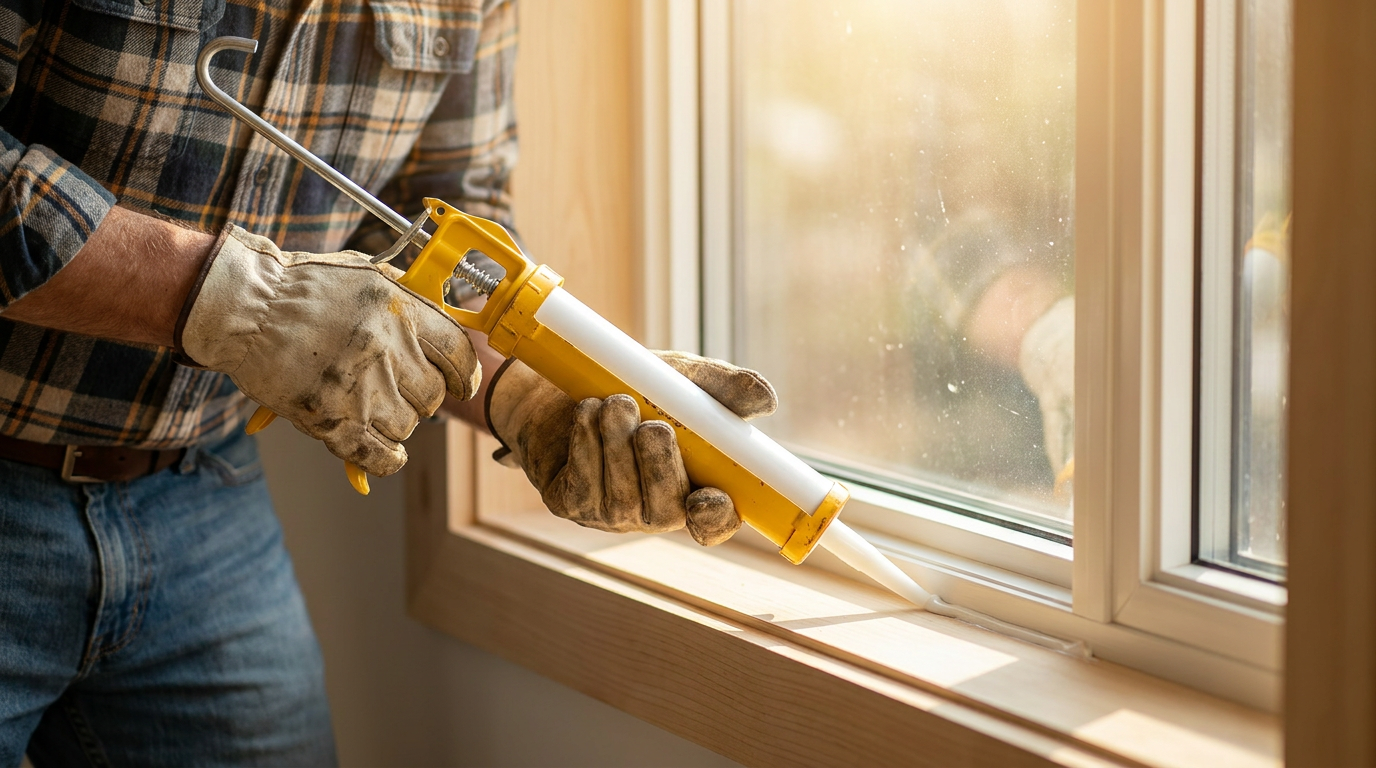
To combat the stack effect, the first physical intervention must always be air sealing. This involves using inexpensive materials like silicone caulk, weatherstripping, and expanding polyurethane foam to permanently plug the gaps where different building materials meet, effectively zipping up the house's thermal envelope.[1][2]
To combat the stack effect, the first physical intervention must always be air sealing.
Up in the attic, DIYers should look for dirty spots on existing fiberglass insulation. Because fiberglass acts as an air filter, dark, dusty patches indicate that conditioned air from the living space is moving through the insulation and escaping. Key targets for expanding foam include the gaps around plumbing vents, electrical wire holes, and dropped soffits above kitchen cabinets.[2]
Down in the basement, the rim joist—the perimeter where the house's wooden framing meets the concrete foundation—is a notorious site for cold air infiltration. Sealing this perimeter with expanding foam or rigid foam board can drastically reduce cold floor drafts on the first level of the home.[2]
Only after the home is meticulously air-sealed should a homeowner consider adding new insulation. Insulation is the 'sweater' of the home, keeping the heat in, but it only works effectively if the 'windbreaker'—the air sealing—is zipped up tight to stop the wind from blowing right through the fabric.[4]
Once the bypasses are sealed, adding a thick layer of blown-in cellulose or fiberglass batt insulation to the attic floor is one of the highest-return DIY projects available. The U.S. Department of Energy notes that comprehensively reducing drafts and upgrading insulation can cut a household's annual heating and cooling costs by 10% to 20%.[1][2]

However, the fabric-first approach comes with a critical, non-negotiable warning from retrofit professionals: 'Build tight, ventilate right.' As a home becomes more airtight and energy-efficient, it simultaneously loses its ability to naturally flush out indoor moisture, odors, and airborne pollutants.[3][5]
Without a deliberate ventilation strategy, a tightly sealed home can trap humidity generated from everyday activities like cooking, breathing, and showering. Over time, this trapped moisture leads to window condensation, dampness inside wall cavities, and eventually, hazardous mold growth.[3][5]
To mitigate this risk, homeowners must ensure that bathroom exhaust fans and kitchen range hoods vent directly to the outside exterior, rather than dumping moist air into the attic. In deeper, whole-house retrofits, mechanical ventilation with heat recovery (MVHR) systems are often installed to provide a constant supply of fresh, filtered air without losing the home's hard-won heat.[2][3]

Once the building fabric is sealed, insulated, and properly ventilated, the home is finally ready for mechanical upgrades. Because the building now retains its internal temperature so efficiently, the required heating and cooling load drops dramatically.[3][5]
This deliberate sequencing prevents homeowners from making a costly mistake: overpaying for oversized HVAC equipment. A heat pump sized for a leaky, uninsulated house will be far too large once the fabric is fixed, leading to inefficient 'short-cycling' and premature mechanical wear.[3]
Ultimately, the fabric-first approach democratizes home energy efficiency. While whole-home solar arrays and geothermal systems require specialized contractors and massive capital budgets, a caulk gun, a few cans of expanding foam, and a weekend of attic sealing are accessible, empowering steps almost anyone can take to build a better home.[6]
How we got here
1970s
Global energy crises prompt the first major wave of residential insulation and weatherization awareness programs.
1990s
Building science emerges as a distinct discipline, identifying the critical role of air sealing alongside traditional insulation.
2000s
The 'Fabric First' concept gains widespread traction through European Passive House standards.
2020s
Rising energy costs and the push for residential electrification make DIY weatherization a mainstream priority for homeowners.
Viewpoints in depth
Building Science Experts
Focus on the physics of heat and moisture transfer within residential structures.
Building scientists view a house as an interconnected system rather than a collection of separate rooms. From this perspective, adding a high-efficiency heat pump to a leaky house is like putting a powerful engine in a car with flat tires. They emphasize that the laws of thermodynamics—specifically the stack effect and moisture migration—dictate that the physical envelope must be secured first. Their primary concern during retrofits is ensuring that increased airtightness is perfectly balanced with mechanical ventilation to prevent catastrophic moisture accumulation inside wall cavities.
DIY Homeowners
Focus on the accessibility, immediate comfort, and financial returns of weatherization.
For the average homeowner, the appeal of the fabric-first approach lies in its accessibility. While installing solar panels or upgrading an electrical panel requires specialized licenses and thousands of dollars, air sealing is a highly democratic process. Armed with a $10 can of expanding foam and a weekend of free time, a DIYer can permanently eliminate a cold draft in their living room. This camp values the immediate, tangible improvements in daily comfort just as much as the long-term reductions in their monthly utility bills.
Energy Retrofit Professionals
Focus on the sequencing of upgrades to ensure long-term durability and proper equipment sizing.
Contractors who specialize in deep energy retrofits advocate for the fabric-first sequence primarily to protect the homeowner's future investments. If a homeowner replaces their furnace before air-sealing and insulating, the new unit must be sized to heat a leaky building. Once the homeowner eventually fixes the drafts, that expensive new furnace will be drastically oversized, leading to inefficient 'short-cycling,' uneven temperatures, and premature mechanical failure. By fixing the fabric first, professionals ensure that all subsequent mechanical systems can be smaller, cheaper, and vastly more efficient.
What we don't know
- Exactly how much energy a specific home will save, as results vary wildly based on the home's age, local climate, and the thoroughness of the DIY air sealing.
- How quickly new building codes mandating passive-house levels of airtightness will be adopted across different municipal jurisdictions.
Key terms
- Fabric First
- An approach to building design and retrofitting that prioritizes maximizing the performance of the components and materials that make up the building fabric itself, before considering mechanical systems.
- Stack Effect
- The movement of air into and out of buildings driven by buoyancy; warm indoor air rises and escapes through the roof, pulling cold outdoor air in through the lower levels.
- Thermal Envelope
- The physical separator between the conditioned (heated or cooled) and unconditioned environment of a building, including walls, floors, roofs, windows, and doors.
- Blower Door Test
- A diagnostic test used by professional energy auditors involving a powerful fan mounted in an exterior door frame to measure the airtightness of a building.
- MVHR
- Mechanical Ventilation with Heat Recovery; a system that provides a continuous supply of fresh air while capturing the heat from the outgoing stale air to warm the incoming stream.
Frequently asked
What is a DIY home energy audit?
A DIY audit is a visual and tactile inspection of your home to identify air leaks, check insulation levels, and spot inefficient appliances before calling in a professional.
Why is air sealing done before insulation?
Insulation traps heat but does not block airflow. If you don't seal the air leaks first, cold drafts will blow right through the new insulation, rendering it ineffective.
What does 'build tight, ventilate right' mean?
It is a building science principle stating that as you seal a home to prevent energy loss, you must actively install mechanical ventilation (like exhaust fans) to remove indoor moisture and prevent mold.
Where are the worst air leaks in a house?
While windows and doors are noticeable, the most severe energy-draining leaks are usually hidden in the attic (around pipes and wires) and the basement rim joists.
Sources
Source coverage
6 outlets
3 viewpoints surfaced






[1]U.S. Department of EnergyBuilding Science Experts
Do-It-Yourself Home Energy Assessments
Read on U.S. Department of Energy →[2]ENERGY STARDIY Homeowners
A DIY Guide to Sealing and Insulating with ENERGY STAR
Read on ENERGY STAR →[3]South East London Community EnergyBuilding Science Experts
Fabric First Approach to Home Retrofit
Read on South East London Community Energy →[4]Focus on EnergyDIY Homeowners
DIY Air Sealing and Insulation Guide
Read on Focus on Energy →[5]S6EnergyEnergy Retrofit Professionals
Fabric First Retrofit Approach Detailed Guide 2026
Read on S6Energy →[6]Factlen Editorial TeamEnergy Retrofit Professionals
Synthesis by Factlen editorial team
Read on Factlen Editorial Team →
Every angle. Every day.
Get home stories with full source coverage and perspective breakdowns delivered to your inbox.