
How T20 Cricket is Preparing for its 2028 Olympic Debut in Los Angeles
After a 128-year absence, cricket will return to the Olympic Games in 2028 with a fast-paced, six-team T20 tournament. The event will be hosted in a new modular stadium in California, reflecting the sport's rapid growth in the United States.

The 128-year wait is finally coming to an end. In July 2028, the sport of cricket will officially return to the Olympic Games in Los Angeles, marking its first appearance on the world's biggest sporting stage since a one-off, two-day match between Great Britain and France at the 1900 Paris Games. The International Olympic Committee and the International Cricket Council have spent years finalizing the blueprint for the sport's highly anticipated reintroduction.
The resulting tournament is scheduled to run from July 12 to July 29, 2028, featuring separate, highly competitive men's and women's events. This return is not just a nod to history, but a calculated move to introduce the world's second-most popular sport to a massive new American audience while simultaneously engaging billions of existing fans across the globe.[1]
Unlike the grueling, multi-day Test matches that define cricket's traditional lore and history, the Olympic tournament will utilize the modern Twenty20, or T20, format. T20 is a condensed, fast-paced version of the game specifically designed to be completed in roughly three hours, making it highly accessible to new viewers. In this format, each team is allotted a single innings restricted to exactly 20 overs—meaning they face a maximum of 120 legal deliveries.
The objective is straightforward but demands explosive athleticism: the team batting first attempts to score as many runs as possible within their 120 balls, either by running frantically between the wickets or striking the ball over the boundary rope for maximum points. The opposing team then takes their turn, attempting to chase down that target score before they run out of deliveries or lose all ten of their wickets.[1]
This specific format was selected for its seamless compatibility with the rigorous and tightly packed Olympic schedule. While traditional One Day Internationals require up to eight hours to complete and Test matches can span up to five full days, T20's reliable three-hour window fits neatly into the dense broadcasting grid of the Summer Games.
The format has already proven its viability in multi-sport environments, having been successfully deployed at the Commonwealth Games and the Asian Games. For Olympic organizers, T20 provides the perfect balance: it retains the strategic depth of traditional cricket while delivering the high-octane, action-packed experience that casual spectators and international broadcasters demand from modern Olympic events.
The venue for this historic return will not be a traditional cricket stronghold, but rather a state-of-the-art modular stadium constructed at the Fairplex in Pomona, California, located roughly 30 miles east of downtown Los Angeles. The $21 million facility, officially dubbed the Knight Riders Cricket Ground, is being financed by the Knight Riders Group—a major franchise ownership syndicate that operates teams in both the Indian Premier League and the United States' own Major League Cricket (MLC).
The stadium will feature a seating capacity of 15,000 for the duration of the Olympic Games. Once the medals have been awarded and the Olympics conclude, the facility will remain in place to serve as the permanent home stadium for the Los Angeles Knight Riders of the MLC, leaving a lasting legacy for the sport in Southern California.[2]
This significant infrastructure investment underscores the rapid and unprecedented growth of professional cricket within the United States. Major League Cricket, which launched its inaugural season in 2023, is currently preparing for its fourth season in the summer of 2026. The league is backed by over $150 million in strategic investments from American Cricket Enterprises, with plans to build up to ten international-standard cricket venues across the country by the end of the decade.
The Olympic tournament is acting as a powerful catalyst for this domestic expansion, accelerating the construction of permanent facilities and providing a massive promotional platform that domestic organizers believe will permanently elevate cricket from a niche community game to a mainstream American professional sport.[2][4]
Despite the sport's massive global footprint, the Olympic tournament will be highly exclusive, featuring only six teams per gender. Each participating nation will be permitted to bring a 15-player squad, meaning that just 90 athletes per gender will have the opportunity to compete for Olympic medals.
To determine which nations secure these coveted spots, the International Cricket Council has outlined a qualification mechanism that prioritizes geographic diversity over strict global rankings. The system guarantees one spot to the top-ranked T20 nation from each of the five continental regions: Asia, Oceania, Europe, Africa, and the Americas. A final, sixth spot will be determined through a highly competitive, ICC-managed global qualifier tournament.[1][3]
While this regional model ensures true global representation at the Games, it introduces a stark reality: several of the world's absolute best cricketing nations will inevitably miss out on the LA28 tournament. Because the spots are distributed by continent, regions with multiple top-tier teams will face a brutal bottleneck. For instance, if the qualification cut-off were applied today, powerhouses like India, Australia, England, and South Africa would likely secure their respective continental berths.
This would leave other top-tier teams—such as Pakistan, New Zealand, Sri Lanka, and the West Indies—forced to battle fiercely against one another for the single remaining global qualifier spot. Furthermore, the United States, as the host nation, is widely expected to receive an automatic entry, which could claim the Americas slot and further complicate the path for established Caribbean nations.[3][4]
Beyond the action on the field, the scheduling of the matches reveals the immense financial calculus behind cricket's Olympic inclusion. The International Olympic Committee and LA28 organizers have meticulously designed the match timings to cater directly to the sport's massive South Asian fanbase. Fixtures are slated to begin at 9:00 AM and 6:30 PM Pacific Daylight Time.
These specific windows correspond perfectly to 9:30 PM and 7:00 AM Indian Standard Time, ensuring that the matches air during prime television viewing hours in India. With over 90 percent of cricket's one billion global fans residing in South Asia, this strategic scheduling alignment is expected to generate a massive windfall in broadcasting rights for the IOC, cementing cricket's immense commercial value to the Olympic movement for decades to come.[4]
As the 2026 Major League Cricket season approaches and the Pomona stadium prepares to break ground, the runway to the LA28 Olympics is officially clear. The sport is no longer just an American curiosity; it is a rapidly institutionalizing presence preparing for its biggest global showcase in over a century. For the athletes, the opportunity to stand on an Olympic podium offers a new pinnacle of achievement outside the traditional World Cup cycle.
As the 2026 Major League Cricket season approaches and the Pomona stadium prepares to break ground, the runway to the LA28 Olympics is officially clear.
For the organizers, it represents a bridge to an entirely new demographic of global sports fans. Whether it is the explosive power-hitting of the T20 format or the strategic maneuvering of the qualification process, cricket's return to the Olympic Games promises to be one of the defining narratives of the Los Angeles summer.[2][4]
Key points
- Cricket will return to the Olympics in 2028, ending a 128-year absence from the Games.
- The tournament will use the fast-paced T20 format, which takes roughly three hours to complete.
- Matches will be played at a new $21 million modular stadium in Pomona, California.
- Only six teams per gender will compete, with qualification based on regional representation.
- Match timings are specifically scheduled to align with prime-time television viewing in India.
How we got here
1900
Cricket makes its first and only Olympic appearance at the Paris Games.
2003
The Twenty20 (T20) format is formally introduced in England to attract new audiences with a shorter game.
July 2023
Major League Cricket (MLC) launches its inaugural season in the United States.
October 2023
The International Olympic Committee officially approves cricket's inclusion for the LA28 Games.
July 2028
Cricket will return to the Olympic stage with men's and women's T20 tournaments in Los Angeles.
- Olympic Organizers & Broadcasters
- Viewing cricket as a strategic key to unlocking the massive South Asian media market.
- Traditional Cricket Nations
- Excited by the Olympic platform but anxious about the highly restricted six-team format.
- US Cricket Infrastructure
- Seeing LA28 as the ultimate catalyst for building permanent cricket infrastructure in America.
Perspectives this story doesn't cover
- Associate cricket nations outside the top regional rankings
Sources
Source coverage
4 outlets
3 viewpoints surfaced




- [1]International Olympic CommitteeOlympic Organizers & Broadcasters
Cricket at the LA 2028 Olympic Games will feature six teams
Read on International Olympic Committee → - [2]ForbesUS Cricket Infrastructure
New Jersey 5s Muster A Win In Major League Pickleball Week 6 In New York
Read on Forbes → - [3]Los Angeles CricketUS Cricket Infrastructure
LA 2028 Olympic Cricket: Qualification
Read on Los Angeles Cricket → - [4]Factlen Editorial TeamOlympic Organizers & Broadcasters
Synthesis by Factlen editorial team
Read on Factlen Editorial Team →
More in Sports
See all →Power ranking
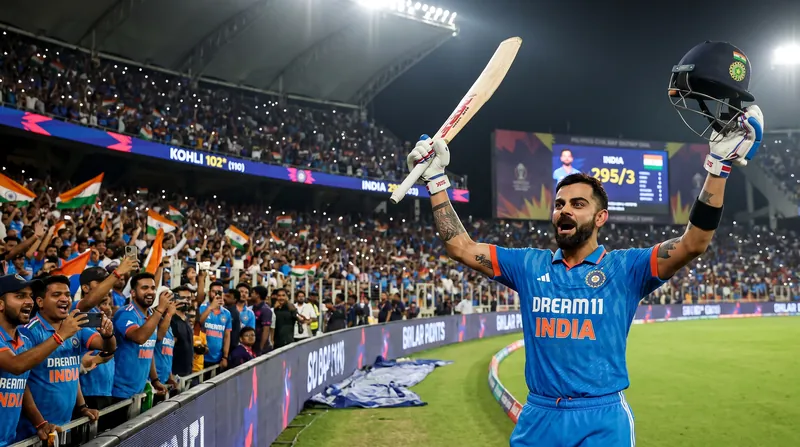
Global Cricket Power Rankings: The Hottest ODI Teams in the World Right Now
6 sources
Standings
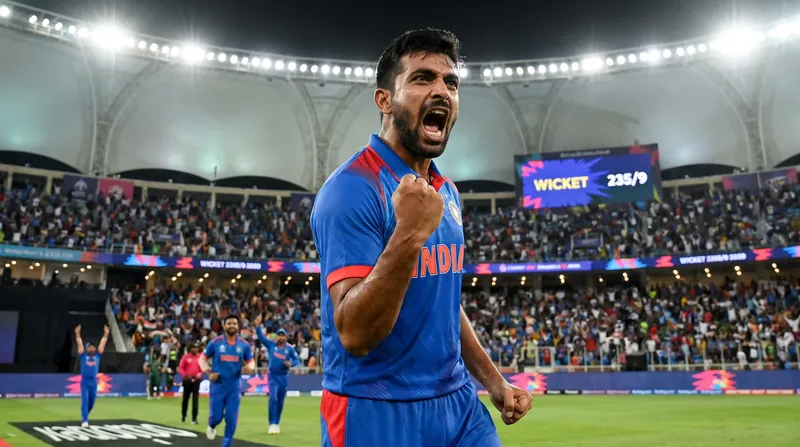
Four-Way Tie at the Summit: Net Run Rate Decides Historic ETPL Playoff Bracket
7 sources
Sports Analytics
The Resource Percentage Tables and the Target Calculation That Define the Duckworth-Lewis-Stern Method
6 sources
Injury
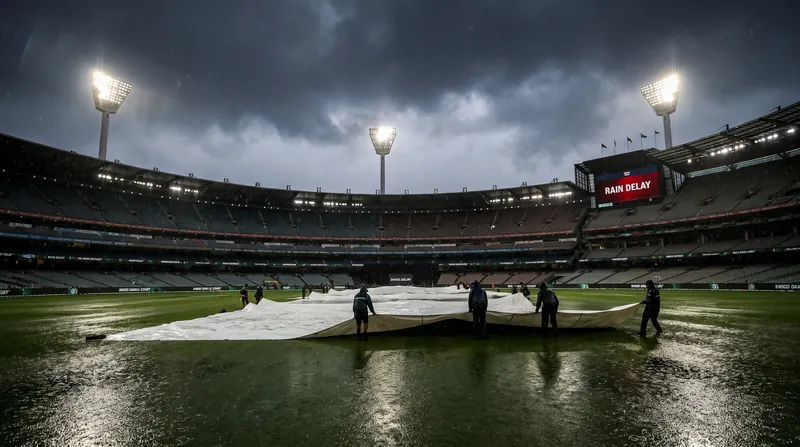
South Africa's Pace Attack Decimated by Injuries Ahead of Australia ODI Series
6 sources

Comments
Every angle. Every day.
Get Sports stories with full source coverage and perspective breakdowns, free every day.