
UK Announces Sweeping Social Media Ban for Under-16s
Prime Minister Keir Starmer has unveiled legislation to ban children under 16 from major social media platforms, alongside restrictions on gaming chats and AI companions.
By Factlen Editorial Team
- UK Government & Parent Groups
- Argues that tech companies have failed to self-regulate and that addictive algorithms require a hard access ban to protect youth mental health.
- Digital Rights & Child Advocates
- Argues that banning access violates children's rights to information and connection, advocating instead for strict regulation of platform design.
- Major Technology Platforms
- Warns that age-gating the internet is technically flawed and will drive teenagers to unregulated, offshore platforms without parental supervision.
What's not represented
- · Teenagers directly affected by the impending ban
- · Educators navigating the digital divide in classrooms
Why this matters
This legislation represents one of the most aggressive state interventions into digital life in the Western world. If successfully enforced, it will fundamentally alter how millions of teenagers communicate, while forcing global tech giants to overhaul their age-verification systems under threat of massive fines.
Key points
- The UK government will ban children under 16 from major social media platforms, including TikTok, Instagram, and YouTube.
- Messaging apps like WhatsApp and educational tools like Google Classroom are exempt from the restrictions.
- The legislation also bans AI romantic companions for under-18s and restricts livestreaming and gaming chats.
- Tech companies will be responsible for enforcing age verification and face multimillion-dollar fines for non-compliance.
- Digital rights groups argue the ban treats children as the problem rather than regulating addictive platform designs.
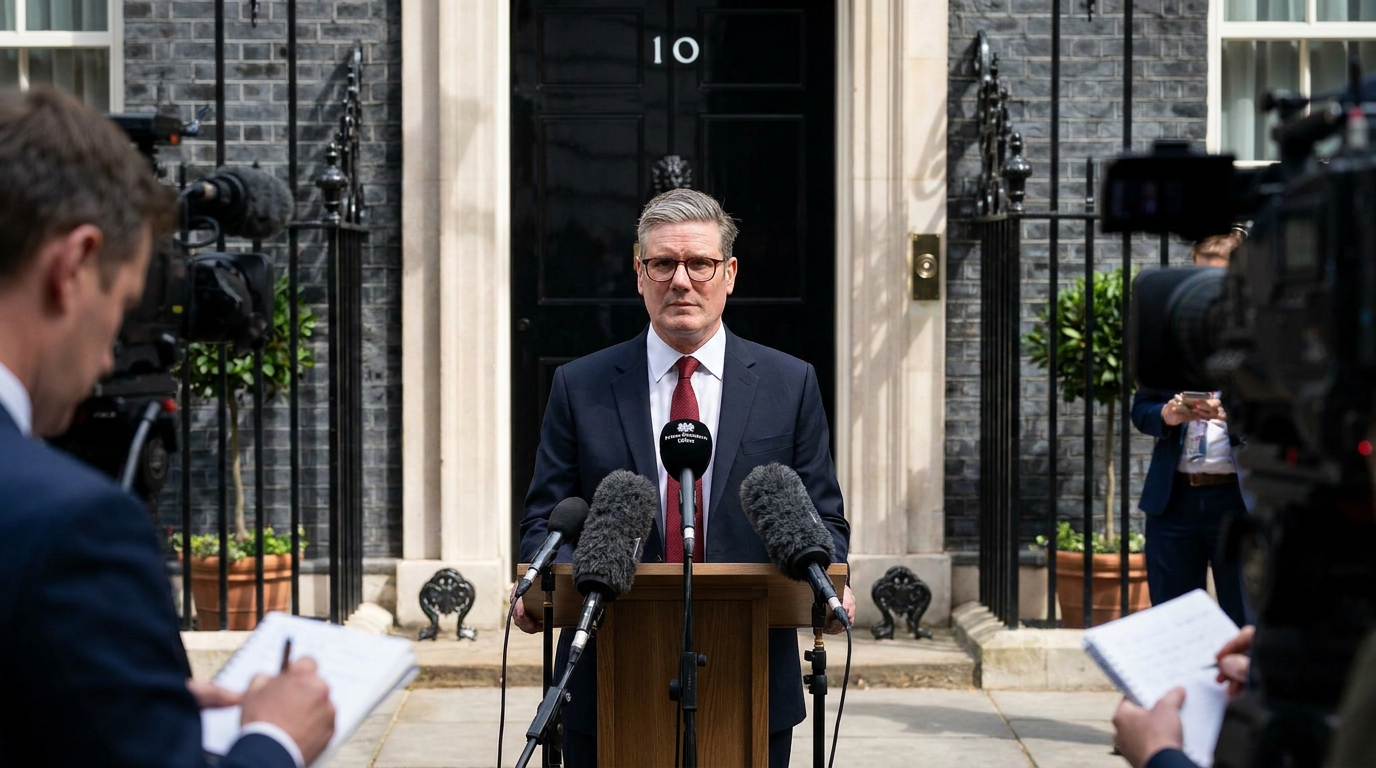
Prime Minister Keir Starmer has announced a sweeping legislative package that will ban children under 16 from accessing major social media platforms, positioning the United Kingdom at the forefront of a growing global movement to restrict youth internet access. The sweeping changes, announced during a press conference in London, are designed to push back against the power of big technology companies and shield minors from the documented psychological harms of infinite scrolling and algorithmic curation. Starmer framed the intervention as a necessary circuit breaker for a generation consumed by screens, declaring that the government could no longer allow technology to intrude unchecked into every area of adolescent life.[3][4]
The proposed legislation casts a wide net over the digital ecosystem, explicitly targeting platforms built around public broadcasting and algorithmic discovery. Under the new rules, teenagers under 16 will be barred from holding accounts on TikTok, Instagram, Snapchat, Facebook, X, and the main YouTube platform. However, the government has drawn a deliberate distinction between social broadcasting and private communication. End-to-end encrypted messaging services such as WhatsApp and Signal will remain fully accessible, as will curated educational environments like Google Classroom and YouTube Kids. This bifurcated approach attempts to sever children from addictive content feeds while preserving their ability to communicate directly with peers and family members.[1][5]
The motivation behind the ban is rooted in escalating concerns over youth mental health, cyberbullying, and predatory behavior online. Starmer argued forcefully that social media is inherently designed to be addictive, making children unhappy and leaving them vulnerable to harassment. "We are giving children their childhoods back," the Prime Minister stated, emphasizing that the legislation aims to change the fundamental expectations of how children grow up in Britain. By removing the pressure of curated online personas, the government hopes to provide teenagers with more security and freedom in their formative years.[1][3]

Beyond traditional social media, the UK is pushing its regulatory boundaries further than any other Western nation by targeting emerging digital frontiers. The legislation includes a strict prohibition on artificial intelligence "romantic companions" for anyone under 18, addressing fears that highly personalized AI chatbots could manipulate vulnerable adolescents. Additionally, the government plans to crack down on livestreaming platforms and multiplayer gaming environments, specifically targeting features that allow children to communicate with anonymous strangers via voice or text chat.[3][4]
The enforcement mechanism for this sweeping ban places the burden entirely on the technology industry rather than on parents or children. The UK's communications regulator, Ofcom, has been tasked with establishing robust age-verification standards that platforms must implement to prove users are over 16. Companies that fail to effectively age-gate their services will face multimillion-dollar fines. Starmer was explicit that the government will not criminalize teenagers who attempt to bypass the blocks, but will instead hold the multi-billion-dollar corporations liable for failing to secure their digital borders.[1][4][5]
The government is moving aggressively to codify these restrictions into law. Starmer indicated that he hopes to have the regulations passed by Parliament by late December, which would allow the ban to come into full force by the spring of 2027. Authorities are also considering supplementary measures, including mandatory overnight curfews that would disable access to certain digital services late at night, and forced breaks in infinite scrolling for users under 18 who are legally allowed on the platforms.[3][4]
The government is moving aggressively to codify these restrictions into law.
Britain’s approach is heavily influenced by Australia, which in December 2025 became the first nation to implement a nationwide social media ban for children under 16. Starmer openly cited the Australian model as the blueprint for the UK's legislation, signaling a growing consensus among allied nations that the era of frictionless, unregulated internet access for minors is coming to an end. However, the UK government insists its legislation will go further by encompassing gaming chats and AI companions, areas the Australian law largely left untouched.[1][3]
Despite the political momentum, early data from Australia provides a sobering reality check on the feasibility of age-gating the internet. A poll conducted by Australia's internet regulator in March revealed that roughly 70 percent of parents reported their children were still accessing banned platforms, having easily found ways to bypass the age-verification systems using virtual private networks (VPNs) or falsified credentials. This widespread circumvention has fueled skepticism among cybersecurity experts about whether a national digital firewall can truly keep determined teenagers offline.[4]

Starmer dismissed concerns about enforcement loopholes, arguing that imperfect compliance is not a justification for inaction. He drew a direct parallel to physical age restrictions, noting that society does not abandon the legal drinking age simply because some teenagers manage to acquire alcohol. "We don't say: 'Oh, look, a teenager managed to get a drink somehow, so let's not bother banning drinks from children,'" Starmer remarked, calling the defeatist argument "utterly ridiculous."[4][5]
The technology industry has mounted a fierce defense, warning that the legislation will create more dangers than it solves. Representatives from Meta and YouTube argue that blanket bans will isolate teenagers from vital online communities and educational resources. More alarmingly, tech spokespeople warn that cutting off access to mainstream, moderated platforms will inevitably drive youth into the darker, unregulated corners of the internet—such as encrypted forums and offshore message boards—where built-in parental controls do not exist and the risk of exploitation is significantly higher.[1][5]
Opposition to the ban has also emerged from human rights organizations, who view the legislation as a blunt instrument that violates children's digital rights. Amnesty International characterized the government's approach as "the right diagnosis but the wrong prescription." The organization argues that the ban unfairly treats children as the problem, stripping them of their right to connect, organize, and learn, rather than holding the tech companies accountable for the toxic environments they have engineered.[2]
Digital rights advocates contend that the government should focus on regulating the underlying business models of social media rather than restricting access. Critics argue that if the platforms are unsafe by design, the solution is to ban invasive data profiling, hyper-personalized recommendation algorithms, and manipulative features like autoplay and infinite scroll. By focusing solely on an access ban, advocates warn that the UK is allowing tech companies to maintain their surveillance-based business models for adults while simply locking children out of the modern digital public square.[2][6]

Despite the multifaceted pushback from Silicon Valley and human rights groups, the legislation enjoys overwhelming domestic support. A government consultation conducted earlier in the year found that 9 out of 10 British parents backed the measure, reflecting deep-seated frustration with the current digital landscape. This massive public mandate provides Starmer with the political capital necessary to push the legislation through Parliament, framing the debate as a defense of family life against corporate overreach.[1][4]
The UK's decisive action marks a critical inflection point in global technology policy. With Canada, France, Denmark, and Malaysia all weighing similar legislation, the concept of age-gating the internet is rapidly shifting from a fringe idea to standard international policy. As the spring 2027 enforcement deadline approaches, the impending clash between the British government and global tech giants will likely serve as a definitive test case for whether sovereign nations can successfully reclaim regulatory control over the digital lives of their citizens.[3][4]
How we got here
December 2025
Australia becomes the first nation to implement a nationwide social media ban for children under 16.
March 2026
A UK government consultation reveals that 90% of parents support a similar ban.
June 15, 2026
Prime Minister Keir Starmer officially announces the UK's legislation to ban under-16s from social media.
Spring 2027
The target date for the ban and its associated fines to come into full enforcement.
Viewpoints in depth
UK Government & Parent Groups
Argues that tech companies have failed to self-regulate and that addictive algorithms require a hard access ban.
Proponents of the ban view the current digital landscape as a public health crisis that tech companies are unwilling to solve. They argue that platforms are intentionally designed to be addictive, utilizing features like infinite scroll and hyper-personalized algorithms to maximize engagement at the expense of youth mental health. For this camp, a hard access ban is the only effective circuit breaker, shifting the burden of enforcement away from exhausted parents and onto the multi-billion-dollar corporations that profit from adolescent attention.
Digital Rights & Child Advocates
Argues that banning access violates children's rights and fails to address the root cause of toxic platform design.
Human rights organizations and child advocates argue that the legislation is a draconian overreach that treats teenagers as the problem rather than the victims. They contend that social media is a vital modern public square where youth connect, learn, and organize. Instead of exiling children from the internet, this camp advocates for strict regulation of the platforms' underlying business models—such as banning invasive data profiling and manipulative design features—ensuring the digital world is safe for everyone, rather than just age-gating the danger.
Major Technology Platforms
Warns that age-gating the internet is technically flawed and will drive teenagers to unregulated, offshore platforms.
The technology industry argues that blanket bans are a blunt instrument that will ultimately backfire. They warn that determined teenagers will easily bypass age-verification systems using VPNs, pushing them out of mainstream, moderated platforms and into the darker, anonymous corners of the internet. In these unregulated spaces, tech companies argue, teenagers will be entirely stripped of built-in parental controls, supervised experiences, and community safety guidelines, leaving them far more vulnerable to exploitation and extreme content.
What we don't know
- Exactly what age-verification technology Ofcom will mandate, and whether it will require government ID or biometric scanning.
- How the government plans to enforce the ban on AI romantic companions, given the decentralized nature of many AI applications.
- Whether tech companies will successfully challenge the legislation in court before the spring 2027 enforcement deadline.
Key terms
- Age-gating
- Technical measures used to restrict access to digital content or platforms based on a user's age.
- Ofcom
- The UK's government-approved regulatory and competition authority for the broadcasting and telecommunications industries.
- Infinite scroll
- A web-design technique that continually loads content as the user scrolls down, designed to keep users engaged on a platform indefinitely.
- AI romantic companion
- Artificial intelligence chatbots programmed to simulate romantic or intimate relationships with human users.
Frequently asked
Which apps are included in the ban?
The ban covers major broadcasting platforms including TikTok, Instagram, Snapchat, YouTube, Facebook, and X.
Will teenagers lose access to messaging apps?
No. Messaging services like WhatsApp and Signal, as well as educational tools like Google Classroom, are exempt from the ban.
How will the government enforce this?
The burden falls on tech companies, who must implement robust age-verification systems overseen by the regulator Ofcom, or face multimillion-dollar fines.
When does the ban take effect?
The government aims to pass the legislation by late December 2026, with enforcement beginning in the spring of 2027.
Sources
Source coverage
6 outlets
3 viewpoints surfaced






[1]TIMEUK Government & Parent Groups
The U.K. is set to ban under-16s from several social media platforms
Read on TIME →[2]Amnesty InternationalDigital Rights & Child Advocates
UK: Social media ban for under 16s 'right diagnosis, wrong prescription'
Read on Amnesty International →[3]Al JazeeraUK Government & Parent Groups
Britain announces sweeping social media ban for under-16s
Read on Al Jazeera →[4]CBS NewsUK Government & Parent Groups
UK Prime Minister Keir Starmer Announces Social Media Ban for UK Teens
Read on CBS News →[5]Education WeekMajor Technology Platforms
U.K. Bans Under-16s From Using Social Media Apps, Including TikTok and YouTube
Read on Education Week →[6]The GuardianDigital Rights & Child Advocates
Will a ban keep the UK’s kids off social media? – podcast
Read on The Guardian →

More in news politics
See all 10 stories →G7 Summit
G7 Leaders Push for Ukraine Peace Deal as Trump Signals Return of Russian Oil Sanctions
8 sources

Reparations Debate
Justice Department Sues to Halt Evanston's First-in-the-Nation Reparations Program
6 sources

Social Media Ban
UK to Ban Social Media for Under-16s in Landmark Tech Crackdown
6 sources
Ukraine War
G7 Leaders Push for Ukraine Peace Deal as Trump Weighs Reimposing Russian Oil Sanctions
6 sources

Every angle. Every day.
Get news politics stories with full source coverage and perspective breakdowns delivered to your inbox.