
UK to Ban Social Media for Under-16s in Landmark Tech Crackdown
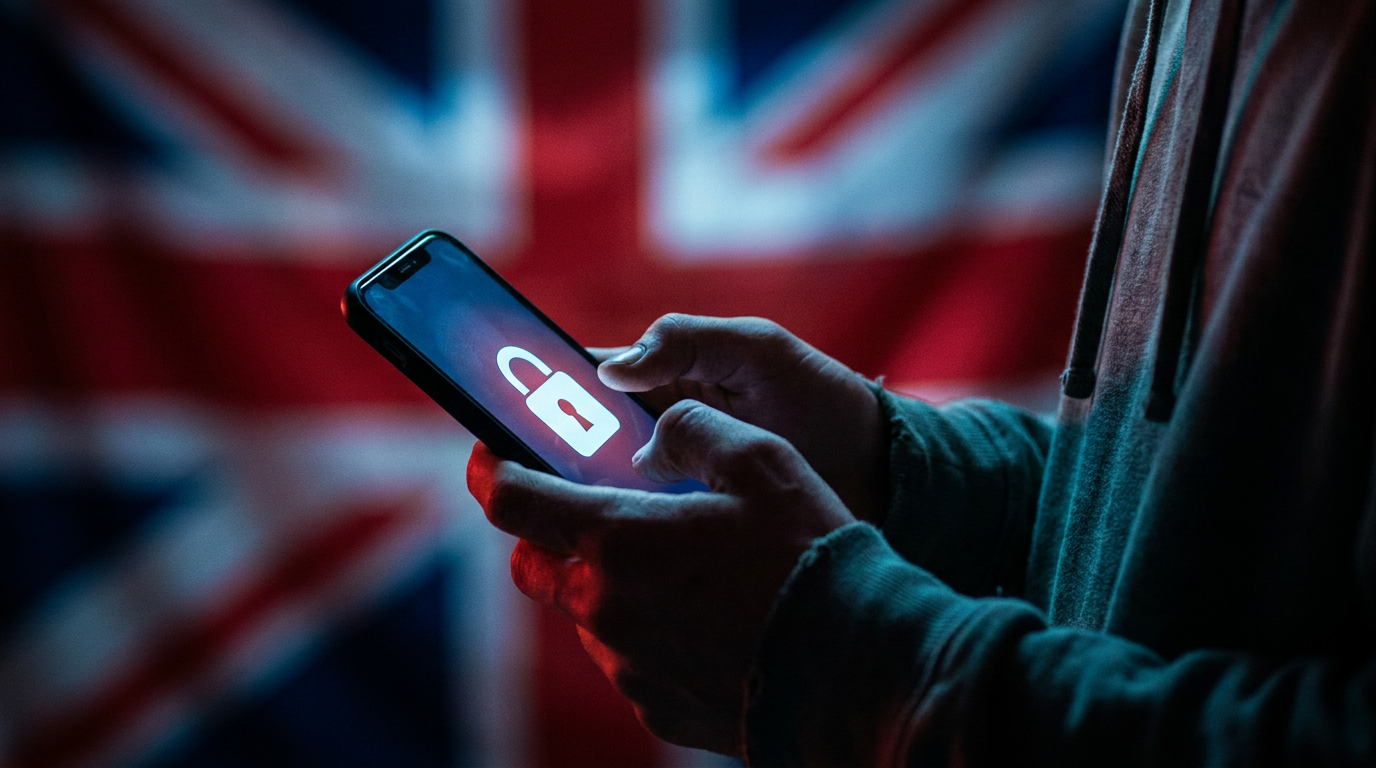
Prime Minister Keir Starmer has announced a sweeping ban on major social media platforms for children under 16, setting a global precedent that goes further than Australia's recent restrictions.
By Factlen Editorial Team
- Child Safety Advocates
- Parents and government officials argue that algorithmic feeds are fundamentally unsafe for developing brains.
- Digital Privacy Campaigners
- Civil liberties groups warn that age verification mandates will create a surveillance state for all internet users.
- Tech Industry
- Platform operators argue that blanket bans are ineffective and cut vulnerable youth off from vital support networks.
What's not represented
- · Teenagers and youth advocates whose daily digital lives and social networks will be directly dismantled by the ban.
- · Educators who rely on platforms like YouTube for supplementary classroom materials and homework assistance.
Why this matters
This policy fundamentally rewrites the rules of digital childhood, forcing tech giants to rethink their business models while potentially requiring all internet users to verify their age, altering the fabric of online privacy.
Key points
- The UK will ban children under 16 from using major social media platforms like TikTok, Instagram, and YouTube.
- The 'Australia Plus' model also blocks under-16s from livestreaming and chatting with strangers on gaming sites.
- Messaging apps like WhatsApp and Signal are exempt from the new restrictions.
- Tech companies face multimillion-dollar fines if they fail to enforce the age limits.
- Privacy advocates warn that age verification could require all adults to upload digital IDs to use the internet.
British Prime Minister Keir Starmer has drawn a "line in the sand" for the global technology industry, announcing a sweeping nationwide ban on social media access for children under the age of 16.[1][2]
The landmark policy, expected to take effect in the spring of 2027, will legally block younger teenagers from creating accounts or accessing "user-to-user platforms" that rely on algorithmic recommendations. This dragnet captures the world's most popular digital spaces, including TikTok, Instagram, Snapchat, Facebook, X, and YouTube.[3][5][6]
Starmer framed the aggressive intervention as a necessary rescue mission for a generation losing its formative years to addictive screens. "It stops children doing their homework, reading, playing with their friends outside, going to bed at a decent hour," Starmer said during a Downing Street press conference. "I am not prepared to compromise on the safety and happiness of our children."[5][6]
The United Kingdom is not the first nation to attempt an age-gated internet—Australia implemented a similar under-16 ban late last year—but the British framework goes significantly further. Dubbed an "Australia Plus" model by policymakers, the UK legislation extends beyond traditional social media to target the interactive features of the broader web.[1][4][5]

Under the new rules, children under 16 will be blocked from livestreaming themselves or communicating with strangers on gaming platforms like Roblox. To prevent a sudden "cliff edge" of exposure when teenagers turn 16, the government will mandate that these safety restrictions remain on by default for 16- and 17-year-olds.[1][3]
The legislation also introduces unprecedented restrictions for older teenagers. Under-18s will be legally barred from accessing AI "romantic companion" chatbots—programs designed to simulate intimate or sexual relationships. Furthermore, the government is actively consulting on implementing overnight digital curfews and mandatory breaks in "infinite scrolling" feeds for all minors.[1][2][6]
Not every app will be plunged into the dark. The government has carved out specific exemptions for end-to-end encrypted messaging services like WhatsApp and Signal, arguing they function more like traditional telecommunications than algorithmically driven content feeds. Educational platforms, e-commerce sites, and YouTube Kids will also remain accessible.[1][3][5]
Educational platforms, e-commerce sites, and YouTube Kids will also remain accessible.
The political momentum behind the ban is massive. A government consultation on the issue received over 116,000 responses—the second-largest public engagement in UK history, trailing only the 2012 debate on same-sex marriage. More than 90 percent of respondents supported the under-16 ban.[5]

The policy has been heavily championed by bereaved parents who attribute their children's deaths to online harms. Esther Ghey, the mother of murdered teenager Brianna Ghey, publicly backed the ban, stating it would "potentially save so many children's lives" by severing their connection to toxic digital environments.[1][5]
However, the mechanics of enforcing a nationwide digital blockade remain fraught with technical and ethical hurdles. The burden of compliance will fall entirely on the technology companies, who face multimillion-dollar fines if they fail to keep underage users off their platforms.[5]
The UK's media regulator, Ofcom, has been given until October to design a "highly effective" age-verification regime. This is the central vulnerability of the policy: how can a platform definitively prove a user is over 16 without requiring every single user—including adults—to upload government-issued identification?[1][4]
Digital privacy organizations are sounding the alarm over the implications of mandatory age checks. Big Brother Watch, a London-based civil liberties group, warned that the policy will inevitably lead to a "papers, please" internet where adults are forced to hand over biometric data or passport scans just to watch a YouTube video. The Open Rights Group echoed this, calling a privacy-preserving ban "virtually impossible."[1][6]

Technology companies have proposed using behavioral algorithms to estimate a user's age based on their browsing habits, a method currently being tested in Australia. However, Ofcom has already expressed deep skepticism, warning that current evidence does not show these models can deliver an effective solution that also preserves user privacy.[4]
The tech industry itself is fiercely opposing the measure. Representatives from Meta, YouTube, and Snapchat have argued that a blanket ban will not eliminate online risks but will instead drive teenagers toward darker, unregulated corners of the internet. They also contend that cutting off access to platforms like YouTube severs a vital educational and social lifeline for marginalized youth.[1][6]
Early data from Australia suggests that enforcement will be a cat-and-mouse game. Reports indicate that a "substantial proportion" of Australian teenagers have already found ways to circumvent their country's ban using Virtual Private Networks (VPNs) and falsified birth dates.[1][4]

Starmer dismissed these concerns, arguing that the inevitability of some teenagers breaking the rules does not negate the necessity of setting a legal standard. "This will change the conversations that parents have and the expectations of children over time," he said.[2]
The UK government plans to introduce the legislation to Parliament before Christmas, aiming for royal assent and implementation by the spring of 2027. If successful, Britain will cement its position at the vanguard of a growing global movement—joining Canada, Brazil, and several European nations—seeking to fundamentally rewrite the rules of the digital childhood.[3][5][6]
How we got here
December 2025
Australia becomes the first nation to implement a nationwide social media ban for children under 16.
June 15, 2026
UK Prime Minister Keir Starmer officially announces the 'Australia Plus' social media ban for under-16s.
October 2026
Deadline for Ofcom to present a viable, privacy-preserving age-verification regime to enforce the ban.
Spring 2027
The targeted date for the UK's social media ban to officially come into force and begin penalizing non-compliant platforms.
Viewpoints in depth
Child Safety Advocates
Parents and government officials argue that algorithmic feeds are fundamentally unsafe for developing brains.
Proponents of the ban view social media not as a neutral communication tool, but as a behavioral hazard engineered to maximize engagement at the expense of mental health. Bereaved parents and child psychologists argue that infinite scrolling, algorithmic recommendations, and the pressure of online social comparison are directly linked to rising rates of anxiety, depression, and self-harm among teenagers. For this camp, the inevitability of some teenagers bypassing the ban is irrelevant; the goal is to establish a legal and cultural norm that treats social media access similarly to purchasing alcohol or tobacco.
The Tech Industry
Platform operators argue that blanket bans are ineffective and cut vulnerable youth off from vital support networks.
Technology companies contend that age-gating the internet is a blunt instrument that ignores the nuanced reality of how teenagers use digital spaces. Representatives from major platforms argue that a total ban will simply drive tech-savvy youth toward encrypted, unregulated, or offshore platforms where safety tools and moderation do not exist. Furthermore, they emphasize that social media provides crucial educational content, marginalized community support, and creative outlets that will be severed by a blanket prohibition. They advocate for enhanced parental controls and algorithmic safety guardrails rather than outright bans.
Digital Privacy Campaigners
Civil liberties groups warn that age verification mandates will create a surveillance state for all internet users.
For digital rights organizations, the debate is less about child safety and more about the infrastructure required to enforce the ban. Privacy advocates point out that it is technologically impossible to verify that a user is over 16 without requiring every single user—including adults—to prove their identity. Groups like Big Brother Watch warn that this will mandate a 'papers, please' internet, forcing citizens to hand over passport scans, biometric facial data, or banking details to private tech companies just to access basic web services, fundamentally ending online anonymity.
What we don't know
- Exactly what technology Ofcom will mandate to verify the ages of millions of internet users without violating privacy laws.
- Whether the UK government will follow through on proposals to implement overnight digital curfews for 16- and 17-year-olds.
- How tech companies will respond if forced to choose between implementing invasive ID checks or pulling their services from the UK market entirely.
Key terms
- User-to-user platform
- An online service that allows individuals to interact, post material, and view content generated by others, typically driven by algorithms.
- Age verification
- The technological process of confirming a user's age before granting access to a website, often requiring ID documents or biometric data.
- Infinite scrolling
- A web design technique that continually loads new content as a user scrolls down a page, designed to keep users engaged for as long as possible.
- Ofcom
- The government-approved regulatory and competition authority for the broadcasting, telecommunications, and postal industries of the United Kingdom.
Frequently asked
Which apps are included in the UK social media ban?
The ban covers 'user-to-user platforms' that use algorithms to recommend content, including TikTok, Instagram, Snapchat, Facebook, X, and YouTube.
Will messaging apps like WhatsApp be banned?
No. End-to-end encrypted messaging services like WhatsApp and Signal are exempt, as the government views them as communication tools rather than algorithmic feeds.
When does the social media ban take effect?
The UK government aims to pass the legislation by late December 2026, with the ban officially coming into force in the spring of 2027.
How will the government know if a user is under 16?
The exact mechanism is still undecided. The UK media regulator, Ofcom, has been given until October 2026 to design an age-verification system, which could involve ID uploads or biometric scanning.
Sources
Source coverage
6 outlets
3 viewpoints surfaced






[1]The GuardianDigital Privacy Campaigners
UK under-16s social media ban: which apps will be blocked and how will it work?
Read on The Guardian →[2]Al JazeeraTech Industry
UK PM Starmer announces ban on social media for under-16s
Read on Al Jazeera →[3]Gov.ukChild Safety Advocates
Social media platforms to be blocked from offering services to under-16s
Read on Gov.uk →[4]Financial TimesDigital Privacy Campaigners
UK to ban under-16s from social media in tech crackdown
Read on Financial Times →[5]CBC NewsChild Safety Advocates
Britain to ban children under 16 from using social media apps
Read on CBC News →[6]Courthouse NewsChild Safety Advocates
Britain will ban under-16s from using social media to 'give kids the childhood they deserve'
Read on Courthouse News →

More in news politics
See all 11 stories →G7 Summit
Trump Urges Russia to 'Make a Deal' on Ukraine as G7 Leaders Push for Peace Talks
6 sources

D.C. Autonomy
Trump Threatens Federal Takeover of Washington D.C. as Progressive Leads Mayoral Primary
6 sources
Ukraine War
Trump Urges Russia to 'Make a Deal' at G7 Summit, Weighs Reinstating Oil Sanctions
7 sources

G7 Summit
G7 Leaders Push for Ukraine Peace Deal as Trump Signals Return of Russian Oil Sanctions
8 sources

Every angle. Every day.
Get news politics stories with full source coverage and perspective breakdowns delivered to your inbox.