
The Economic Stakes of the US-Iran Peace Deal and the Reopening of the Strait of Hormuz
As the US and Iran finalize a landmark peace agreement to reopen the Strait of Hormuz, global markets are bracing for the return of Iranian oil. However, central bankers warn that the diplomatic breakthrough may not immediately resolve the world's lingering energy and inflation shocks.
By Factlen Editorial Team
- Energy & Shipping Markets
- Optimistic about the resumption of trade but highly focused on the logistical, security, and legal hurdles of reopening the strait.
- Central Banks & Policymakers
- Focused on the lingering effects of the energy shock and the need to maintain restrictive monetary policy until core inflation cools.
- Climate & Sustainability Advocates
- Concerned that using high interest rates to combat fossil fuel shocks is making the green energy transition prohibitively expensive.
What's not represented
- · Consumers facing high household energy bills
- · Middle Eastern oil-producing nations adjusting their output quotas
Why this matters
The unfreezing of the Strait of Hormuz and the influx of crude oil will directly impact global gas prices, shipping costs, and the trajectory of interest rates. This dictates whether central banks will continue to hike borrowing costs, affecting everything from household energy bills to mortgage rates.
Key points
- The US and Iran have reached a preliminary peace agreement that includes lifting the naval blockade on the Strait of Hormuz.
- Energy markets reacted positively, with oil prices dropping and Qatar preparing to ramp up LNG exports through the region.
- Restoring shipping traffic to pre-war levels could take up to 30 days due to the need for extensive demining and security assessments.
- Central bankers warn that the economic damage is already baked in, meaning the energy shock will not immediately dissipate.
- The ECB recently raised its main deposit rate to 2.25%, and officials indicate further tightening may still be necessary.
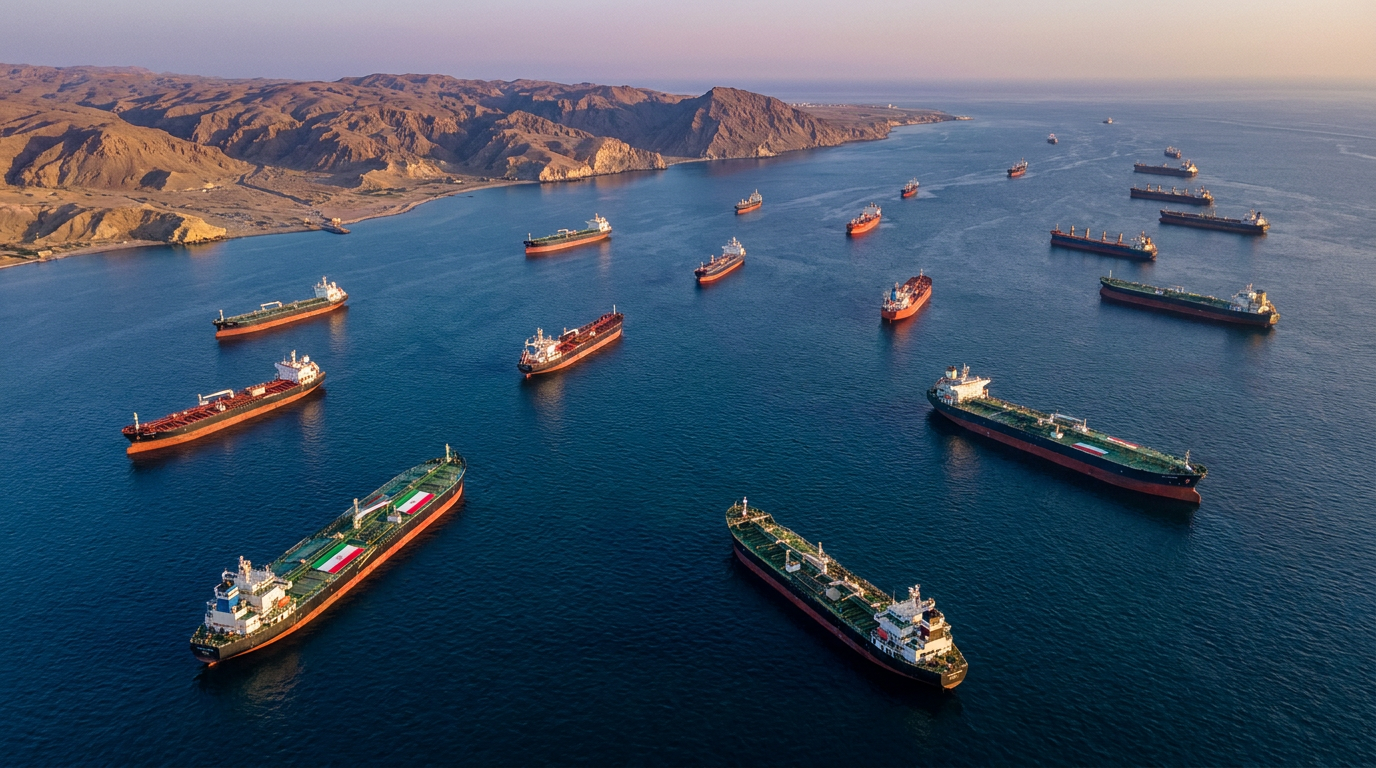
The diplomatic breakthrough between the United States and Iran has set the stage for the reopening of the Strait of Hormuz, promising an end to a months-long blockade that choked global energy markets. Mediated by Pakistan, the preliminary peace agreement aims to unwind the economic and military consequences of a conflict that began in late February 2026. U.S. President Donald Trump announced that the deal is complete, authorizing the immediate removal of the U.S. naval blockade and calling for a toll-free opening of the vital shipping lane. For a global economy battered by supply shocks and persistent inflation, the prospect of normalized trade offers a desperately needed reprieve.[6][9]
The stakes of this reopening cannot be overstated. Before the conflict erupted, the Strait of Hormuz facilitated the transit of roughly 20 percent of the world's crude oil and a significant portion of its liquefied natural gas. The sudden closure of this chokepoint sent energy prices soaring, forcing major producers to throttle back output and reroute shipments. Now, with the blockade lifting, energy giants are already maneuvering to capitalize on the thaw. Qatar, a major liquefied natural gas supplier, has begun moving its tankers back to the Middle East in preparation for a rapid ramp-up of exports once the waterway is declared safe.[1][7]
However, the physical resumption of maritime traffic will not happen overnight. While political leaders have heralded an immediate reopening, the logistical reality is far more complex. The waters must be cleared of mines, and shipping companies must assess the lingering security risks before committing their multi-million-dollar vessels and crews to the route. Iranian officials have indicated that restoring traffic to pre-war levels could take up to 30 days, assuming the demining process proceeds without incident. Furthermore, the U.S. military has stated that it is actively working to secure safe passage, but the exact timeline for a full return to normalcy remains fluid.[6][9]

Beyond the physical logistics, there are unresolved legal and financial hurdles. Early reports suggest that the United States is prepared to offer Iran broad financial incentives, including the right to sell oil immediately, as part of the final draft of the agreement. Yet, questions remain about whether Iran will attempt to levy maritime service fees or tolls on ships passing through the strait. While the U.S. administration has insisted on a toll-free opening, any attempt by Tehran to collect payments could expose shippers and banks to existing U.S. Treasury sanctions, complicating the resumption of seamless global trade.[3][7]
While financial markets reacted to the peace deal with immediate optimism—sending oil prices sharply lower and lifting global stocks—central bankers are adopting a decidedly more cautious tone. The European Central Bank, which has spent years battling persistent inflation driven by supply chain disruptions and energy shocks, recently raised its main deposit rate to 2.25 percent. This marked the central bank's first rate hike since 2023, a direct response to the inflationary pressures exacerbated by the Middle East conflict.[5][10]
This marked the central bank's first rate hike since 2023, a direct response to the inflationary pressures exacerbated by the Middle East conflict.
For monetary policymakers, the end of the war does not equate to an immediate end to the economic damage. European Central Bank officials have explicitly warned that the interim deal will not necessarily bring an immediate halt to the global energy shock. Damage to energy infrastructure could cause lingering price pressures, meaning that production and supply chains may only recover with a significant lag. Central bankers are focused on the inflation that has already permeated the broader economy, not just the anticipated drop in future energy prices.[2][10]

European Central Bank President Christine Lagarde echoed this sentiment, noting that while the preliminary agreement is welcome news, the outlook for inflation and the broader eurozone economy remains uncertain. The central bank's leadership emphasized that the institution will continue to be proactive in its fight against high inflation, even if the peace deal successfully brings down headline energy costs. Financial markets are already pricing in the possibility of at least one more rate hike later this year, as core inflation pressures remain stubbornly present.[5][10]
The ripple effects of the peace deal are being felt across other major financial institutions as well. The Swiss National Bank is currently reviewing its alert level for the Swiss franc—traditionally a safe-haven currency during times of geopolitical stress. The bank must determine if it is too soon to dial down its defensive rhetoric before the prospective Middle East peace deal becomes a concrete, verifiable reality. The interconnected nature of global finance means that a breakthrough in the Persian Gulf directly influences currency strategies from Zurich to Tokyo.[4]
Meanwhile, the broader macroeconomic environment remains fraught with secondary challenges. The push to raise interest rates in response to the oil shock has had unintended consequences for long-term structural goals, particularly the green energy transition. Higher borrowing costs make the significant upfront capital required for renewable energy projects—such as wind turbines and solar panels—much more expensive. Researchers warn that using interest rate hikes to combat a supply-driven energy shock not only fails to stabilize volatile oil prices but also locks in Europe's exposure to future fossil fuel crises by discouraging green investment.[8]

This dynamic creates a frustrating paradox for policymakers. The very tools used to fight the inflation caused by the Strait of Hormuz blockade are simultaneously slowing down the development of the energy infrastructure needed to prevent the next crisis. Some economic analysts are now urging central banks to reconsider their approach, suggesting that a dual interest rate policy could provide cheaper financing for green projects while still maintaining broader macroeconomic stability. Until such innovations are adopted, the tension between immediate inflation control and long-term sustainability will persist.[8]
Ultimately, the success of the economic recovery hinges on the durability of the peace agreement itself. The memorandum of understanding requires strict verification, and both sides have a history of deep mistrust. If the ceasefire holds and the Strait of Hormuz remains permanently open, the global economy may achieve the soft landing that seemed impossible just weeks ago. However, if the demining process stalls, or if disputes over maritime tolls and sanctions relief reignite tensions, the current market rally could quickly evaporate.[7][9]
For now, the world watches the waters of the Persian Gulf with cautious optimism. The physical unblocking of the strait is only the first step in a much longer process of economic normalization. From the boardrooms of European central banks to the trading floors of global energy markets, the consensus is clear: the crisis may have peaked, but the financial aftershocks will continue to shape the global economy well into the next year.[10]
How we got here
Late Feb 2026
The conflict escalates, leading to the effective closure of the Strait of Hormuz and a spike in global energy prices.
April 2026
The Federal Reserve holds interest rates steady at 3.50–3.75%, citing revived inflation risks from the energy shock.
June 11, 2026
The European Central Bank raises its main deposit rate to 2.25%, its first hike since 2023, to combat persistent inflation.
June 15, 2026
The US and Iran announce a preliminary peace agreement, authorizing the immediate reopening of the Strait of Hormuz.
Viewpoints in depth
Central Bankers
Monetary policymakers warn that the peace deal will not instantly erase the inflation already baked into the economy.
Officials at the European Central Bank and the Federal Reserve argue that the energy shock caused by the months-long blockade has already permeated supply chains. They emphasize that infrastructure damage and delayed production mean price pressures will linger. Consequently, they maintain that interest rates must remain restrictive—or even increase—until core inflation definitively cools, regardless of immediate drops in headline oil prices.
Global Shipping Industry
Maritime operators are focused on the logistical and legal hurdles of resuming transit through the strait.
For shipping companies and energy exporters, the political announcement of a toll-free opening is only the beginning. Industry analysts point out that the waters must be thoroughly demined and security protocols re-established before multi-million-dollar vessels can safely return. Furthermore, they remain concerned about potential legal ambiguities, such as whether Iran will attempt to levy service fees that could trigger existing U.S. sanctions.
Green Energy Advocates
Sustainability researchers argue that using high interest rates to fight oil shocks actively harms the climate transition.
Climate economists highlight a frustrating paradox: the monetary tools used to combat fossil fuel-driven inflation are making renewable energy projects prohibitively expensive. Because wind and solar infrastructure require massive upfront capital, higher borrowing costs stall their deployment. These advocates argue that central banks should adopt dual interest rate policies to ensure green investments remain affordable, thereby reducing long-term reliance on volatile geopolitical chokepoints.
What we don't know
- Whether Iran will attempt to levy maritime service fees or tolls on ships passing through the Strait of Hormuz.
- How quickly the demining process can be completed to ensure safe passage for commercial vessels.
- Whether the European Central Bank will proceed with another interest rate hike later this year despite the drop in headline oil prices.
Key terms
- Strait of Hormuz
- A narrow, strategically vital waterway between the Persian Gulf and the Gulf of Oman, through which roughly 20 percent of the world's crude oil passes.
- Deposit Rate
- The interest rate that a central bank pays commercial banks to hold their excess reserves, used as a primary tool to control inflation.
- Liquefied Natural Gas (LNG)
- Natural gas that has been cooled to a liquid state for easier and safer non-pipeline transport, heavily exported by countries like Qatar.
- Stagflationary Dilemma
- An economic situation characterized by slow growth occurring simultaneously with high inflation, complicating central bank policy.
Frequently asked
When will the Strait of Hormuz fully reopen?
While the political agreement authorizes an immediate reopening, Iranian officials estimate it will take up to 30 days to clear mines and restore shipping traffic to pre-war levels.
Will the peace deal immediately lower inflation?
Not necessarily. Central bankers warn that the months-long energy shock has already affected broader supply chains, meaning price pressures will likely linger even as oil prices drop.
Why did the European Central Bank raise interest rates?
The ECB raised its deposit rate to 2.25% to combat the persistent inflation exacerbated by the Middle East conflict and the resulting spike in energy costs.
How does the peace deal affect green energy?
The high interest rates implemented to fight the oil shock have made financing renewable energy projects more expensive, which experts warn could slow down the green transition.
Sources
Source coverage
10 outlets
3 viewpoints surfaced







[1]BloombergEnergy & Shipping Markets
Qatar Moves LNG Ships Back to Mideast Ahead of Hormuz Reopening
Read on Bloomberg →ECB Officials Say Peace in Iran Isn’t Enough to Fix Energy Shock
Read on Bloomberg →US Set to Offer Iran Broad Financial Gains in Peace Deal
Read on Bloomberg →SNB Reviews Franc Alert Level Before Middle East Peace Deal
Read on Bloomberg →[5]The GuardianCentral Banks & Policymakers
European Central Bank increases main deposit rate to 2.25%
Read on The Guardian →[6]CBS NewsEnergy & Shipping Markets
Iran peace deal to be signed Sunday and strait reopened immediately, Trump says
Read on CBS News →[7]PBSEnergy & Shipping Markets
The tentative agreement to end the war in Iran and reopen the Strait of Hormuz would be good news for the global economy
Read on PBS →[8]Green Central BankingClimate & Sustainability Advocates
War in the Middle East has put pressure on the ECB to raise interest rates, but experts say this will increase the cost of the green transition
Read on Green Central Banking →[9]Seatrade MaritimeEnergy & Shipping Markets
Strait of Hormuz set to reopen under US – Iran peace deal
Read on Seatrade Maritime →[10]Modern DiplomacyCentral Banks & Policymakers
Iran Deal Sparks Market Rally, but ECB Says Inflation Risks Persist
Read on Modern Diplomacy →
More in business
See all 6 stories →GLP-1 Economy
The GLP-1 Companion Economy: How Entrepreneurs Are Building for the Weight-Loss Boom
6 sources

SpaceX IPO
SpaceX Completes Historic $75 Billion IPO, Valuing Aerospace and AI Giant at Over $2 Trillion
8 sources
SpaceX IPO
SpaceX Shatters Market Records With $2 Trillion IPO and Unprecedented Options Debut
8 sources
Space Economy
How the SpaceX Public Debut is Catalyzing a New Generation of Aerospace Entrepreneurs
7 sources
Every angle. Every day.
Get business stories with full source coverage and perspective breakdowns delivered to your inbox.