
US and Iran to Sign Truce Ending Four-Month War as Analysts Warn of Strategic Defeat
The United States and Iran have agreed to a Memorandum of Understanding that lifts the US naval blockade and reopens the Strait of Hormuz, initiating a 60-day window for nuclear negotiations.
By Factlen Editorial Team
- Strategic Analysts
- Views the outcome as a strategic defeat for the US that proved Iran's ability to hold the global economy hostage.
- US Administration
- Argues the deal successfully reopens global shipping lanes and forces Iran to the negotiating table over its nuclear program.
- Israeli Defense Establishment
- Considers the war a costly failure that depleted resources while leaving Iran emboldened and Israel isolated.
- Iranian Leadership
- Frames the agreement as a victory that forced the US to lift its blockade and recognize Iran's regional deterrence.
What's not represented
- · Commercial shipping insurers pricing the ongoing risk in the Strait of Hormuz
- · Lebanese civilians affected by the parallel conflict between Israel and Hezbollah
Why this matters
This agreement halts a major conflict that threatened to permanently destabilize global energy markets and drag the US into a prolonged Middle Eastern war. However, by leaving Iran's nuclear program intact and proving its ability to choke off the Strait of Hormuz, the deal establishes a new, highly volatile balance of power that will dictate international security and oil prices for years.
Key points
- The US and Iran will sign a Memorandum of Understanding in Switzerland to halt a nearly four-month war.
- The agreement lifts the US naval blockade on Iranian ports and reopens the Strait of Hormuz to commercial shipping.
- A 60-day negotiation window will follow to address Iran's nuclear program and potential sanctions relief.
- Defense analysts widely view the outcome as a strategic defeat for the US, noting Iran's regime and nuclear assets survived intact.
- President Trump invoked the Defense Production Act to replenish US munitions depleted during the conflict.
- Israel has been sidelined from the talks and continues its military operations against Hezbollah in Lebanon.
The United States and Iran are preparing to sign a formal Memorandum of Understanding in Switzerland this Friday, marking a tentative diplomatic breakthrough after months of intense hostilities. Brokered through extensive back-channel mediation by Pakistan and Qatar, the framework agreement establishes an immediate ceasefire across multiple fronts and initiates a critical 60-day window for complex technical negotiations. As diplomats converge on the heavily secured, mountainside Burgenstock resort near Lucerne, the international community is watching closely to see if this preliminary truce can hold. The signing ceremony is expected to transition immediately into a second phase of direct talks aimed at resolving the core disputes that ignited the conflict in the first place.[1][2]
The agreement aims to halt a nearly four-month war that has deeply rattled the global economy and reshaped the geopolitical landscape of the Middle East. The conflict, which began with US and Israeli strikes aimed at degrading Tehran's nuclear capabilities, quickly escalated into a broader regional crisis that saw commercial shipping paralyzed and energy markets thrown into turmoil. For the United States, the immediate priority is restoring stability to international supply chains and preventing a prolonged, multi-front engagement. For Iran, the focus remains on securing tangible economic relief and preserving the infrastructure of its nuclear and military programs after absorbing waves of allied bombardment.[1][2]
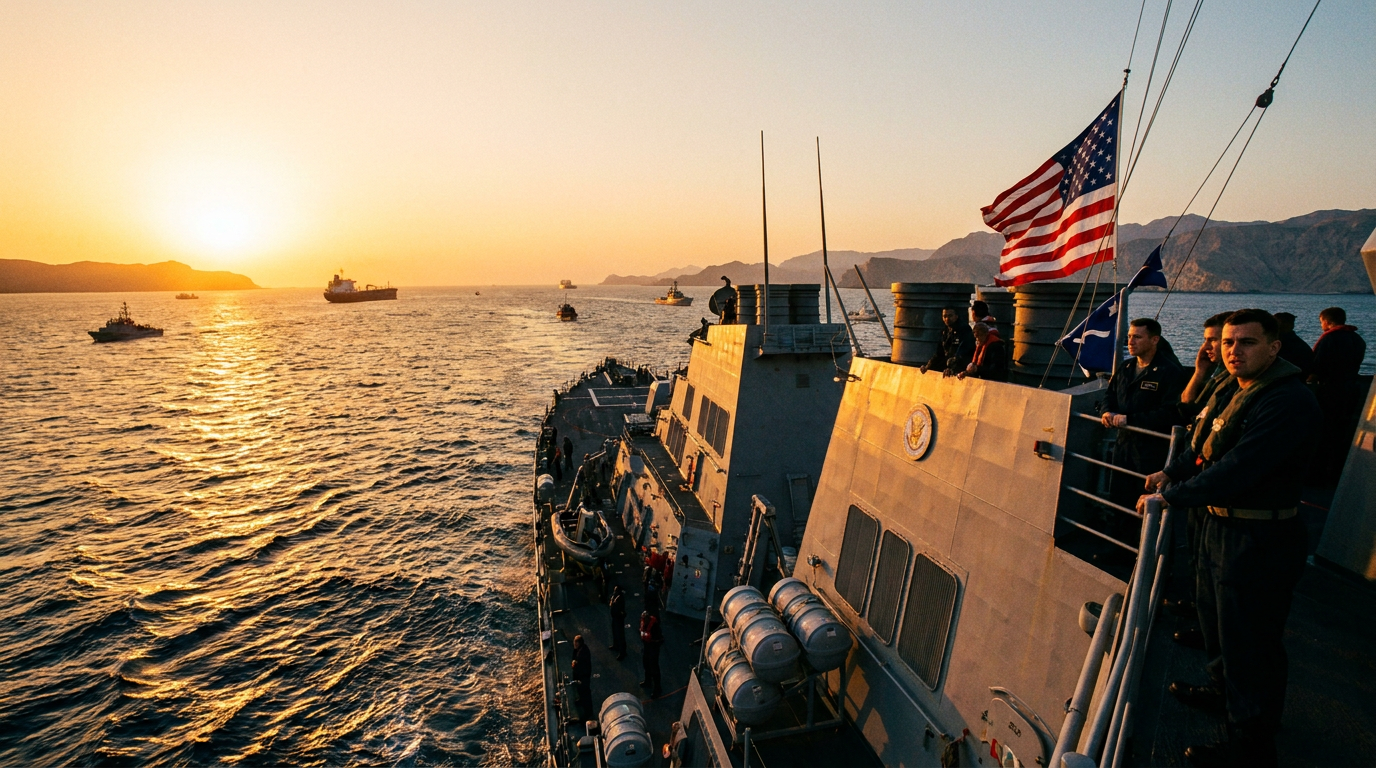
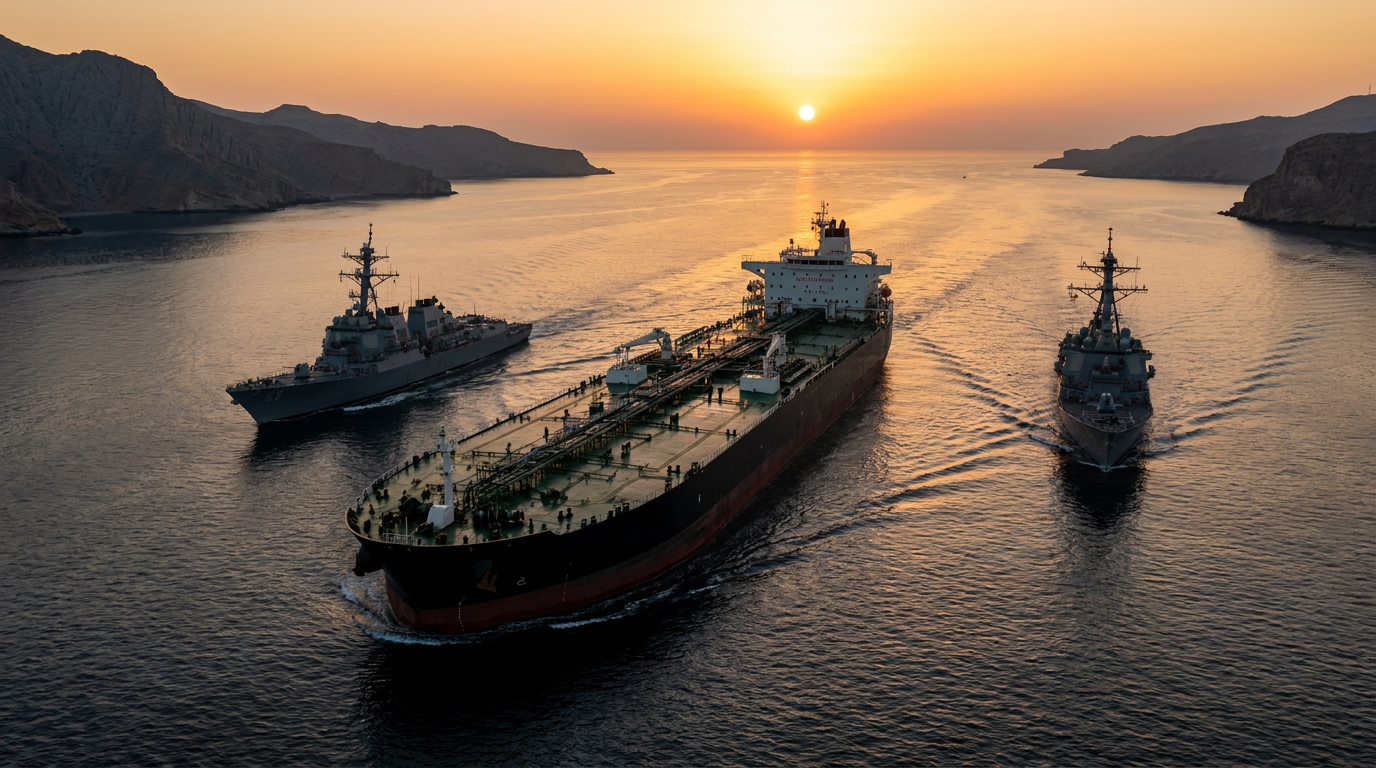
The immediate terms of the deal require the United States to lift its two-month naval blockade on Iranian ports, a measure initially imposed in retaliation for Iranian aggression in the Persian Gulf. In exchange, Tehran has agreed to reopen the Strait of Hormuz, the critical maritime chokepoint it effectively closed to commercial shipping at the onset of the conflict. Implementation of these initial steps is already underway on the water. Iranian deputy foreign minister Majid Takht-Ravanchi confirmed that the US blockade has been formally lifted, and maritime tracking data shows sanctioned Iranian oil tankers crossing into the Gulf of Oman for the first time in months. Commercial traffic is also tentatively returning to the Strait, though shipping volumes remain well below pre-war levels as insurers and energy traders price in the lingering risk of renewed hostilities.[1][3][8]

Despite the diplomatic breakthrough in Europe, the tactical situation on the ground and at sea remains highly volatile. US defense officials report that the Islamic Revolutionary Guard Corps has continued to launch drones toward commercial corridors since the initial ceasefire announcement, forcing the US military to actively intercept them before they can strike transiting vessels. This ongoing low-level friction highlights the fragility of the Memorandum of Understanding and underscores the deep mistrust between the two militaries. Furthermore, the two nations have already begun issuing conflicting narratives regarding the sequence of sanctions relief. While Washington insists that Iran will receive no financial concessions until it fully complies with the upcoming technical agreements, Iranian state media and military commanders claim the US has already committed to unfreezing billions of dollars in assets before the talks even begin.[3][8]
As the dust begins to settle, a stark consensus is emerging among defense analysts, military historians, and international observers: the conflict has culminated in a strategic defeat for the United States. The core of this assessment rests on the reality that Washington failed to achieve nearly all of its primary war aims. Despite a punishing campaign of airstrikes, Iran's regime remains firmly in power, its leadership structure intact, and its ballistic missile arsenal largely functional. Most critically, Iran's nuclear program—the original casus belli—survived the US and Israeli bombardment. The highly enriched uranium remains inside the country, and the infrastructure required to process it can be readily reassembled, leaving Tehran just a short technical step away from weapons-grade material.[4][5]
The core of this assessment rests on the reality that Washington failed to achieve nearly all of its primary war aims.
Beyond the survival of its military and nuclear assets, Iran successfully stress-tested its ultimate asymmetric deterrent. By shutting down the Strait of Hormuz and spooking global shipping insurers, Tehran proved it could hold the global economy hostage without ever needing to deploy a nuclear warhead. Analysts argue that this dynamic establishes a permanently altered strategic landscape in the Middle East. The United States is essentially accepting a return to the status quo ante bellum, but with Iran now possessing proven, battle-tested coercive power over global energy markets. By demonstrating that it can absorb an American military assault and still dictate terms in the Persian Gulf, the Islamic Republic has cemented a new baseline of deterrence that will likely define regional geopolitics for years to come.[4][5]

In Washington, the political fallout from the inconclusive war is intensifying as lawmakers scrutinize the administration's handling of the conflict. The Senate narrowly failed to advance a War Powers resolution in a tight 47-48 vote, reflecting deep, bipartisan frustration over the war's mounting costs and the White House's refusal to share detailed end-game strategies with Congress. President Donald Trump, who initiated the conflict without congressional approval, appears eager to pivot away from the military engagement ahead of the 2026 midterm elections. However, the sheer material toll of the campaign has forced the administration's hand domestically. On Tuesday, Trump invoked the Defense Production Act to address severe constraints in the manufacturing of munitions and missiles, highlighting how deeply the four-month war depleted American military stockpiles.[3][5][7]
Meanwhile, Israel finds itself entirely sidelined from the US-Iran negotiations, exposing a widening rift between Washington and its closest Middle Eastern ally. Prime Minister Benjamin Netanyahu has publicly vowed that the American agreement does not bind Israel, and Israeli forces continue to conduct intense military operations against Hezbollah in southern Lebanon. This parallel conflict has drawn visible frustration from President Trump, who recently criticized Israel's "minor war" in Lebanon for complicating the broader peace effort with Tehran. Iranian officials, in turn, have warned that any continued Israeli presence or strikes in Lebanon would constitute a direct violation of the spirit of the US-Iran deal, threatening to unravel the fragile ceasefire before the ink is even dry in Switzerland.[3][6]

Within Israel, the domestic press and military commentators are harshly criticizing the government's war effort, framing the outcome as a strategic disaster for Netanyahu. Investigative reports have labeled the campaign a massive "flop" that drained an estimated 50 billion shekels from the national treasury without neutralizing the existential threat posed by Tehran. The conflict severely depleted Israel's sophisticated air defense interceptors and required vast expenditures on munitions, yet left Iran emboldened and its proxy networks largely operational. For many in the Israeli defense establishment, the US decision to halt hostilities feels like an abandonment that leaves the Jewish state to manage an intact and highly motivated adversary on its own borders.[6]
The ultimate success of the Memorandum of Understanding now hinges entirely on the upcoming 60-day negotiation window. The central unresolved issue remains Iran's nuclear program, specifically its estimated 440-kilogram stockpile of uranium enriched to 60 percent purity. Negotiators must find a way to either remove or neutralize this material to prevent Iran from crossing the nuclear threshold. If these technical talks collapse, the United States faces a bleak set of military options. Defense analysts warn that a ground invasion would require massive, politically toxic troop mobilizations, while further air campaigns risk triggering a regional humanitarian catastrophe. For now, the world watches the Strait of Hormuz, hoping the fragile ceasefire holds long enough to avert a wider disaster.[1][2][5]
How we got here
February 2026
The US and Israel launch a military campaign against Iran following the collapse of nuclear talks.
April 7, 2026
An initial ceasefire is reached after Iran attacks Israel and several Arab Gulf nations.
April 17, 2026
The US military imposes a naval blockade on Iranian ports in retaliation for Iran's closure of the Strait of Hormuz.
June 14, 2026
Pakistan and Qatar broker a Memorandum of Understanding to end the war and reopen shipping lanes.
June 19, 2026
The formal signing ceremony is scheduled to take place in Switzerland, initiating 60 days of technical negotiations.
Viewpoints in depth
US Administration's view
Focuses on the immediate economic relief of reopening the Strait of Hormuz and forcing Iran into a structured 60-day negotiation window.
For the White House, the Memorandum of Understanding represents a necessary pivot away from an escalating conflict that threatened to derail the global economy ahead of the 2026 midterms. Administration officials emphasize that the deal successfully reopens the Strait of Hormuz, relieving pressure on international shipping and energy markets. Furthermore, they argue that the 60-day window provides a structured, diplomatic mechanism to finally address Iran's nuclear program without committing to an open-ended, multi-trillion-dollar ground war.
Strategic Analysts' view
Argues the war was a strategic blunder that proved Iran's deterrence capabilities and left the regime intact.
Defense analysts and military historians are increasingly characterizing the four-month conflict as a historic strategic failure for Washington. They point out that the US expended billions of dollars and severely depleted its munitions stockpiles without achieving any of its core objectives: Iran's regime survived, its ballistic missile arsenal remains potent, and its nuclear infrastructure is largely intact. By proving it could absorb an American assault and still shut down the Strait of Hormuz, Iran has established a new baseline of coercive power, effectively holding the global economy hostage and exposing the limits of American military might.
Israeli Defense Establishment's view
Views the US-Iran agreement as an abandonment that leaves Israel vulnerable after a costly and inconclusive campaign.
Within Israel, the US decision to halt hostilities is being met with deep frustration and a sense of abandonment. Military commentators and the domestic press have labeled the war a 50 billion shekel "flop" that drained Israel's sophisticated air defense interceptors without neutralizing the existential threat posed by Tehran. The defense establishment argues that the ceasefire leaves Iran emboldened and its proxy networks, particularly Hezbollah, fully operational on Israel's borders, forcing the Jewish state to continue fighting a multi-front war without full American backing.
Iranian Leadership's view
Frames the lifting of the US naval blockade and the survival of its military infrastructure as a definitive victory.
Tehran is projecting the outcome of the war as a triumph of its asymmetric deterrence strategy. Iranian officials highlight the forced lifting of the US naval blockade and the reopening of their ports as proof that Washington could not sustain a prolonged conflict. By successfully leveraging its control over the Strait of Hormuz to inflict economic pain on the West, the Iranian leadership believes it has forced the United States to the negotiating table on more equal terms, securing its regional influence and preserving its nuclear leverage.
What we don't know
- Whether Iran will agree to surrender or destroy its 440-kilogram stockpile of highly enriched uranium during the 60-day negotiation window.
- How the US and Iran will sequence sanctions relief, given their conflicting public claims about unfrozen assets.
- Whether Israel's ongoing military operations against Hezbollah in Lebanon will derail the broader US-Iran ceasefire.
Key terms
- Memorandum of Understanding (MoU)
- A formal agreement between two or more parties that establishes a framework for future negotiations, rather than a final binding treaty.
- Strait of Hormuz
- A crucial maritime chokepoint between the Persian Gulf and the Gulf of Oman through which a significant portion of the world's oil supply passes.
- Status quo ante bellum
- A Latin phrase meaning 'the state existing before the war,' used to describe a return to pre-conflict conditions.
- Defense Production Act
- A US federal law that grants the president emergency powers to direct domestic industries to manufacture essential materials for national defense.
- Highly Enriched Uranium (HEU)
- Uranium that has been processed to increase the concentration of the U-235 isotope, making it usable for nuclear weapons if enriched to 90 percent.
Frequently asked
What does the US-Iran agreement actually do?
It establishes a ceasefire, lifts the US naval blockade on Iranian ports, reopens the Strait of Hormuz, and sets a 60-day window for further negotiations.
Did the US achieve its goals in the war?
Defense analysts widely suggest it did not, as Iran's regime, nuclear program, and regional influence remain largely intact.
How is Israel reacting to the deal?
Israel was sidelined from the negotiations and continues its military operations against Hezbollah in Lebanon, drawing criticism from President Trump.
What happens to Iran's nuclear program?
The fate of Iran's highly enriched uranium remains unresolved and will be the primary focus of the upcoming 60-day technical negotiations.
Sources
Source coverage
8 outlets
4 viewpoints surfaced








[1]PBS NewsHourUS Administration
US and Iran reach agreement to end war
Read on PBS NewsHour →[2]The GuardianStrategic Analysts
Two months of talks for final settlement to begin immediately after deal signing
Read on The Guardian →[3]CBS NewsUS Administration
Trump invokes Defense Production Act to boost weapons manufacturing as Iran war intensifies concerns
Read on CBS News →[4]The IndependentStrategic Analysts
US war on Iran ends in strategic defeat
Read on The Independent →[5]Byline TimesStrategic Analysts
All US Options for Ending the Iran War Are Terrible, Warns US Defence Analyst
Read on Byline Times →[6]Middle East EyeIsraeli Defense Establishment
Israeli press casts emerging US-Iran deal as a strategic defeat for Netanyahu
Read on Middle East Eye →[7]Associated PressUS Administration
Senate fails to advance war powers resolution to halt US action against Iran
Read on Associated Press →[8]The Jerusalem PostIsraeli Defense Establishment
Iran has fired drones in Strait of Hormuz since signing of MoU, US official says
Read on The Jerusalem Post →
Every angle. Every day.
Get news politics stories with full source coverage and perspective breakdowns delivered to your inbox.