
US and Iran Reach Deal to Reopen Strait of Hormuz, Sending Oil Prices Tumbling
The United States and Iran have reached a tentative agreement to end their months-long conflict and reopen the Strait of Hormuz, sending global oil prices tumbling. While the first Iranian tankers have exited the U.S. naval blockade, experts warn that physical normalization and a final diplomatic settlement will take time.
By Factlen Editorial Team
- Energy Markets & Shippers
- Focuses on the immediate relief of supply bottlenecks and the logistical hurdles of clearing mines and securing insurance.
- Geopolitical Skeptics
- Argues the deal is a temporary band-aid that pauses the economic bleeding but fails to resolve the deep-seated regional proxy conflicts.
- US Policy Watchers
- Emphasizes the successful pressure campaign, the demand for toll-free transit, and the goal of dismantling Iran's nuclear stockpile.
- Regional Observers
- Focuses on the immediate movement of Iranian assets and the local diplomatic fallout of the ceasefire.
What's not represented
- · Oman and UAE port authorities managing the logistical backlog.
- · Civilian populations in the region affected by the broader economic fallout.
Why this matters
The reopening of the Strait of Hormuz unfreezes a quarter of the world's seaborne oil trade, directly impacting global energy prices, inflation rates, and the cost of consumer goods. However, the fragile nature of the agreement means the global economy remains vulnerable to sudden supply shocks if negotiations fail.
Key points
- The US and Iran reached a memorandum of understanding to reopen the Strait of Hormuz.
- At least three Iranian supertankers carrying 5 million barrels of oil have exited the US blockade.
- Global crude oil prices plunged nearly 5% to around $80 per barrel on the news.
- Physical normalization will take time as sea mines must be cleared and insurance secured.
- A 60-day negotiation window will follow to address Iran's nuclear program and sanctions.
The months-long standoff that choked off a quarter of the world's seaborne oil trade is beginning to thaw. Following a breakthrough memorandum of understanding between the United States and Iran, the first physical signs of de-escalation are appearing in the Strait of Hormuz, signaling a potential end to a conflict that has rattled the global economy since late February.[5][8]
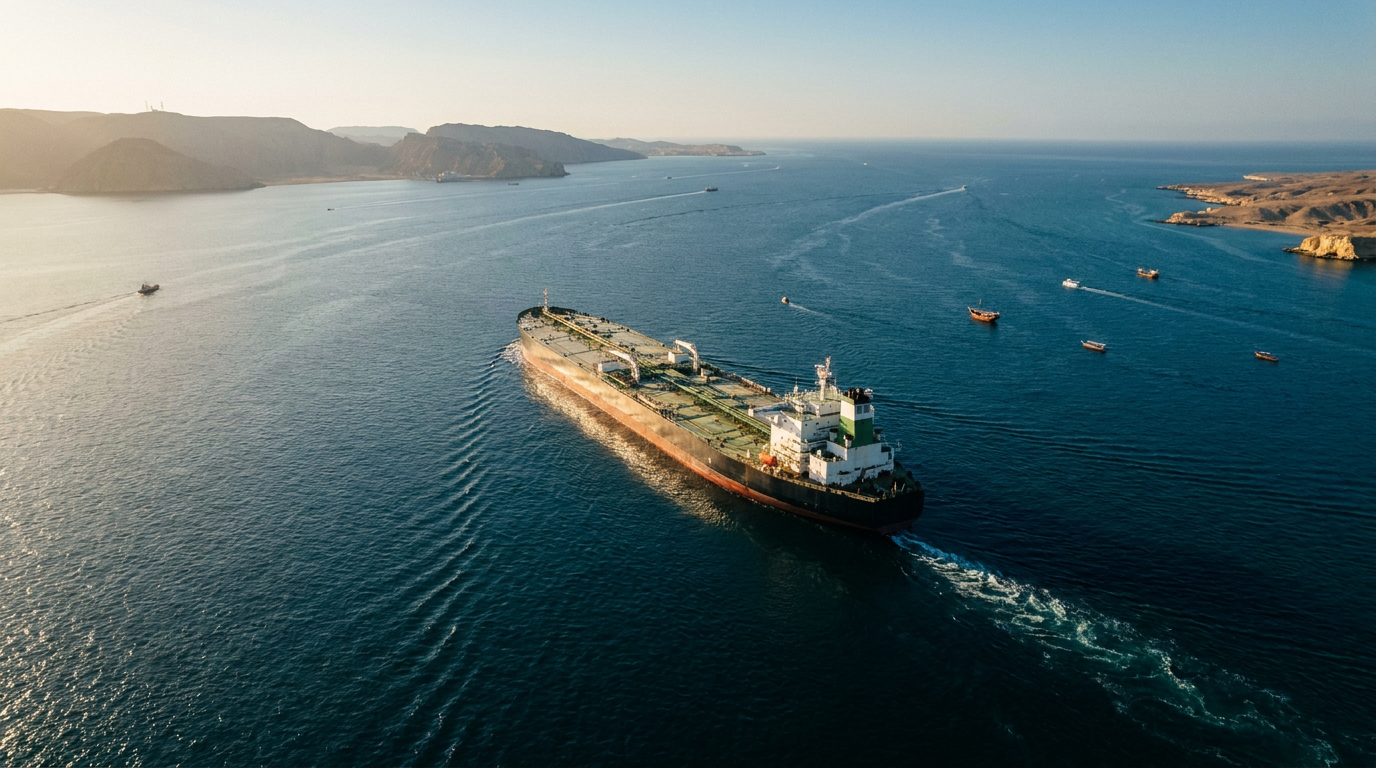
The most concrete evidence of this thaw emerged as at least three Iranian supertankers exited the U.S. Navy's blockade perimeter. Satellite imagery and vessel-tracking data confirmed that vessels including the DIONA and HERO2 have moved into open waters, carrying a combined total of nearly 5 million barrels of crude oil. This marks the first major movement of Iranian energy exports in two months.[1][7]
Global energy markets reacted violently to the downside as the news broke. U.S. crude prices plunged nearly 5% to hover around $80 per barrel, erasing a significant portion of the war-driven premium that had previously sent prices soaring past $110 per barrel at the conflict's peak. The sudden drop reflects a collective sigh of relief from traders who had feared a prolonged inflation shock.[2][9]

The prospect of a reopened waterway has triggered an immediate scramble in the shipping industry. Tankers that were previously rerouting toward Africa to avoid the conflict zone are now executing U-turns in the Indian Ocean. Shipowners are racing to reposition their vessels closer to the Middle East to capitalize on the anticipated surge in exports.[3]
To understand the magnitude of the relief, one must understand the severity of the squeeze. Since the conflict escalated, the Strait of Hormuz has been effectively paralyzed. Iran laid sea mines and threatened merchant vessels, prompting the U.S. to enforce a strict naval blockade of Iranian ports starting in mid-April. This dual-layered chokehold caused Iranian oil exports to plummet by over 90% in May.[7][9]
The macroeconomic toll of this paralysis has been staggering. Analysts estimate that supply losses will exceed 1.5 billion barrels by the end of June. This massive deficit forced countries around the world to draw down their strategic petroleum reserves at a historic pace just to keep their economies functioning during the standoff.[6][9]

The macroeconomic toll of this paralysis has been staggering.
The new framework, brokered with the help of intermediaries like Pakistan, commits Washington to lifting its naval blockade. In exchange, Tehran has agreed to allow the free passage of international shipping through the Strait, effectively unfreezing a critical artery for global liquefied natural gas and crude oil. The deal also allows Iran to immediately resume selling oil and fuel on the global market.[8][9]
However, the exact mechanics of the reopening remain fiercely contested. U.S. President Donald Trump has publicly declared that the strait will reopen "toll-free" by June 19. Conversely, Iranian officials have indicated they intend to charge a "service fee" for maritime insurance and environmental protection, setting up an immediate diplomatic friction point over who controls the waterway.[8][9]
Even with a political agreement, physical normalization will not happen overnight. The waters must be painstakingly cleared of sea mines, a complex process that adds significant delays. Furthermore, maritime insurers need concrete guarantees before underwriting massive cargo loads, leading analysts to project that physical crude markets will remain tight through the summer as the backlog clears.[6]

The current memorandum is merely an interim step. The formal signing is scheduled for June 19 at the Bürgenstock resort in Switzerland, which will kick off a tense 60-day negotiation window. During this period, diplomats must hammer out a final settlement addressing the most contentious issues, including the comprehensive lifting of international sanctions.[5][7]
The most daunting hurdle in those upcoming talks will be Iran's nuclear program. U.S. officials have stated that a core part of the final agreement must involve international inspectors helping to dismantle Iran's stockpile of highly enriched uranium. The release of billions of dollars in frozen Iranian assets is reportedly contingent on strict compliance with these nuclear terms.[8][9]
Many regional experts remain deeply cautious about the long-term prospects for peace. The interim deal addresses the immediate maritime crisis but leaves the underlying strategic grievances untouched. Skeptics warn that the root causes of the conflict—including broader proxy wars and the devastation in Lebanon and Gaza—could easily derail the fragile truce if left unaddressed.[5][9]

Central bankers are also tempering their optimism. European Central Bank officials have signaled that the peace deal alone may not be enough to instantly fix the broader energy shock. The prolonged supply disruption has already baked higher costs into the global supply chain, meaning inflation could remain sticky despite the drop in headline crude prices.[4]
For now, the world watches the waters off the coast of Oman. If the initial tanker movements proceed without incident and the Swiss summit yields a signed agreement, the global economy may narrowly avoid a prolonged energy crisis. But the path from a fragile ceasefire to a durable peace remains heavily mined, both literally and figuratively.[5]
How we got here
Feb 28, 2026
Conflict erupts, leading Iran to threaten shipping and lay mines in the Strait of Hormuz.
April 13, 2026
The United States imposes a strict naval blockade on Iranian ports, halting crude exports.
June 14, 2026
The US and Iran announce a memorandum of understanding to end hostilities and reopen the strait.
June 19, 2026
Formal signing of the interim peace agreement scheduled in Switzerland.
Viewpoints in depth
Energy Markets & Shippers
Focuses on the immediate relief of supply bottlenecks and the logistical hurdles of clearing mines and securing insurance.
For the global shipping and energy sectors, the agreement is a desperately needed lifeline, but one fraught with logistical peril. While the immediate drop in crude prices reflects relief, industry analysts emphasize that the physical market remains exceptionally tight. Clearing sea mines from the Strait of Hormuz is a painstaking process, and maritime insurers will require ironclad guarantees before underwriting massive VLCC cargoes. Consequently, this camp expects a lag of several months before transit volumes fully normalize.
US Administration
Emphasizes the successful pressure campaign, the demand for toll-free transit, and the goal of dismantling Iran's nuclear stockpile.
U.S. officials are framing the memorandum as a vindication of their aggressive naval blockade, arguing that the economic squeeze forced Tehran to the negotiating table. The administration's primary focus now shifts to enforcing a strictly "toll-free" reopening of the strait and leveraging the upcoming 60-day window to secure binding, verifiable concessions on Iran's highly enriched uranium stockpile. For this camp, the release of frozen assets is entirely contingent on nuclear compliance.
Iranian Authorities
Frames the deal as a victory that breaks the economic siege, demanding maritime service fees and immediate sanctions relief.
Tehran views the lifting of the U.S. naval blockade as a critical victory that restores its economic lifeblood. Iranian officials are asserting their sovereignty over the strait by proposing a "service fee" for maritime insurance and environmental protection, directly challenging the U.S. demand for toll-free transit. This camp insists that the success of the 60-day negotiation window depends on the immediate and comprehensive lifting of international economic sanctions.
Geopolitical Skeptics
Argues the deal is a temporary band-aid that pauses the economic bleeding but fails to resolve the deep-seated regional proxy conflicts.
Regional analysts and security experts warn against premature celebration. They argue that while the interim deal successfully de-escalates the immediate maritime crisis, it completely ignores the underlying strategic grievances that sparked the war in February. By leaving the broader proxy conflicts in Lebanon and Gaza unresolved, this camp fears the agreement is merely a tactical pause, leaving the global economy vulnerable to a sudden resumption of hostilities.
What we don't know
- Whether Iran will successfully enforce its proposed 'service fee' on international shipping, or if the US will ensure toll-free transit.
- How quickly maritime insurers will be willing to underwrite massive cargo loads through the recently mined waterway.
- If the 60-day negotiation window will be sufficient to resolve the deeply entrenched disputes over Iran's nuclear program.
Key terms
- Strait of Hormuz
- A narrow waterway connecting the Persian Gulf to the open ocean, critical for global energy transit.
- Memorandum of Understanding (MoU)
- A preliminary agreement outlining the framework for a future, more comprehensive treaty.
- Naval Blockade
- The use of naval forces to cut off a specific area, preventing maritime commerce and supply lines.
- Sanctions Waiver
- A temporary exemption granted by a government allowing certain prohibited economic activities, such as oil sales, to resume.
- VLCC
- Very Large Crude Carrier, a type of supertanker capable of carrying up to 2 million barrels of oil.
Frequently asked
What is the Strait of Hormuz?
A vital maritime chokepoint between the Persian Gulf and the Gulf of Oman. Prior to the conflict, it handled roughly 25% of the world's seaborne oil trade and 20% of its liquefied natural gas.
Why was the strait blocked?
Following the outbreak of war in February 2026, Iran threatened shipping and laid sea mines in the waterway. In response, the U.S. imposed a strict naval blockade of Iranian ports in April.
Will gas prices drop immediately?
While global crude oil prices have fallen, physical supply will take months to normalize due to the need to clear sea mines and secure maritime insurance, meaning consumer prices may decline slowly.
What happens during the 60-day window?
Following the initial signing, negotiators will attempt to finalize a permanent treaty covering Iran's nuclear program and the complete lifting of international economic sanctions.
Sources
Source coverage
9 outlets
4 viewpoints surfaced







[1]CNBCEnergy Markets & Shippers
Three Iranian tankers exit U.S. blockade for first time in months as shipowners eye Hormuz in 'wary disbelief'
Read on CNBC →[2]BloombergEnergy Markets & Shippers
Oil Falls as US-Iran Deal Set to Add Wave of Supply
Read on Bloomberg →Oil Tankers U-Turn, Rush to Middle East Before Hormuz Reopening
Read on Bloomberg →ECB Officials Say Peace in Iran Isn’t Enough to Fix Energy Shock
Read on Bloomberg →[5]The GuardianGeopolitical Skeptics
US-Iran deal may get oil flowing again, but region's root problems are unsolved
Read on The Guardian →[6]S&P GlobalEnergy Markets & Shippers
FACTBOX: US-Iran deal eases oil supply fears but full restoration to take time
Read on S&P Global →[7]Al ArabiyaRegional Observers
First Iranian oil tankers exit US blockade ahead of peace talks
Read on Al Arabiya →[8]The Straits TimesUS Policy Watchers
Trump says Hormuz to reopen on June 19 under US-Iran deal
Read on The Straits Times →[9]Journal of Petroleum TechnologyEnergy Markets & Shippers
Oil Prices Ease as US-Iran Deal Emerges To Reopen the Strait of Hormuz
Read on Journal of Petroleum Technology →
Every angle. Every day.
Get business stories with full source coverage and perspective breakdowns delivered to your inbox.