
The 2026 European Sleeper Train Renaissance: Routes, Cabins, and Carbon Savings Explained
Europe is experiencing a massive renaissance in sleeper trains, driven by climate consciousness and a desire for more comfortable travel. With new routes launching in 2026 and innovations like solo pods, overnight rail is rapidly replacing short-haul flights.
By Factlen Editorial Team
- Climate & Sustainability Advocates
- Prioritize carbon reduction and view the extra travel time as a positive feature of 'slow travel'.
- Travel Guides & Enthusiasts
- Focus on the practical benefits of saving a hotel night and arriving directly in the city center.
- Industry Analysts
- Advocate for expanded cross-border routes, unified booking systems, and increased infrastructure investment.
What's not represented
- · Track maintenance workers
- · Residents living near expanded rail lines
Why this matters
As the climate impact of aviation becomes impossible to ignore, sleeper trains offer a highly practical, low-carbon alternative for crossing Europe. Understanding how to navigate this expanding network allows travelers to save money on hotels, skip airport security lines, and arrive directly in city centers.
Key points
- Europe is seeing a massive revival of sleeper trains as an alternative to short-haul flights.
- Modern trains offer tiered cabins, including new capsule-style 'solo pods' for individual travelers.
- Taking a train instead of a plane can reduce a passenger's carbon emissions by 73% to 91%.
- New routes for 2026 include a saved Paris-to-Berlin line and a new Brussels-to-Milan connection.
- Booking requires navigating fragmented national systems, ideally three to six months in advance.
For decades, the European sleeper train was written off as a romantic but obsolete relic, steadily losing ground to the aggressive expansion of budget airlines. But as 2026 unfolds, the continent is experiencing a massive overnight rail renaissance.[1][2]
What was once a niche pursuit for backpackers and rail enthusiasts has transformed into a mainstream travel movement. Driven by climate consciousness and a desire for "slow travel," passengers are increasingly trading cramped airport security lines for the charm of waking up in a new city center.[2][6]
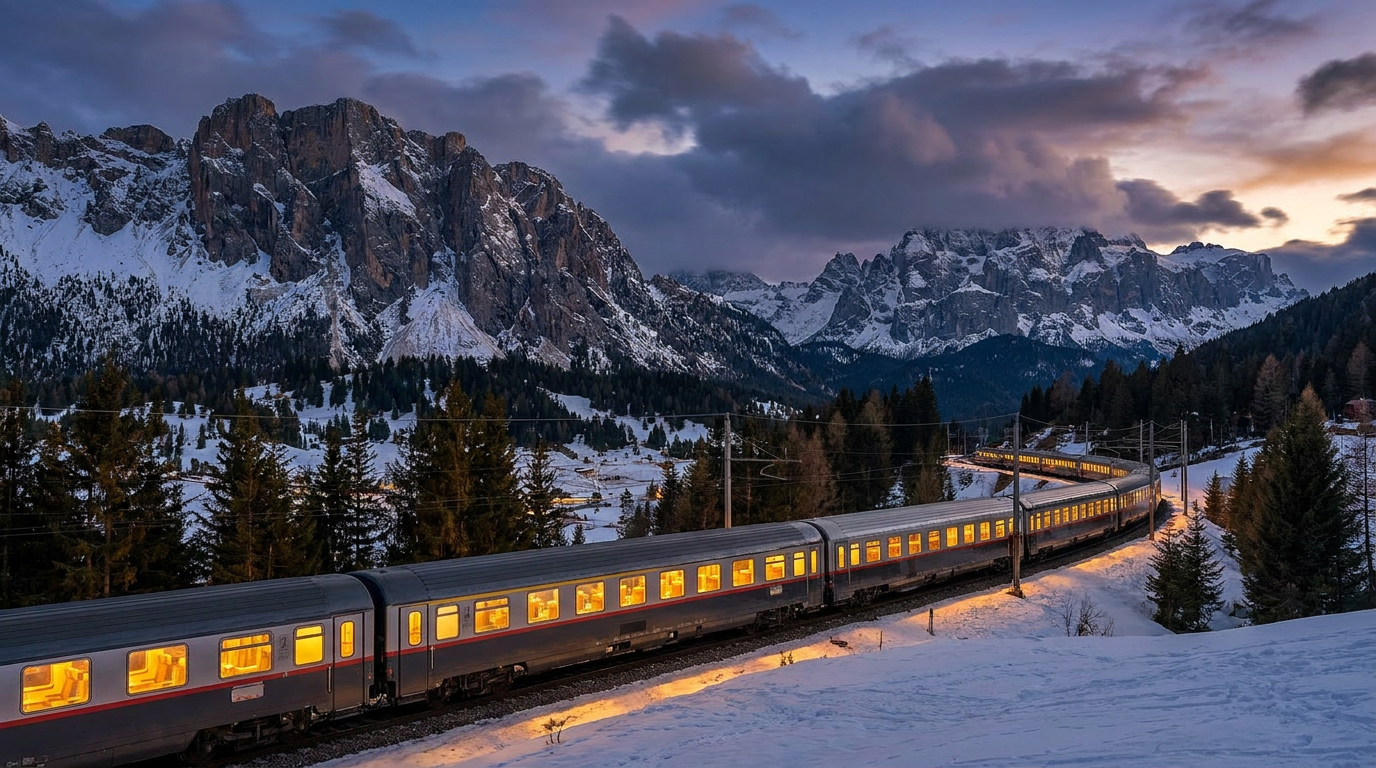
To understand this revival, one must look at the modern sleeper train experience, which has evolved far beyond the squeaky bunks of the 1990s. Today's operators offer a tiered system designed to accommodate different budgets and privacy needs.[3]
At the entry level are reclining seats and "couchettes"—shared compartments of four to six bunks where passengers typically make their own beds. These maintain the communal, hostel-on-wheels atmosphere that budget-conscious travelers favor.[3]

For those seeking more comfort, private sleeper cabins offer lockable doors, pre-made beds, and often en-suite washbasins or full showers, effectively serving as a rolling hotel room.[3]
The newest innovation driving the current boom is the "solo pod." Pioneered by operators like Austria's ÖBB Nightjet, these capsule-style sleeping berths offer solo travelers complete privacy, keycard entry, and LED lighting without the premium cost of booking a full private cabin.[3][6]
The map of available routes is expanding rapidly to meet this new demand. A major victory for the movement came when the Dutch-Belgian cooperative European Sleeper stepped in to save the iconic Paris-to-Berlin route, which had faced cancellation, ensuring the service continues through 2026.[1][2]

European Sleeper is also launching a highly anticipated Brussels-to-Milan route in late 2026. This expansion creates a vital north-south rail corridor that connects the Benelux countries directly to Italy via Switzerland.[1]
European Sleeper is also launching a highly anticipated Brussels-to-Milan route in late 2026.
Meanwhile, ÖBB's Nightjet continues to dominate Central Europe, running extensive daily networks that link Vienna, Amsterdam, Rome, and Hamburg, proving that cross-border overnight rail can operate reliably at scale.[2][3]
The primary catalyst for this renaissance is the undeniable environmental math. Short-haul flights are disproportionately carbon-intensive because takeoff and landing consume massive amounts of fuel relative to the distance traveled.[4][5]

Research indicates that swapping a plane for a train on popular European routes reduces carbon emissions by 73% to 91%, making it one of the most impactful choices an individual traveler can make.[4]
The raw numbers are stark: a short-haul flight produces approximately 285 grams of carbon dioxide per passenger-kilometer. In contrast, an electric European train averages around 41 grams, with highly efficient electrified routes dropping as low as 6 grams.[4]
Furthermore, aviation emissions released at high altitudes cause a "radiative forcing" effect. These high-altitude emissions trap heat more aggressively than ground-level carbon dioxide, amplifying their warming impact by up to 2.5 times.[4]

Beyond the climate benefits, the practical logistics of night trains are winning over pragmatic tourists. While a flight from Paris to Berlin takes only 90 minutes in the air, the door-to-door journey—factoring in transit to remote airports, security lines, and baggage claim—often consumes five to six hours of waking time.[3][6]
A sleeper train reclaims that lost time. By traveling overnight, passengers save the cost of a hotel room and arrive directly in the heart of the city, fully rested and ready to explore at breakfast time.[3]
However, the night train revival is not without its friction points. The European rail network remains heavily fragmented, with different national operators using separate booking systems that can confuse first-time users trying to stitch together a cross-border itinerary.[3][6]
Tickets can also be expensive. While budget airlines frequently offer heavily subsidized fares, a private sleeper cabin can cost significantly more, especially if not booked during the typical three-to-six-month advance window.[3]
How we got here
2021
Dutch-Belgian cooperative European Sleeper is founded to revive cross-border night trains.
2024
European rail travel surges, with passengers logging over 443 billion kilometers.
March 2026
European Sleeper takes over and saves the iconic Paris-to-Berlin night route.
Late 2026
A new north-south sleeper route connecting Brussels to Milan is scheduled to launch.
Viewpoints in depth
The Climate Advocate View
Prioritizing carbon reduction and sustainable tourism.
For this group, the primary appeal of the sleeper train is the drastic reduction in carbon footprint. They point to the 'radiative forcing' effect of high-altitude aviation emissions as a critical reason to avoid short-haul flights. This camp views the extra travel time not as a burden, but as a feature of 'slow travel'—an opportunity to decompress and enjoy the journey rather than rushing between crowded airport terminals.
The Pragmatic Traveler View
Focusing on the practical logistics of saving time and money.
Pragmatic tourists weigh the higher upfront cost of a sleeper ticket against the hidden costs of flying. By eliminating the need for an extra hotel night, expensive airport transfers, and hours spent in security lines, they argue that night trains are often the most efficient way to travel. Arriving directly in a city center at 9:00 AM allows them to maximize their vacation days.
The Industry & Operator View
Pushing for infrastructure investment and unified systems.
Organizations like European Sleeper and ÖBB argue that the main barriers to rail adoption are systemic, not lack of demand. They advocate for standardized cross-border track fees, unified booking platforms, and government subsidies that match the tax breaks historically given to the aviation industry. They believe that with proper investment, night trains can completely replace short-haul flights on the continent.
What we don't know
- Whether national governments will eventually standardize track access fees to lower ticket prices.
- How budget airlines will adjust their pricing models to compete with the expanding night train network.
Key terms
- Couchette
- A basic, shared sleeping compartment on a train, typically featuring four to six bunk beds that fold down from the walls.
- Solo Pod
- A compact, capsule-style private sleeping berth designed for individual travelers, offering privacy without the cost of a full cabin.
- Radiative Forcing
- The phenomenon where greenhouse gas emissions released at high altitudes trap significantly more heat than the same emissions at ground level.
- Interrail Pass
- A flexible train ticket that allows unlimited travel across participating European rail networks for a set number of days.
Frequently asked
Are European sleeper trains cheaper than flying?
Not always. While you save the cost of a hotel night, private sleeper cabins can be more expensive than budget airline tickets. Budget-conscious travelers often opt for shared couchettes.
How far in advance should I book a night train?
It is highly recommended to book three to six months in advance. Popular routes and private cabins sell out very quickly, especially for summer travel.
Do sleeper trains have showers?
It depends on the cabin class. Premium private sleeper cabins often feature en-suite showers, while standard cabins and couchettes typically only provide access to shared washrooms.
Can I use an Interrail pass on a sleeper train?
Yes, but the pass only covers the base travel fare. You must still pay an additional reservation fee to secure a bed or couchette for the night.
Sources
Source coverage
6 outlets
3 viewpoints surfaced






[1]National GeographicIndustry Analysts
Europe gets a slew of new sleeper services
Read on National Geographic →[2]Time OutTravel Guides & Enthusiasts
The best European sleeper trains to ride in 2026
Read on Time Out →[3]The Man in Seat 61Travel Guides & Enthusiasts
A guide to European train travel and environmental impact
Read on The Man in Seat 61 →[4]CarbonClickClimate & Sustainability Advocates
Train tourism carbon savings compared to flights
Read on CarbonClick →[5]Travel and ClimateClimate & Sustainability Advocates
Train, car or plane? Climate footprint of traveling
Read on Travel and Climate →[6]Factlen Editorial TeamIndustry Analysts
Synthesis by Factlen editorial team
Read on Factlen Editorial Team →


Every angle. Every day.
Get travel stories with full source coverage and perspective breakdowns delivered to your inbox.