
How Oil and Gas Drilling Tech is Unlocking Limitless Geothermal Energy
Enhanced Geothermal Systems are borrowing horizontal drilling and fracking techniques from the shale revolution to tap into the Earth's heat. The breakthrough offers a massive new source of 24/7 carbon-free power while providing a seamless transition for fossil fuel workers.
By Factlen Editorial Team
- Geothermal Developers
- Focus on technological breakthroughs and the ability to provide 24/7 baseload clean power.
- Oil & Gas Industry
- View geothermal as a lucrative pivot that utilizes their existing assets, workforce, and expertise.
- Policymakers & Regulators
- Balance the promise of energy security with the realities of federal land management and environmental safety.
What's not represented
- · Local communities near drilling sites
- · Environmental conservation groups
Why this matters
As AI and data centers place unprecedented strain on the power grid, the world desperately needs clean electricity that runs 24/7. This breakthrough not only solves that problem, but it allows the existing oil and gas workforce to transition into the green economy without losing their livelihoods.
Key points
- Enhanced Geothermal Systems (EGS) use horizontal drilling and hydraulic fracturing to access deep, hot rock.
- The technology provides 24/7 carbon-free baseload power, making it ideal for AI data centers.
- Over 75% of the investment and skills required for EGS overlap directly with the oil and gas industry.
- The transition allows fossil fuel workers to enter the clean energy sector without retraining.
The shale revolution changed the global energy landscape in the 2010s. Now, the exact same technologies—horizontal drilling and hydraulic fracturing—are being deployed to unlock a completely different resource: the virtually limitless heat of the Earth's crust.[1][8]
For decades, geothermal energy was a niche player, restricted to regions with natural hot springs or volcanic activity like Iceland or parts of California. Traditional plants required a lucky geological trifecta: underground heat, permeable rock, and a natural water supply.[4][6]
Enter Enhanced Geothermal Systems (EGS). Instead of hunting for natural underground aquifers, EGS companies drill directly into hot, dry, impermeable rock miles beneath the surface.[3][4]
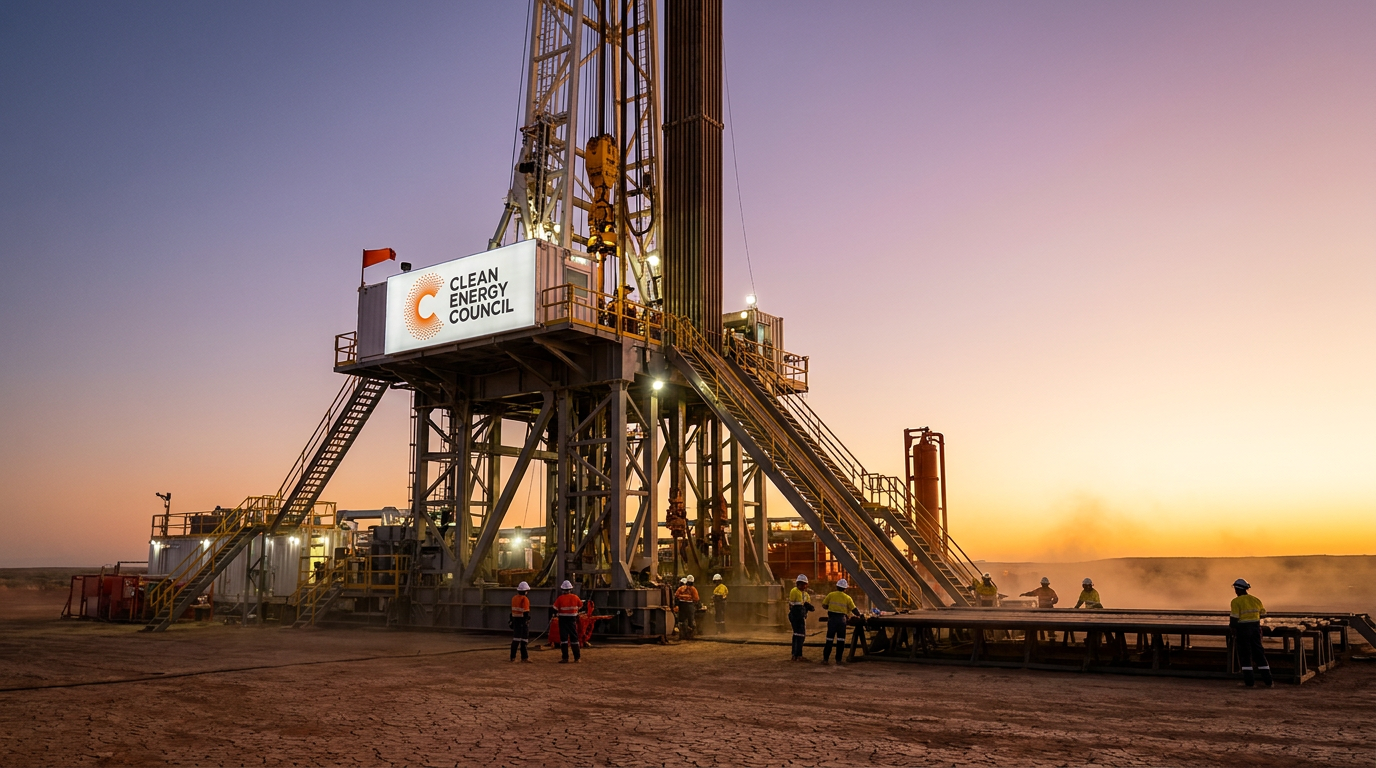
The mechanism relies heavily on the oil and gas playbook. Drillers bore down vertically for up to two miles, then turn the drill bit 90 degrees to cut horizontally through solid granite.[5][6]

Once the horizontal wells are established, engineers use high-pressure fluid to create millimeter-wide fractures in the rock—a process identical to the hydraulic fracturing, or "fracking," used in shale oil extraction.[1][4]
Cold water is pumped down an injection well, forced through the newly fractured hot rock where it absorbs extreme heat, and then drawn back up a production well to spin a turbine and generate electricity.[4][6]
The results are moving rapidly from theoretical to commercial. Houston-based Fervo Energy recently completed its Cape Station project in Utah, achieving a 70% reduction in drilling times compared to its earlier pilot projects.[1][5]
By turning horizontally, developers expose far more surface area to the hot rock than a traditional vertical well ever could, sustaining higher flow rates and temperatures exceeding 375°F (190°C).[5][6]

This technological leap arrives at a critical moment for the U.S. power grid. The explosive growth of artificial intelligence and data centers has created an insatiable appetite for electricity.[1][4]
This technological leap arrives at a critical moment for the U.S.
While solar and wind are cheap, they are intermittent. Tech giants need "firm" or baseload power—electricity that flows 24/7. Advanced geothermal provides exactly that, without the carbon emissions of coal or natural gas.[4][5]
Perhaps the most uplifting aspect of the EGS boom is its impact on the workforce. The transition from fossil fuels to clean energy often raises fears of job losses, but geothermal offers a near-perfect skills transfer.[2][7]
The International Energy Agency estimates that roughly two-thirds of every dollar invested in conventional geothermal operations overlaps directly with oil and gas industry expertise. For next-generation EGS, that overlap exceeds 75%.[2]
Petroleum engineers, rig operators, and geologists do not need to retrain to join the geothermal sector. The subsurface modeling software, the polycrystalline diamond compact (PDC) drill bits, and the heavy machinery are identical.[6][7]

The U.S. Department of Energy has recognized this synergy, launching the GEODE initiative to actively repurpose oil and gas infrastructure and expertise for geothermal expansion.[3]
Politically, the technology is threading a rare bipartisan needle. Democrats champion EGS for its carbon-free profile, while Republicans embrace it as an extension of American drilling dominance that utilizes domestic resources and existing fossil-fuel supply chains.[1]
Despite the momentum, significant hurdles remain. EGS projects require massive upfront capital, and the extreme underground temperatures wear out conventional drilling equipment far faster than oil and gas operations do.[4][8]

There is also the challenge of induced seismicity. Just as wastewater injection in oil operations can cause minor earthquakes, fracturing deep granite requires careful monitoring to prevent seismic events near populated areas.[4][8]
How we got here
Early 1900s
The world's first conventional geothermal power plant is built in Larderello, Italy, relying on natural hot springs.
1990s–2010s
The oil and gas industry perfects horizontal drilling and hydraulic fracturing, sparking the shale revolution.
2021
The U.S. Department of Energy launches the Utah FORGE project to research and test Enhanced Geothermal Systems.
November 2023
Fervo Energy begins operations at Project Red in Nevada, proving the commercial viability of EGS using oil and gas techniques.
May 2026
Fervo Energy marks its IPO, signaling major Wall Street confidence in the scalability of advanced geothermal power.
Viewpoints in depth
Geothermal Developers
Focus on technological breakthroughs and the ability to provide 24/7 baseload clean power.
Companies pioneering Enhanced Geothermal Systems argue that the technology is the missing piece of the clean energy puzzle. Because solar and wind are intermittent, the grid requires 'firm' power to maintain stability—especially with the surging demand from AI data centers. Developers point to recent drilling successes as proof that geothermal is no longer geographically restricted, arguing that with sufficient capital, EGS can be deployed almost anywhere in the world.
Oil & Gas Industry
View geothermal as a lucrative pivot that utilizes their existing assets, workforce, and expertise.
For the fossil fuel sector, advanced geothermal represents a lifeline and a massive new revenue stream in a decarbonizing world. Industry groups emphasize that the transition requires zero retraining for their workforce. The same roughnecks, petroleum engineers, and seismic modeling software used to extract shale gas are perfectly suited for EGS. They argue that without the decades of innovation funded by oil and gas, the current geothermal boom would be technologically impossible.
Policymakers & Regulators
Balance the promise of energy security with the realities of federal land management and environmental safety.
Government officials view advanced geothermal as a rare bipartisan win—offering both carbon-free electricity and a continuation of American drilling dominance. However, regulators remain cautious about induced seismicity (earthquakes caused by rock fracturing) and the environmental impact of drilling on public lands. Policymakers are currently debating how to streamline the federal permitting process, which was designed for conventional energy and often delays new geothermal projects by several years.
What we don't know
- Whether the federal government will streamline the permitting process for geothermal projects on public lands.
- How quickly the supply chain for specialized high-temperature drill bits can scale to meet surging demand.
- The long-term commercial viability of EGS in regions with significantly lower subsurface temperatures.
Key terms
- Enhanced Geothermal Systems (EGS)
- A technology that generates electricity by drilling into hot, impermeable rock and injecting fluid to create an artificial underground heat reservoir.
- Horizontal Drilling
- A technique where a well is drilled vertically deep into the earth and then steered horizontally to expose more surface area of the target rock layer.
- Hydraulic Fracturing
- The process of injecting high-pressure fluid into subterranean rocks to force open existing fissures, allowing water or gas to flow more freely.
- Baseload Power
- The minimum amount of electric power needed to be supplied to the electrical grid at any given time, requiring energy sources that run continuously.
- Induced Seismicity
- Minor earthquakes or tremors that are caused by human activity, such as the injection or extraction of fluids deep underground.
Frequently asked
What is the difference between traditional geothermal and EGS?
Traditional geothermal relies on naturally occurring underground hot water reservoirs. Enhanced Geothermal Systems (EGS) create artificial reservoirs by drilling into hot, dry rock and injecting water to absorb the heat.
Does geothermal energy cause earthquakes?
The hydraulic fracturing process used in EGS can cause micro-seismicity (very small tremors). Projects are heavily monitored and regulated to ensure these tremors remain far below the threshold that could cause surface damage.
Why is the oil and gas industry involved in renewable energy?
The techniques required for EGS—specifically deep horizontal drilling and hydraulic fracturing—were perfected by the oil and gas industry during the shale boom. Their equipment and workforce transfer almost perfectly to geothermal development.
Can advanced geothermal power data centers?
Yes. Unlike wind and solar, which fluctuate with the weather, geothermal provides constant, 24/7 "baseload" electricity, making it an ideal power source for the continuous demands of AI and data centers.
Sources
Source coverage
8 outlets
3 viewpoints surfaced








[1]The Washington PostPolicymakers & Regulators
New drilling technologies push geothermal energy from niche to mainstream
Read on The Washington Post →[2]International Energy AgencyOil & Gas Industry
Geothermal energy and the oil and gas industry: Transferrable skills and technologies
Read on International Energy Agency →[3]U.S. Department of EnergyPolicymakers & Regulators
Geothermal Energy from Oil and Gas Demonstrated Engineering (GEODE)
Read on U.S. Department of Energy →[4]Information Technology and Innovation FoundationGeothermal Developers
Enhanced Geothermal Systems: A Path to Firm, Clean Energy
Read on Information Technology and Innovation Foundation →[5]Fervo EnergyGeothermal Developers
Fervo Energy: Advancing Next-Generation Geothermal
Read on Fervo Energy →[6]GeoExProGeothermal Developers
How advanced 3D modelling and innovative drilling techniques from the oil and gas industry are positioning geothermal energy
Read on GeoExPro →[7]GP RadarOil & Gas Industry
Bridging Sectors: Oil & Gas Meets Geothermal
Read on GP Radar →[8]Factlen Editorial TeamPolicymakers & Regulators
Synthesis by Factlen editorial team
Read on Factlen Editorial Team →
Every angle. Every day.
Get energy stories with full source coverage and perspective breakdowns delivered to your inbox.