
US and Iran to Sign Interim Peace Deal to End War and Reopen Strait of Hormuz
The United States and Iran have agreed to a 60-day ceasefire and the reopening of the Strait of Hormuz, halting a devastating months-long conflict. While both sides claim victory ahead of Friday's formal signing in Geneva, analysts warn the deal leaves key nuclear and regional disputes unresolved.
By Factlen Editorial Team
- Strategic Analysts & Critics
- Argues the war ended in a strategic defeat for the US, as Iran proved its asymmetric deterrence and core nuclear issues remain unresolved.
- US Administration
- Views the reopening of the Strait of Hormuz and the degradation of Iran's conventional military as a definitive victory that restores global economic stability.
- Iranian State & Gulf Observers
- Frames the survival of the regime and the lifting of the US naval blockade as a strategic triumph, asserting continued control over the Strait.
What's not represented
- · Lebanese civilians affected by the ongoing Hezbollah-Israel conflict
- · Global shipping companies navigating the Strait of Hormuz
Why this matters
The reopening of the Strait of Hormuz immediately eases global energy markets and lowers fuel costs, but the fragile 60-day truce leaves the core drivers of the war—Iran's nuclear program and regional proxies—unresolved, meaning the threat of a wider Middle East conflict still looms over the global economy.
Key points
- The US and Iran will sign a 14-point Memorandum of Understanding in Geneva to halt their four-month conflict.
- The agreement establishes a 60-day ceasefire and mandates the lifting of the US naval blockade on Iranian ports.
- Iran has agreed to reopen the Strait of Hormuz, immediately sending global crude oil prices tumbling.
- The interim deal defers negotiations on Iran's nuclear program and proxy militias to a later date.
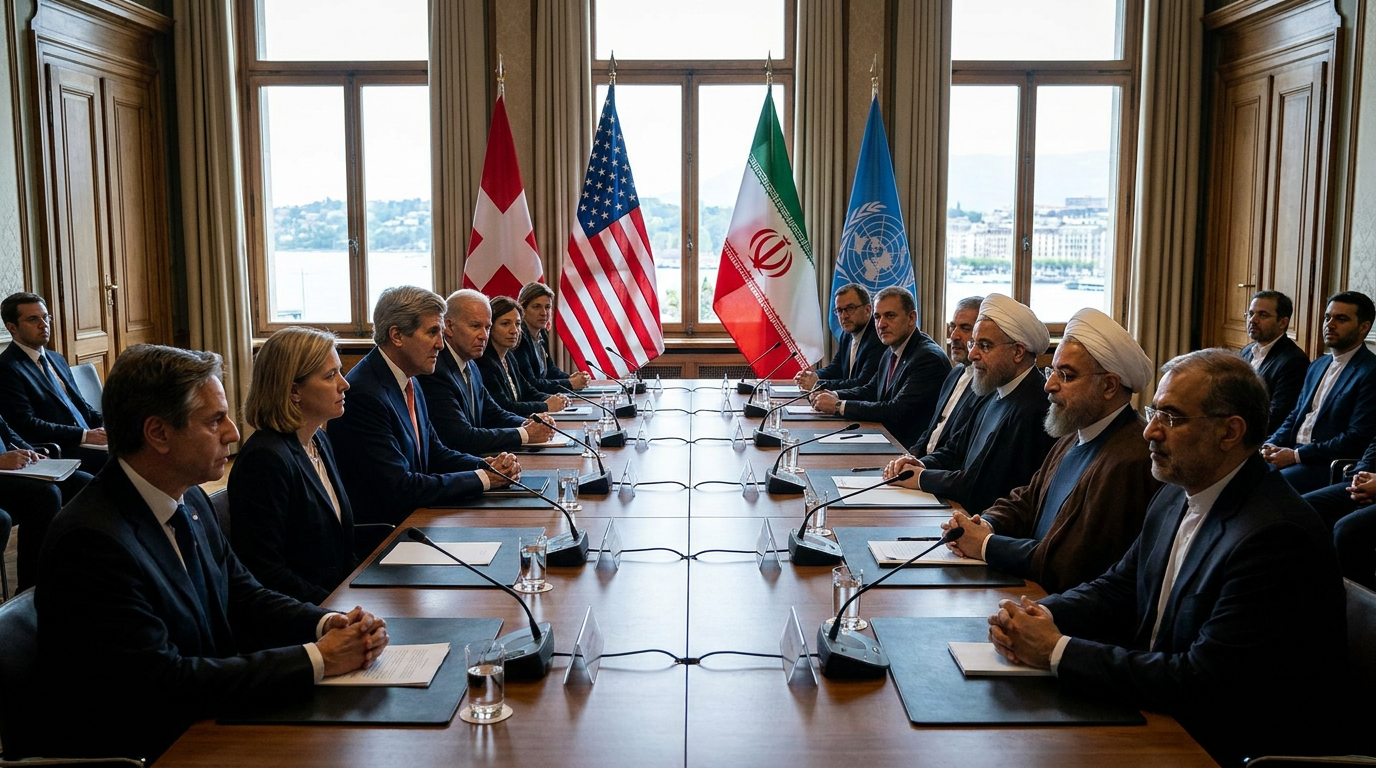
The United States and Iran are preparing to formally sign an interim peace agreement in Geneva this Friday, pausing a devastating four-month war that has fundamentally reshaped the Middle East and roiled the global economy. The breakthrough, structured as a 14-point Memorandum of Understanding (MoU), establishes a 60-day ceasefire across all fronts. Crucially, it mandates the lifting of a two-month US naval blockade on Iranian ports and the reopening of the Strait of Hormuz to international shipping. The agreement marks a sudden diplomatic pivot after months of intense hostilities that saw massive casualties and unprecedented economic disruption. While both Washington and Tehran are eager to claim victory ahead of the signing ceremony, the fragile truce leaves the most intractable issues entirely unresolved.[2][3]
The conflict originally erupted in late February when US and Israeli forces launched "Operation Epic Fury," a massive and highly coordinated aerial campaign designed to cripple the Islamic Republic. The initial wave of strikes successfully assassinated Supreme Leader Ali Khamenei and targeted critical military infrastructure, air defenses, and missile silos across the country. The Trump administration and the Israeli government calculated that a swift, high-tech decapitation strike would neutralize Iran's nuclear ambitions and potentially trigger a domestic uprising. However, the strikes failed to collapse the regime, instead unifying the surviving hardline leadership and triggering a massive, multi-theatre regional war that quickly spiraled beyond Washington's initial projections.[6][7]
In response to the decapitation strikes, Tehran unleashed unprecedented drone and ballistic missile barrages against US military installations and Gulf Arab states, shattering the region's security umbrella. More consequentially for the global economy, Iran executed its long-standing threat to close the Strait of Hormuz—a vital maritime chokepoint through which roughly one-fifth of the world's oil consumption passes. By deploying naval mines and threatening commercial shipping, Iran effectively choked off the global energy supply. The closure triggered a severe crisis, driving global crude prices past $100 a barrel and forcing the US Navy to implement a strict blockade on Iranian ports in a desperate attempt to break Tehran's economic leverage.[4][6]

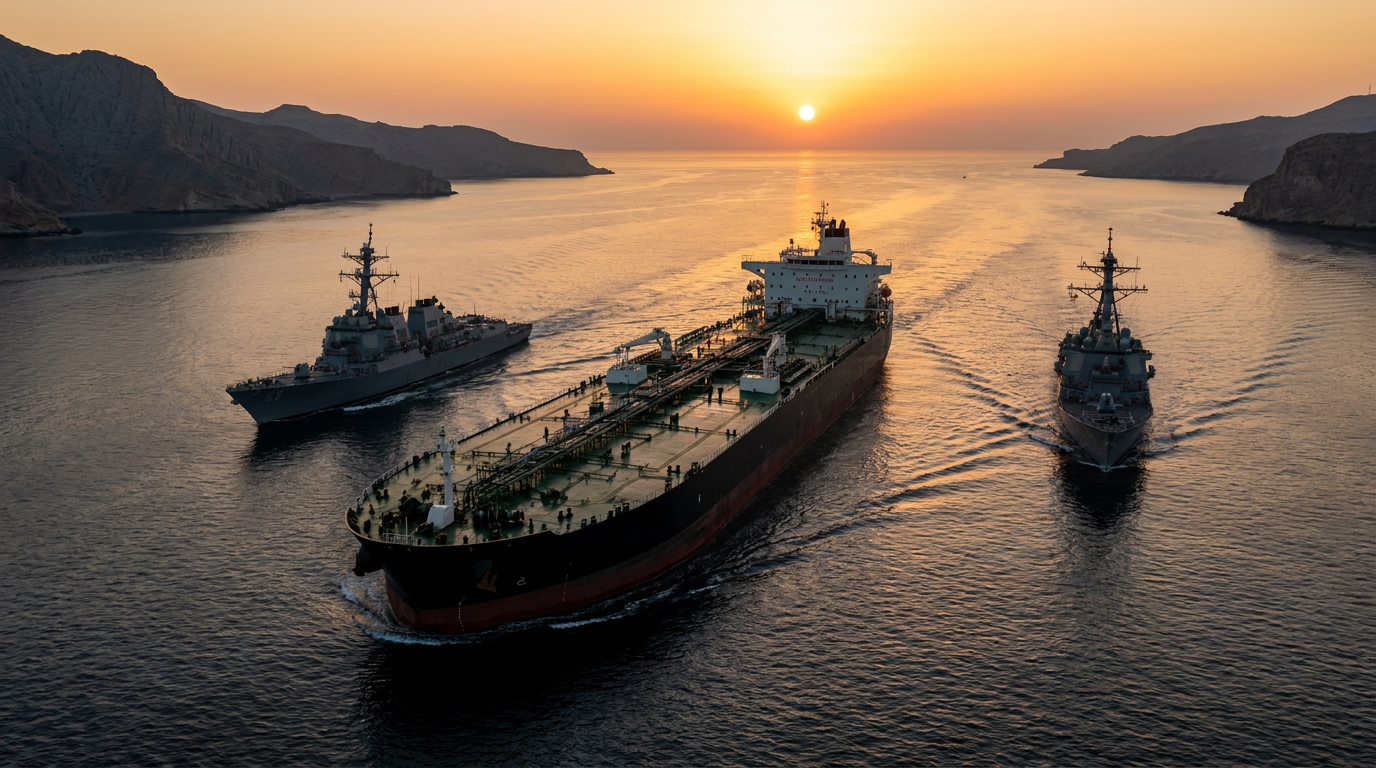
The immediate economic relief of the new MoU is already materializing in the Persian Gulf. Digital tracking data and satellite imagery confirmed this week that multiple Iranian supertankers, carrying nearly four million barrels of crude oil, have exited the previously blockaded zones. This movement marks the country's first crude exports in over two months, signaling that the US naval blockade has indeed been lifted prior to the formal signing in Geneva. Iranian Deputy Foreign Minister Majid Takht-Ravanchi publicly confirmed the lifting of the blockade, framing it as a pre-condition that Washington was forced to accept. The sudden influx of oil into the market has already sent global energy prices tumbling, providing much-needed relief to Western economies.[2][3]
The immediate economic relief of the new MoU is already materializing in the Persian Gulf.
Despite the halt in direct hostilities, the agreement has exposed deep and increasingly public rifts between Washington and its closest regional ally. President Donald Trump used the G7 summit to publicly rebuke Israeli Prime Minister Benjamin Netanyahu, criticizing Israel's ongoing military campaign against Hezbollah in Lebanon. Trump argued that too many civilians had been killed and urged immediate restraint to preserve the fragile US-Iran truce. The public dressing-down highlights a significant tactical divergence: while the Trump administration seeks a controlled exit strategy to stabilize global markets, the Israeli government continues to push for a prolonged military campaign to permanently neutralize Iranian proxies on its borders.[3][7]
Furthermore, the exact terms of the MoU remain shrouded in conflicting interpretations, setting the stage for a highly volatile negotiation period. US officials, including Vice President JD Vance, have confidently asserted that the Strait of Hormuz will be open "in a toll-free way for the long term." The administration is framing the restoration of unrestricted global maritime trade as a definitive American victory. However, Iranian state media and Islamic Revolutionary Guard Corps (IRGC) affiliates are broadcasting a vastly different narrative. They claim Tehran is merely pausing its transit "service fees" for the 60-day duration of the ceasefire, insisting that Iran and Oman will maintain joint management and ultimate authority over the strategic waterway.[4]

Beyond the immediate tactical disputes over maritime traffic, a growing chorus of foreign policy analysts and international observers argue that the war has ultimately ended in a strategic defeat for Washington. Critics point out that while Iran's conventional military and air force were severely degraded by US and Israeli strikes, the regime itself survived the onslaught. By weathering the initial decapitation strikes and successfully holding the global economy hostage via the Strait of Hormuz, Tehran proved the efficacy of its asymmetric deterrence. Analysts argue that Iran demonstrated it possesses enduring coercive power that can inflict unacceptable costs on the West, all without needing to deploy a nuclear warhead.[1][5][6]

The 60-day window established by the MoU now defers the most intractable issues that sparked the conflict in the first place. With Iran's nuclear enrichment program and its vast network of proxy militias conspicuously absent from the interim text, diplomats face a monumental task. The agreement essentially restores the status quo ante bellum, leaving the core drivers of regional instability completely unaddressed. If negotiators fail to translate this temporary ceasefire into a comprehensive and permanent settlement before the window closes, the Middle East risks plunging back into an even wider and more economically ruinous confrontation. For now, the world watches Geneva, hoping that a two-month pause can somehow bridge a divide that decades of diplomacy could not.[2][5]
How we got here
Feb 28, 2026
US and Israeli forces launch 'Operation Epic Fury,' killing Supreme Leader Ali Khamenei and targeting Iranian military sites.
March 2026
Iran retaliates with massive drone and missile strikes across the Middle East and effectively closes the Strait of Hormuz.
June 14, 2026
The US and Iran reach a 'near-final' 14-point interim agreement to halt hostilities.
June 17, 2026
Iranian oil tankers begin exiting the US naval blockade zone as the blockade is lifted.
June 19, 2026
Scheduled formal signing of the Memorandum of Understanding in Geneva, triggering a 60-day negotiation period.
Viewpoints in depth
US Administration
Views the reopening of the Strait of Hormuz and the degradation of Iran's conventional military as a definitive victory that restores global economic stability.
President Trump and US officials emphasize that the 14-point MoU achieves the immediate goal of halting hostilities and unblocking a critical artery for global energy markets. By lifting the naval blockade in exchange for a ceasefire, the administration argues it has successfully neutralized the immediate threat to international shipping while severely degrading Iran's military infrastructure during the preceding months of airstrikes.
Iranian Leadership
Frames the survival of the regime and the lifting of the US naval blockade as a strategic triumph, asserting continued control over the Strait.
Iranian state media and officials portray the conflict's outcome as a testament to their asymmetric deterrence. Despite suffering heavy losses, including the death of Supreme Leader Ali Khamenei, the regime survived. Tehran insists that the reopening of the Strait of Hormuz is on its own terms, framing the cessation of transit fees as a temporary 60-day pause rather than a permanent concession to Washington.
Strategic Analysts
Argues the war ended in a strategic defeat for the US, as Iran proved its asymmetric deterrence and core nuclear issues remain unresolved.
A growing consensus among foreign policy critics and international observers suggests that Washington fell into the trap of asymmetric warfare. By surviving the initial decapitation strikes and successfully holding the global economy hostage via the Strait of Hormuz, Iran demonstrated enduring coercive power. Analysts warn that the 60-day ceasefire merely kicks the can down the road, leaving Iran's nuclear enrichment program and proxy network intact.
What we don't know
- Whether Iran will permanently drop its demand for transit tolls in the Strait of Hormuz.
- If the 60-day negotiation window will yield any binding restrictions on Iran's nuclear enrichment program.
- How Israel will adjust its military operations against Hezbollah in Lebanon during the ceasefire.
Key terms
- Strait of Hormuz
- A vital maritime chokepoint between the Persian Gulf and the Gulf of Oman, through which roughly one-fifth of the world's oil consumption passes.
- Memorandum of Understanding (MoU)
- A formal agreement between two or more parties that establishes a framework for future negotiations, though often lacking binding legal enforcement.
- Operation Epic Fury
- The US codename for the initial February 2026 joint military strikes with Israel against Iranian leadership and infrastructure.
- Asymmetric Warfare
- A conflict between opposing forces which differ greatly in military power, typically involving unconventional tactics like proxy militias or economic blockades.
Frequently asked
What started the 2026 US-Iran war?
The conflict escalated in late February 2026 when US and Israeli forces launched 'Operation Epic Fury,' a massive aerial campaign targeting Iranian leadership and military infrastructure amid rising nuclear tensions.
What is in the new peace agreement?
The 14-point Memorandum of Understanding includes a 60-day ceasefire across all fronts, the lifting of a US naval blockade on Iranian ports, and the reopening of the Strait of Hormuz to global shipping.
Will this deal end Iran's nuclear program?
No. The interim agreement only sets a 60-day window to negotiate a longer-term deal regarding Iran's nuclear ambitions and proxy networks, leaving those core issues unresolved for now.
How does Israel view the ceasefire?
The agreement has exposed rifts between the US and Israel. Israeli Prime Minister Benjamin Netanyahu has pushed for continued military pressure, particularly against Hezbollah in Lebanon, prompting public rebukes from President Trump.
Sources
Source coverage
7 outlets
3 viewpoints surfaced







[1]The New York TimesStrategic Analysts & Critics
We Just Learned the Limits of American Power
Read on The New York Times →[2]CBS NewsUS Administration
Iran deputy foreign minister says U.S. naval blockade 'lifted'
Read on CBS News →[3]Gulf NewsIranian State & Gulf Observers
'Near-final' 14-point US-Iran peace deal
Read on Gulf News →[4]Institute for the Study of WarStrategic Analysts & Critics
Iran Update Special Report, June 15, 2026
Read on Institute for the Study of War →[5]The IndependentStrategic Analysts & Critics
US war on Iran ends in strategic defeat
Read on The Independent →[6]Middle East MonitorStrategic Analysts & Critics
Trump monitors U.S. military operations in Iran
Read on Middle East Monitor →[7]Yeni ŞafakStrategic Analysts & Critics
Trump faces strategic defeat as Iran war reshapes Middle East
Read on Yeni Şafak →
More in news politics
See all 10 stories →US-Iran Conflict
US and Iran Extend Ceasefire as Analysts Weigh the Strategic Fallout of the Four-Month War
6 sources
US-Iran Deal
US and Iran to Sign Truce Ending Four-Month War as Analysts Warn of Strategic Defeat
8 sources
AI Infrastructure
DOJ Seeks to Halt NAACP Lawsuit Against xAI, Citing National Security and Military AI Use
7 sources
Reparations
Ghana Convenes 80 Nations to Advance Global Reparations Framework for Transatlantic Slave Trade
8 sources
Every angle. Every day.
Get news politics stories with full source coverage and perspective breakdowns delivered to your inbox.