
Trump Urges Russia to 'Make a Deal' at G7 Summit, Weighs Reinstating Oil Sanctions
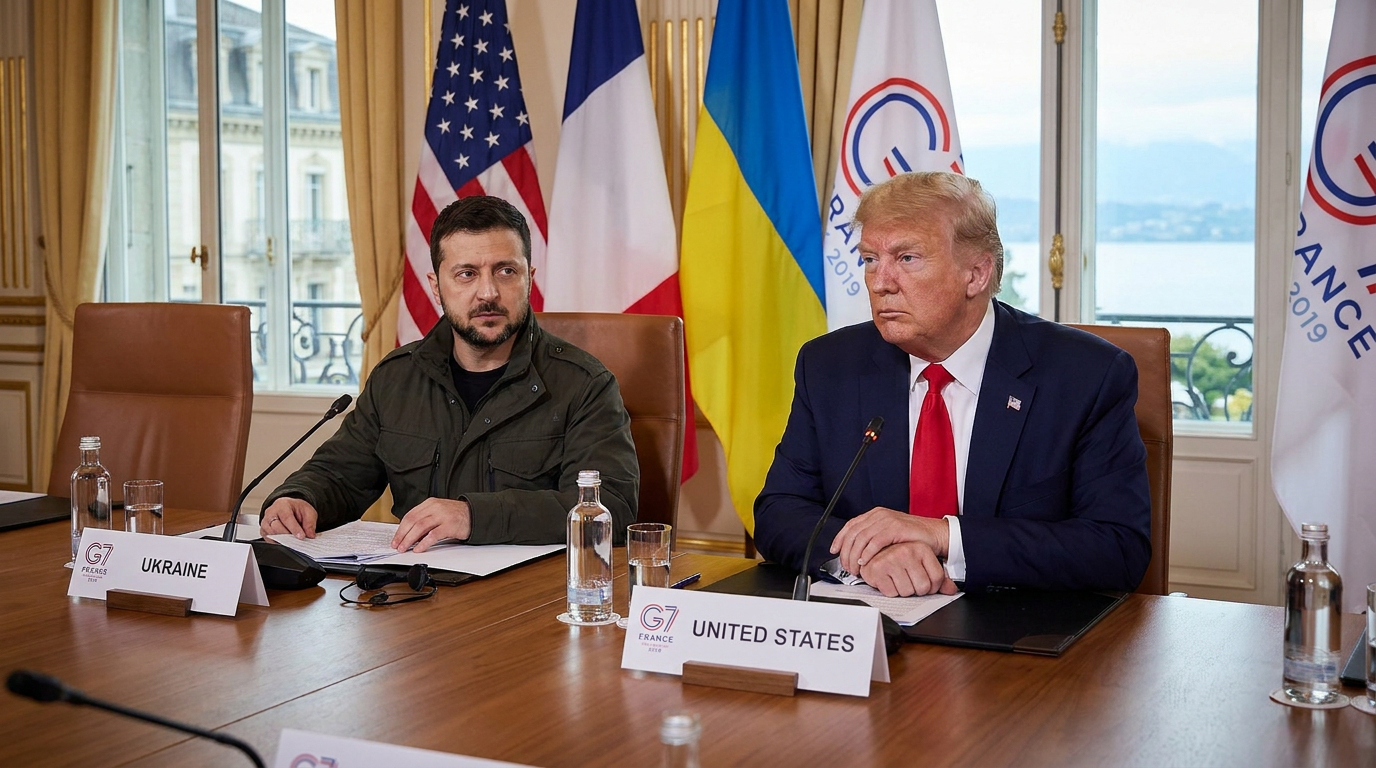
US President Donald Trump signaled a renewed focus on the war in Ukraine during the G7 summit in France, meeting with President Volodymyr Zelenskyy and suggesting the US could reimpose sanctions on Russian oil.
By Factlen Editorial Team
- US Administration
- Focuses on brokering a deal, leveraging reinstated oil sanctions, and shifting focus from the Middle East back to Europe.
- Ukrainian Leadership
- Emphasizes that Russia is not negotiating in good faith and demands sustained military support and air defense.
- European Allies
- Cautiously optimistic about US re-engagement, pushing for unified pressure on Moscow, and taking the lead on military aid.
- Russian Stance
- Rejects Western pressure, insists talks must happen on its terms, and continues military strikes to project strength.
What's not represented
- · Russian government officials directly involved in negotiations
- · Ukrainian civilians living in cities targeted by recent strikes
Why this matters
A shift in US diplomatic strategy and the potential reinstatement of Russian oil sanctions could dramatically alter the trajectory of the five-year war in Ukraine, impacting global energy markets and European security.
Key points
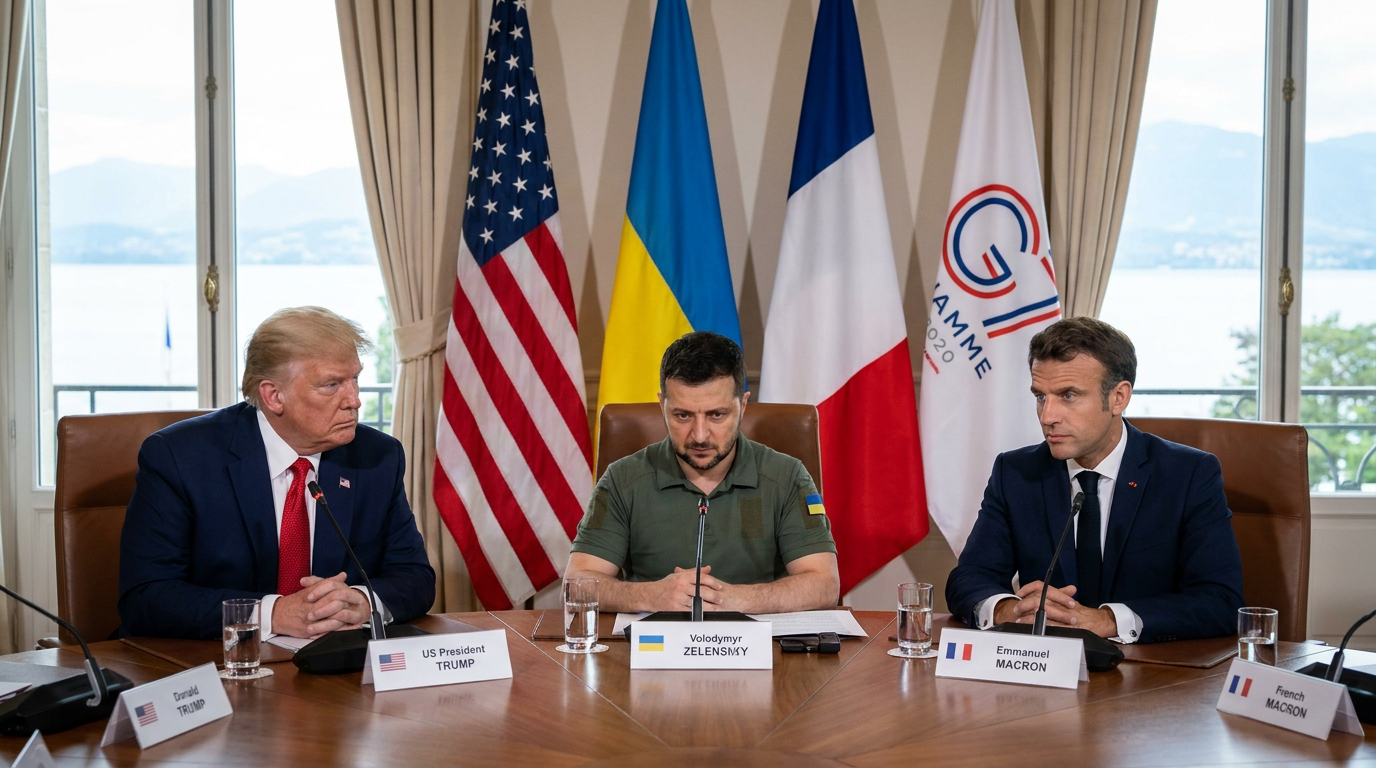
- US President Donald Trump met with Ukrainian President Volodymyr Zelenskyy and French President Emmanuel Macron at the G7 summit.
- Trump stated that Russia 'should make a deal' and indicated the US may reimpose sanctions on Russian oil shipments.
- European leaders expressed cautious optimism about a unified Western approach to pressuring Moscow.
- Russia launched deadly missile strikes on Ukrainian cities just hours before the summit began.
At the Group of Seven summit in the French lakeside resort of Evian-les-Bains, the war in Ukraine abruptly reclaimed the center of the global diplomatic stage. US President Donald Trump, fresh off brokering a tentative agreement to end a brief conflict with Iran, declared that "Russia should make a deal" to end the fighting in Eastern Europe.[1][2]
The remarks followed a highly anticipated trilateral meeting between Trump, Ukrainian President Volodymyr Zelenskyy, and French President Emmanuel Macron. It marked the first face-to-face encounter between the US and Ukrainian leaders in nearly four months, a period during which Washington's attention had been heavily diverted by the Middle East.[3][5]
"The whole thing is ridiculous," Trump told reporters, referring to the mounting death toll on both sides of the conflict, which is now deep into its fifth year. "So, yeah, I'm going to do whatever I can."[1][4]
To force Moscow to the negotiating table, Trump indicated that the United States could soon reimpose strict sanctions on Russian oil shipments. Those penalties had been temporarily waived by the US administration to stabilize global energy prices during the recent three-and-a-half-month war with Iran.[1][3]

"Soon we'll be able to do that because the oil is now flowing," Trump said, noting that the Strait of Hormuz is reopening. "We're in a position to do that soon."[1]
European leaders, who have shouldered the bulk of military and financial support for Kyiv during the US pullback, expressed cautious optimism about Trump's renewed engagement. German Chancellor Friedrich Merz described the US president as "very cooperative," adding that the unified stance gives him "a certain degree of optimism that we here, as Europeans and as Americans, are now doing everything we can, together, to end the war."[1][2]
Behind closed doors, Zelenskyy and his European allies worked to impress upon the US delegation that Ukraine's battlefield position has stabilized. They highlighted recent Ukrainian drone incursions deep into Russian territory as evidence that Moscow is vulnerable and not winning the war of attrition.[2][7]
Behind closed doors, Zelenskyy and his European allies worked to impress upon the US delegation that Ukraine's battlefield position has stabilized.
During the trilateral meeting, Zelenskyy reportedly showed Trump images of the aftermath of a Russian strike on Kyiv's historic Pechersk Lavra monastery. European diplomats described the move as psychologically effective, noting that Trump expressed clear disapproval of the destruction.[2][7]
The reality of the ongoing violence underscored the summit's urgency. Just hours before the leaders convened on Monday, Russia launched a massive barrage of drones and missiles at Ukraine's largest cities, killing at least 11 people and setting the religious landmark ablaze.[3]

Despite the diplomatic push in France, the Kremlin has shown little public willingness to compromise. Following a phone call with Trump on Sunday, Russian President Vladimir Putin reportedly insisted that if Zelenskyy wants to negotiate, he must travel to Moscow—an offer Kyiv views as a non-starter and a stalling tactic.[6]
"Politically, Ukraine is ready for ending the war," Zelenskyy said during the summit. "Russia is not demonstrating any serious activity in any of those directions. Everyone else understands that everything else is just a game."[7]
To tighten the economic vice on Moscow, G7 leaders agreed to intensify pressure on Russia's energy sector. In tandem with the summit, the United Kingdom announced new sanctions specifically targeting the "shadow fleet" of vessels Russia uses to ship liquefied natural gas and oil in evasion of Western price caps.[3][4]

French diplomats confirmed that the G7 also committed to providing Kyiv with enhanced air defense capabilities. Zelenskyy specifically requested additional Patriot missile batteries and discussed licensing agreements to increase their production, which are vital for countering Russian ballistic missile attacks on Ukraine's power grid.[3][7]
While campaigning in 2024, Trump famously claimed he could end the Russia-Ukraine war within 24 hours of taking office. He has since acknowledged the deep complexities of the conflict, citing the "great antipathy" between the two nations' leaders, but his pivot back to Europe signals a critical new phase in the international effort to force a resolution.[1][6]
How we got here
Feb 2022
Russia launches its full-scale invasion of Ukraine.
Early 2026
The US temporarily waives some sanctions on Russian oil to lower prices during a brief conflict with Iran.
June 15, 2026
Russia launches massive drone and missile strikes on Ukrainian cities, killing 11 people.
June 16, 2026
G7 leaders, including Trump and Zelenskyy, meet in France to discuss a peace deal and reinstated sanctions.
Viewpoints in depth
Washington's Pivot
The US administration shifts its focus back to Europe after the Middle East conflict.
Having secured a tentative agreement to end the brief US conflict with Iran, the Trump administration is pivoting its diplomatic weight back to the war in Ukraine. The primary US leverage appears to be the threat of reimposing strict sanctions on Russian oil—penalties that were temporarily lifted to stabilize global energy markets while the Strait of Hormuz was contested. US officials hope that the return of these economic pressures will force Moscow to the negotiating table.
Kyiv's Calculus
Ukraine seeks to prove it can win a war of attrition while demanding more air defense.
Ukrainian leadership arrived at the G7 summit determined to counter any narrative that Russia is winning the war. By highlighting successful drone incursions deep into Russian territory, Kyiv aims to prove that Moscow is vulnerable. However, the devastating Russian missile strikes on Ukrainian cities just hours before the summit underscored Ukraine's urgent need for more Patriot missile batteries and sustained Western financial support.
Europe's Unified Front
European nations attempt to lock the US into a long-term commitment to Ukraine's defense.
During the period of reduced US involvement, France, Germany, and other European allies became the primary underwriters of Ukraine's defense. European leaders are now using the G7 summit to cautiously welcome the US back to the forefront of the diplomatic effort, hoping to forge a unified Western bloc that can present an uncompromising front to Russia regarding sanctions and military aid.
What we don't know
- Whether Russia will agree to participate in peace talks that include European and American mediators.
- The exact timeline for the US to reimpose sanctions on Russian oil shipments.
- How quickly new Patriot missile batteries and air defense systems can be delivered to Ukraine.
Key terms
- Group of Seven (G7)
- An intergovernmental political and economic forum consisting of Canada, France, Germany, Italy, Japan, the United Kingdom, and the United States.
- Shadow Fleet
- A network of ships used by Russia to transport oil and liquefied natural gas in secret, bypassing Western sanctions and price caps.
- Pechersk Lavra
- A historic Orthodox Christian monastery complex in Kyiv, Ukraine, which was recently damaged by a Russian missile strike.
Frequently asked
Why were US sanctions on Russian oil temporarily lifted?
The US temporarily waived certain sanctions on Russian oil shipments to help stabilize global energy prices during a recent three-and-a-half-month conflict with Iran, which disrupted oil flow through the Strait of Hormuz.
What did Trump and Zelenskyy discuss at the G7?
They discussed the possibility of a peace deal, with Zelenskyy showing Trump images of recent Russian strikes on Kyiv to emphasize the ongoing destruction and the need for more air defense systems.
How are European leaders reacting to Trump's involvement?
European leaders expressed cautious optimism, noting that Trump appeared cooperative and attentive to their unified stance that Russia must be pressured into ending the war.
Sources
Source coverage
7 outlets
4 viewpoints surfaced







[1]The GuardianEuropean Allies
Trump news at a glance: G7 leaders wrestle Ukraine back on to president’s agenda
Read on The Guardian →[2]Channel News AsiaEuropean Allies
G7 leaders express optimism for peace after Trump's 'very good' Zelenskyy meeting
Read on Channel News Asia →[3]PBS NewsHourUS Administration
The United States could soon reimpose sanctions on Russian oil shipments, Trump says
Read on PBS NewsHour →[4]The Moscow TimesRussian Stance
G7 Leaders Agree to Intensify Pressure on Russia
Read on The Moscow Times →[5]EurointegrationUkrainian Leadership
Zelenskyy, Trump and Macron hold trilateral meeting at G7 summit
Read on Eurointegration →[6]Courthouse News ServiceUS Administration
At G7 summit, Trump urges Russia to 'make a deal' in Ukraine
Read on Courthouse News Service →[7]The Jerusalem PostEuropean Allies
G7 leaders express optimism for peace after Trump's 'very good' Zelensky meeting
Read on The Jerusalem Post →
More in news politics
See all 12 stories →G7 Summit
G7 Leaders Push for Ukraine Peace Deal as Trump Shifts Focus from Iran
7 sources
G7 Summit
Trump Urges Russia to 'Make a Deal' on Ukraine as G7 Leaders Push for Peace Talks
6 sources
D.C. Autonomy
Trump Threatens Federal Takeover of Washington D.C. as Progressive Leads Mayoral Primary
6 sources
G7 Summit
G7 Leaders Push for Ukraine Peace Deal as Trump Signals Return of Russian Oil Sanctions
8 sources
Every angle. Every day.
Get news politics stories with full source coverage and perspective breakdowns delivered to your inbox.