
Trump Urges Russia to 'Make a Deal' on Ukraine as G7 Leaders Push for Peace Talks
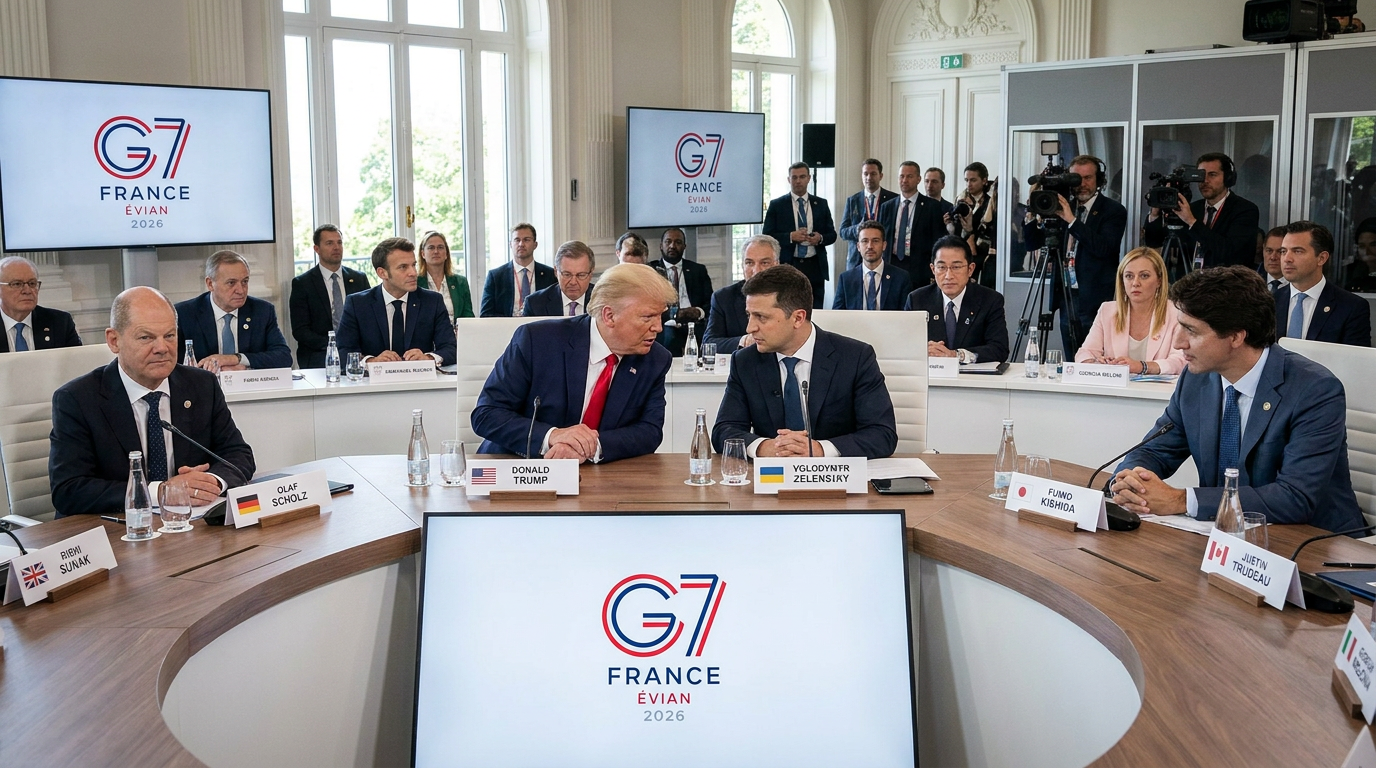
At the G7 summit in France, U.S. President Donald Trump signaled a renewed diplomatic push to end the five-year Russia-Ukraine war, meeting with President Volodymyr Zelenskyy and urging Moscow to negotiate.
By Factlen Editorial Team
- European Diplomats
- European leaders are pushing for the U.S. to take a leading mediator role to force a settlement.
- Ukrainian Government
- Kyiv seeks to negotiate from a position of strength while securing long-term security guarantees.
- U.S. Policymakers
- The U.S. is balancing a desire to end the conflict with a reluctance to over-commit American resources.
What's not represented
- · Russian Government
- · Frontline Ukrainian Civilians
Why this matters
A shift in U.S. diplomatic engagement could alter the trajectory of the five-year-long conflict. With European allies pressing Washington to host direct talks, the summit marks the most significant coordinated push for a negotiated settlement in months.
Key points
- U.S. President Donald Trump urged Russia to 'make a deal' to end the five-year war following a meeting with Ukrainian President Volodymyr Zelenskyy.
- European leaders formally pressed Trump to host direct peace talks between Zelenskyy and Russian President Vladimir Putin in the United States.
- Trump suggested the U.S. could reimpose sanctions on Russian oil shipments now that the Middle East energy crisis has stabilized.
- The European Union is finalizing its 21st sanctions package, targeting Russia's ability to export liquefied natural gas.
- Zelenskyy argued that recent Ukrainian drone strikes inside Russia have shifted the war's momentum, giving Kyiv leverage in potential negotiations.
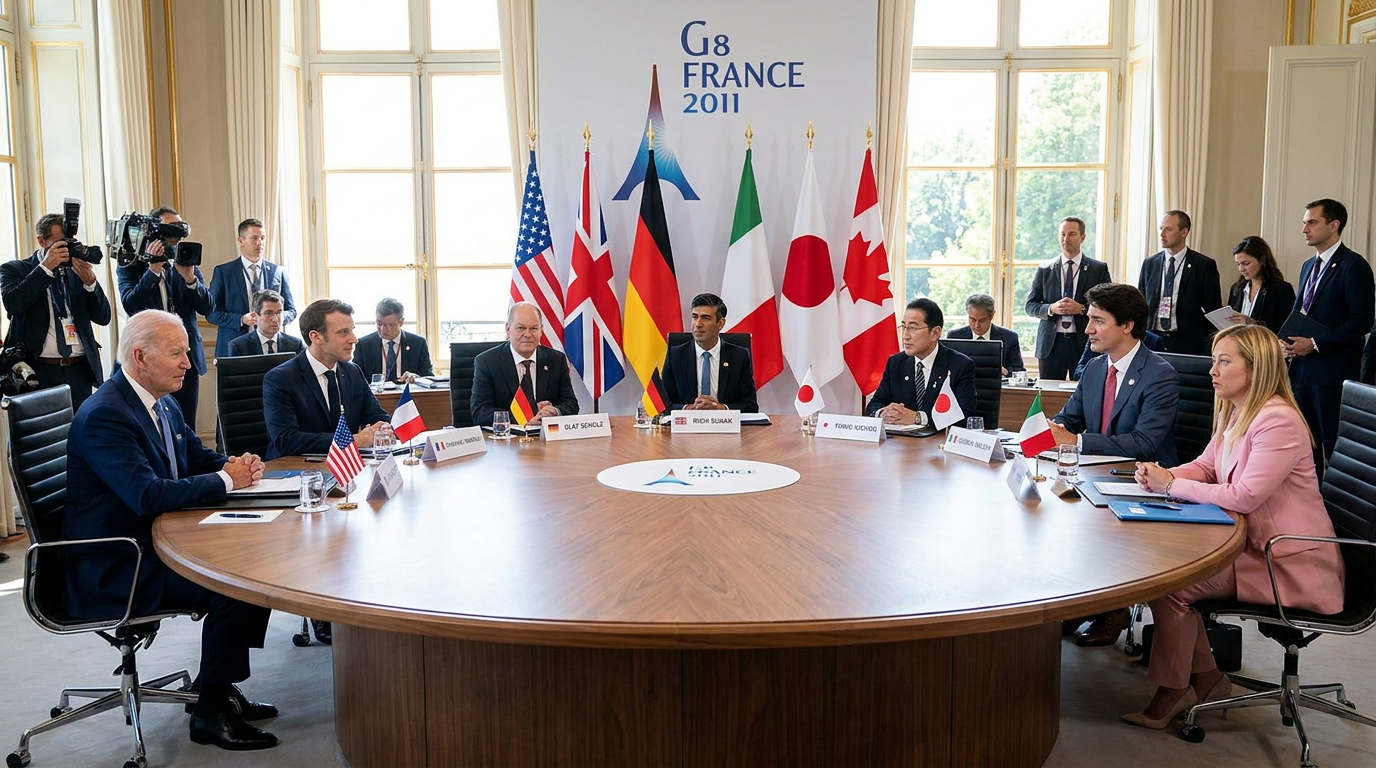
At the Group of Seven summit in the French lakeside resort of Évian-les-Bains, U.S. President Donald Trump signaled a renewed diplomatic push to end the five-year-long Russia-Ukraine war. Following a face-to-face meeting with Ukrainian President Volodymyr Zelenskyy, Trump publicly urged Moscow to negotiate a settlement, declaring that the conflict has dragged on long enough. "Russia should make a deal. Russia has lost tremendous amounts of people, and so has Ukraine," Trump told reporters outside the summit venue. The remarks marked a notable shift in focus for the U.S. administration, which had recently been consumed by the crisis in the Middle East. With a tentative 60-day ceasefire now in place with Iran, Trump indicated he is ready to pivot his attention back to Eastern Europe, vowing to "do whatever I can" to bring the warring neighboring countries to the negotiating table.[1][4]
The summit's renewed focus on Ukraine comes as European leaders actively lobby Washington to take a more hands-on role in mediating the conflict. French President Emmanuel Macron and other allied heads of state formally urged Trump to host direct peace talks between Zelenskyy and Russian President Vladimir Putin in the United States. European diplomats are eager to capitalize on Trump's recent diplomatic momentum following the Iran deal, hoping his unconventional approach might break the deadlock. While Trump acknowledged the "great antipathy" between the Ukrainian and Russian leaders, he claimed that both men were open to a meeting. The push for U.S.-hosted talks reflects a consensus among G7 nations that American leverage remains the most viable tool for forcing Moscow into serious negotiations after half a decade of grinding attrition.[2][5]
Zelenskyy arrived at the Évian-les-Bains summit with a clear objective: to convince Trump that Ukraine is no longer losing on the battlefield and that any peace deal must not amount to a capitulation. Backed by European allies, the Ukrainian delegation highlighted a recent string of successful drone incursions deep into Russian territory, arguing that these strikes have fundamentally altered the war's strategic calculus. European Commission President Ursula von der Leyen echoed this sentiment, stating publicly that "the tide is turning" and that Russia's military fatigue is becoming openly apparent. By demonstrating that Kyiv can project power across its borders, Zelenskyy sought to prove that Ukraine brings genuine leverage to any prospective peace talks, countering earlier U.S. assessments that Kyiv was negotiating from a position of weakness.[1][2]

To underscore the ongoing human cost of the invasion, Zelenskyy reportedly utilized a highly personal appeal during his bilateral meeting with the U.S. president. According to European diplomats briefed on the exchange, the Ukrainian leader showed Trump graphic images detailing the aftermath of a recent Russian missile strike on Kyiv's historic Pechersk Lavra monastery. The visual evidence was described as a calculated psychological move to emphasize the indiscriminate nature of Russia's bombardment of civilian and cultural centers. Trump reportedly expressed clear disapproval of the strike upon seeing the images. The emotional appeal was paired with concrete requests for enhanced air defense systems, which remain a critical priority for Kyiv as it attempts to shield its urban populations and energy infrastructure from relentless aerial assaults.[1]
To underscore the ongoing human cost of the invasion, Zelenskyy reportedly utilized a highly personal appeal during his bilateral meeting with the U.S.
The shifting geopolitical landscape in the Middle East has unexpectedly provided the U.S. with new economic leverage against Moscow. During the height of the recent conflict with Iran, the United States temporarily lifted certain sanctions on Russian oil shipments to help stabilize global energy markets and prevent a catastrophic spike in fuel prices. However, with the Strait of Hormuz reopening and global oil shipments flowing normally once again, Trump suggested that Washington could soon reimpose those strict penalties. Reinstating the sanctions would choke off a vital revenue stream for the Kremlin's war machine just as diplomatic pressure mounts. The potential snapback of U.S. energy sanctions aligns with broader G7 efforts to tighten the economic noose around Russia's export economy.[3][4]

Beyond the threat of renewed U.S. oil penalties, the broader G7 coalition agreed to escalate its own economic warfare against Moscow. European leaders confirmed that the European Union is currently finalizing its 21st package of sanctions, which will specifically target the logistics of Russia's energy exports. A key component of the new package includes severe restrictions on the sale and transfer of liquefied natural gas (LNG) tankers to Russian entities, aiming to cripple Moscow's ability to bypass existing embargoes using a shadow fleet. Zelenskyy also pushed the bloc to confiscate Russian assets and target its banking sector more aggressively. The coordinated economic strategy is designed to create a compounding financial crisis for Putin, theoretically making the prospect of a negotiated settlement more attractive than continued economic isolation.[1][2]
Despite the outward display of allied unity and diplomatic optimism, underlying tensions regarding the extent of U.S. commitment remain visible. While Trump expressed a desire to end the bloodshed, he also delivered mixed messages that catered to his domestic "America First" political base. At one point during the summit, he remarked that the Eastern European conflict "has no impact on us, other than we sell weapons," noting that the United States is "thousands of miles away." These comments served as a stark reminder to European capitals that Washington's patience and financial support are not infinite. The juxtaposition of Trump's willingness to mediate with his transactional view of the alliance continues to fuel European anxieties about the long-term reliability of the American security umbrella.[5]

As the summit concludes, the immediate focus shifts to the logistical groundwork required to turn the G7's diplomatic rhetoric into a tangible peace process. Zelenskyy confirmed that Ukrainian and American diplomatic teams would continue meeting intensively over the next 24 hours to outline potential frameworks for negotiations. The Ukrainian president publicly expressed confidence in the U.S. administration's unique ability to alter the war's trajectory, stating, "I think Donald Trump can do it, mainly only him." Whether this renewed diplomatic offensive will culminate in a historic summit between Zelenskyy and Putin on American soil remains uncertain, but the Évian-les-Bains gathering has undeniably injected fresh momentum into the quest to end Europe's deadliest conflict since the Second World War.[2][6]
How we got here
Feb 2022
Russia launches a full-scale invasion of Ukraine, triggering the largest European conflict since WWII.
2024–2025
The war settles into a grinding war of attrition, though Ukraine begins launching successful drone strikes deep into Russian territory.
May 2026
The U.S. brokers a 60-day ceasefire with Iran, freeing up diplomatic bandwidth and stabilizing global oil markets.
June 2026
G7 leaders meet in France, launching a coordinated effort to bring Russia and Ukraine to the negotiating table.
Viewpoints in depth
European Allies
European leaders are pushing for the U.S. to take a leading mediator role to force a settlement.
Allied capitals believe that the combination of Ukraine's recent drone successes and Russia's economic fatigue has created a genuine window for diplomacy. By urging Trump to host direct talks between Zelenskyy and Putin, European leaders hope to lock the U.S. into a sustained diplomatic commitment, fearing that without American leverage, Moscow will simply wait out Western resolve.
Ukrainian Leadership
Kyiv seeks to negotiate from a position of strength while securing long-term security guarantees.
President Zelenskyy's administration is walking a tightrope: demonstrating a willingness to engage in peace talks while refusing to concede sovereign territory. By highlighting deep strikes into Russia and the civilian toll at home, Kyiv aims to prove it is not a defeated party. Ukrainian officials view Trump's unpredictable leverage as the only mechanism capable of forcing Putin to the table on acceptable terms.
U.S. Administration
The U.S. is balancing a desire to end the conflict with a reluctance to over-commit American resources.
Following the successful brokering of a ceasefire with Iran, the Trump administration sees an opportunity to secure another major foreign policy win. However, the approach remains highly transactional. Policymakers are willing to use aggressive economic tools—like snapping back oil sanctions—but remain deeply skeptical of open-ended military or financial commitments to European security, preferring to shift the long-term burden to NATO allies.
What we don't know
- Whether Russian President Vladimir Putin is genuinely willing to participate in U.S.-hosted peace talks.
- The specific territorial or political concessions that would form the basis of any proposed peace agreement.
- How the reimposition of U.S. sanctions on Russian oil might impact global energy prices in the long term.
Key terms
- G7 (Group of Seven)
- An informal bloc of advanced industrialized democracies—including the U.S., Canada, France, Germany, Italy, Japan, and the UK—that meets annually to coordinate global policy.
- Pechersk Lavra
- A historic Eastern Orthodox Christian monastery complex in Kyiv, Ukraine, which recently suffered damage from a Russian missile strike.
- Shadow Fleet
- A network of aging, often uninsured oil and gas tankers used by Russia to bypass Western sanctions and export energy covertly.
Frequently asked
Why is the U.S. pushing for peace talks now?
Following a recently brokered ceasefire with Iran, the U.S. administration has freed up diplomatic resources. Additionally, European allies believe Ukraine's recent battlefield successes provide leverage to force Russia into negotiations.
What sanctions are being considered against Russia?
The U.S. is threatening to reimpose oil sanctions that were temporarily lifted during the Iran crisis. Meanwhile, the EU is finalizing its 21st sanctions package, which targets the sale of LNG tankers to Russia's shadow fleet.
Will Trump host talks between Zelenskyy and Putin?
European leaders have formally proposed that Trump host direct talks in the United States. While Trump stated he would 'do whatever I can,' no official summit between the Ukrainian and Russian leaders has been scheduled yet.
Sources
Source coverage
6 outlets
3 viewpoints surfaced






[1]ReutersUkrainian Government
G7 leaders express optimism for peace after Trump's 'very good' Zelensky meeting
Read on Reuters →[2]The GuardianEuropean Diplomats
European leaders urge Trump to host Zelenskyy-Putin talks
Read on The Guardian →[3]Associated PressU.S. Policymakers
Trump predicts 'great things' from Iran deal as he meets with Macron at G7
Read on Associated Press →[4]Kyodo NewsEuropean Diplomats
G7 leaders rally around Ukraine, Trump urges Russia to make deal
Read on Kyodo News →[5]Courthouse NewsU.S. Policymakers
Trump sends mixed messages on Ukraine at G7
Read on Courthouse News →[6]Ukrainska PravdaUkrainian Government
Trump confirms meeting with Zelenskyy on sidelines of G7 summit
Read on Ukrainska Pravda →
More in news politics
See all 13 stories →AI Infrastructure
DOJ Seeks to Halt NAACP Lawsuit Against xAI, Citing National Security and Military AI Use
7 sources
Reparations
Ghana Convenes 80 Nations to Advance Global Reparations Framework for Transatlantic Slave Trade
8 sources
US-Iran Conflict
US and Iran to Sign Interim Peace Deal to End War and Reopen Strait of Hormuz
7 sources
G7 Summit
G7 Leaders Push for Ukraine Peace Deal as Trump Shifts Focus from Iran
7 sources
Every angle. Every day.
Get news politics stories with full source coverage and perspective breakdowns delivered to your inbox.