
Best Home Battery Storage Systems in 2026: Tesla vs. FranklinWH vs. Enphase
A comprehensive trade-off analysis of the top residential energy storage systems, comparing continuous power, round-trip efficiency, and whole-home backup capabilities.
By Factlen Editorial Team
- Value-Focused Homeowners
- Prioritizing cost-per-kilowatt-hour and rapid return on investment.
- Resilience Maximizers
- Prioritizing whole-home backup, heavy appliance loads, and off-grid security.
- Ecosystem Loyalists
- Prioritizing system redundancy, modular expansion, and microinverter architecture.
What's not represented
- · Renters unable to install hardware
- · Off-grid cabin owners
- · Utility grid operators managing decentralized storage
Why this matters
With grid instability rising and net-metering policies penalizing solar exports, choosing the right home battery dictates whether your house stays powered during a multi-day outage and how quickly your solar investment pays for itself.
Key points
- The Tesla Powerwall 3 offers the highest round-trip efficiency and continuous power output, making it ideal for value-focused buyers.
- The FranklinWH aPower S provides massive 15 kWh capacity and intelligent load shedding, perfect for heavy whole-home backup.
- The Enphase IQ Battery 5P uses a decentralized microinverter architecture, ensuring the system stays online even if a component fails.
- Lithium Iron Phosphate (LFP) chemistry has become the industry standard, offering superior safety and longer lifespans.
- Choosing the right battery requires auditing your home's peak energy loads rather than just looking at total storage capacity.
The residential energy landscape in 2026 has crossed a critical threshold, fundamentally altering how homeowners interact with the electrical grid. With regional grid instability increasing due to extreme weather events and net-metering policies like California's NEM 3.0 aggressively penalizing traditional grid exports, home battery storage has transitioned from a luxury add-on to a financial necessity. Homeowners are no longer simply purchasing backup power for the occasional blackout; they are investing in personal energy independence to shield themselves from volatile utility rates. This shift has triggered a massive wave of innovation among hardware manufacturers, resulting in systems that are smarter, safer, and significantly more powerful than the batteries available just a few years ago.[5][6]
The underlying technology has matured rapidly to meet this surging residential demand. The industry has almost universally adopted Lithium Iron Phosphate, commonly known as LFP, as the standard battery chemistry, leaving behind the older nickel-manganese-cobalt cells that dominated early electric vehicles and first-generation home storage. LFP chemistry offers superior thermal stability, virtually eliminating the thermal runaway risks that previously concerned building inspectors and fire departments. Furthermore, LFP cells provide thousands of additional charge cycles, allowing homeowners to aggressively cycle their batteries every single day for time-of-use arbitrage without degrading the system's overall lifespan or voiding the manufacturer's warranty.[1][2][3]
Three flagship systems currently dominate the 2026 market, each engineered with a distinct philosophy regarding how a home should manage its power: the Tesla Powerwall 3, the FranklinWH aPower S, and the Enphase IQ Battery 5P. Choosing between them is no longer a simple matter of comparing total storage capacity. It requires a rigorous side-by-side trade-off analysis, as the right choice depends entirely on a home's specific peak energy loads, existing solar hardware, and ultimate resilience goals. What works perfectly for a small urban home may fail entirely for a rural property running well pumps and heavy machinery.[9]
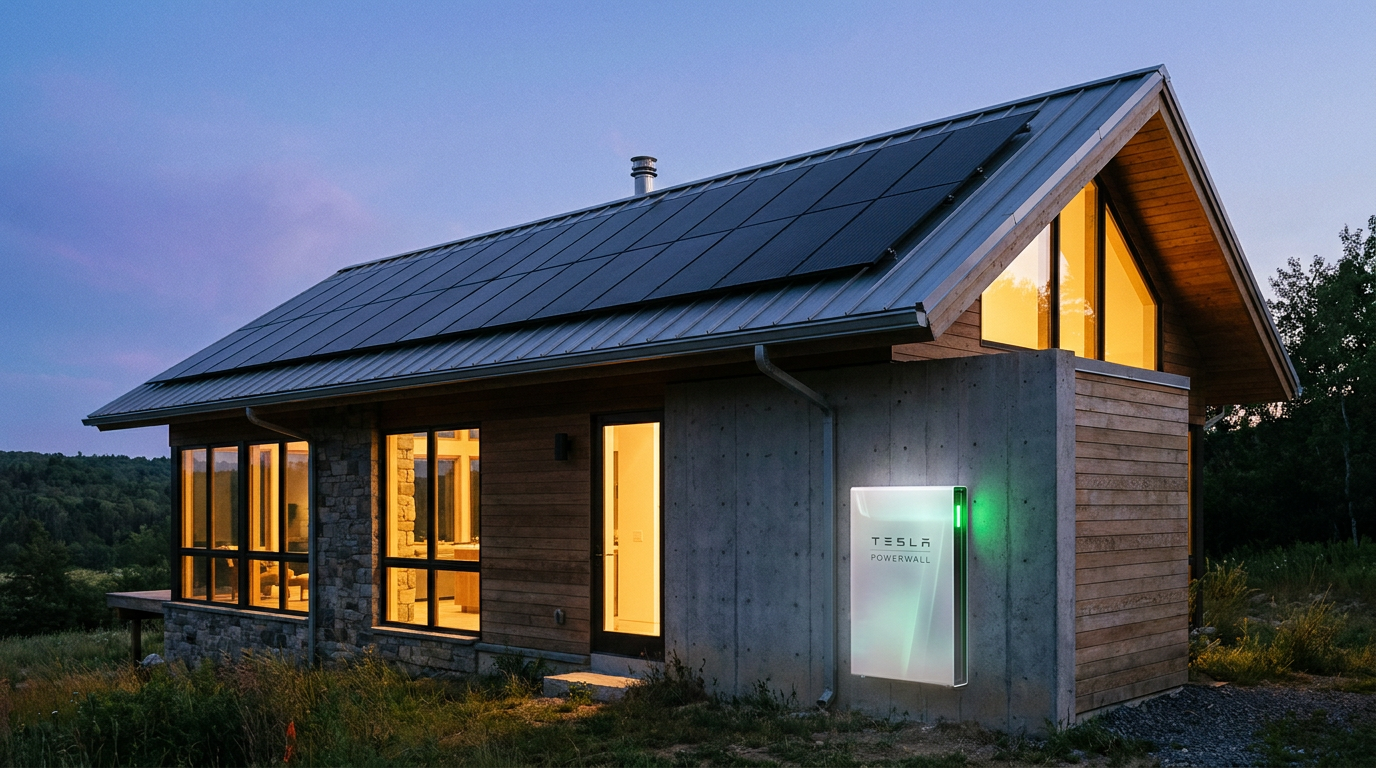
The case for the Tesla Powerwall 3 rests on raw power delivery and unmatched round-trip efficiency. Tesla completely redesigned its third-generation battery to include an integrated hybrid inverter, significantly streamlining the installation process for new solar arrays by eliminating the need for third-party conversion hardware. It delivers a massive 11.5 kilowatts of continuous AC power from a single unit, allowing it to start heavy loads like central air conditioners, electric dryers, and induction ranges without breaking a sweat. For homeowners looking to maximize the sheer muscular output of a single wall-mounted box, the Powerwall 3 sets the industry benchmark.[1][4][7]

The argument against the Powerwall 3 centers on ecosystem lock-in and warranty limitations compared to its premium rivals. Installing a Powerwall generally forces homeowners into Tesla's proprietary walled garden, which can complicate integrations with certain third-party smart home systems. Unlike its top-tier competitors, Tesla still caps its standard warranty at 10 years rather than the emerging 15-year industry standard. Furthermore, its monolithic 13.5-kilowatt-hour size means you cannot purchase a smaller, cheaper unit if you only need to back up a few critical circuits like a refrigerator and internet router, forcing a high baseline investment.[1][4]
The evidence for Tesla's market dominance is clearly visible in the system's real-world performance numbers. The Powerwall 3 boasts an industry-leading 97.5 percent round-trip efficiency, meaning almost none of your hard-earned solar energy is lost to heat during the chemical storage and retrieval process. At an installed cost typically ranging from $8,500 to $12,000 before federal tax credits or local rebates, it offers arguably the best cost-per-kilowatt-hour ratio on the market. This combination of high efficiency and aggressive pricing makes the math highly favorable for homeowners focused on rapid return on investment.[4][7]
The Tesla Powerwall 3 fits well when you are installing a brand-new solar and storage system simultaneously, or when you need maximum continuous power on a tight budget to run heavy appliances during an outage. It provides a sleek, all-in-one solution that requires minimal configuration. However, it does not fit well when you have a complex, heavily shaded roof that requires the granular optimization of microinverters, or when you want the flexibility to start with a very small battery footprint and scale up incrementally over several years as your budget allows.[4][9]
It provides a sleek, all-in-one solution that requires minimal configuration.
The case for the FranklinWH aPower S is built entirely around ultimate whole-home resilience and intelligent load management. Upgraded to 15 kilowatt-hours of usable capacity, it represents the largest single residential block available in the mainstream market. Its true superpower is the accompanying aGate smart controller, which dynamically manages heavy loads, automatically sheds non-critical circuits during a grid outage to preserve battery life, and seamlessly integrates with standby gas generators. This allows the battery to act as the central brain of a multi-source microgrid, ensuring the lights stay on regardless of the weather.[2][5]

The argument against the FranklinWH system is its premium price tag and slightly lower operational efficiency. A single installed unit can run upwards of $17,500, making it a significant upfront investment that may stretch the budgets of average homeowners. Additionally, its round-trip efficiency sits at 89 percent, meaning you lose roughly 11 percent of your generated solar power to heat and conversion losses. Over the course of a decade, that efficiency gap compared to Tesla's near-perfect retention can add up to hundreds of dollars in lost energy arbitrage value.[4][5]
The evidence supporting FranklinWH's premium status lies in its incredibly robust specifications and long-term guarantees. It delivers a highly capable 10 kilowatts of continuous power and is backed by an industry-leading 15-year warranty, providing exceptional peace of mind. For massive estates or light commercial applications, the system can scale up to 15 units for a staggering 225 kilowatt-hours of total storage. This immense scalability ensures that even the most energy-hungry properties can operate entirely off the grid for days at a time without ever needing to compromise on their lifestyle or operations.[2][5]
The FranklinWH aPower S fits well when you demand true whole-home backup, own multiple heavy appliances like electric vehicle chargers and heat pumps, and want the ultimate security of native generator integration. It is the definitive choice for rural properties prone to multi-day outages. It does not fit well when you are highly sensitive to upfront costs, or when you have limited wall space in your garage, as the units are exceptionally heavy, physically imposing, and require substantial clearance for proper installation and thermal management.[5][9]
The case for the Enphase IQ Battery 5P is defined by supreme reliability through redundancy and granular modularity. Rather than relying on a single central inverter that could fail and take down the entire system, each 5-kilowatt-hour battery block contains six independent, embedded IQ8 microinverters. If one microinverter experiences a hardware fault, the battery simply continues to operate at a slightly reduced capacity, completely eliminating the single point of failure that plagues traditional string-inverter storage systems. This decentralized architecture is a massive selling point for homeowners who prioritize absolute system uptime.[3][8]

The argument against the Enphase 5P is its exceptionally low individual power output. A single unit provides only 3.84 kilowatts of continuous power, which is barely enough to run a microwave and a hair dryer simultaneously. To match the heavy surge capability of a single Tesla or FranklinWH battery, a homeowner must purchase and install three separate Enphase 5P units. This requirement significantly increases the amount of wall space needed, complicates the physical wiring, and generally drives up the total hardware and labor costs for whole-home backup scenarios.[3][8]
The evidence for Enphase's methodical approach is found in its seamless AC-coupled architecture and exceptional build quality. With a 90 percent AC round-trip efficiency and a robust 15-year warranty covering up to 6,000 cycles, the 5P is engineered for extreme longevity. Its passive cooling system features zero moving parts or internal fans, ensuring whisper-quiet operation and requiring zero mechanical maintenance over its lifespan. Furthermore, the field-replaceable nature of its internal components means that technicians can swap out a single faulty microinverter without needing to replace the entire heavy battery chassis.[3][8]
The Enphase IQ Battery 5P fits well when you already have an Enphase microinverter solar array on your roof, ensuring seamless software integration, or when you only want to back up a few critical circuits and prefer to buy storage in small, highly manageable 5-kilowatt-hour increments. It does not fit well when you need to start a 5-ton central air conditioner but only have the budget or physical wall space for a single battery unit, as the system simply lacks the concentrated muscular output required for heavy motor loads.[8][9]

The 2026 home battery market proves that the era of one-size-fits-all energy storage is officially over. The decision matrix for homeowners has shifted dramatically from simply asking "how much capacity do I need?" to rigorously evaluating continuous power output, inverter architecture, and long-term warranty value. Homeowners must conduct a thorough audit of their peak energy loads—understanding the difference between the surge required to start an appliance and the continuous draw needed to run it—before committing to a specific chemistry or a proprietary brand ecosystem.[9]
Ultimately, the widespread transition to residential energy storage represents a profound shift in how communities interact with the broader electrical grid. Whether prioritizing the raw value and efficiency of Tesla, the heavy-duty resilience and generator integration of FranklinWH, or the modular reliability of Enphase, deploying any of these advanced systems moves a household closer to true energy independence. By taking control of their own power generation and storage, homeowners are successfully shielding themselves from the relentless volatility of utility pricing and the increasing unpredictability of extreme weather events.[9]
How we got here
2015
Tesla introduces the original Powerwall, mainstreaming the concept of residential lithium-ion energy storage.
2023
California passes NEM 3.0, drastically reducing compensation for solar exports and making home batteries financially essential.
2024
Tesla launches the Powerwall 3 with an integrated hybrid inverter and massive 11.5 kW continuous power output.
2025
FranklinWH upgrades its flagship battery to the aPower S, increasing capacity to 15 kWh and integrating direct solar connections.
2026
LFP chemistry becomes the undisputed industry standard, offering 15-year warranties and superior thermal safety across top brands.
Viewpoints in depth
Value-Focused Homeowners
Prioritizing cost-per-kilowatt-hour and rapid return on investment.
This camp argues that the primary purpose of a home battery is financial arbitrage—storing cheap solar power to offset expensive evening grid rates. For these buyers, the Tesla Powerwall 3 is the undisputed champion. They point to its 97.5% round-trip efficiency and lower installed cost as the key metrics, arguing that paying a premium for 15-year warranties or extreme modularity extends the payback period unnecessarily.
Resilience Maximizers
Prioritizing whole-home backup, heavy appliance loads, and off-grid security.
Homeowners in areas with frequent, multi-day outages view batteries as critical infrastructure rather than just financial tools. This camp favors the FranklinWH system, emphasizing that true resilience requires the ability to run central air conditioning, well pumps, and EV chargers simultaneously. They value the aGate controller's ability to seamlessly trigger a standby gas generator when the battery depletes, ensuring the home never goes dark regardless of solar production.
Ecosystem Loyalists
Prioritizing system redundancy, modular expansion, and microinverter architecture.
This perspective, often held by solar installers and tech-forward homeowners, argues that central inverters are a dangerous single point of failure. They advocate for the Enphase IQ Battery 5P because its embedded microinverters ensure the system stays online even if a component fails. They also value the ability to buy storage in small 5 kWh increments, allowing them to perfectly tailor the system size to their exact needs without overbuying capacity.
What we don't know
- How future utility rate structures might further incentivize or penalize battery owners who participate in virtual power plants.
- Whether solid-state battery technology will eventually replace LFP chemistry in the residential market before the end of the decade.
Key terms
- Continuous Power
- The steady amount of electrical output a battery can provide indefinitely, which determines how many appliances you can run at the same time.
- Usable Capacity
- The actual amount of stored energy available for the homeowner to use, measured in kilowatt-hours (kWh), excluding the reserve kept to protect the battery's health.
- Round-Trip Efficiency
- The percentage of electricity put into storage that is later retrieved, accounting for energy lost as heat during the conversion process.
- Microinverter
- A small device that converts direct current (DC) from a solar panel or battery into alternating current (AC) for home use, operating independently from other units.
- Load Shedding
- The automated process of turning off non-essential electrical circuits during a power outage to conserve battery life for critical needs.
Frequently asked
Can a single battery run my central air conditioner?
It depends on the battery's continuous power rating. The Tesla Powerwall 3 (11.5 kW) and FranklinWH aPower S (10 kW) can easily start and run most central AC units. The Enphase 5P (3.84 kW) would require multiple units to handle the surge.
What is round-trip efficiency?
Round-trip efficiency measures how much energy is lost during the process of storing and retrieving power. A 97.5% efficiency means you lose very little energy to heat, while an 89% efficiency means you lose about 11% of your stored power.
Do I need a gas generator if I have a home battery?
Not necessarily, but it adds security for multi-day outages. Systems like the FranklinWH aPower S feature native generator integration, automatically turning the generator on when the battery runs low and solar production is insufficient.
What is LFP battery chemistry?
Lithium Iron Phosphate (LFP) is the modern standard for home batteries. It is significantly safer and less prone to thermal runaway than older chemistries, and it offers thousands of more charge cycles for a longer lifespan.
Sources
Source coverage
9 outlets
3 viewpoints surfaced









[1]Tesla OfficialValue-Focused Homeowners
Powerwall 3 Specs and Capacity
Read on Tesla Official →[2]FranklinWH OfficialResilience Maximizers
aPower 2 and aPower S Whole Home Backup
Read on FranklinWH Official →[3]Enphase EnergyEcosystem Loyalists
IQ Battery 5P Technical Specifications
Read on Enphase Energy →[4]NuWatt EnergyValue-Focused Homeowners
Tesla Powerwall 3 Review: Full 2026 Assessment
Read on NuWatt Energy →[5]NRG Clean PowerResilience Maximizers
FranklinWH aPower S: Quick Summary and Review
Read on NRG Clean Power →[6]PowerOutage.usResilience Maximizers
Tesla Powerwall 3 specs and capacity for home backup
Read on PowerOutage.us →[7]Solar CalculatorValue-Focused Homeowners
Tesla Powerwall 3 specifications and features
Read on Solar Calculator →[8]SunPowerEcosystem Loyalists
Next-Generation Energy Storage Made Simple
Read on SunPower →[9]Factlen Editorial TeamEcosystem Loyalists
Synthesis by Factlen editorial team
Read on Factlen Editorial Team →


Every angle. Every day.
Get guides stories with full source coverage and perspective breakdowns delivered to your inbox.