
The Era of Disposable Smartphones Ends as Right-to-Repair Laws Take Global Effect
With a sweeping European Union directive taking effect in July 2026, major tech companies are rapidly expanding self-repair programs and redesigning devices for longevity.
By Factlen Editorial Team
- Consumer Advocates
- Celebrate the legislation as a victory against planned obsolescence, though they continue to push for lower spare part prices.
- Major Tech Manufacturers
- Adapting to the new legal baseline by expanding self-service programs and marketing device longevity as a premium feature.
- Independent Repairers
- Benefiting from the influx of official manuals and parts, which democratizes the repair ecosystem beyond authorized service providers.
What's not represented
- · Environmental NGOs focused on rare earth mining
- · Third-party component manufacturers
Why this matters
For the first time in the modern smartphone era, consumers are gaining the legal right and practical ability to fix their own devices. This shift promises to save users hundreds of dollars per repair, significantly reduce electronic waste, and extend the average lifespan of a phone by several years.
Key points
- The EU's Right to Repair directive reaches its final compliance deadline in July 2026, mandating sweeping changes to consumer electronics.
- Smartphone manufacturers must provide spare parts for seven years and software updates for five years.
- Apple has expanded its Self Service Repair program to 65 devices, including the new iPhone 17e and MacBook Neo.
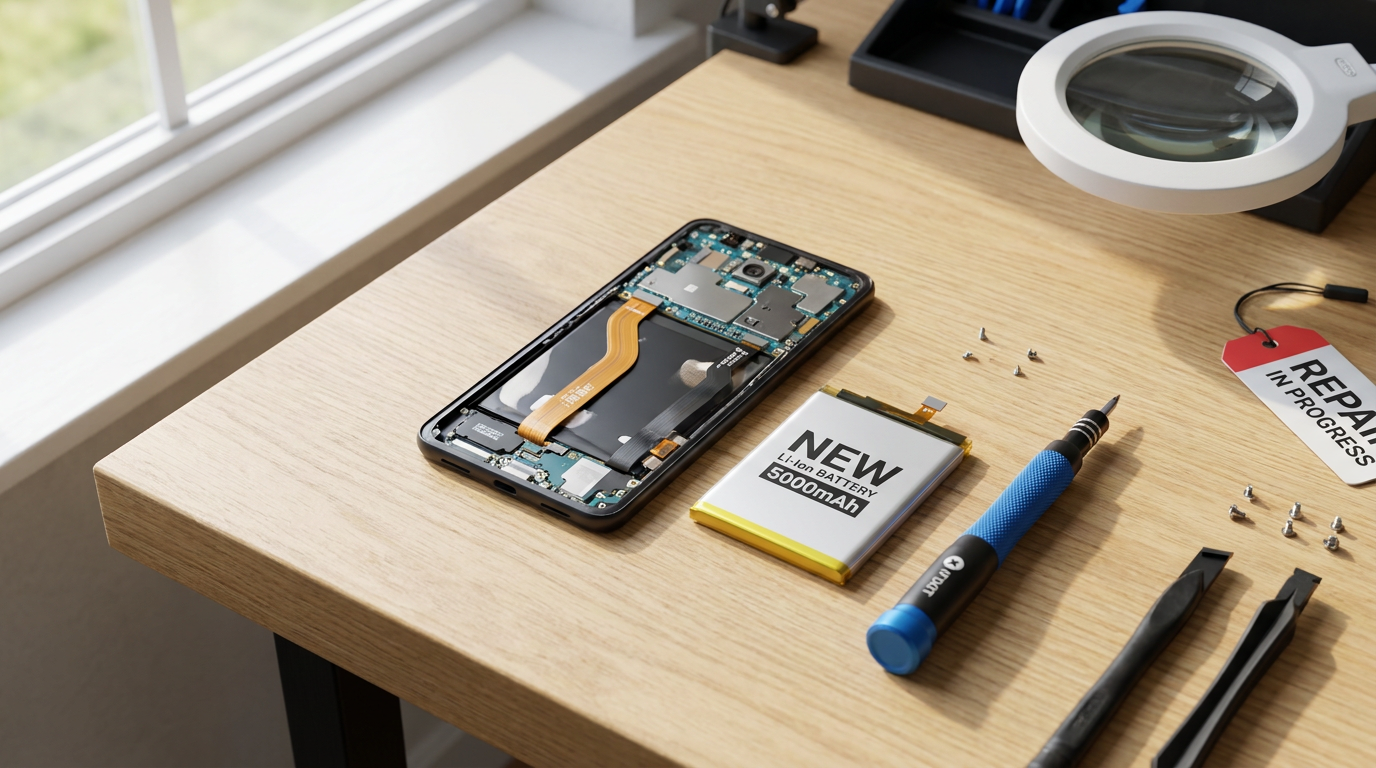
- Devices like the HMD Skyline are pioneering "Gen2 repairability," allowing users to easily swap screens and batteries at home.
- The regulations are expected to drastically reduce electronic waste and save consumers hundreds of dollars in replacement costs.
The era of the glued-shut, disposable smartphone is officially coming to a close. Driven by sweeping new consumer protection laws, the global technology industry is undergoing a massive hardware redesign aimed at keeping devices in users' hands for years longer.[1][4]
The catalyst for this shift is the European Union's Right to Repair directive, which reaches its final compliance deadline on July 31, 2026. The legislation fundamentally rewrites the rules of consumer electronics, transforming repairability from a niche hobbyist request into a strict condition for market access.[1][4]
Under the new ecodesign requirements, manufacturers must guarantee that critical spare parts—such as batteries, screens, and charging ports—remain available for at least seven years after a device model is discontinued. Furthermore, companies are legally required to provide operating system and security updates for a minimum of five years, addressing the software obsolescence that often forces users to abandon physically functioning phones.[4][7]

To help consumers make informed choices, devices sold in the EU must now display a standardized A-to-E repairability score at the point of sale, clearly indicating how easily a phone or tablet can be disassembled. Because modern tech supply chains are highly centralized, manufacturers are not building "Europe-only" modular phones; these hardware improvements are rolling out to consumers worldwide.[1][4][7]
The impact on the industry's biggest players has been profound. Apple, once notorious for its tightly sealed hardware ecosystems, has rapidly expanded its Self Service Repair program. As of this spring, the platform supports 65 different Apple products, providing everyday consumers with the exact same diagnostic tools and official manuals used by Genius Bar technicians.[2][5]
The impact on the industry's biggest players has been profound.
This expansion includes Apple's newest slate of devices, such as the iPhone 17e, the M4 iPad Air, and the newly redesigned MacBook Neo. The MacBook Neo represents a specific triumph for repair advocates: its internal chassis uses standard screws rather than industrial adhesive, allowing users to replace an individual keyboard for just $140. In previous generations, a broken key required replacing the entire aluminum top case and battery assembly, costing upwards of $600.[2][5]

Beyond the premium flagship market, a new generation of "Gen2 repairable" mid-range smartphones is proving that modularity doesn't require sacrificing sleek design. The recently launched HMD Skyline is specifically engineered to be opened at home with a standard guitar pick and screwdriver.[3][6]
Through a partnership with the repair advocacy group iFixit, Skyline owners can easily order replacement screens, batteries, and USB-C ports directly to their doors. While reviewers note the device's software update timeline is shorter than its premium competitors, its physical modularity sets a new standard for how easily a cracked screen can be fixed on a kitchen table.[3][6]
The environmental and economic stakes of this transition are massive. Approximately 150 million smartphones are sold annually in the EU alone, and historically, less than 40 percent of that electronic waste has been recycled. By extending the average lifespan of a smartphone from two years to five or more, the industry can drastically reduce the mining of rare earth metals and the volume of toxic e-waste entering landfills.[1][4]
The financial benefits for consumers are equally significant. The ability to swap a degraded battery for $40 rather than purchasing a $1,000 replacement device is reshaping consumer habits. Industry analysts project that the refurbished and repairable tech sector will surge past €30 billion by the early 2030s, fueled by users choosing maintenance over immediate upgrades.[1][4]

While consumer advocates celebrate the legislation, they acknowledge that the fight for true hardware ownership is ongoing. Manufacturers can still technically comply with the law while pricing spare parts at a premium, and debates continue over the practice of "parts pairing"—where software locks reject third-party components.[1][4]
Nevertheless, the momentum is entirely on the side of the consumer. Repairability is no longer viewed as a liability by hardware designers, but as a highly marketable feature. As the 2026 mandates take full effect, the power dynamic between tech giants and their customers has fundamentally shifted, ensuring that the devices we rely on every day are built to last.[1][4]
How we got here
2022
Apple launches its initial Self Service Repair program for a limited number of iPhones.
2023
The European Union formally approves the Right to Repair directive aimed at reducing e-waste.
June 2025
EU ecodesign requirements mandate A-to-E repairability scores at the point of sale.
April 2026
Apple expands its DIY repair program to 65 devices, including the latest iPhones and Macs.
July 2026
The EU Right to Repair directive's final compliance deadline takes effect across all member states.
Viewpoints in depth
Consumer Advocates
Right-to-repair groups view the 2026 mandates as a historic victory, but warn of lingering loopholes.
Advocacy groups celebrate the end of glued-shut, disposable electronics, noting that mandated repairability scores will finally allow consumers to vote with their wallets. However, they caution that manufacturers can still comply with the letter of the law while pricing spare parts so high that repair remains economically unviable. They are also actively lobbying against 'parts pairing'—software locks that reject third-party components even if they are physically identical to original parts.
Tech Manufacturers
Hardware giants are pivoting from closed ecosystems to marketing longevity and self-repair as premium features.
For years, companies like Apple and Samsung argued that tightly sealed devices were necessary for water resistance, safety, and sleek design. Faced with the EU's strict market-access conditions, these manufacturers have entirely reversed their public stance. They are now heavily investing in self-service repair programs, redesigning internal chassis with screws instead of industrial adhesive, and using their extended software support timelines as a competitive advantage to justify premium device prices.
What we don't know
- It remains unclear how aggressively regulators will police the pricing of spare parts to ensure they remain 'reasonable' for average consumers.
- The future of 'parts pairing'—software locks that reject third-party components—is still being contested in ongoing legal battles.
- It is unknown if component manufacturers like Qualcomm will extend their chipset support timelines to match the new hardware longevity requirements.
Key terms
- Planned Obsolescence
- The practice of designing products to break, fail, or become unusable after a certain period to force consumers to buy replacements.
- Parts Pairing
- A software restriction used by manufacturers that ties a specific hardware component to a device's motherboard, preventing third-party parts from functioning.
- Ecodesign Requirements
- EU regulations that mandate minimum standards for energy efficiency, durability, and repairability for products sold in the single market.
Frequently asked
Can I repair my phone without voiding the warranty?
Yes. Under the new regulations, performing a DIY repair with official parts or using an independent repair shop does not void your statutory warranty.
Do these rules apply outside of Europe?
While legally binding only in the EU, the global nature of tech supply chains means manufacturers are applying these modular designs and self-repair programs worldwide.
What parts am I allowed to replace?
Manufacturers are required to provide access to commonly failing components, including batteries, screens, camera modules, and charging ports.
Sources
Source coverage
7 outlets
3 viewpoints surfaced







[1]CybernewsConsumer Advocates
EU Right to Repair law will make it easier to fix a smartphone
Read on Cybernews →[2]MacRumorsMajor Tech Manufacturers
Apple Now Selling Parts for Seven New Devices Unveiled Last Month
Read on MacRumors →[3]ForbesIndependent Repairers
HMD Skyline Review: A Repairable Smartphone With An Achilles' Heel
Read on Forbes →[4]Gadget HacksConsumer Advocates
EU Repairable Smartphones Rules: What Changed and What Hasn't
Read on Gadget Hacks →[5]TechRepublicMajor Tech Manufacturers
65 Apple Products Now Supported in Its DIY Repair Program
Read on TechRepublic →[6]PCMagIndependent Repairers
HMD's Skyline Phone Embraces Repairability and Social Media Breaks
Read on PCMag →[7]European CommissionMajor Tech Manufacturers
New EU rules for durable, energy-efficient and repairable smartphones and tablets start applying
Read on European Commission →



Every angle. Every day.
Get technology stories with full source coverage and perspective breakdowns delivered to your inbox.