
UK Announces Sweeping Social Media Ban for Under-16s
Prime Minister Keir Starmer has unveiled legislation to ban children under 16 from major platforms like TikTok and Instagram by Spring 2027. The policy goes further than other nations by also restricting livestreaming, gaming communications, and AI companions.
By Factlen Editorial Team
- Government & Child Welfare
- The state must intervene to protect children from addictive platforms that harm mental health.
- Tech Industry
- Blanket bans isolate teenagers and drive them toward unregulated, dangerous alternatives.
- Digital Rights Advocates
- The ban treats children as the problem instead of regulating the tech companies' addictive designs.
- Youth & Teens
- The ban fundamentally misunderstands how modern adolescents socialize and communicate.
What's not represented
- · Educators and teachers
- · Child psychologists
Why this matters
This landmark legislation sets a new global precedent for internet regulation, fundamentally altering how millions of families navigate the digital world. If successful, it will force tech giants to overhaul their age-verification systems and could trigger a domino effect of similar bans across Europe and North America.
Key points
- The UK government will ban children under 16 from accessing major social media platforms, including TikTok, Instagram, and YouTube.
- Messaging apps like WhatsApp and Signal, as well as educational platforms, will remain exempt from the restrictions.
- The policy includes world-first bans on under-16s livestreaming themselves and communicating with strangers on gaming sites.
- Tech companies will bear the legal responsibility for enforcing age verification, facing massive fines for non-compliance.
UK Prime Minister Keir Starmer has announced a sweeping national ban on social media for children under 16, framing the landmark legislation as a necessary intervention to protect youth mental health. The proposed law, expected to be introduced to Parliament before Christmas, aims to block minors from accessing major algorithmic platforms by Spring 2027. The move marks a dramatic escalation in the global regulatory battle against Big Tech, positioning the UK at the forefront of a growing movement to restrict children's digital access.[1][2]
The ban will apply to user-to-user platforms driven by algorithmic feeds, explicitly targeting industry giants like TikTok, Instagram, Snapchat, Facebook, YouTube, and X. However, the government intends to exempt end-to-end encrypted messaging services like WhatsApp and Signal, acknowledging their utility for basic communication. Educational tools such as Google Classroom and YouTube Kids will also be excluded from the restrictions, ensuring that schoolwork and curated learning environments remain accessible.[1][3]
Starmer’s government is positioning the policy as the most comprehensive of its kind globally, going significantly further than a similar ban enacted by Australia in late 2025. Beyond restricting basic platform access, the UK legislation will introduce world-leading blocks on specific functionalities. This includes a total ban on under-16s livestreaming themselves and strict prohibitions on strangers communicating with children across all platforms, including multiplayer gaming sites.[1][6]

The policy also ventures into the rapidly expanding and largely unregulated realm of artificial intelligence. Under the new rules, AI "romantic companion" chatbots—programs designed to simulate intimate relationships or roleplay with users—will be legally required to enforce a strict minimum age of 18. The government argues that these intimate functionalities pose unique psychological risks to developing adolescents that require a higher age threshold than standard social media.[6]
The government argues that these platforms are fundamentally unsafe by design and that self-regulation has failed. "Social media is making children unhappy. It's making it easier for bullies to harass and abuse them, and it could even be harming their mental health," Starmer stated, adding that the platforms are engineered to be addictive. A recent government consultation found that 90% of parents supported the measure, prompting Starmer to declare the state was stepping in to "give kids their childhood back."[1][3]

Enforcement will rely on mandatory age-verification checks, shifting the legal burden entirely onto tech companies rather than parents. The UK's communications regulator, Ofcom, has been tasked with developing robust age-assurance protocols over the coming months. Companies that fail to comply with the new standards will face massive financial penalties, though the exact mechanisms of verification remain a point of intense technical debate.[2][3]
Enforcement will rely on mandatory age-verification checks, shifting the legal burden entirely onto tech companies rather than parents.
The tech industry has quickly pushed back against the sweeping restrictions, warning of unintended consequences. A spokesperson for Meta, the parent company of Facebook and Instagram, argued that blanket bans risk isolating teenagers from established online communities and driving them toward unregulated, less safe alternatives that lack built-in parental controls. YouTube echoed these concerns, arguing that the ban pushes children out of curated, supervised experiences and into the internet's darker corners.[3]
Digital rights and human rights organizations have also criticized the government's approach, albeit for entirely different reasons. Amnesty International UK characterized the ban as "the right diagnosis but the wrong prescription," arguing that excluding children treats them as the problem rather than addressing the surveillance-based business models of the tech giants that prioritize engagement over safety.[4]
"You cannot solve a design problem with an access ban," said Kerry Moscogiuri, Chief Executive of Amnesty International UK. The organization is instead calling for stringent regulations that would restrict profiling-by-default, infinite scrolling, and hyper-personalized recommendation systems. They argue that children should not have to surrender their digital rights to be safe, and that the state should force companies to build safer products rather than building digital walls.[4]
Meanwhile, teenagers themselves have expressed frustration over the disconnect between policymakers and modern youth culture. For many adolescents, platforms like Snapchat are not merely entertainment, but the primary infrastructure for their social lives. As one 13-year-old noted in an interview following the announcement, adults often fail to understand that these apps are fundamentally "how we talk to our friends," viewing the ban as an erasure of their social existence.[5]

The UK will inevitably face the same enforcement hurdles that have plagued Australia's pioneering ban. In March, Australia's internet regulator reported that roughly 70% of parents surveyed said their children were still accessing banned platforms by finding ways to bypass age-gating systems, often using Virtual Private Networks (VPNs) or borrowing older accounts.[2]
Starmer, however, dismissed concerns about the technical viability of the ban, insisting that imperfect enforcement is not a reason to abandon the effort. "We don't say: 'Oh, look, a teenager managed to get a drink somehow, so let's not bother banning drinks from children,'" he argued. The Prime Minister maintained that the law sets a vital cultural standard, even if highly motivated users attempt to circumvent the rules.[2]
The upcoming legislative battle will likely hinge on the specifics of Ofcom's age-verification requirements. A central unresolved question is whether adults will also be forced to upload government identification or undergo biometric scans to prove their age, raising significant privacy concerns for the broader UK population. As the Spring 2027 deadline approaches, the technical reality of walling off the internet for millions of teenagers remains the policy's greatest test.[3]
How we got here
December 2025
Australia implements the world's first national social media ban for under-16s.
June 15, 2026
UK Prime Minister Keir Starmer announces the government's plan to ban social media for under-16s.
Late 2026
Expected deadline for the legislation to be introduced and passed in the UK Parliament.
Spring 2027
Target date for the ban and age-verification enforcement to officially take effect.
Viewpoints in depth
Government & Child Welfare
The state must intervene to protect children from addictive platforms that harm mental health.
Prime Minister Keir Starmer and the vast majority of UK parents argue that tech companies have failed to self-regulate. They view social media as fundamentally unsafe by design, engineered to keep users addicted while exposing them to bullying, harmful content, and predators. For this camp, a blanket access ban is the only definitive way to "give kids their childhood back" and establish a clear boundary for families.
Tech Industry
Blanket bans isolate teenagers and drive them toward unregulated, dangerous alternatives.
Companies like Meta and Google argue that age-gating entire platforms removes teenagers from curated, supervised environments where safety tools are already in place. They warn that determined youth will simply migrate to darker, unregulated corners of the internet or use VPNs to bypass the blocks, effectively rendering the ban useless while destroying the beneficial aspects of online communities.
Digital Rights Advocates
The ban treats children as the problem instead of regulating the tech companies' addictive designs.
Organizations like Amnesty International argue that the government has misdiagnosed the solution. Instead of excluding children from the digital public square—which violates their right to participate and organize—the state should outlaw the surveillance-based business models, infinite scrolling, and hyper-personalized algorithms that make the platforms harmful in the first place.
Youth & Teens
The ban fundamentally misunderstands how modern adolescents socialize and communicate.
For teenagers, platforms like Snapchat and Instagram are not just entertainment; they are the primary infrastructure of their social lives. Many young people feel that adult policymakers fail to grasp that banning these apps effectively cuts them off from their peer groups, arguing that the legislation is a heavy-handed intrusion into their personal relationships.
What we don't know
- How Ofcom will mandate age verification without requiring adults to upload sensitive government ID or biometric data.
- Whether tech companies will successfully challenge the legislation in UK or international courts.
- How the government plans to stop tech-savvy teenagers from using VPNs to bypass the geographic restrictions.
Key terms
- Age-assurance
- Technologies and methods used to verify or estimate a user's age to ensure they meet minimum age requirements for a service.
- User-to-user platforms
- Online services whose primary purpose is to enable social interaction and allow users to generate and share content with others.
- Ofcom
- The UK's government-approved regulatory and competition authority for the broadcasting, telecommunications, and postal industries.
- AI romantic companion
- Artificial intelligence chatbots designed to simulate intimate relationships, roleplay, or emotional companionship with users.
Frequently asked
Which apps are banned under the new UK law?
The ban includes user-to-user platforms like TikTok, Instagram, Snapchat, Facebook, X, and YouTube.
Will kids still be able to text their friends?
Yes, messaging services like WhatsApp and Signal are exempt from the ban.
How will the government enforce the ban?
Tech companies will be legally required to implement age-verification checks, with Ofcom setting the technical standards.
When does the ban take effect?
The government plans to pass the legislation by late December 2026, with enforcement beginning in Spring 2027.
Sources
Source coverage
6 outlets
4 viewpoints surfaced






[1]GOV.UKGovernment & Child Welfare
Social media to be banned for under-16s in landmark government move to give kids their childhood back
Read on GOV.UK →[2]CBS NewsGovernment & Child Welfare
UK Prime Minister Keir Starmer Announces Social Media Ban for UK Teens
Read on CBS News →[3]TIMETech Industry
The U.K. Is Banning Under-16s From Social Media. Here's What to Know
Read on TIME →[4]Amnesty InternationalDigital Rights Advocates
UK: Social media ban for under 16s 'right diagnosis, wrong prescription'
Read on Amnesty International →[5]The GuardianYouth & Teens
Will a ban keep the UK’s kids off social media? – podcast
Read on The Guardian →[6]BMJGovernment & Child Welfare
Social media ban for UK's under 16s will go even further than Australia's policy
Read on BMJ →

More in news politics
See all 12 stories →Reparations Debate
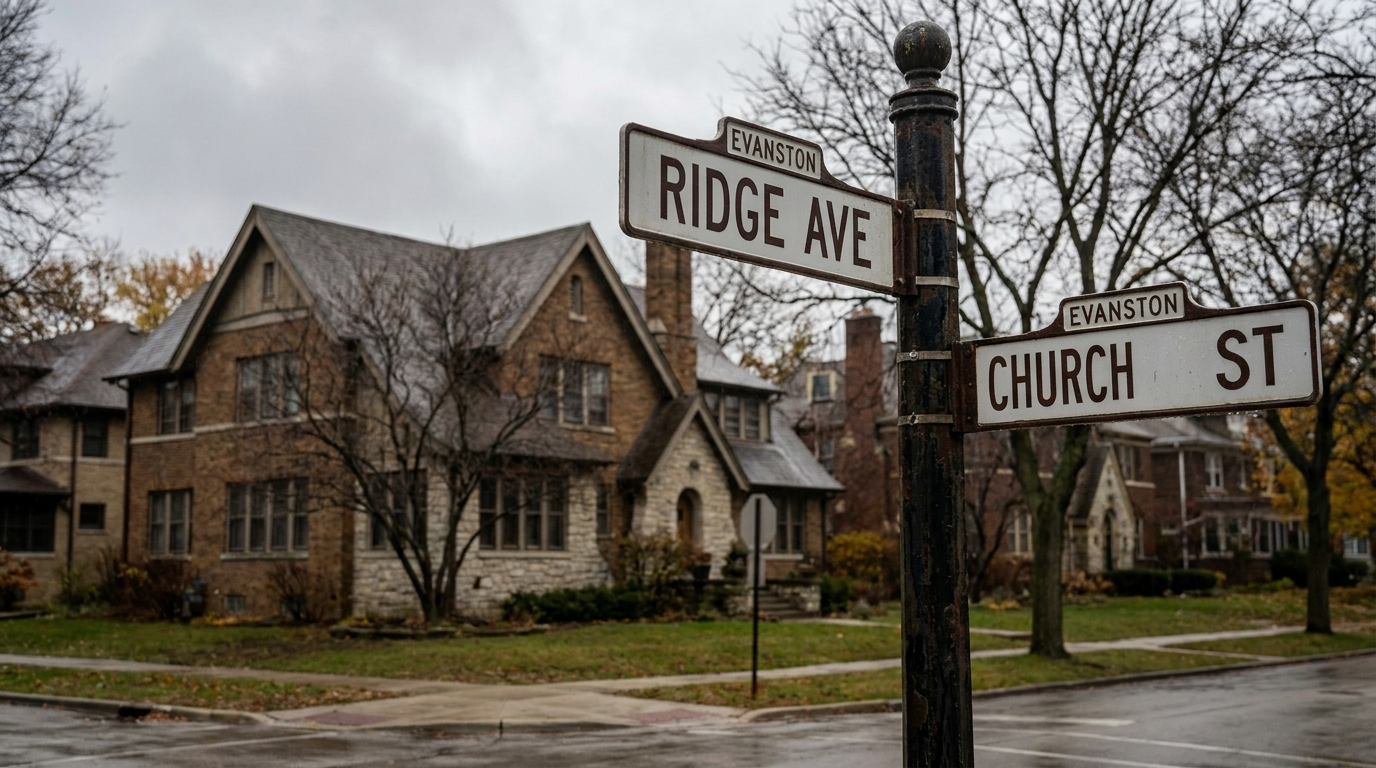
Justice Department Sues to Halt Evanston's First-in-the-Nation Reparations Program
6 sources
Social Media Ban
UK to Ban Social Media for Under-16s in Landmark Tech Crackdown
6 sources
Ukraine War
G7 Leaders Push for Ukraine Peace Deal as Trump Weighs Reimposing Russian Oil Sanctions
6 sources
Reparations Law
Justice Department Sues to Halt Evanston's First-in-the-Nation Reparations Program
6 sources
Every angle. Every day.
Get news politics stories with full source coverage and perspective breakdowns delivered to your inbox.