
Open-Source AI Models Reach Performance Parity, Democratizing Frontier Intelligence
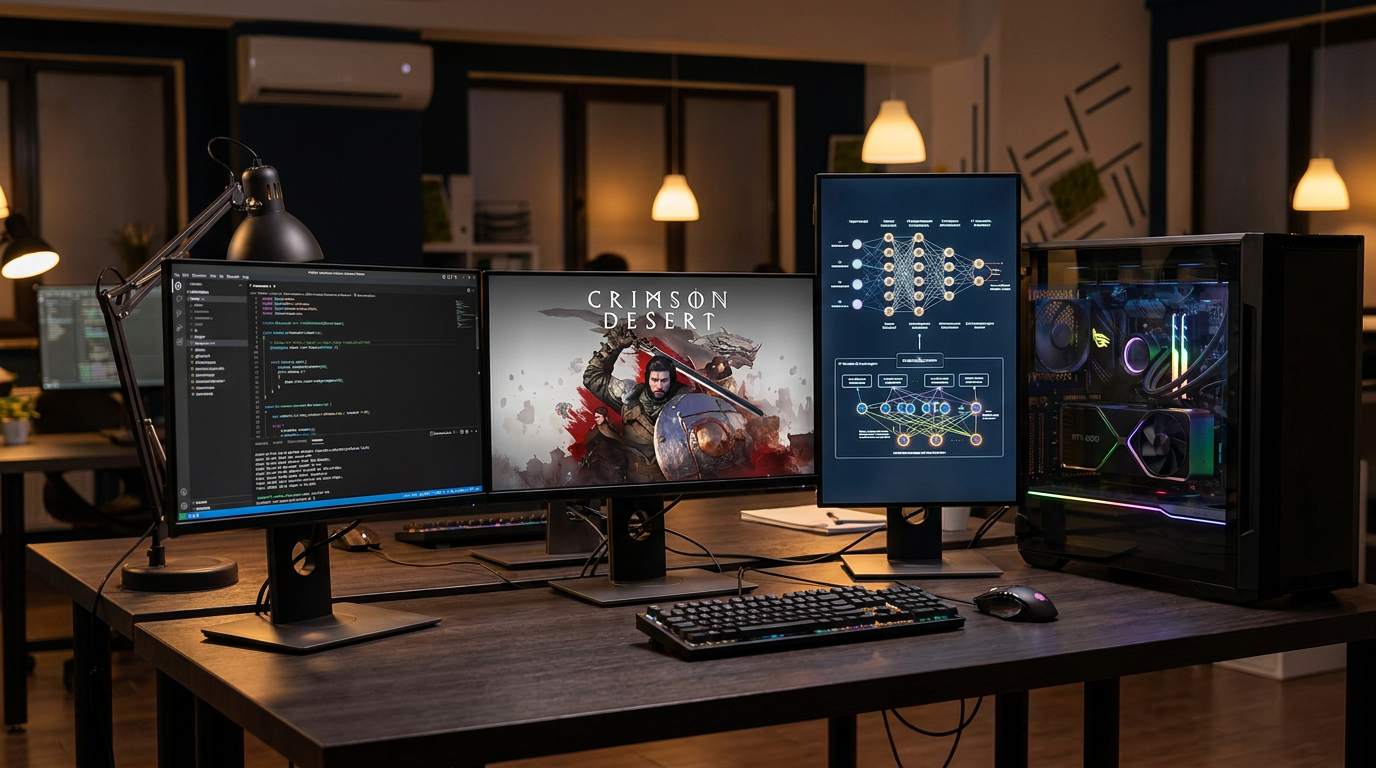
A wave of open-weight AI models released in mid-2026 has successfully matched the performance of proprietary systems, allowing developers to run frontier-level intelligence entirely on consumer hardware.
By Factlen Editorial Team
- Open-Source Advocates
- Argue that open-weight models democratize technology, ensure data privacy, and prevent a few corporations from monopolizing frontier intelligence.
- Enterprise Architects
- Focus on the practical trade-offs, valuing the cost-efficiency of local models but remaining cautious about the operational overhead of self-hosting.
- AI Safety Researchers
- Emphasize that while open models accelerate innovation, they bypass the centralized safety filters and guardrails implemented by proprietary API providers.
What's not represented
- · Cloud API Providers
- · Hardware Supply Chain Analysts
Why this matters
For developers and businesses, the ability to run frontier-level AI on local hardware eliminates the need to pay per-token API fees or send sensitive data to third-party cloud providers. This shift democratizes access to cutting-edge intelligence, allowing anyone with a consumer GPU to build, fine-tune, and deploy highly capable AI agents privately and affordably.
Key points
- Open-source AI models released in mid-2026 have matched or exceeded the performance of proprietary APIs on major industry benchmarks.
- Techniques like GGUF quantization allow massive models up to 32 billion parameters to run locally on single consumer GPUs.
- New architectures, such as the MiniMax M3, feature 1-million-token context windows and native multi-modal computer use capabilities.
- The shift toward local deployment is heavily driven by enterprise demands for data privacy and predictable inference costs.
- While open models eliminate API fees, organizations must now manage the operational overhead of self-hosting and safety alignment.
June 2026 marks a definitive turning point in the artificial intelligence landscape. For years, the industry operated under a simple premise: the most capable AI models lived behind proprietary APIs, while open-source alternatives trailed a generation behind. That narrative has now collapsed. A wave of open-weight models released in mid-2026 has successfully closed the performance gap with closed-source giants, fundamentally reshaping how developers and enterprises deploy frontier intelligence. The shift promises to decentralize AI development, moving power away from a handful of cloud providers and into the hands of individual developers and organizations.[1][2]
The benchmark data underscores the magnitude of this transition. Models like Meta's Llama 4, Mistral Large 2, and DeepSeek-V3 are no longer just "good enough" for cost-sensitive tasks; they are matching or exceeding the capabilities of proprietary systems on rigorous industry evaluations. The newly launched MiniMax M3, for example, represents a monumental shift toward advanced sparse attention mechanism designs. Built entirely on the MiniMax Sparse Attention architecture, the model registers a 59.0% score on the SWE-Bench Pro coding evaluation, exceeding the performance of several premium closed-source APIs.[3][4]
Beyond raw benchmark scores, the architectural capabilities of these open models have expanded dramatically. MiniMax M3 and Alibaba's Qwen 3.5 series now feature native multi-modal computer use capabilities and context windows stretching up to 1 million tokens. This allows the models to process dense streams of video and image inputs while directly interacting with operating system interfaces. Similarly, models like GLM 4.6 are demonstrating native agentic reasoning, enabling them to execute multi-step coding tasks and navigate complex codebases without aggressive summarization.[2][3][5]

The democratization of these frontier capabilities is largely driven by breakthroughs in hardware optimization and model compression. Techniques like GGUF quantization have made it possible to run massive models on commodity hardware without a prohibitive loss in quality. A 32-billion parameter model, quantized to 4-bit precision, can now run comfortably on a single high-end consumer GPU. This optimization has effectively erased the barrier between multi-million-dollar research lab infrastructure and the standard developer workstation.[1][4]
Software frameworks have evolved in tandem to abstract away the friction of local deployment. Tools like Ollama allow developers to pull and run frontier-class models with a single command-line prompt, handling the complexities of GPU memory management automatically. Meanwhile, developer libraries like Hugging Face's smolagents are pivoting toward minimal-abstraction runtimes, enabling models to write and execute raw Python snippets within managed local sandboxes. This tooling ecosystem has made domain-specific fine-tuning accessible to teams without dedicated machine learning engineering departments.[1][3][4]
Software frameworks have evolved in tandem to abstract away the friction of local deployment.
The hardware industry is actively accelerating this localized execution trend. Recognizing the demand for on-premise AI, manufacturers are releasing consumer-grade hardware designed specifically for heavy inference workloads. The NVIDIA RTX Spark Superchip, launched in mid-2026, combines CPU and GPU capabilities with up to 128 GB of unified memory. Delivering a petaflop of AI compute directly to workstation laptops, the hardware is capable of running local models up to 120 billion parameters, eliminating the latency and data egress costs associated with cloud hosting.[3]

For enterprise architects, the migration toward open-source models is driven heavily by data privacy and long-term cost control. Relying entirely on proprietary APIs means sending sensitive corporate data to third-party servers and remaining at the mercy of unpredictable pricing changes. By deploying open-weight models locally or within private cloud instances, organizations retain complete ownership of their data and institutional knowledge. The center of gravity in enterprise AI strategy has shifted from selecting the best API vendor to building internal competency around local model deployment and proprietary fine-tuning.[1][2]
However, the transition from rented APIs to self-hosted infrastructure is not without its trade-offs. Operating open-source models at scale introduces genuine operational overhead. Organizations must take ownership of hardware failures, software updates, scaling challenges, and uptime guarantees—complexities that API providers typically absorb in exchange for higher per-token pricing. For teams lacking robust infrastructure experience, the total cost of ownership mathematics can sometimes flip, making managed services more appealing in the short term.[4]

The proliferation of highly capable open models also raises complex questions regarding safety and alignment. Proprietary models undergo extensive Reinforcement Learning from Human Feedback (RLHF) and centralized safety filtering before reaching the public. Open-weight models, while offering unparalleled transparency and controllability, bypass these centralized guardrails. This places the burden of safety alignment squarely on the developers deploying the models, requiring them to implement their own filtering and ethical constraints based on their specific use cases.[4][6]
Despite these challenges, the momentum behind open-source AI appears irreversible. The ecosystem has matured to a point where starting a new project with a proprietary API is increasingly difficult to justify for teams with the technical capacity to self-host. As 2026 progresses, the defining competitive advantage in the technology sector will likely belong to organizations that can seamlessly integrate, fine-tune, and deploy these open models on their own terms. The era of renting intelligence by the token is steadily giving way to a decentralized, developer-controlled future.[1][5]
How we got here
Early 2024
Open-source models are widely considered a generation behind proprietary APIs, useful primarily for research.
Mid 2025
Models like DeepSeek-V3 and Llama 3 begin closing the performance gap, introducing viable local alternatives for enterprise use.
Early 2026
Quantization techniques and frameworks like Ollama make local deployment accessible to developers without specialized infrastructure.
June 2026
A wave of releases, including MiniMax M3 and GLM 4.6, officially match frontier proprietary models in reasoning and agentic capabilities.
Viewpoints in depth
Open-Source Advocates
Argue that democratized access to frontier intelligence prevents corporate monopolies and ensures data privacy.
For the developer community, the parity achieved by models like Llama 4 and MiniMax M3 represents a victory for technological democratization. Advocates argue that intelligence should be a foundational infrastructure layer, not a rented commodity controlled by a handful of mega-corporations. By making model weights and architectures publicly available, the open-source movement ensures that innovation can happen at the edges of the network. This camp emphasizes that local deployment guarantees absolute data privacy, allowing developers to build highly personalized, context-aware agents without feeding proprietary information into centralized corporate training sets.
Enterprise Architects
Focus on the practical business trade-offs between API convenience and the operational overhead of self-hosting.
While enthusiastic about the capabilities of open models, enterprise IT leaders view the landscape through a lens of total cost of ownership and operational reliability. This camp acknowledges the massive savings on API inference costs but points out the hidden expenses of self-hosting: acquiring high-end GPUs, managing server uptime, and maintaining complex deployment pipelines. For these architects, the decision to adopt open-source AI is less about ideology and more about a calculated business trade-off. They advocate for a hybrid approach, using open models for sensitive, domain-specific tasks while relying on managed APIs for general-purpose, burst-heavy workloads where infrastructure maintenance would be a distraction.
AI Safety Researchers
Warn that open-weight models bypass centralized safety filters, requiring new paradigms for decentralized alignment.
The rapid proliferation of frontier-level open models presents a complex challenge for safety and alignment researchers. This camp warns that releasing raw model weights permanently removes the ability to patch vulnerabilities, update safety filters, or revoke access from malicious actors. While proprietary providers can monitor API usage and intervene if a model is used to generate harmful code or biological threats, open models offer no such centralized oversight. Researchers in this space are urgently calling for new paradigms in decentralized AI safety, arguing that the community must develop robust, verifiable alignment techniques that work even when the model is running entirely offline on a consumer laptop.
What we don't know
- How proprietary API providers will adjust their pricing and business models in response to the open-source surge.
- Whether decentralized safety alignment techniques can effectively prevent the misuse of open-weight models by bad actors.
- How the ongoing global GPU shortage will impact the ability of smaller enterprises to build their own local AI infrastructure.
Key terms
- Quantization
- A technique that reduces the precision of a model's weights (e.g., to 4-bit), significantly lowering the memory required to run it without a major loss in performance.
- Context Window
- The maximum amount of text or data an AI model can process and remember in a single interaction.
- Sparse Attention
- An architectural design that allows an AI model to process massive amounts of information efficiently by only focusing on the most relevant parts of the data.
- Agentic Workflow
- A process where an AI model doesn't just answer questions, but actively plans, uses tools, and executes multi-step tasks autonomously.
Frequently asked
What does 'open-weight' mean in AI?
It means the trained parameters of the model are publicly available, allowing developers to run, modify, and fine-tune the model locally without relying on a proprietary API.
Can I run these models on my personal computer?
Yes, thanks to quantization techniques, models up to 32 billion parameters can run on high-end consumer GPUs, and tools like Ollama make installation as simple as a single command.
How do open-source models compare to GPT-4?
As of mid-2026, top open-source models like Llama 4 and MiniMax M3 match or exceed GPT-4 on standard benchmarks, including complex coding and reasoning tasks.
What are the downsides of using open-source AI?
The primary trade-off is operational overhead. Organizations must manage their own hardware, uptime, and safety alignment rather than outsourcing those tasks to an API provider.
Sources
Source coverage
6 outlets
3 viewpoints surfaced






[1]Towards AIOpen-Source Advocates
The Open Source AI Revolution: How to Build Private, Free, and Powerful Agents in 2026
Read on Towards AI →[2]Plain EnglishEnterprise Architects
The Top Open-Source LLMs in 2026: From Alternatives to Anchors
Read on Plain English →[3]DevFlokersOpen-Source Advocates
Open-Source AI Projects, New Model Releases & Research Papers: June 2026 Roundup
Read on DevFlokers →[4]SkycrumbsEnterprise Architects
The Leading Open Source AI Models in 2026
Read on Skycrumbs →[5]FeatherlessOpen-Source Advocates
Best Open-Source LLMs in 2026
Read on Featherless →[6]arXivAI Safety Researchers
Evaluating Frontier-Level Capabilities in Open-Weight Language Models
Read on arXiv →

More in ai
See all 5 stories →


Every angle. Every day.
Get ai stories with full source coverage and perspective breakdowns delivered to your inbox.