
The End of the Deepfake Guessing Game: How Content Credentials Actually Work
With synthetic media flooding the internet, the tech industry has abandoned unreliable AI detectors in favor of cryptographic 'nutrition labels' that prove an image's origin.
By Factlen Editorial Team
- Provenance Architects
- Argue that cryptographic tracing from the point of capture is the only sustainable way to establish ground truth in a synthetic era.
- Technical Realists
- Emphasize that metadata alone is vulnerable to stripping, advocating for 'soft binding' cloud registries and pixel-level watermarks to ensure durability.
- Regulatory & Compliance Bodies
- Focus on mandatory machine-readable disclosures and platform liability to protect consumers from undisclosed synthetic media.
- Digital Consumers & Analysts
- Focus on the human element of media literacy, noting the learning curve required to correctly interpret new authenticity badges.
What's not represented
- · Privacy advocates concerned about the tracking implications of hardware-level camera signing
- · Open-source AI developers struggling to implement complex cryptographic standards
Why this matters
As AI-generated content floods the internet, the ability to distinguish fact from fiction is no longer a guessing game. Understanding how Content Credentials work is essential for anyone who consumes news, creates digital art, or wants to verify the authenticity of the media they share.
Key points
- Between 40% and 60% of newly indexed web content in 2026 is estimated to be AI-generated or assisted.
- Traditional AI detection tools are failing, prompting a shift toward cryptographic 'Content Credentials.'
- Cameras like the Google Pixel 10 and Leica M11-P now cryptographically sign photos the moment they are taken.
- The EU AI Act requires mandatory machine-readable watermarking for synthetic media starting in August 2026.
- 'Soft binding' technology uses cloud registries to recover an image's provenance even if its metadata is stripped.
The internet of 2026 has crossed a threshold: depending on the metric, between 40% and 60% of newly indexed web content is now AI-generated or substantially AI-assisted. For years, the public relied on visual tells—six-fingered hands, garbled background text, or unnatural lighting—to spot synthetic media. But as generative models achieved flawless photorealism, the cat-and-mouse game of visual detection ended. The new era of digital literacy no longer asks, "Can I spot the fake?" Instead, it asks, "Can you prove this is real?"[4][7]
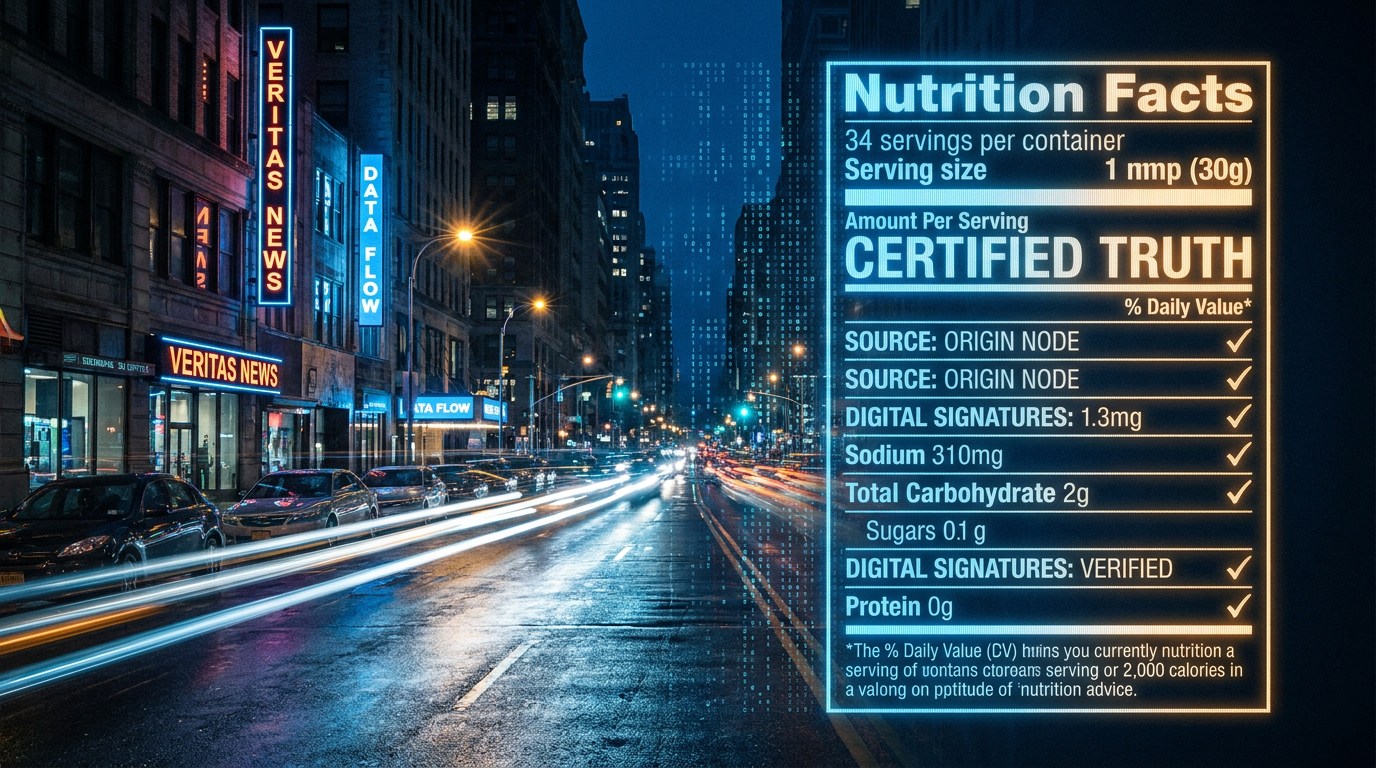
The answer to that question has arrived in the form of Content Credentials. Developed by the Coalition for Content Provenance and Authenticity (C2PA)—an alliance of over 6,000 tech and media companies—Content Credentials act as a cryptographic "nutrition label" for digital files. Rather than trying to catch deepfakes after they go viral, this standard flips the paradigm: it establishes an unbreakable chain of trust from the moment a photo is taken or a video is rendered.[1][2]
The mechanism begins at the hardware level. In 2026, major camera manufacturers have moved provenance technology directly onto the silicon. Devices like the Leica M11-P, Sony's alpha series, and the Google Pixel 10 feature dedicated security chips that cryptographically sign a photo the millisecond the shutter clicks. This initial "manifest" records the device identity, time, and location, locking the ground-truth data into the file before it ever reaches the internet.[5]
As the image moves through the editing process, the Content Credential updates dynamically. If a photographer opens the file in Adobe Lightroom or Photoshop, the software logs every meaningful adjustment. If they use a generative AI tool to expand the background or remove an object, the manifest permanently records the use of that specific AI model. The original file is never overwritten; instead, a tamper-evident history is chained together, allowing anyone to trace the image back to its source.[1][2]

On the synthetic side of the equation, major AI generators like OpenAI's DALL-E 3, Google Gemini, and Adobe Firefly now embed Content Credentials into their outputs by default. These manifests explicitly declare the content as AI-generated. This additive approach is crucial because post-generation "AI detectors"—software designed to guess if a text or image is synthetic—have largely failed.[4]
Independent research in 2026 shows that classifier-based AI detectors hover between 65% and 80% accuracy in real-world scenarios. Worse, they suffer from high false-positive rates, frequently flagging authentic human work—particularly from non-native English speakers—as synthetic. By relying on cryptographic provenance instead of statistical guessing, platforms can establish absolute certainty about a file's origin without falsely accusing creators.[4][7]

However, early implementations of the C2PA standard faced a critical vulnerability known as the "strip attack." Because the cryptographic manifest was stored in the file's metadata, a malicious actor could simply take a screenshot of an AI-generated image, or pass it through a non-compliant app, effectively stripping away the Content Credential and laundering the image into an "unknown" state.[6]
To combat this, the 2026 standard introduced a dual-layer defense: Hard Binding and Soft Binding. Hard binding is the traditional metadata manifest. Soft binding, however, relies on a "perceptual hash"—a digital fingerprint of the image's actual visual layout, stored in a secure cloud registry. Even if a bad actor screenshots the image, crops it, and strips the metadata, platforms can scan the visual fingerprint, match it to the cloud registry, and instantly re-link the image to its original AI disclosure.[6]
To combat this, the 2026 standard introduced a dual-layer defense: Hard Binding and Soft Binding.
This cloud-recovery system is often paired with pixel-level watermarking, such as Google's SynthID. These technologies weave invisible statistical noise directly into the pixels or audio waveforms of generated content. This noise survives heavy compression, color changes, and format conversions, providing a resilient backup signal when metadata is lost.[4][6]

The rapid maturation of these technologies is not just driven by industry goodwill; it is being forced by the regulatory hammer of the European Union. On August 2, 2026, Article 50 of the EU AI Act becomes fully enforceable. This landmark legislation requires that outputs from AI systems be marked in a machine-readable format and detectable as artificially generated.[3][6]
Under the new EU rules, anyone publishing AI-assisted content is legally considered a "deployer" and carries strict disclosure obligations. Social media platforms face fines of up to €10 million or 2% of their global turnover if they fail to label synthetic media. Consequently, networks like Meta, YouTube, and TikTok have implemented aggressive auto-labeling systems, scanning every upload for C2PA manifests, perceptual hashes, and pixel watermarks.[3][6]
Content that lacks machine-readable proof of human origin or proper AI disclosure is increasingly being algorithmically demoted or shadowbanned to minimize platform liability. For digital creators, adopting Content Credentials is no longer an optional transparency exercise; it is a mandatory compliance protocol required to maintain reach and monetization.[6]
Despite the technical triumphs, a significant human-perception problem remains. User experience studies in early 2026 revealed a frustrating irony: when consumers saw the small "CR" (Content Credential) icon on a verified, authentic photograph, many mistakenly assumed the badge meant the image was AI-generated. Public education campaigns are now racing to teach users that the credential is a mark of verified reality, not a warning label.[5][7]

It is also vital to understand what a missing credential means. Because billions of legacy photos exist from before the C2PA standard, and because many budget smartphones do not yet support hardware signing, the absence of a Content Credential does not prove an image is fake. It simply means the file belongs to the "unverified web," requiring traditional critical thinking to evaluate.[1][2]
We are witnessing the bifurcation of the internet. On one side is the authenticated web, where cryptographic signatures guarantee the origin of news photography, financial documents, and official communications. On the other is the unverified web, a chaotic mix of legacy media, synthetic art, and untraceable content. By making provenance transparent and accessible, Content Credentials are finally giving users the tools to navigate this divide with confidence.[2][7]
How we got here
Feb 2021
The Coalition for Content Provenance and Authenticity (C2PA) is founded by Adobe, Microsoft, Intel, and others.
Oct 2023
Leica releases the M11-P, the world's first consumer camera with built-in hardware C2PA signing.
Aug 2024
The European Union AI Act officially enters into force, setting the clock for compliance.
Sep 2025
Google launches the Pixel 10, bringing hardware-backed Content Credentials to mainstream smartphones.
Aug 2026
Article 50 of the EU AI Act becomes fully enforceable, mandating machine-readable AI transparency.
Viewpoints in depth
Provenance Architects
The coalition building the technical infrastructure for digital trust.
This camp, led by the C2PA and the Content Authenticity Initiative, argues that the internet can no longer rely on post-publication detection to fight misinformation. They believe that cryptographic tracing from the point of capture is the only sustainable way to establish ground truth. By turning authenticity into an opt-in, verifiable standard, they aim to protect human creators and provide consumers with absolute certainty about the media they consume.
Regulatory & Compliance Bodies
Policymakers enforcing transparency through legal mandates.
European regulators view synthetic media not just as a technical challenge, but as a systemic societal risk. Through Article 50 of the AI Act, they are shifting the burden of proof onto creators and platforms. This viewpoint insists that voluntary watermarking is insufficient; machine-readable disclosures must be legally mandatory, backed by massive financial penalties for platforms that fail to label AI-generated content appropriately.
Technical Realists
Security researchers focused on the vulnerabilities of metadata.
While supportive of the C2PA standard, this group highlights the fragility of 'hard binding' metadata, which can be easily stripped by screenshots or non-compliant apps. They argue that true provenance requires 'soft binding'—cloud-based perceptual registries—and resilient pixel-level watermarking like Google's SynthID. For this camp, a standard is only as good as its ability to survive adversarial tampering in the wild.
What we don't know
- Whether consumer education can successfully decouple the 'Content Credential' icon from the assumption that the media is AI-generated.
- How strictly the EU will enforce Article 50 penalties on smaller, open-source AI platforms compared to tech giants.
Key terms
- C2PA Manifest
- A cryptographically signed data structure embedded in a file that records its origin, edits, and whether AI was used.
- Content Credentials
- The consumer-facing 'nutrition label' for digital media, based on the C2PA standard, showing a file's verifiable history.
- Hard Binding
- The practice of embedding cryptographic signatures directly into a digital file's metadata.
- Soft Binding
- Storing a perceptual hash of an image in a cloud registry, allowing its provenance to be recovered even if the file's metadata is stripped.
- Perceptual Hash
- A digital fingerprint of an image's visual content, rather than its underlying code, which remains identifiable even after cropping or compression.
- Deployer
- Under the EU AI Act, any individual or organization that publishes AI-assisted content, carrying legal obligations for transparency.
Frequently asked
Does a missing Content Credential mean an image is AI-generated?
No. Billions of legacy photos and images from older cameras lack credentials. It simply means the file's origin cannot be cryptographically verified.
Can AI watermarks be removed by taking a screenshot?
Basic metadata can be stripped, but 2026 standards use 'soft binding' (cloud registries) and pixel-level noise that survive screenshots and compression.
Do I need a special camera to use Content Credentials?
While newer cameras like the Pixel 10 and Leica M11-P sign photos automatically, you can also apply credentials using software like Adobe Photoshop or Lightroom.
What happens if social media platforms ignore these standards?
Under the EU AI Act, platforms face fines of up to €10 million or 2% of global turnover if they fail to provide machine-readable transparency for synthetic media.
Sources
Source coverage
7 outlets
4 viewpoints surfaced







[1]C2PA.orgProvenance Architects
Coalition for Content Provenance and Authenticity: 2026 Technical Specifications
Read on C2PA.org →[2]Content Authenticity InitiativeProvenance Architects
Advancing Digital Content Transparency and Authenticity
Read on Content Authenticity Initiative →[3]EU AI Act DocumentationRegulatory & Compliance Bodies
Article 50: Transparency obligations for providers and deployers of certain AI systems
Read on EU AI Act Documentation →[4]AI Magicx ResearchTechnical Realists
The State of AI Content Detection and Provenance in 2026
Read on AI Magicx Research →[5]C2PA Viewer TrackerTechnical Realists
C2PA Hardware Adoption: 2026 Camera and Smartphone Implementations
Read on C2PA Viewer Tracker →[6]Tech Plus TrendsTechnical Realists
The 2026 Content Gap: Watermarking Is Not Optional
Read on Tech Plus Trends →[7]Factlen Editorial TeamDigital Consumers & Analysts
Synthesis by Factlen editorial team
Read on Factlen Editorial Team →

Every angle. Every day.
Get meta stories with full source coverage and perspective breakdowns delivered to your inbox.