
SpaceX Shatters Records With $75 Billion IPO and Unprecedented Options Trading Debut
SpaceX's historic public market debut vaulted the company to a $2.1 trillion valuation, triggering a massive influx of international retail investment and record-breaking options trading.
By Factlen Editorial Team
- Retail Speculators
- Retail investors utilizing options and secondary market purchases to bet on rapid, outsized gains.
- Cautious Market Strategists
- Financial analysts warning of the risks associated with unprecedented volatility and speculative derivatives trading.
- Long-Term Space Bulls
- Institutional investors and analysts focused on SpaceX's fundamental business model and total addressable market.
What's not represented
- · Traditional Aerospace Competitors
- · Index Fund Managers
Why this matters
The successful public listing of SpaceX opens the commercial space economy and advanced AI infrastructure to everyday investors for the first time. It also sets a highly bullish precedent for the broader technology sector, paving the way for other mega-cap private companies to enter the public markets.
Key points
- SpaceX executed the largest initial public offering in history, raising $75 billion at a $135 share price.
- The stock closed its first day of trading up 19%, pushing the company's valuation past $2.1 trillion and making Elon Musk the world's first trillionaire.
- South Korean retail investors poured an estimated $800 million into the stock on day one after being shut out of the initial allocation.
- The debut of SpaceX options shattered market records, with over one million contracts traded amid heavy bullish speculation.
- The company's valuation is anchored by a projected $28.5 trillion total addressable market spanning satellite internet, space logistics, and AI infrastructure.
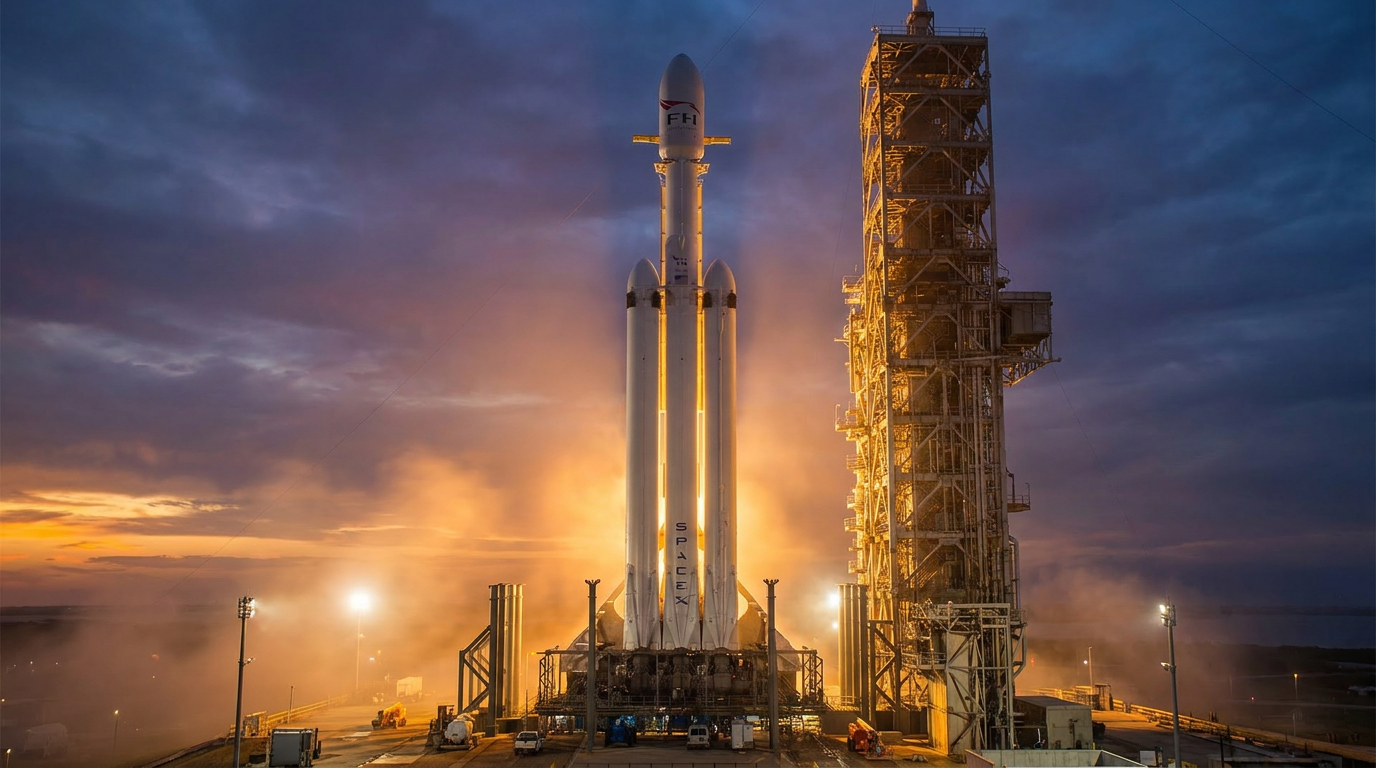
After nearly two and a half decades as a private enterprise, SpaceX has executed the largest initial public offering in the history of the stock market, fundamentally reshaping the landscape of mega-cap equities. The aerospace and satellite internet giant raised a staggering $75 billion by offering 555.5 million shares to the public. The sheer scale of the offering immediately vaulted SpaceX into the upper echelons of global corporate valuations, cementing a market capitalization that eclipsed $2.1 trillion by the end of its first day of trading. The debut not only validated the company's ambitious multiplanetary mission but also triggered a seismic reallocation of capital across global markets as institutional and retail investors scrambled for exposure.[3][4][8]
The highly anticipated Nasdaq listing, trading under the ticker SPCX, defied conventional IPO mechanics. Rather than offering a traditional price range, SpaceX presented an "accept-it-or-leave-it" price of $135 per share, which was met with overwhelming demand that oversubscribed the offering by nearly four times. When public trading officially commenced just before noon on Friday, the stock opened at $150—an immediate 11% premium. A wave of buying pressure quickly drove the price to an intraday high of $176 before shares settled at roughly $161 at the closing bell. This 19% first-day pop solidified SpaceX as the seventh-largest firm in the world, ranking ahead of established titans like Broadcom, Saudi Aramco, and Tesla.[3][4]

The frenzy surrounding the equity debut was quickly matched by unprecedented activity in the derivatives market. When SpaceX options officially launched on Tuesday, trading volume shattered all existing records for a first-day listing. According to executives at Cboe Global Markets, contracts were changing hands at a rate of 10,000 per minute during the early hours of the session. By the end of the day, over one million options contracts had been traded, completely obliterating the previous first-day record of 364,000 contracts set by Meta in 2012.[5]
The options flow revealed a distinctly aggressive posture among retail and institutional traders, who gravitated heavily toward bullish call options. Data from financial clearinghouses indicated a put-call ratio of approximately 0.7, meaning that bets on the stock rising outpaced bets on it falling by a wide margin. The most popular contracts were calls with a $220 strike price expiring within days. This massive concentration of upside bets has sparked discussions of a potential "gamma squeeze," a phenomenon where market makers are forced to purchase the underlying stock to hedge the call options they have sold, thereby creating a self-reinforcing cycle of upward price momentum.[2][5]
While domestic enthusiasm was intense, the most striking demand shock originated from overseas. South Korean retail investors, colloquially known as "seohak ants" for their aggressive coordination in U.S. equities, poured an estimated $800 million (roughly 1.2 trillion won) into SpaceX shares on the very first day of trading. This single-day net purchase volume was entirely unprecedented for the South Korean market, exceeding the cumulative three-month net buying of any other U.S. equity by Korean retail traders. To put the scale into perspective, the previous daily record was a $514 million inflow into a leveraged semiconductor ETF earlier in the month.[1][6][7]

While domestic enthusiasm was intense, the most striking demand shock originated from overseas.
The massive South Korean influx into the secondary market was largely driven by a complete lockout during the primary offering. Despite intense local interest, Mirae Asset Securities—the only South Korean member of the underwriting syndicate—failed to secure any share allocation for its domestic clients. Shut out of the IPO, retail investors and local asset managers were forced to aggressively purchase shares on the open market the moment trading began. The resulting liquidity drain was so severe that it generated an estimated $1.5 billion in dollar-buying demand, placing noticeable downward pressure on the South Korean won.[1][6]
Beyond the immediate market mechanics, the IPO represents a watershed moment for personal wealth and corporate power. The successful listing officially made SpaceX founder and CEO Elon Musk the world's first trillionaire. Controlling roughly half of the company's outstanding shares, Musk's net worth surged past the $1.1 trillion mark, adding to a fortune already heavily anchored by his $300 billion stake in Tesla. The public offering also served as a massive liquidity event for thousands of current and former SpaceX employees, turning early engineers and staff into newly minted millionaires.[3][4][8]
Investors justifying the astronomical $2.1 trillion valuation point to SpaceX's unparalleled dominance in the commercial space economy and its rapidly expanding technological footprint. In its regulatory filings, the company outlined a total addressable market of $28.5 trillion. This staggering figure encompasses an $870 billion market for its traditional broadband business, $740 billion for Starlink's direct-to-cell mobile unit, and a massive $2.4 trillion opportunity in artificial intelligence infrastructure, fueled by synergies with Musk's AI startup, xAI. For many long-term bulls, SpaceX is no longer just a rocket manufacturer, but the foundational infrastructure layer for the next century of global connectivity.[4][8]

However, the sheer velocity of the stock's ascent has prompted sharp warnings from market strategists. Derivatives analysts have cautioned that the current options pricing signals "expensive" and "dangerous" bets, particularly given the lack of historical volatility data to anchor the pricing models. The "implied volatility discovery phase"—the period where market makers guess at the stock's future swings without past data—has resulted in exceptionally wide bid-ask spreads. Skeptics warn that the heavy reliance on short-term call options makes the stock highly vulnerable to sudden, violent pullbacks if the speculative fervor cools or if early investors decide to lock in their substantial gains.[2]
Looking ahead, the successful integration of SpaceX into the public markets is expected to have profound ripple effects across the technology sector. The company's massive market capitalization guarantees its eventual inclusion in major benchmark indices, which will force passive mutual funds and ETFs to purchase billions of dollars in shares regardless of price. Furthermore, the overwhelming appetite for SpaceX's debut has set a highly bullish precedent for other mega-cap private technology firms. With artificial intelligence leaders like OpenAI and Anthropic reportedly preparing for their own public offerings later this year, the SpaceX IPO may be remembered as the catalyst that reignited a historic boom in public market capital formation.[3][8]
How we got here
April 2026
SpaceX confidentially files draft registration documents with the SEC.
May 20, 2026
The SEC publicly discloses SpaceX's S-1 prospectus, revealing the company's internal finances.
June 11, 2026
SpaceX finalizes its IPO price at $135 per share, raising $75 billion.
June 12, 2026
SpaceX shares begin trading on the Nasdaq, closing at approximately $161 and cementing a $2.1 trillion valuation.
June 16, 2026
SpaceX options officially launch, shattering first-day trading volume records with over one million contracts.
Viewpoints in depth
Retail Speculators
Retail investors utilizing options and secondary market purchases to bet on rapid, outsized gains.
This camp, heavily represented by South Korean "seohak ants" and domestic options traders, views SpaceX as a generational wealth-building opportunity. Shut out of the initial IPO allocation, these investors flooded the secondary market and the derivatives exchange, purchasing over a million options contracts on day one. Their strategy relies heavily on bullish call options, betting that the stock's momentum will trigger a gamma squeeze and drive prices exponentially higher in the short term.
Cautious Market Strategists
Financial analysts warning of the risks associated with unprecedented volatility and speculative derivatives trading.
Market strategists and derivatives experts emphasize the dangers of the current trading environment. They point out that without historical data to anchor implied volatility, the options market is currently in a "discovery phase" characterized by wide bid-ask spreads and expensive premiums. This camp warns that the heavy concentration of short-term call options creates a fragile market structure, leaving retail investors highly exposed to sudden, violent pullbacks if the initial speculative momentum begins to wane.
Long-Term Space Bulls
Institutional investors and analysts focused on SpaceX's fundamental business model and total addressable market.
For long-term bulls, the initial price volatility is secondary to SpaceX's foundational role in the future global economy. This perspective anchors the $2.1 trillion valuation in the company's stated $28.5 trillion total addressable market. They argue that SpaceX's near-monopoly on reusable rocket launches, combined with Starlink's rapidly expanding global internet infrastructure and the company's emerging role in artificial intelligence data centers, justifies the historic premium. To this camp, SpaceX is not just an aerospace company, but the ultimate infrastructure play for the next technological era.
What we don't know
- How the stock will perform once the initial speculative fervor and options-driven "gamma squeeze" dynamics subside.
- The exact timeline for SpaceX's inclusion in major benchmark indices like the S&P 500, which would trigger massive mandatory institutional buying.
- How traditional aerospace and defense contractors will adjust their market strategies now that SpaceX has access to public market capital.
Key terms
- Initial Public Offering (IPO)
- The process by which a private company offers shares to the public for the first time, allowing everyday investors to buy ownership stakes.
- Call Option
- A financial contract that gives an investor the right, but not the obligation, to buy a stock at a specified price within a specific time period, typically used to bet that the stock price will rise.
- Put-Call Ratio
- A measurement of trading volume in put options (bets that a stock will fall) versus call options (bets that it will rise); a ratio below 1.0 indicates bullish sentiment.
- Gamma Squeeze
- A rapid increase in a stock's price caused by market makers buying shares to cover their risk as investors purchase large volumes of call options.
- Total Addressable Market (TAM)
- The overall revenue opportunity available for a product or service if 100% market share is achieved.
Frequently asked
What was the SpaceX IPO price?
SpaceX priced its initial public offering at $135 per share, though it opened for trading on the Nasdaq at $150 and closed its first day near $161.
How much did SpaceX raise in its IPO?
The company raised $75 billion by selling 555.5 million shares, making it the largest IPO in stock market history.
Why did South Korean investors buy so much stock?
South Korean retail investors, known as "seohak ants," were shut out of the initial IPO allocation, leading them to aggressively purchase over $800 million worth of shares on the open market during the first day of trading.
What is a gamma squeeze?
A gamma squeeze occurs when heavy buying of call options forces market makers to buy the underlying stock to hedge their positions, driving the share price even higher.
Sources
Source coverage
8 outlets
3 viewpoints surfaced








[1]BloombergCautious Market Strategists
SpaceX Drew $800 Million From Korean Investors on Trading Debut
Read on Bloomberg →[2]CNBCCautious Market Strategists
SpaceX options debut signals 'expensive' and 'dangerous' bets, strategist says
Read on CNBC →[3]The GuardianLong-Term Space Bulls
SpaceX makes biggest stock market debut in history, putting Musk on course to be trillionaire
Read on The Guardian →[4]ForbesLong-Term Space Bulls
SpaceX Opened Trading At $150 Following Largest-Ever IPO
Read on Forbes →[5]MorningstarRetail Speculators
Investors pile into moonshot SpaceX bets as first-day options trading shatters records
Read on Morningstar →[6]KED GlobalRetail Speculators
Korean retail investors pile into SpaceX bets with close to $900 mn buying spree on IPO debut
Read on KED Global →[7]Chosun IlboRetail Speculators
Korean retail investors trading U.S. stocks bought more than 1 trillion won worth of SpaceX shares
Read on Chosun Ilbo →[8]Zacks Investment ResearchLong-Term Space Bulls
SpaceX IPO broke records, raising $75 billion and creating one of the world's most valuable companies
Read on Zacks Investment Research →

More in business
See all 5 stories →SpaceX IPO
SpaceX Completes Historic $75 Billion IPO, Valuing Aerospace and AI Giant at Over $2 Trillion
8 sources
SpaceX IPO
SpaceX Shatters Market Records With $2 Trillion IPO and Unprecedented Options Debut
8 sources
Space Economy
How the SpaceX Public Debut is Catalyzing a New Generation of Aerospace Entrepreneurs
7 sources
Every angle. Every day.
Get business stories with full source coverage and perspective breakdowns delivered to your inbox.