
Intermittent Fasting vs. Calorie Counting: Clinical Trials Reveal Which Weight Loss Method Actually Works
Recent long-term clinical trials and meta-analyses show that time-restricted eating and continuous calorie restriction produce identical weight loss results, shifting the focus from physiological superiority to behavioral adherence.
By Factlen Editorial Team

- Clinical Consensus
- Argues that total caloric deficit is the primary driver of weight loss, making long-term adherence the only metric that matters.
- Time-Restricted Advocates
- Values the psychological simplicity of setting a clock over the burden of logging food, pointing to natural calorie reductions.
- Traditional Trackers
- Prefers the flexibility to eat at any hour, relying on data and portion control to guarantee a caloric deficit.
What's not represented
- · Eating Disorder Specialists
- · Sports Nutritionists
Why this matters
Millions of people struggle with the psychological burden of dieting, often failing because they choose a method that fights their natural lifestyle. Understanding that both fasting and tracking yield the exact same physiological results allows you to choose the method that requires the least mental effort for your specific personality.
Key points
- Long-term clinical trials show intermittent fasting and calorie counting produce identical weight loss.
- Both methods successfully reduce body fat, lower blood pressure, and improve blood sugar control.
- Time-restricted eating naturally reduces daily intake by roughly 400 calories without the need for tracking.
- The best dietary approach depends entirely on an individual's schedule, psychology, and tracking fatigue.
For decades, the golden rule of weight loss was a mathematical equation: calories in versus calories out. The prescription was continuous calorie restriction, requiring individuals to meticulously track every meal, snack, and beverage to maintain a daily energy deficit.
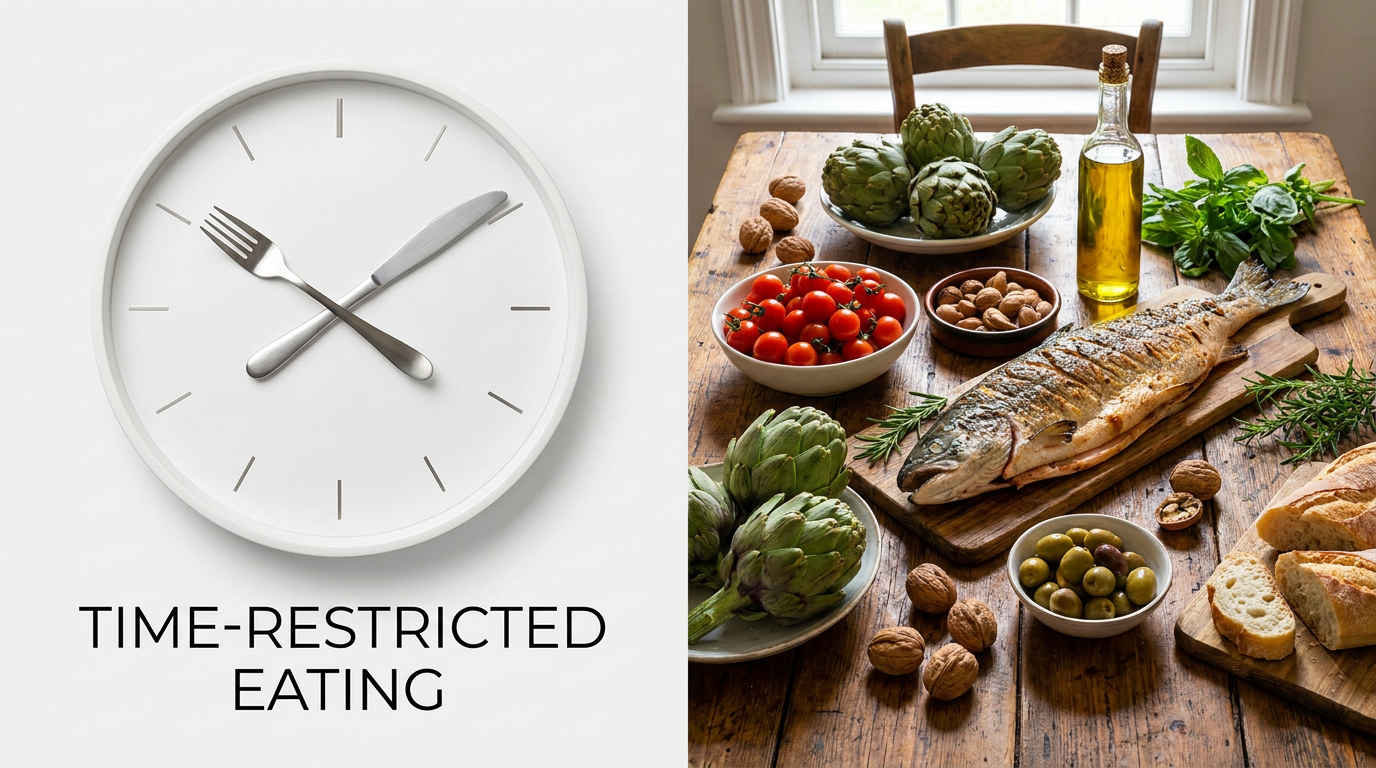
In recent years, a radically different philosophy has captured the public imagination. Intermittent fasting, specifically time-restricted eating, shifted the focus from what and how much we eat to when we eat. By confining meals to a strict six- or eight-hour window, advocates promised weight loss without the psychological burden of a food diary.
This ideological split created two distinct camps in the wellness world: the traditional trackers who rely on data, and the fasting advocates who rely on the clock. But as millions of people choose sides, clinical researchers have spent the last few years putting both methods head-to-head in rigorous, long-term trials to determine which approach actually delivers superior results.
The clinical reality, synthesized in a wave of 2025 and 2026 meta-analyses, offers a definitive answer that bridges the divide. When evaluated over a 12-month period, the two methods result in virtually identical weight loss. The science reveals that time-restricted eating is not a metabolic magic trick, but rather a highly effective behavioral tool for achieving the exact same caloric deficit as traditional tracking.[2]

A landmark trial published in the New England Journal of Medicine tracked patients with obesity over a full year, assigning them to either an eight-hour eating window or a traditional daily calorie restriction. The results were remarkably parallel. The fasting group lost an average of 8.0 kilograms, while the calorie-counting group lost 6.3 kilograms. The 1.8-kilogram net difference was not statistically significant, proving that both methods are highly effective pathways to the same destination.[1]
A comprehensive network meta-analysis published in the BMJ confirmed these findings across dozens of trials. Whether participants counted calories or watched the clock, the average weight loss hovered between five and eight percent of total body weight over six to twelve months. Furthermore, both groups saw identical improvements in waist circumference, body fat percentage, and lean muscle retention.[2]
To understand how to choose between the two, a side-by-side trade-off analysis is required. When evaluating continuous calorie restriction, the primary argument for the approach is its absolute flexibility. Practitioners can eat at any hour of the day, accommodating late dinners, early breakfasts, and unpredictable social schedules, provided they stay under their numerical ceiling.[5]
The argument against continuous restriction is the sheer psychological friction of data entry. Weighing ingredients, scanning barcodes, and calculating portion sizes requires relentless daily vigilance. Over time, this friction often leads to tracking fatigue, causing individuals to abandon the diet entirely when the mental math becomes too exhausting.[5]
The evidence for continuous restriction remains ironclad: it works reliably when adhered to. Clinical data shows that a 25 percent reduction in daily energy intake consistently yields steady fat loss and improves cardiovascular markers. However, adherence rates in clinical trials often drop to around 60 percent by the 12-month mark, highlighting the difficulty of long-term execution.[4]

The evidence for continuous restriction remains ironclad: it works reliably when adhered to.
Conversely, when evaluating time-restricted eating, the primary argument for the approach is its profound simplicity. There is no math, no food scale, and no barcode scanner. By simply closing the kitchen at 8:00 p.m. and skipping breakfast, individuals naturally eliminate late-night snacking and reduce their overall intake.[5]
The argument against time-restricted eating is its rigidity in social and professional settings. A strict eight-hour window can make morning coffee meetings or late family dinners difficult to navigate. Furthermore, some individuals compensate for the fasting period by binge-eating highly caloric foods during their open window, entirely negating the deficit.[5]
The evidence supporting time-restricted eating is compelling precisely because of its behavioral impact. Trials show that confining meals to an eight-hour window naturally causes participants to reduce their intake by an average of 400 calories per day, matching the deficit achieved by meticulous trackers. Notably, one 12-month trial reported an 87 percent adherence rate to the fasting window, suggesting it may be a more sustainable habit for certain personality types.[4]
Beyond the scale, the trade-off analysis must account for metabolic health. Both methods significantly lower blood pressure, reduce cholesterol, and improve overall cardiometabolic risk factors. A trial published in JAMA Network Open specifically looked at adults with Type 2 diabetes and found that both strategies effectively lowered HbA1c levels.[3]
There is a slight nuance in the short-term data regarding insulin. Some studies indicate that intermittent fasting provides a minor, short-term advantage in improving insulin sensitivity, likely because the extended fasting window gives the pancreas a longer resting period. However, by the six-month and 12-month marks, the continuous calorie restriction group catches up, resulting in a metabolic tie.[1][2]

Quality of life and mood are also critical factors in this comparison. A secondary analysis by the National Institutes of Health measured depression, tension, and fatigue across both dietary groups over a year. The findings were entirely neutral: neither counting calories nor watching the clock negatively impacted mood or quality of life, debunking the myth that fasting inherently causes irritability or that tracking inherently causes anxiety.[4]
Ultimately, the scientific consensus has shifted away from declaring a universal winner and toward personalized behavioral matching. Because the physiological results are identical, the best diet is entirely dependent on an individual's psychological relationship with food, their daily schedule, and their tolerance for rules.[5]
Continuous calorie restriction fits well when an individual thrives on data, prefers grazing on smaller meals throughout the day, or has a highly variable schedule that makes strict meal times impossible. It is the optimal choice for athletes who need to fuel workouts at specific times, or for those who find comfort in the flexibility of eating whatever they want, provided it fits their numerical budget.[5]
Conversely, continuous restriction does not fit when a person experiences tracking fatigue, has a history of obsessing over food numbers, or finds portion control impossible once they start eating. For these individuals, the constant presence of a food diary becomes a barrier rather than a tool.[5]
Time-restricted eating fits well when an individual prefers eating larger, more satisfying meals rather than small portions, or when they struggle with late-night snacking. It is highly effective for people who want a binary rule rather than a sliding scale of caloric math, offering a sense of freedom during the eating window.[5]
However, time-restricted eating does not fit when an individual has a medical condition requiring food with medication, a history of eating disorders, or a lifestyle that demands late-night social dinners. In the end, the science is clear: whether you use a calculator or a clock, the body responds to the deficit, leaving the choice entirely in the hands of the individual.[5]
How we got here
Pre-2010s
Continuous calorie restriction stands as the undisputed gold standard for medical weight loss.
2012
Intermittent fasting gains mainstream popularity, promising superior metabolic benefits.
2022
The New England Journal of Medicine publishes a landmark 12-month trial showing identical weight loss between the two methods.
2025
A comprehensive BMJ network meta-analysis confirms that neither method is physiologically superior for long-term weight reduction.
Viewpoints in depth
Clinical Consensus
Medical researchers argue that the mechanism of weight loss is identical, making adherence the only variable that matters.
The prevailing view among obesity researchers and endocrinologists is that the laws of thermodynamics remain undefeated. Whether a person skips breakfast or meticulously weighs their chicken breast, the resulting weight loss is driven entirely by the caloric deficit. Because the physiological outcomes are identical, clinicians now emphasize personalized behavioral matching—prescribing the diet that the patient is most likely to stick with for years, rather than months.
Time-Restricted Advocates
Fasting proponents highlight the psychological relief of abandoning food scales and calorie-tracking apps.
Advocates for time-restricted eating argue that modern humans suffer from tracking fatigue. They point out that continuous calorie restriction requires a level of daily data entry that is unnatural and exhausting. By simply setting a clock, individuals can achieve the same 400-calorie daily deficit without ever opening an app. Furthermore, they emphasize the short-term benefits of giving the digestive system and pancreas a prolonged daily resting period to improve insulin sensitivity.
Traditional Trackers
Calorie-counting advocates value the flexibility to eat at any hour, relying on data to guarantee results.
Those who favor continuous calorie restriction argue that time-restricted eating is a blunt instrument that can easily fail if a person overeats during their open window. By tracking calories, individuals have the absolute certainty of a deficit. This camp values the flexibility to eat a late dinner with family or an early breakfast before a workout, arguing that portion control is a more sustainable lifelong skill than skipping meals entirely.
What we don't know
- Whether specific genetic profiles make certain individuals more responsive to fasting versus continuous restriction.
- The multi-decade effects of time-restricted eating on muscle mass retention as individuals age.
Key terms
- Time-Restricted Eating (TRE)
- A form of intermittent fasting where all daily calories are consumed within a specific window, typically 8 to 10 hours, with water-only fasting for the remainder.
- Continuous Calorie Restriction (CCR)
- The traditional dietary approach of reducing total daily energy intake by a set percentage across all meals, requiring portion control and tracking.
- Cardiometabolic Risk Factors
- Health markers including blood pressure, cholesterol, and blood sugar that indicate a person's risk for heart disease and diabetes.
- Ad libitum diet
- An eating pattern where an individual consumes food freely according to their natural appetite, without intentionally restricting calories or timing.
Frequently asked
Does intermittent fasting burn more fat than calorie counting?
No. Clinical trials show that when total calories are equal, both methods result in identical fat loss and lean mass retention over a 12-month period.
Do I need to count calories if I do intermittent fasting?
Not necessarily. Studies show that restricting the eating window to 8 hours naturally causes most people to reduce their intake by about 400 calories per day without tracking.
Which method is better for blood sugar control?
Both methods significantly improve HbA1c and insulin sensitivity. While fasting shows a slight short-term edge for fasting insulin, long-term outcomes are equivalent.
Sources
Source coverage
5 outlets
3 viewpoints surfaced





[1]The New England Journal of MedicineClinical Consensus
Calorie Restriction with or without Time-Restricted Eating in Weight Loss
Read on The New England Journal of Medicine →[2]BMJClinical Consensus
Effect of intermittent versus continuous calorie restriction on body weight: a network meta-analysis
Read on BMJ →[3]JAMA Network OpenTime-Restricted Advocates
Effect of Time-Restricted Eating on Weight Loss in Adults With Type 2 Diabetes
Read on JAMA Network Open →[4]National Institutes of HealthTime-Restricted Advocates
Effects of Time-Restricted Eating versus Daily Calorie Restriction on Mood and Quality of Life
Read on National Institutes of Health →[5]Factlen Editorial TeamTraditional Trackers
Synthesis by Factlen editorial team
Read on Factlen Editorial Team →
Every angle. Every day.
Get fitness stories with full source coverage and perspective breakdowns delivered to your inbox.