
How the Price Gap Between New and Existing Homes Vanished in 2026
The historical price premium for newly built homes has evaporated in 2026, forcing buyers to weigh builder incentives and energy savings against the location and character of existing properties.
By Factlen Editorial Team
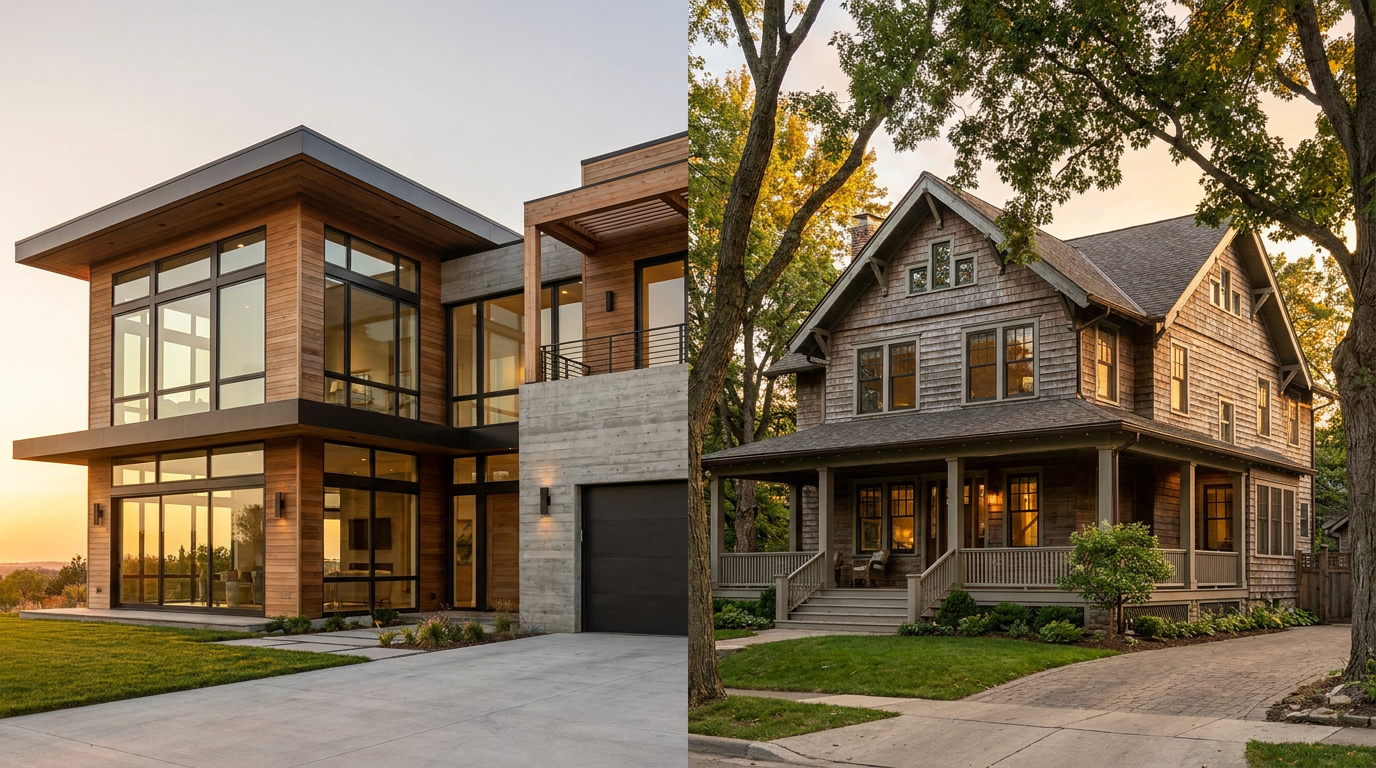
- New Construction Advocates
- Argue that modern energy standards, builder warranties, and financing incentives make new builds the smarter financial choice.
- Resale Market Proponents
- Emphasize the value of established neighborhoods, faster move-in timelines, and the architectural character of existing homes.
- Market Analysts
- Focus on the macroeconomic shift, noting how supply shortages and construction costs have temporarily erased the historical price premium of new homes.
What's not represented
- · Renters priced out of both markets
- · Local zoning board officials
Why this matters
For the first time in decades, the price gap between new and existing homes has nearly vanished, fundamentally changing the math for homebuyers. Understanding the hidden costs and incentives of both options is critical to avoiding a six-figure mistake and securing a monthly payment you can actually afford.
Key points
- The median price of existing homes briefly surpassed new construction in early 2026.
- Builders are offering aggressive mortgage rate buydowns to offset higher interest rates.
- New homes offer an estimated $25,335 in utility and maintenance savings over ten years.
- Existing homes provide faster 30- to 60-day move-in timelines compared to 6-18 months for new builds.
- Mature neighborhoods and urban proximity remain the strongest advantages of the resale market.
For decades, the American real estate market operated on a reliable rule of thumb: buying a brand-new home was a luxury that commanded a steep premium, while purchasing an existing home was the frugal, practical choice. In 2026, that conventional wisdom has been entirely upended. A severe shortage of resale inventory, combined with aggressive maneuvering by homebuilders, has fundamentally altered the financial calculus of buying a home. For the first time in recent memory, the decision between building new and buying used is no longer just a question of budget, but a complex trade-off between financing incentives, long-term operational costs, and lifestyle priorities.
The most striking shift in the current landscape is the near-total evaporation of the new construction price premium. Between 2010 and 2019, buyers typically paid an average of $66,000 more for a newly built home compared to an existing property. Today, that gap has vanished. According to first-quarter 2026 data from the U.S. Census Bureau and the National Association of Home Builders, the median price for a new single-family home sat at $403,200. In a stunning reversal, the median price for an existing home actually edged slightly higher, reaching $404,600.[1]
This price convergence is not uniform across the country, making geography a critical factor in the build-versus-buy debate. In the Northeast, land scarcity and strict zoning laws mean new construction still carries a massive premium, often selling for over $300,000 more than existing homes. However, in the sprawling markets of the South and Midwest, builders have successfully achieved price parity. In these regions, buyers are frequently presented with a direct choice: pay $400,000 for a twenty-year-old home that needs updating, or pay the exact same amount for a pristine, untouched property.[1]

When evaluating the upfront costs, the advantage increasingly tilts toward new construction due to the hidden power of builder incentives. While individual sellers in the resale market might offer minor concessions for repairs, large corporate builders have the capital to buy down mortgage rates. In 2026, it is common for builders to offer permanent rate buydowns into the 4% or 5% range, alongside tens of thousands of dollars in closing cost credits. This means that even if a new home has a slightly higher sticker price, the actual monthly payment can be significantly lower than that of an existing home financed at standard market rates.[6]
Conversely, the resale market offers a different kind of financial flexibility: the power of negotiation. Builders are notoriously protective of their base prices, as lowering them would damage the comparable value of other homes in the development. If a buyer wants a discount on new construction, it almost always comes in the form of upgrades or financing perks. In the existing home market, buyers can negotiate directly on the purchase price, request repair credits after an inspection, or find motivated sellers willing to make a deal to close quickly.[5]
Beyond the closing table, the long-term operational costs present a compelling case for new construction. A 2026 analysis by Realtor.com and the Pearl SCORE rating system quantified the financial impact of modern building codes. The study found that a buyer of an average new home can expect to save $25,335 over the first ten years of ownership compared to someone buying a two-decade-old home. These savings are driven by superior insulation, energy-efficient windows, and advanced HVAC systems that drastically reduce monthly utility bills.[3]
Maintenance predictability is another major column in the new construction ledger. Existing homes, particularly those past the fifteen-year mark, often harbor looming capital expenditures. A new roof, a failing water heater, or an outdated electrical panel can instantly drain a buyer's emergency fund. New homes eliminate this immediate anxiety. Because every system is brand new, the first decade of ownership is typically free from catastrophic repair bills, allowing buyers to budget with a high degree of certainty.[5]

This peace of mind is legally codified through builder warranties, which provide a safety net entirely absent in the resale market. Most new builds come with a standard 1-2-10 warranty structure. This covers workmanship and materials for the first year, plumbing and electrical systems for two years, and major structural defects for a full decade. While buyers of existing homes can purchase third-party home warranties, these policies are notorious for coverage loopholes and service delays, making them a poor substitute for a builder's guarantee.[6]
This peace of mind is legally codified through builder warranties, which provide a safety net entirely absent in the resale market.
However, the financial and operational benefits of new construction must be weighed against the undeniable lifestyle advantages of existing homes. The most significant of these is location. Because cities develop outward, existing homes dominate the urban core and the most desirable, established suburbs. Buyers who prioritize short commutes, walkable neighborhoods, and proximity to cultural centers will find that existing homes are often their only option. New developments are frequently relegated to the suburban fringe, requiring longer drives and a heavier reliance on cars.[4]
The physical environment of an established neighborhood also offers intangible benefits that new developments cannot replicate. Existing communities feature mature landscaping, towering shade trees, and a diverse array of architectural styles. In contrast, new construction neighborhoods can feel sterile in their early years. The trees are saplings, the lawns are still taking root, and the homes often share a uniform, cookie-cutter aesthetic. For buyers who value charm and character, the pristine nature of a new build can actually feel like a drawback.[5]

The timeline of the transaction is where the existing home market truly shines. Purchasing a resale property is a relatively swift process. Once an offer is accepted, buyers can typically complete inspections, finalize financing, and move in within 30 to 60 days. This predictability is essential for buyers coordinating a job relocation, timing the end of a lease, or trying to settle their family before a new school year begins.[4]
Building a home, by contrast, requires an immense tolerance for delay. Even when purchasing a production home in a planned community, the timeline from contract to keys usually spans 6 to 18 months. This window is highly vulnerable to weather disruptions, municipal permitting delays, and supply chain bottlenecks. Buyers of new construction must often secure temporary housing and remain flexible, as the promised move-in date is frequently pushed back by weeks or even months.[4]
Customization is often touted as the ultimate benefit of new construction, but the reality is highly dependent on the buyer's budget. True custom homes allow buyers to dictate every detail, from the floor plan to the exact shade of the kitchen cabinets. However, most affordable new construction in 2026 consists of production homes. In these developments, buyers are typically limited to a menu of pre-selected finishes and structural options. While they get to choose their countertops and flooring, they are still operating within the builder's predetermined parameters.[6]
Existing homes offer a different approach to customization: the blank canvas of renovation. While buyers must initially live with the previous owner's choices, an existing home can be remodeled over time to perfectly suit the new owner's tastes. This allows buyers to spread the cost of customization over several years, tackling projects as their budget allows, rather than rolling the cost of every upgrade into their initial 30-year mortgage.[4]
Ultimately, the decision requires buyers to align their purchase with their specific risk tolerance, financial goals, and daily lifestyle needs. Buying new construction fits well when buyers prioritize financial predictability and cutting-edge energy efficiency above all else. It is the ideal path for those who want to lock in a lower monthly payment through aggressive builder incentives, avoid the stress of weekend repair projects, and enjoy the profound peace of mind that comes with a comprehensive multi-year warranty. For these buyers, it represents a highly analytical, low-maintenance approach to long-term homeownership.

Conversely, new construction does not fit well when buyers are operating on a strict timeline or demand the cultural density and walkability of an urban environment. If a buyer needs to relocate and settle their family within two months, the unpredictable delays of a construction site will prove maddening. Furthermore, buyers who cannot tolerate the noise, dust, and heavy machinery associated with living in a partially finished, developing neighborhood for the first few years should look elsewhere. For those who insist on walking to local coffee shops and independent boutiques, the suburban new-build model will likely lead to deep frustration and buyer's remorse.
On the other side of the equation, buying an existing home fits well when buyers place a premium on established communities, architectural diversity, and the convenience of immediate occupancy. It is the superior choice for those who are determined to live within the boundaries of a specific, highly rated school district or a protected historic neighborhood where new development is simply impossible. This path also strongly appeals to hands-on buyers who genuinely enjoy the process of home improvement, allowing them to strategically build sweat equity by updating and modernizing an older property over a period of several years.
However, an existing home does not fit well when buyers lack the substantial cash reserves required to handle sudden, unexpected repairs. If a buyer is stretching their financial limits just to cover the initial down payment and closing costs, the sudden failure of a twenty-year-old HVAC system or a leaking roof can be financially devastating. In the complex 2026 real estate market, both housing paths offer distinct, quantifiable advantages. Choosing correctly ultimately requires a brutally honest assessment of what a buyer values most: the irreplaceable charm and location of the past, or the pristine certainty and efficiency of the new.
How we got here
2010–2019
New construction homes carry a historical average premium of $66,000 over existing homes.
2021–2022
Pandemic-era supply chain disruptions and labor shortages drive the cost of building materials to record highs.
2023–2024
High mortgage rates lock existing homeowners in place, starving the resale market of inventory and driving up existing home prices.
Early 2026
The price gap effectively closes, with the median price of existing homes briefly surpassing new construction in several U.S. markets.
Viewpoints in depth
New Construction Advocates
The argument that modern building standards and builder incentives make new homes the superior financial choice.
Proponents of new construction emphasize that the upfront purchase price is only one part of the housing equation. By factoring in aggressive builder incentives—such as permanent mortgage rate buydowns to the 4-5% range—buyers often secure a lower monthly payment on a new build than on a cheaper resale home at standard market rates. Furthermore, advocates point to the long-term operational savings. With advanced HVAC systems, superior insulation, and comprehensive warranties, new homes shield buyers from the sudden, catastrophic repair bills that frequently plague older properties during the first decade of ownership.
Resale Market Proponents
The perspective that existing homes offer irreplaceable value through location, character, and immediate availability.
Those favoring the resale market argue that you cannot build a mature neighborhood overnight. Existing homes are typically located closer to city centers, established school districts, and public transit, whereas new developments are often pushed to the suburban fringe where land is cheaper. Proponents also highlight the certainty of the transaction. Buying an existing home means locking in a 30- to 60-day closing timeline without the risk of construction delays, weather disruptions, or supply chain bottlenecks. For these buyers, the architectural character and established community of an older home far outweigh the appeal of untouched drywall.
Macroeconomic Analysts
The view that the current price parity is a temporary anomaly driven by locked-in homeowners and lean supply.
Economists and market analysts view the 2026 convergence of new and existing home prices as a fascinating distortion of historical norms. Typically, new construction carries a steep premium. However, because millions of homeowners secured ultra-low mortgage rates prior to 2022, they remain hesitant to sell, creating an artificial drought of resale inventory. Analysts note that builders have capitalized on this shortage by constructing slightly smaller homes on tighter lots to keep prices competitive. They caution that once interest rates normalize and resale inventory unlocks, the traditional premium for new construction is likely to return.
What we don't know
- Whether the price parity between new and existing homes will persist once mortgage rates drop and resale inventory unlocks.
- How long major homebuilders can sustain aggressive rate buydowns without cutting into structural quality.
Key terms
- Rate Buydown
- A financing incentive where a builder or seller pays an upfront fee to lower the buyer's mortgage interest rate for the first few years or the life of the loan.
- Spec Home
- A speculative home built by a developer before a specific buyer is secured, often available for a quicker move-in than a fully custom build.
- Closing Cost Credit
- Money provided by the seller or builder to cover the buyer's administrative and loan-processing fees at the end of the transaction.
- Builder Warranty
- A guarantee provided by the construction company covering specific defects in materials, workmanship, and structural integrity for a set period.
Frequently asked
Are new construction homes always more expensive than existing ones?
Historically yes, but in 2026, the median prices have nearly converged. In some regions, existing homes actually cost slightly more due to severe inventory shortages.
Can I negotiate the price of a new construction home?
While builders rarely lower the base purchase price to protect neighborhood comparables, they frequently negotiate by offering closing cost credits, free upgrades, or mortgage rate buydowns.
What does a builder warranty typically cover?
Most new homes come with a 1-2-10 warranty: one year for workmanship and materials, two years for plumbing and electrical systems, and ten years for structural defects.
Why do existing homes have a faster move-in timeline?
Existing homes are already built and typically require only a standard 30- to 60-day closing period, whereas new construction can take 6 to 18 months depending on supply chains and weather.
Sources
Source coverage
7 outlets
3 viewpoints surfaced







[1]U.S. Census Bureau & NAHBMarket Analysts
New and Existing Home Prices Converge in 2026
Read on U.S. Census Bureau & NAHB →[2]MorningstarMarket Analysts
New Construction Homes Cost $52K More Than the Typical U.S. Home
Read on Morningstar →[3]LiveNOW from FOXNew Construction Advocates
Buying a new home could save more than 25K over 10 years
Read on LiveNOW from FOX →[4]OpendoorResale Market Proponents
Build vs. Buy: The 2026 Market Context
Read on Opendoor →[5]RedfinResale Market Proponents
New Construction vs. Existing Home: Which Is Better to Buy?
Read on Redfin →[6]Effective AgentsNew Construction Advocates
Buying New Construction vs. Existing Homes: What Every Buyer Should Know
Read on Effective Agents →[7]Factlen Editorial TeamMarket Analysts
Synthesis by Factlen editorial team
Read on Factlen Editorial Team →
Every angle. Every day.
Get real estate stories with full source coverage and perspective breakdowns delivered to your inbox.