
The Invisible Crew: How AI and Next-Gen Cameras Are Rewriting the Wildlife Documentary
From AI-powered remote traps to 17K spatial drones, a new wave of non-invasive technology is allowing filmmakers to capture the natural world in unprecedented detail while leaving zero human footprint.
By Factlen Editorial Team
- Conservation Filmmakers
- Argue that traditional crews disrupt the behaviors they seek to document, making remote traps and silent drones essential for authentic storytelling and animal welfare.
- Immersive Technologists
- Focus on the empathetic power of spatial video, arguing that placing a viewer directly inside a 17K virtual habitat creates a visceral connection to nature.
- Traditional Broadcasters
- Emphasize narrative storytelling, utilizing low-light sensors and macro cinematography to reveal hidden worlds without relying heavily on VR.
- AI & Post-Production Specialists
- Focus on algorithmic tracking, automated footage sorting, and digital enhancements to streamline the massive logistical burden of modern filmmaking.
What's not represented
- · Local indigenous guides who assist in placing the camera traps
- · Hardware manufacturers building the specialized sensors
Why this matters
The documentaries that shape our understanding of the natural world are fundamentally changing. By removing human interference from the filming process, these technologies are providing scientists with better conservation data and audiences with a more authentic, immersive view of the planet.
Key points
- Filmmakers are increasingly replacing human camera operators with AI-driven remote traps to avoid altering animal behavior.
- Dual infrared laser triggers have largely replaced older motion sensors, drastically reducing false recordings.
- New low-light digital sensors allow crews to film nocturnal predators in full color without using disruptive spotlights.
- Heavy-lift drones are now carrying 17K spatial cameras to create immersive VR documentaries for platforms like the Apple Vision Pro.
- The massive data generated by these cameras—up to 11 gigabytes per second—presents a major logistical challenge in remote environments.
- High-fidelity footage captured for entertainment is frequently shared with biologists to aid in frontline conservation research.
For decades, the gold standard of wildlife filmmaking involved a patient cameraperson huddled inside a camouflaged blind, waiting weeks for a snow leopard or a bird of paradise to appear. The resulting footage was spectacular, but it came with an unavoidable biological cost: human presence inherently alters animal behavior. In 2026, the documentary industry has fundamentally shifted its approach. The blind is now empty. Instead, productions are deploying autonomous, AI-driven camera systems that capture the natural world exactly as it behaves when no one is watching.[1]
This transition from human-operated lenses to "invisible" filmmaking is being driven by a convergence of advanced sensor technology, artificial intelligence, and heavy-lift drones. Upcoming releases, such as Apple TV+'s The Wild Ones, are explicitly marketing themselves not just as nature shows, but as technological survival missions. By utilizing over 350 custom-built remote cameras, thermal drones, and AI-enhanced imaging, these crews are capturing endangered species in the planet's most hostile environments without ever stepping foot in the animals' immediate territory.[2]
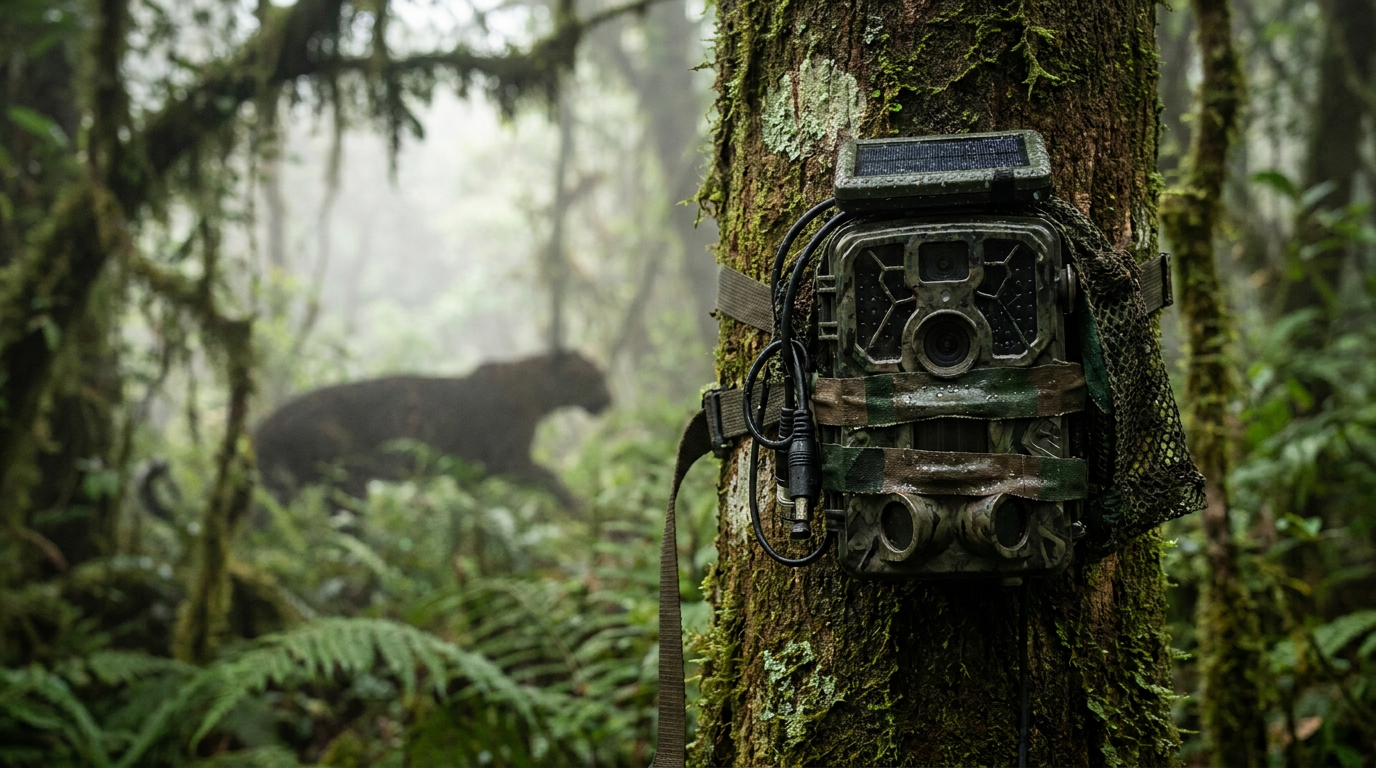
The cornerstone of this revolution is the modern camera trap. Historically, remote cameras relied on passive infrared sensors, which were notoriously prone to false triggers from swaying grass or shifting sunlight, resulting in thousands of hours of empty footage and drained batteries. Today, filmmakers and biologists like Dan O'Neill, who tracks elusive predators for the Snow Leopard Trust, utilize dual infrared laser triggers. When an animal breaks the invisible beam, the camera fires instantly, capturing high-resolution video of vulnerable species that would flee at the scent of a human.[3]

Setting these traps in extreme environments requires rugged, specialized gear. Field operators use ultra-bright, 1,000-nit touchscreen monitors to perfectly frame their shots in blinding glacial sunlight or dense jungle canopies. Once the trap is set, the monitor is unplugged, and the autonomous camera cube is left alone for months. When the crew finally retrieves the memory cards, they are no longer forced to manually review months of footage. Edge-AI algorithms pre-sort the data, instantly identifying and tagging the specific species captured.[3]
Beyond remote traps, the physics of digital sensors has unlocked the nocturnal world. In the past, filming at night required disruptive infrared spotlights or thermal imaging that rendered the world in monochromatic green or white. Recent series like Night on Earth have popularized ultra-low-light camera technology that can capture full-color video using only the ambient light of the moon or stars. By utilizing larger sensor apertures and advanced noise-reduction algorithms, filmmakers can document the night-time antics of urban otters or deep-sea whale sharks without blinding them.[4]
This low-light capability is not just an aesthetic upgrade; it is an ethical imperative. Traditional lighting setups could temporarily blind nocturnal prey, making them easy targets for predators, or conversely, ruin a predator's night vision. By relying on highly sensitive digital sensors, documentary crews can observe the brutal realities of the food chain without accidentally tipping the scales.[1]

This low-light capability is not just an aesthetic upgrade; it is an ethical imperative.
While camera traps handle the intimate ground-level shots, the sky has been taken over by a new generation of drones. Early consumer drones were loud, disruptive, and strictly regulated in conservation areas. The 2026 fleet is divided into two distinct categories: ultra-lightweight, near-silent models for agile tracking, and massive heavy-lift rigs designed for a completely new medium—spatial video.[5]
Immersive platforms like the Apple Vision Pro and the Las Vegas Sphere have created a massive demand for 180-degree and 360-degree nature documentaries. To feed these platforms, companies are building custom drones capable of carrying multi-lens spatial cameras, such as the Blackmagic URSA Cine Immersive or the Achtel 9x7. These rigs capture the environment in staggering 17K resolution, allowing viewers to put on a headset and feel as though they are physically standing on an Antarctic ice shelf or hovering above a migrating herd.[5]
However, this level of immersion comes with staggering logistical challenges. A 17K spatial camera recording 16-bit RAW footage generates roughly 11 gigabytes of data every single second. Managing, storing, and backing up that volume of data while operating out of a tent in the Amazon rainforest or a small boat in the Southern Ocean requires enterprise-grade server infrastructure built into portable, weather-proof cases.[5]

At the opposite end of the spectrum from vast spatial landscapes is the booming field of "micro-nature." Honoring the legacy of macro cinematography pioneers like the late Alastair MacEwen, modern filmmakers are using specially designed motion-control rigs to document the microscopic world. Series like The Green Planet and Secrets of the Bees utilize time-lapse photography and robotic macro lenses to speed up the minuscule movements of plants or the architectural genius of insects, translating their slow, invisible lives into real-time drama.[4][6]
As these technologies merge, they are blurring the line between documentary filmmaking and scientific research. The high-fidelity footage captured by these advanced rigs is frequently shared with local conservationists and biologists. A 17K drone scan of a coral reef or a laser-triggered video of a rare civet provides invaluable data on population density, animal health, and habitat degradation, turning entertainment budgets into funding for frontline science.[1]

Yet, the influx of AI and digital enhancement has sparked a quiet ethical debate within the industry. As text-to-video AI models and AI-driven upscaling become more sophisticated, the temptation to "clean up" a messy shot, stabilize a jittery drone pan, or digitally remove a distracting element grows. Documentary purists argue that the struggle, the mud, and the imperfections are what make wildlife filmmaking authentic, warning that over-processing could lead to a sanitized, artificial version of nature.[7]
Ultimately, the technological arms race in wildlife filmmaking is driven by a desire to foster empathy. In an era defined by climate anxiety and habitat loss, filmmakers know that audiences will only protect what they can understand and connect with. By removing the human footprint from the filming process, these next-generation cameras are delivering the most honest, intimate, and breathtaking view of the natural world ever captured.[1]
How we got here
2019
The release of 'Our Planet' highlights the environmental crisis, sparking a shift toward conservation-focused filmmaking.
2021
Series like 'Night on Earth' pioneer the use of full-color low-light sensors for nocturnal wildlife.
2024
Advanced AI triggers and dual-laser systems begin replacing standard motion sensors in remote camera traps.
2025
Apple TV+ announces 'The Wild Ones', a series utilizing over 350 custom remote cameras and thermal drones.
Early 2026
Heavy-lift drones capable of carrying 17K spatial cameras are deployed for VR nature documentaries.
Viewpoints in depth
Conservation Filmmakers
Advocates for zero-footprint filming to ensure authentic animal behavior and welfare.
This camp argues that the traditional model of embedding a human crew in a habitat inherently taints the documentary. Animals smell, hear, and react to humans, meaning the footage captured is often of an animal in a state of mild distress or unnatural curiosity. By utilizing remote traps, silent drones, and long-range lenses, conservation filmmakers believe they are finally capturing the truth of the wild while minimizing their ecological footprint.
Immersive Technologists
Champions of spatial video who believe VR is the ultimate empathy engine.
For technologists building 17K drone rigs, the goal is to obliterate the screen entirely. They argue that placing a viewer directly inside a virtual habitat via headsets like the Apple Vision Pro creates a visceral, emotional connection to nature that traditional flat screens cannot match. They view the staggering logistical hurdles—such as managing 11 gigabytes of data per second in the Amazon—as a necessary cost to build the next generation of environmental advocacy tools.
Documentary Purists
Critics who warn against the over-sanitization of nature through AI enhancements.
While embracing better sensors, documentary purists caution against the heavy reliance on AI upscaling, edge-computing, and algorithmic stabilization. They argue that the struggle, the mud, and the imperfections are what make wildlife filmmaking authentic. There is a growing concern in this camp that text-to-video enhancements and aggressive digital clean-ups risk turning raw, unpredictable nature into a highly polished, artificial product that loses its fundamental truth.
What we don't know
- How the massive data storage requirements of 17K spatial video will be sustainably managed in remote, off-grid locations.
- Whether the increasing use of AI to 'clean up' footage will lead to stricter ethical guidelines regarding what constitutes a true documentary.
Key terms
- Camera Trap
- A remote camera triggered by motion or infrared sensors, used to capture wildlife without human presence.
- Spatial Video
- Immersive, three-dimensional video formats designed for virtual reality headsets and massive dome screens.
- Macro Cinematography
- Extreme close-up filming used to capture small subjects, like insects or plant movements, in high detail.
- Low-Light Sensor
- A digital camera component designed to capture clear, color-accurate footage in near-total darkness without artificial lighting.
- Passive Infrared (PIR) Sensor
- An electronic sensor that measures infrared light radiating from objects in its field of view, commonly used as a motion detector in older camera traps.
Frequently asked
Do AI cameras replace human wildlife camera operators?
No. They allow operators to set up remote traps in dangerous or inaccessible areas, minimizing human interference while the operator manages the broader logistical and narrative scope.
How do drones film animals without scaring them?
Modern wildlife drones use longer zoom lenses and quieter, ultra-lightweight propellers, allowing them to capture intimate footage from a safe distance without triggering a flight response.
What is spatial video in documentaries?
It is a 180-degree or 360-degree video format captured in ultra-high resolution (up to 17K) that allows viewers using VR headsets to feel as though they are physically present in the habitat.
Why is filming at night difficult?
Historically, it required disruptive spotlights that could blind animals or thermal cameras that only showed monochromatic heat signatures. New low-light sensors solve this by capturing color using only moonlight.
Sources
Source coverage
7 outlets
4 viewpoints surfaced






[1]Factlen Editorial TeamAI & Post-Production Specialists
Synthesis by Factlen editorial team
Read on Factlen Editorial Team →[2]TechRadarConservation Filmmakers
The Wild Ones is a new Apple TV+ nature show that looks set to deliver a completely fresh style of wildlife documentary
Read on TechRadar →[3]British CinematographerConservation Filmmakers
Dan O’Neill uses SmallHD Indie 7 for rugged wildlife documentary
Read on British Cinematographer →[4]Discover WildlifeTraditional Broadcasters
Best nature documentaries to stream right now
Read on Discover Wildlife →[5]Kiwi Aerial ShotsImmersive Technologists
Immersive Drone Filming for Apple Vision Pro and Las Vegas Sphere
Read on Kiwi Aerial Shots →[6]Wildlife FilmTraditional Broadcasters
Tributes Pour in for Macro Cinematography Pioneer Alastair MacEwen
Read on Wildlife Film →[7]Wiro AIAI & Post-Production Specialists
Seedance V1 Pro Fast: Fast Text-to-Video in 5 Tests
Read on Wiro AI →

Every angle. Every day.
Get entertainment stories with full source coverage and perspective breakdowns delivered to your inbox.