
The Evidence Behind Office-to-Residential Conversions: What Works and What Doesn't
As remote work leaves commercial buildings empty and housing shortages persist, adaptive reuse is gaining momentum. A deep dive into the data reveals the physical, financial, and environmental realities of turning offices into apartments.
By Factlen Editorial Team
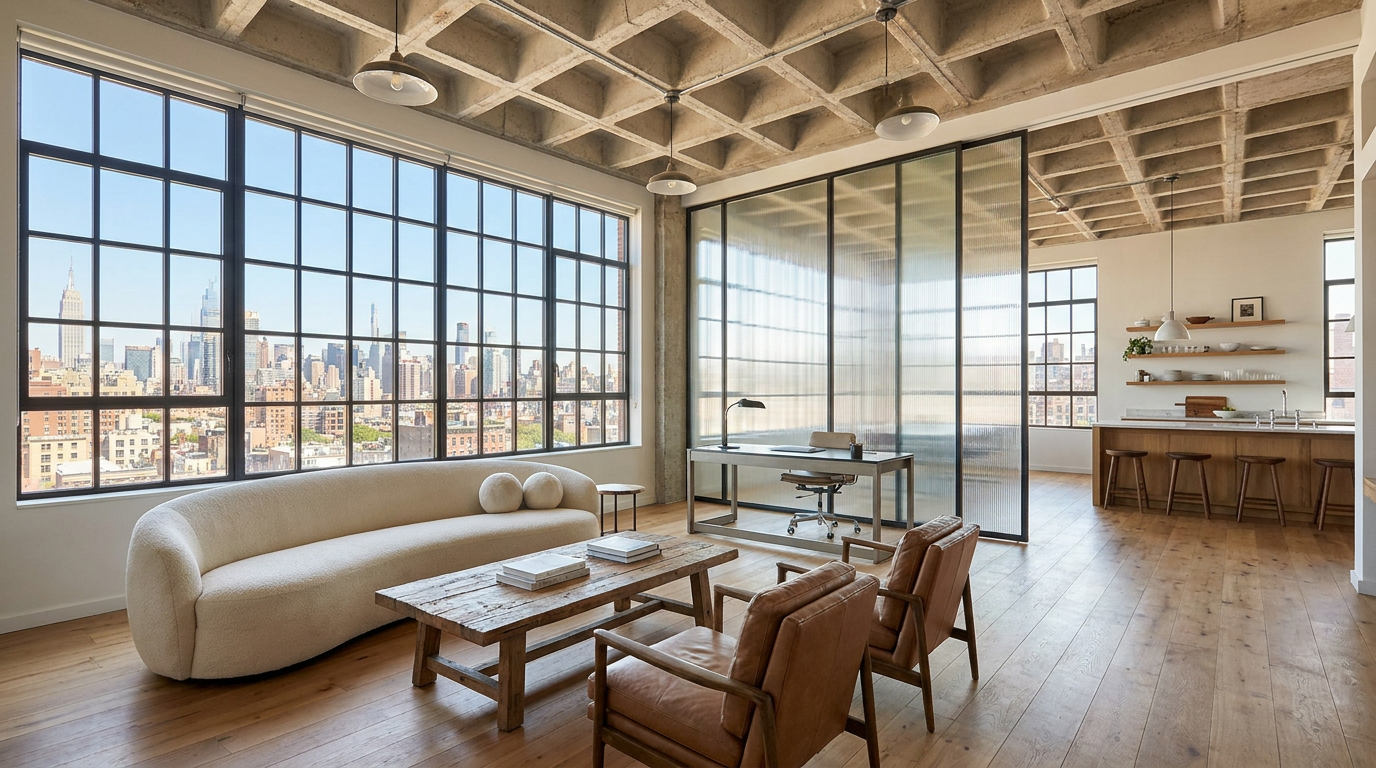
- Urban Planners & Architects
- Advocating for adaptive reuse as a tool for sustainable urban revitalization.
- Commercial Real Estate Developers
- Evaluating conversions strictly through the lens of financial viability and risk.
- Housing Policy Advocates
- Highlighting the limitations of conversions in addressing the broader affordability crisis.
What's not represented
- · Existing commercial tenants facing displacement in partially occupied buildings
- · Construction unions and tradespeople executing the complex retrofits
Why this matters
As remote work leaves downtowns empty and the housing crisis deepens, understanding the reality of office-to-residential conversions helps communities separate viable urban revitalization strategies from overly optimistic hype.
Key points
- The U.S. office-to-residential conversion pipeline has grown to 81 million square feet, representing 1.9% of total commercial inventory.
- Only 11% to 30% of existing office buildings possess the physical characteristics—like narrow floor plates and operable windows—required for residential use.
- Adaptive reuse projects generate 50% to 75% fewer carbon emissions compared to demolishing obsolete buildings and constructing new ones.
- High retrofit costs mean conversions often require steep discounts on property acquisition or significant government tax incentives to be financially viable.
- While conversions will not single-handedly solve the national housing shortage, they can double the residential population in specific downtown corridors.
The post-pandemic era has left American cities grappling with a stark spatial mismatch: millions of square feet of vacant office space sitting alongside a severe shortage of residential housing. As remote and hybrid work models solidify, urban centers face the threat of a "doom loop" driven by plummeting commercial property values and reduced foot traffic. In response, policymakers and developers have increasingly championed a seemingly elegant solution: converting empty cubicles into apartments.[7]
The concept of adaptive reuse is not new, but the scale of the current ambition is unprecedented. Proponents argue that office-to-residential conversions can simultaneously rescue distressed commercial real estate, alleviate housing shortages, and reduce the carbon footprint of urban development. However, as the initial pandemic-era enthusiasm meets the hard realities of construction and finance, a clearer, evidence-based picture is emerging of what actually works.[7]
Recent data indicates that the conversion pipeline is growing steadily, though it remains a fraction of the overall market. According to a May 2025 report from CBRE, the U.S. office conversion pipeline has reached 81 million square feet of planned and underway projects across 44 markets. This accounts for roughly 1.9% of total U.S. office inventory, up from 1.7% just six months prior. Manhattan and Washington, D.C., currently lead the nation in total square footage slated for conversion, driven by strong multifamily demand and local zoning reforms.[2]

Despite the growing pipeline, the most significant hurdle to adaptive reuse remains architectural, meaning only a minority of office buildings are physically suitable for conversion. Modern office buildings, particularly those constructed in the late twentieth century, were designed with massive, deep floor plates to maximize interior cubicle space. Residential building codes, however, require natural light and operable windows for every bedroom, making the cavernous interiors of many commercial towers virtually unlivable without drastic, cost-prohibitive structural modifications.[3]
Quantitative assessments reveal a narrow window of physical viability. A comprehensive algorithm developed by the architecture firm Gensler, which analyzed over 1,300 buildings across North America, found that only about 25% to 30% of office structures make suitable candidates for conversion without requiring prohibitive design compromises. Similarly, a working paper from the National Bureau of Economic Research applied strict physical criteria to commercial properties in the 105 largest U.S. cities, concluding that only about 11% of all office buildings are physically viable for green apartment conversions.[1][3]
The ideal candidates—often referred to as "Goldilocks" buildings—tend to be older, pre-war structures with narrower floor plates, operable windows, and higher ceilings. Ironically, the very features that make these older Class B and C buildings undesirable to modern corporate tenants are exactly what make them highly attractive for multifamily residential development.[3]

Even when a building is physically perfect for conversion, the underlying economics often fail to pencil out without a market correction. The cost of retrofitting plumbing, HVAC systems, and electrical grids for individual apartments is astronomical. For a project to be profitable, the acquisition cost of the empty office building must drop significantly to offset the massive capital expenditures required for the retrofit.[1][4]
Even when a building is physically perfect for conversion, the underlying economics often fail to pencil out without a market correction.
The National Bureau of Economic Research analysis demonstrates that office-to-market-rate residential conversions are financially feasible, but primarily if the commercial properties change hands at their newly depreciated fair market values, rather than their pre-pandemic peaks. Until owners of distressed assets are willing—or forced by lenders—to sell at a steep discount, many viable conversion projects will remain stalled in the planning phase.[1]
To bridge this financial gap, developers are increasingly reliant on public subsidies. Research from J.P. Morgan highlights that municipalities are stepping in with targeted incentives to make the math work. Boston, for instance, provides a tax abatement of up to 75% for conversion projects that include affordable housing, while Chicago has approved $260 million in tax increment financing for downtown conversions. Without these interventions, the high costs of adaptive reuse often restrict developers to building luxury units, doing little to address middle- and lower-income housing needs.[5]
Beyond the financial and architectural challenges, the strongest evidence in favor of adaptive reuse lies in its massive environmental benefits compared to new construction. The construction sector is a major contributor to global greenhouse gas emissions, largely due to the embodied carbon in concrete and steel. Demolishing an obsolete office tower and building a new residential complex from scratch carries a massive environmental toll.[6]
Converting existing structures preserves the embodied carbon of the original building shell. The European Commission's 2025 research on repurposing non-residential buildings found that conversion scenarios have the lowest carbon footprint—generating approximately 1 million kilograms of CO2 equivalent, compared to 4 million kilograms for a demolition and new-build scenario. The National Bureau of Economic Research study corroborates this, noting that the rehabilitation of existing buildings produces 50% to 75% fewer carbon emissions than ground-up construction.[1][6]

While the environmental case is strong, the impact on the national housing supply is more limited. The sheer volume of housing needed in the United States far exceeds what adaptive reuse can provide. While the narrative of turning every empty office into an apartment is compelling, the data suggests a localized impact that will not single-handedly solve the affordability crisis.[4]
A 2026 report by the Brookings Institution simulated the impacts of office-to-residential conversions across six major U.S. cities. The findings revealed that in most market contexts, conversion is a "niche production strategy" that does not match the scale of the broader housing shortage. Even if every suitable building were converted, it would only make a modest dent in the millions of units required nationwide.[4]
However, the Brookings research emphasizes that the true value of these conversions lies in neighborhood revitalization rather than sheer volume. In cities like Pittsburgh and Houston, converting viable office spaces could potentially double the number of housing units in the downtown core. This influx of residents fundamentally changes the dynamics of a neighborhood, supporting local retail, increasing foot traffic, and transforming sterile, 9-to-5 business districts into vibrant, 24-hour communities.[4]
Ultimately, the evidence points to a measured reality. Office-to-residential conversions are not a silver bullet for the housing crisis or the commercial real estate downturn. Instead, as industry analysts note, the pipeline of future projects will likely be realized over years as a steady stream rather than a sudden flood. Armed with better data, targeted algorithms, and strategic public policy, cities can use this tool to selectively breathe new life into their urban cores.[2][7]
How we got here
Pre-2020
Office-to-residential conversions occur sparingly, mostly focused on historic or boutique buildings in select urban centers.
2020–2022
The pandemic triggers a massive shift to remote work, causing commercial office vacancies to spike and sparking widespread interest in adaptive reuse.
August 2023
The National Bureau of Economic Research publishes a landmark study identifying the physical and financial criteria required for viable green apartment conversions.
2024
Major U.S. cities, including Boston and Chicago, begin rolling out targeted tax incentives and zoning reforms to subsidize the high costs of retrofitting offices.
May 2025
CBRE reports that the U.S. office conversion pipeline has reached a record 81 million square feet, representing nearly 2% of total inventory.
Viewpoints in depth
Urban Planners & Architects
Advocating for adaptive reuse as a tool for sustainable urban revitalization.
For urban planners and architectural firms like Gensler, the primary appeal of office conversions lies in their potential to transform single-use business districts into vibrant, 24-hour neighborhoods. They emphasize that while only a fraction of buildings are suitable, converting those 'Goldilocks' structures preserves massive amounts of embodied carbon that would otherwise be lost to demolition. Their focus is on streamlining zoning laws and utilizing advanced algorithms to quickly identify viable candidates, viewing the trend as a necessary evolution of the modern city rather than just a real estate play.
Commercial Real Estate Developers
Evaluating conversions strictly through the lens of financial viability and risk.
Developers and market analysts view the conversion trend with cautious optimism, heavily tempered by financial realities. As CBRE and J.P. Morgan data indicate, the capital expenditures required to retrofit plumbing, HVAC, and electrical systems for residential use are staggering. This camp argues that without significant drops in commercial property acquisition costs and robust public subsidies—such as tax abatements and increment financing—most projects simply cannot generate a return on investment. They advocate for expanded government incentives to bridge the financial gap.
Housing Policy Advocates
Highlighting the limitations of conversions in addressing the broader affordability crisis.
Housing researchers and policy advocates, including voices from the Brookings Institution, caution against viewing office conversions as a panacea for the national housing shortage. They point out that the high costs of adaptive reuse naturally incentivize developers to build luxury apartments, which does little to help middle- and lower-income renters. This camp stresses that while conversions are excellent for downtown placemaking, they must be paired with inclusionary zoning and low-income housing tax credits to affirmatively further fair housing and make a meaningful dent in the affordability crisis.
What we don't know
- Whether commercial property owners will accept the steep valuation discounts necessary to make widespread conversions financially viable.
- How long temporary municipal tax incentives and subsidies will remain available to developers undertaking these expensive retrofits.
- The long-term impact of these conversions on municipal tax bases, as commercial properties traditionally generate higher property tax revenues than residential ones.
Key terms
- Adaptive Reuse
- The process of repurposing an existing building for a use other than what it was originally designed for, such as turning an office tower into an apartment complex.
- Floor Plate
- The total leasable square footage of a single floor in a commercial building. Deep floor plates make it difficult for natural light to reach the center of the building.
- Embodied Carbon
- The total greenhouse gas emissions generated during the manufacturing, transportation, and construction of building materials like steel and concrete.
- Class B and C Offices
- Older, less modern commercial buildings that lack the premium amenities of newer Class A spaces, making them prime candidates for residential conversion.
- Tax Increment Financing (TIF)
- A public financing method used as a subsidy for redevelopment, infrastructure, and other community-improvement projects, often utilized to make office conversions financially viable.
Frequently asked
Can any empty office building be converted into apartments?
No. Research indicates that only 11% to 30% of office buildings are physically suitable. Modern buildings with deep floor plates lack the necessary natural light and operable windows required for residential living.
Will office conversions solve the housing shortage?
While they help, conversions are considered a niche strategy. The total number of units they can provide is a fraction of the millions needed nationwide, though they can significantly boost housing in specific downtown areas.
Are office conversions better for the environment than building new apartments?
Yes. Converting an existing building preserves its embodied carbon, resulting in 50% to 75% fewer greenhouse gas emissions compared to demolishing the site and constructing a new building from scratch.
Why don't developers convert more empty offices?
The financial math is difficult. Retrofitting plumbing, electrical, and HVAC systems is extremely expensive. Projects usually only pencil out if the developer can buy the empty office building at a steep discount or secure government tax incentives.
Sources
Source coverage
7 outlets
3 viewpoints surfaced







[1]National Bureau of Economic ResearchHousing Policy Advocates
Converting Brown Offices to Green Apartments
Read on National Bureau of Economic Research →[2]CBRE ResearchCommercial Real Estate Developers
U.S. Office Conversion Pipeline Reaches 81 Million Sq. Ft.
Read on CBRE Research →[3]GenslerUrban Planners & Architects
What We've Learned Assessing 1,300+ Office-to-Residential Conversions
Read on Gensler →[4]Brookings InstitutionHousing Policy Advocates
Simulating the impacts of office-to-residential conversion on neighborhood demographics
Read on Brookings Institution →[5]J.P. MorganCommercial Real Estate Developers
What to know about office-to-residential conversion
Read on J.P. Morgan →[6]European CommissionUrban Planners & Architects
Repurposing non-residential buildings into housing
Read on European Commission →[7]Factlen Editorial Team
Synthesis by Factlen editorial team
Read on Factlen Editorial Team →
Every angle. Every day.
Get real estate stories with full source coverage and perspective breakdowns delivered to your inbox.