
The Economic Mechanics of the US-Iran Interim Peace Deal
As the US and Iran prepare to sign a landmark interim peace agreement, global markets are bracing for the release of a $300 billion reconstruction fund and the reopening of the Strait of Hormuz. However, the anticipated drop in energy prices may not be enough to lower global interest rates in the near term.
By Factlen Editorial Team
- Global Central Bankers
- Focused on sticky core inflation and skeptical that falling energy prices alone justify immediate interest rate cuts.
- Energy & Maritime Insurers
- Cautious about the physical realities of demilitarizing shipping lanes, maintaining high risk premiums until safe transit is proven.
- Western Diplomats
- Prioritizing strict compliance mechanisms and escrow controls to ensure funds are not diverted to military reconstitution.
- Iranian Economic Planners
- Desperate for the rapid injection of the $300 billion to stabilize the currency and rebuild degraded energy infrastructure.
What's not represented
- · Regional rival economies
- · Renewable energy investors
Why this matters
The unfreezing of Middle Eastern trade routes and capital will directly impact global energy prices, determining whether central banks can finally lower the borrowing costs that dictate mortgage rates, auto loans, and corporate debt.
Key points
- The US and Iran are preparing to sign an interim peace deal that includes a $300 billion reconstruction fund.
- Funds will be held in international escrow and released in tranches tied to strict demilitarization compliance.
- Shipping insurers remain skeptical, warning that physically securing the Strait of Hormuz will take months.
- Global bond yields remain high, indicating central banks are not ready to cut interest rates despite falling energy prices.
The global economy is bracing for a seismic shift as the United States and Iran prepare to formally sign an interim peace agreement. After months of devastating conflict that choked global supply chains and spiked energy costs, the diplomatic breakthrough is sending immediate ripples across financial markets. Gold has held its recent gains as investors digest the dual prospects of easing geopolitical tensions and shifting inflationary pressures. Yet, beneath the headline optimism, the actual mechanics of unwinding a war economy are proving highly complex.[3][4]
The centerpiece of the economic normalization effort is a proposed $300 billion reconstruction fund earmarked for Iran. This unprecedented capital injection is designed to rebuild infrastructure decimated during the conflict and stabilize the Iranian rial, which has suffered from hyperinflation. However, this is not a blank check handed to Tehran. Financial details emerging from the negotiations reveal a highly structured, conditional release of capital designed to prevent militarization.[2][4]
According to diplomatic and financial sources, the $300 billion will be held in international escrow accounts, managed by a consortium of neutral third-party nations and international financial institutions. Funds will be disbursed in tranches, strictly tied to verified compliance with the military de-escalation protocols outlined in the interim pact. This mechanism aims to ensure the capital is used exclusively for civilian reconstruction, power grid restoration, and humanitarian relief.[2][6][8]

For the Iranian domestic economy, the stakes are existential. The nation's industrial base requires immediate liquidity to resume basic operations. Economic planners in Tehran are reportedly prioritizing the modernization of their energy export infrastructure, which has severely degraded under the dual weight of sanctions and recent kinetic strikes. If the escrow mechanism functions as intended, it could trigger one of the largest rapid infrastructure rebuilds in modern Middle Eastern history.[6][8]
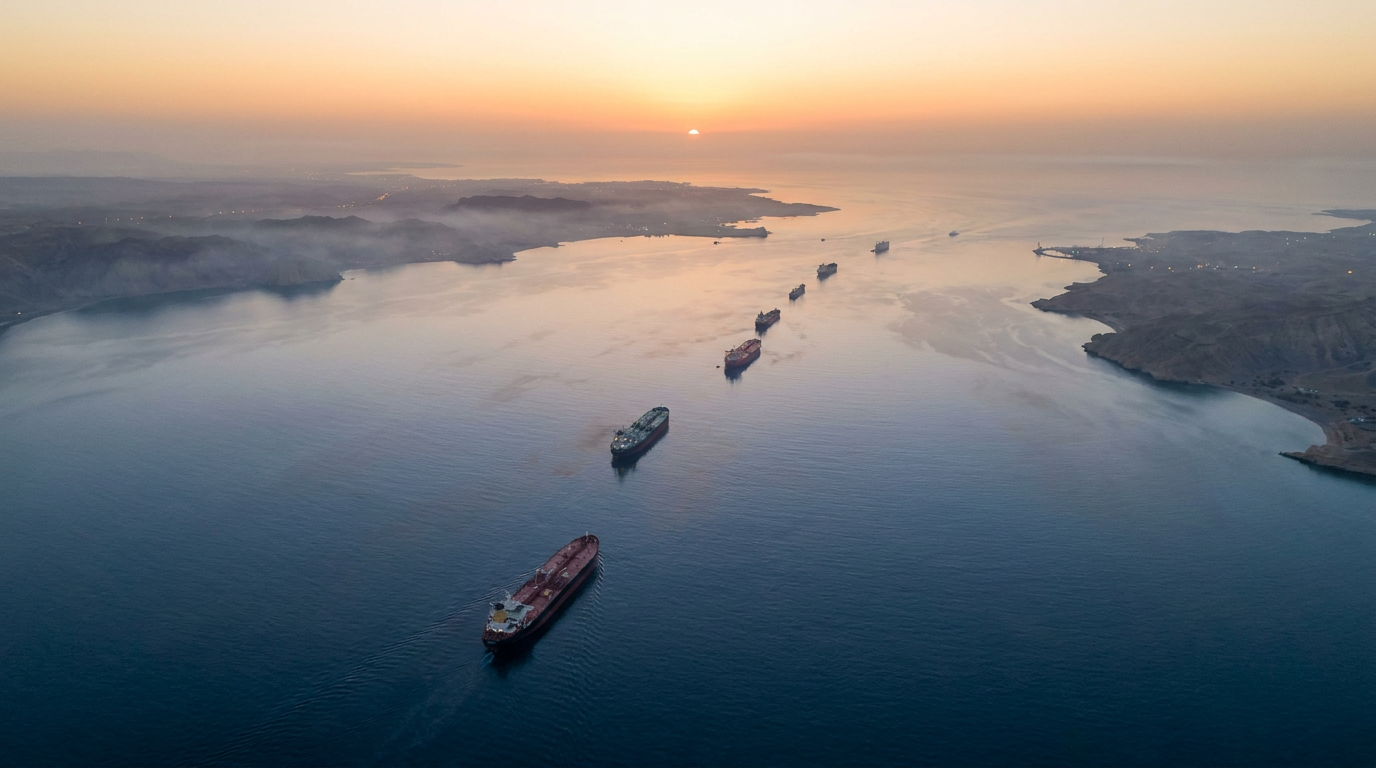
Globally, the most immediate economic relief is expected to flow through the Strait of Hormuz. The narrow waterway, a critical chokepoint for roughly a fifth of the world's daily oil consumption, has been effectively paralyzed by the threat of drone strikes and naval skirmishes. The interim agreement includes specific provisions for the demilitarization of the shipping lanes, theoretically allowing global energy transit to return to pre-conflict volumes.[4][5]
However, the maritime logistics industry remains deeply skeptical of a rapid return to normal. Shipping insurers at Lloyd's of London and global freight operators are maintaining elevated "war risk" premiums on vessels transiting the Persian Gulf. Energy insiders note that while the political agreement is a crucial first step, the physical clearing of naval mines and the establishment of verified safe corridors will take months. Until vessels can transit without military escorts, the bottleneck remains.[4][7]
However, the maritime logistics industry remains deeply skeptical of a rapid return to normal.
This logistical friction directly impacts the global inflation equation. Policymakers in Washington, Frankfurt, and London have been battered by energy-driven inflation spikes over the past year. The prospect of a stabilized Middle East and a steady flow of crude oil has led to a slight softening in benchmark Brent crude prices. In theory, cheaper energy should lower headline inflation, giving central banks the breathing room they need to finally cut interest rates.[3][5]
Yet, the global bond market is aggressively rejecting this dovish narrative. Despite the fragile truce lowering energy prices and curbing immediate inflationary fears, government bond yields remain stubbornly high. The rally in sovereign debt has failed to allay the threat of a "higher-for-longer" global interest rate environment. Investors are signaling that the structural damage to the global economy cannot be undone overnight.[1]

The disconnect between falling oil prices and high interest rates lies in the nature of current inflation. While energy costs are volatile and highly responsive to geopolitical news, core inflation—driven by services, housing, and wage growth—remains deeply entrenched in Western economies. Central bankers are acutely aware that prematurely cutting rates based on a fragile Middle Eastern peace deal could reignite domestic inflation if the truce collapses.[1][8]
The reconstruction of Iran also introduces a massive new demand shock for raw materials. The $300 billion fund will drive intense demand for steel, cement, copper, and heavy machinery over the next decade. Commodity analysts warn that while oil prices might stabilize, the cost of industrial metals could surge as the rebuilding effort begins, creating a new vector for global supply chain inflation just as energy costs recede.[2][6]
The timeline for implementation is the next critical variable. The initial 90-day window following the formal signing will serve as a probationary period. During this phase, international monitors must verify the withdrawal of advanced weapon systems from coastal batteries, while Western nations must take the first legal steps to unfreeze the initial tranches of Iranian assets. Any misstep or localized skirmish during this window could trigger automatic "snapback" sanctions.[4][6]

The enforcement of these snapback provisions is the linchpin of the entire economic arrangement. Financial institutions tasked with managing the escrow accounts require absolute legal clarity. If a violation occurs, banks must be able to instantly freeze disbursements without facing secondary liabilities. This legal tightrope is currently the subject of intense, closed-door negotiations between US Treasury officials and European banking regulators.[6][7]
Ultimately, the US-Iran interim peace deal represents a transition from acute crisis management to chronic economic restructuring. The unfreezing of $300 billion and the reopening of vital trade routes offer a pathway out of the immediate inflationary spiral. However, as the bond markets are clearly signaling, the scars of the conflict are deep, and the global economy will be paying the price of this instability for years to come.[1][2][8]
How we got here
Early 2026
Regional conflict peaks, severely disrupting Strait of Hormuz shipping and driving up global energy costs.
May 2026
Closed-door negotiations yield a framework for an interim peace agreement and military de-escalation.
June 16, 2026
Financial details of a conditional $300 billion reconstruction fund emerge in global markets.
June 17, 2026
Markets react to the impending formal signing, though bond yields signal lingering economic caution.
Viewpoints in depth
Global Central Bankers' View
Focusing on entrenched domestic inflation rather than volatile geopolitical energy swings.
For policymakers at the Federal Reserve and the European Central Bank, the Middle East peace deal is welcome news, but not a silver bullet for the global economy. Central bankers argue that the inflation keeping interest rates high is currently driven by domestic services, wage growth, and housing shortages—factors largely immune to the price of Brent crude. They fear that cutting rates now, based on a fragile geopolitical truce, could trigger a resurgence of inflation if the agreement collapses and energy prices spike again. Consequently, they are signaling to bond markets that borrowing costs will remain 'higher for longer' until core inflation is definitively beaten.
Maritime Logistics & Insurers' View
Skeptical of political declarations, demanding physical proof of safe transit before lowering costs.
The maritime insurance industry, centered around Lloyd's of London, operates on physical realities rather than diplomatic promises. While the interim deal mandates the demilitarization of the Strait of Hormuz, insurers note that the waters remain littered with naval mines and the threat of rogue drone operators persists. Until international minesweeping operations are complete and commercial vessels can transit the Persian Gulf without military escorts, freight operators will continue to pay exorbitant 'war risk' premiums. This logistical friction means the economic benefits of reopened trade routes will take months to materialize in the real economy.
Iranian Economic Planners' View
Viewing the $300 billion fund as an existential lifeline to rescue a collapsing industrial base.
Inside Tehran, the interim agreement is viewed through the lens of acute economic survival. Years of sanctions, compounded by recent kinetic strikes, have decimated the country's energy export infrastructure and triggered hyperinflation. Iranian economic planners see the $300 billion reconstruction fund not just as a diplomatic concession, but as the only viable path to stabilizing the rial and preventing total industrial collapse. Their immediate priority is navigating the complex escrow requirements to secure the first tranches of capital, which are desperately needed to repair power grids and resume basic civilian manufacturing.
Western Diplomats' View
Prioritizing strict, verifiable compliance mechanisms to prevent the funds from being militarized.
For the Western coalition brokering the deal, the primary concern is ensuring the $300 billion does not inadvertently fund a future conflict. Diplomats have engineered a highly restrictive escrow system managed by third-party nations. They argue that releasing the funds in small, conditional tranches is the only way to maintain leverage over Tehran during the fragile 90-day probationary period. Their focus is currently on finalizing the legal framework that will allow international banks to instantly freeze the accounts—via 'snapback' sanctions—at the first sign of military non-compliance, without exposing the banks to secondary legal liabilities.
What we don't know
- How quickly international maritime forces can physically clear the Strait of Hormuz of naval mines to allow unescorted commercial transit.
- Whether the complex legal framework governing the international escrow accounts will hold up under the pressure of the first disbursement.
- How the sudden demand for raw construction materials in Iran will impact global commodity prices.
Key terms
- Escrow Account
- A financial arrangement where a neutral third party holds and regulates payment of the funds required for two parties involved in a given transaction.
- Snapback Sanctions
- A legal mechanism that allows international economic sanctions to be automatically and rapidly reimposed if a party violates the terms of an agreement.
- War Risk Premium
- An additional fee charged by maritime insurance companies to cover vessels traveling through active conflict zones or areas with high geopolitical instability.
- Core Inflation
- A measure of inflation that excludes volatile items like food and energy, giving central banks a clearer picture of underlying long-term price trends.
Frequently asked
Where is the $300 billion coming from?
The funds primarily consist of previously frozen Iranian state assets held in foreign banks, which will be consolidated and released conditionally through international escrow accounts.
Will this deal immediately lower gas prices?
While benchmark crude oil prices have softened on the news, shipping insurers warn it will take months to physically secure the Strait of Hormuz, meaning immediate dramatic drops at the pump are unlikely.
Why aren't interest rates dropping if the war is ending?
Central banks are looking at 'core inflation'—like housing and services—which remains high. They are hesitant to cut rates based solely on volatile energy prices that could spike again if the truce fails.
Sources
Source coverage
8 outlets
4 viewpoints surfaced






[1]BloombergGlobal Central Bankers
Bond Rally Fails to Allay Higher-for-Longer Global Rates Threat
Read on Bloomberg →[2]ForbesWestern Diplomats
What We Know About Potential $300 Billion For Iran In Peace Deal
Read on Forbes →Gold Holds Gain as US, Iran Prepare to Sign Interim Peace Deal
Read on Bloomberg →Financial Details Emerge as US, Iran Prepare for Signing
Read on Bloomberg →[5]ReutersEnergy & Maritime Insurers
Oil prices stabilize as markets weigh Iran peace deal implementation
Read on Reuters →[6]Financial TimesIranian Economic Planners
The economic mechanics of the US-Iran interim accord
Read on Financial Times →[7]Wall Street JournalEnergy & Maritime Insurers
Strait of Hormuz shipping insurers remain skeptical despite peace pact
Read on Wall Street Journal →[8]World BankGlobal Central Bankers
Economic Implications of Middle East Stabilization
Read on World Bank →


Every angle. Every day.
Get business stories with full source coverage and perspective breakdowns delivered to your inbox.