
US and Iran Sign Memorandum of Understanding to End War and Reopen Strait of Hormuz
The United States and Iran have agreed to a framework peace deal that lifts naval blockades, reopens the Strait of Hormuz, and opens a 60-day window to negotiate a permanent nuclear treaty.
By Factlen Editorial Team
- US Administration & G7 Allies
- Argues that the MoU is a necessary pragmatic step to stabilize the global economy, reopen vital shipping lanes, and create a structured diplomatic pathway to permanently block Iran from obtaining a nuclear weapon.
- Israeli Leadership
- Views the bilateral US-Iran agreement with deep suspicion, arguing that it fails to address the immediate security threats posed by Iranian proxies on Israel's borders, and maintains that Israel retains the right to unilateral military action.
- Iranian Government
- Frames the agreement as a testament to Iranian resilience against a US blockade, prioritizing immediate economic relief and reconstruction funds while attempting to preserve its existing nuclear infrastructure.
- US Congressional Skeptics
- Expresses concern that the administration is offering premature economic concessions to Tehran without ironclad guarantees, fearing the 60-day window will allow Iran to regroup.
What's not represented
- · Global shipping companies navigating the mined Strait of Hormuz
- · Lebanese civilians caught in the ongoing crossfire
Why this matters
The reopening of the Strait of Hormuz promises to end a crippling bottleneck on 20% of the world's oil supply, sending global markets rallying. However, the fragile 60-day window to negotiate a permanent nuclear settlement—and Israel's refusal to be bound by the ceasefire—leaves the Middle East teetering between historic peace and renewed conflict.
Key points
- The US and Iran have electronically signed a Memorandum of Understanding to end their three-month war.
- The agreement immediately lifts the naval blockades on Iranian ports and the Strait of Hormuz.
- A 60-day negotiation window will now open to finalize a permanent treaty regarding Iran's nuclear program.
- G7 leaders welcomed the deal, citing the immediate drop in global oil prices and market stabilization.
- Israeli Prime Minister Benjamin Netanyahu stated Israel is not bound by the pact and will continue operations in Lebanon.
The United States and Iran have electronically signed a historic Memorandum of Understanding (MoU) aimed at ending their three-and-a-half-month war and reopening the Strait of Hormuz. The breakthrough agreement, mediated by Pakistan and Qatar, establishes an immediate ceasefire across all fronts and sets a 60-day clock to negotiate a permanent settlement regarding Tehran's nuclear program.[4][5]
The conflict, which erupted on February 28 following US and Israeli strikes that killed Iranian Supreme Leader Ali Khamenei, had severely disrupted global energy markets. In retaliation, Iran blockaded the Strait of Hormuz, choking off roughly 20% of the world's seaborne oil trade, while the US imposed a counter-blockade on Iranian ports.[6][7]
Under the terms of the new MoU, both blockades will be lifted immediately. US officials confirmed Monday that commercial shipping traffic is already beginning to trickle back through the Strait, though clearing naval mines and restoring full pre-war volume is expected to take up to 30 days.[4][8]

The economic relief provisions are substantial but conditional. The framework outlines a potential $300 billion international reconstruction fund for Iran, financed alongside regional partners. However, the Trump administration insists that any release of frozen assets or sanctions relief will be strictly tied to Iran's verifiable compliance with nuclear restrictions, a point of contention with Iranian officials who expect immediate unfreezing of funds.[5][6][8]
The economic relief provisions are substantial but conditional.
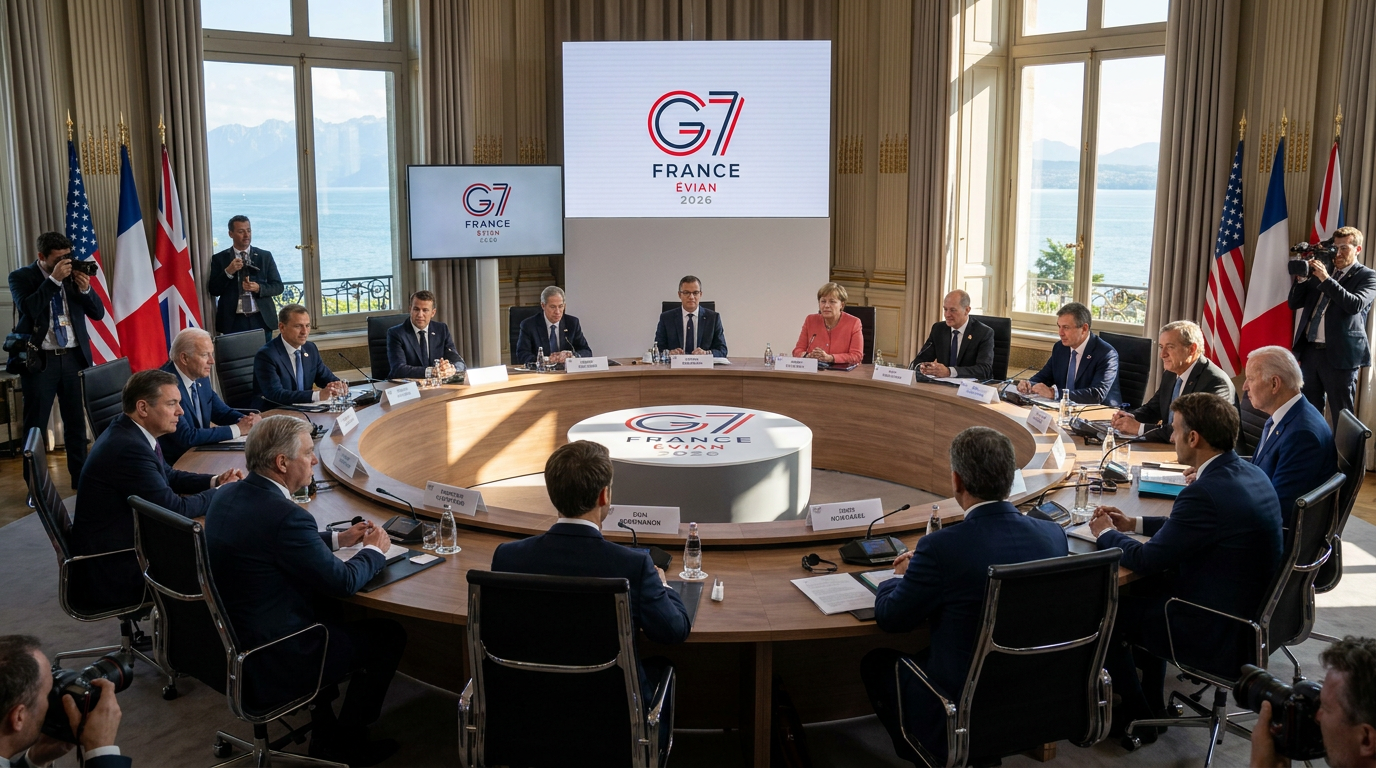
President Donald Trump briefed allied leaders on the agreement Tuesday at the G7 summit in Evian, France. German Chancellor Friedrich Merz strongly welcomed the deal, noting that the immediate drop in global oil prices and rallying stock markets demonstrate the profound economic relief the ceasefire brings to the international community.[1][4]

Despite the optimism in Europe, domestic political hurdles loom in Washington. Trump indicated he would "like" to submit the agreement to Congress for review, a move that could invite fierce opposition. Republican lawmakers, including Senator Lindsey Graham, expressed skepticism about Iran's long-term nuclear commitments but acknowledged that reopening the Strait was "worth a try."[2][3]
The most volatile wildcard remains Israel. The MoU stipulates a ceasefire on all fronts, including Lebanon, where Israeli forces have been engaged in a parallel conflict with Hezbollah. However, Israeli Prime Minister Benjamin Netanyahu publicly distanced himself from the pact, declaring that the agreement "does not bind us" and asserting that Israeli troops will remain in Lebanon and Gaza for as long as necessary.[1][3]
Iranian officials have warned that any continued Israeli military action in Lebanon would constitute a violation of the US-Iran deal, fundamentally linking the two theaters of conflict. This dynamic places immense pressure on the Trump administration to restrain its closest Middle Eastern ally while simultaneously keeping Tehran at the negotiating table.[3][7]

The diplomatic focus now shifts to the Bürgenstock resort in Switzerland, where a formal signing ceremony is scheduled for Friday. From there, negotiators face a grueling 60-day sprint to translate the fragile MoU into a comprehensive treaty that permanently dismantles Iran's nuclear weapons pathways while integrating the war-battered nation back into the global economy.[1][5]
How we got here
Feb 2026
US and Israel launch strikes on Iran, killing Supreme Leader Ali Khamenei and sparking a regional war.
March 2026
Iran blockades the Strait of Hormuz, halting 20% of global oil trade, while the US imposes a counter-blockade.
April 2026
A temporary two-week ceasefire is brokered by Pakistan to allow for initial negotiations.
June 15, 2026
US and Iranian officials electronically sign a Memorandum of Understanding to end the war.
June 19, 2026
Formal signing ceremony scheduled at the Bürgenstock resort in Switzerland.
Viewpoints in depth
US Administration & G7 Allies
Argues that the MoU is a necessary pragmatic step to stabilize the global economy and create a structured diplomatic pathway.
For the US and its European partners, the immediate priority is ending the economic hemorrhage caused by the closure of the Strait of Hormuz. By securing an upfront commitment to reopen the waterway, the Trump administration has delivered a tangible win for global markets. Allied leaders view the 60-day negotiation window not as a concession, but as a necessary cooling-off period that provides leverage to permanently dismantle Iran's nuclear weapons program through diplomacy rather than protracted warfare.
Israeli Leadership
Views the bilateral US-Iran agreement with deep suspicion, arguing that it fails to address immediate security threats.
Israeli officials, led by Prime Minister Benjamin Netanyahu, are fundamentally opposed to any agreement that leaves Iran's proxy network intact. From Israel's perspective, a ceasefire that does not mandate the withdrawal of Hezbollah forces or dismantle Iranian military infrastructure in Syria and Lebanon is incomplete. Consequently, Israel has declared it is not bound by the MoU and will maintain its military operations, risking a potential derailment of the broader US-Iran peace process.
Iranian Government
Frames the agreement as a testament to Iranian resilience against a US blockade, prioritizing immediate economic relief.
Tehran is presenting the MoU to its domestic audience as a victory of endurance, emphasizing the proposed $300 billion reconstruction fund and the lifting of the US naval blockade. Iranian negotiators are likely calculating that the 60-day window will allow them to secure the unfreezing of billions in foreign assets before making irreversible concessions on their nuclear program. Furthermore, Iran insists that the ceasefire must apply to all fronts, using the MoU to pressure the US into restraining Israeli military actions in Lebanon.
What we don't know
- Whether the US Congress will attempt to block the final nuclear agreement if Trump submits it for review.
- How the US will enforce the ceasefire in Lebanon if Israel continues its military operations against Hezbollah.
- The exact mechanisms by which the proposed $300 billion reconstruction fund will be tied to nuclear compliance.
Key terms
- Strait of Hormuz
- A narrow, strategically vital waterway between the Persian Gulf and the Gulf of Oman, through which roughly 20% of the world's oil passes.
- Memorandum of Understanding (MoU)
- A formal, non-binding agreement between two or more parties outlining the framework for future negotiations or a final treaty.
- Naval Blockade
- An act of war wherein a country uses its naval forces to prevent vessels, goods, or personnel from entering or leaving another country's ports.
Frequently asked
Does this mean the US-Iran war is officially over?
The MoU establishes an immediate ceasefire and a framework to end the war, but a permanent peace treaty depends on the outcome of a 60-day negotiation period regarding Iran's nuclear program.
When will oil prices go back to normal?
Oil prices have already begun to drop following the announcement, but officials caution it will take up to 30 days to clear naval mines and fully restore commercial shipping traffic through the Strait of Hormuz.
How does this affect Israel's conflict with Hezbollah?
The MoU calls for a ceasefire on all fronts, including Lebanon. However, Israel has stated it is not bound by the US-Iran agreement and will maintain its military operations against Hezbollah.
Sources
Source coverage
8 outlets
4 viewpoints surfaced








[1]The GuardianUS Administration & G7 Allies
US, Iran agree to framework peace deal at G7 summit
Read on The Guardian →[2]CBS NewsUS Congressional Skeptics
Trump says he'd "like" to send U.S.-Iran agreement to Congress, but doesn't promise it
Read on CBS News →[3]Times of IsraelIsraeli Leadership
Trump willing to send Iran deal to Congress; Netanyahu says Israel not bound
Read on Times of Israel →[4]Anadolu AgencyUS Administration & G7 Allies
US, Iran signed deal to end war, reopen Strait of Hormuz, senior US official says
Read on Anadolu Agency →[5]The HinduUS Administration & G7 Allies
U.S.-Iran peace deal to be signed at Switzerland's Burgenstock resort on Friday
Read on The Hindu →[6]Institute for the Study of WarIranian Government
Iran Update Special Report, June 13, 2026
Read on Institute for the Study of War →[7]Stimson CenterIranian Government
The US-Iran MOU: Regional Realignments and Lebanon's Precarious Position
Read on Stimson Center →[8]i24NEWSIranian Government
Leaked 14-point US-Iran Memorandum of Understanding
Read on i24NEWS →
Every angle. Every day.
Get news politics stories with full source coverage and perspective breakdowns delivered to your inbox.