
The 10-Minute Charge: How Solid-State Batteries Are Finally Moving From Lab to Road
After years of laboratory development, solid-state EV batteries are hitting major manufacturing milestones in 2026, promising to double driving ranges and slash charging times.
By Factlen Editorial Team
- Solid-State Developers
- Argue that solid-state technology is ready to scale, focusing on licensing models and pilot lines to prove commercial viability to automakers.
- Legacy Automakers
- View solid-state batteries as a strategic equalizer to catch up in the EV race, investing heavily in proprietary supply chains for a 2027-2028 launch.
- Market Pragmatists
- Caution that while the chemistry works, extreme manufacturing costs mean solid-state batteries will remain a luxury-only feature until the 2030s.
What's not represented
- · Lithium-ion manufacturing workers
- · Raw material mining communities
Why this matters
Solid-state batteries are the holy grail of electric vehicles. By eliminating the flammable liquids found in current batteries, this technology will allow future EVs to drive over 600 miles on a single charge and recharge in the time it takes to pump a tank of gas, fundamentally removing the last major barriers to EV adoption.
Key points
- Solid-state batteries replace flammable liquid electrolytes with solid materials, drastically improving safety.
- The technology allows for lithium-metal anodes, which can double the energy density of current EV batteries.
- Major developers like QuantumScape and GBT are launching pilot production lines in 2026.
- Automakers including Toyota and Dongfeng are targeting 2027-2028 for their first commercial solid-state vehicle launches.
- Early solid-state EVs are expected to deliver ranges over 600 miles and charge in 10 to 15 minutes.
- High manufacturing costs mean the technology will likely debut in luxury vehicles before reaching the mass market.
The electric vehicle industry is approaching a technological inflection point that promises to fundamentally alter how the world drives. For the better part of a decade, the "solid-state battery" has been the automotive sector's holy grail—a theoretical breakthrough promising vastly longer ranges, dramatically faster charging times, and the elimination of battery fires. Throughout the early 2020s, the technology remained largely confined to laboratory settings and speculative press releases. But in 2026, the landscape has definitively shifted. The race to commercialize solid-state electric vehicle batteries has moved from the research and development phase to the factory floor, with major players across the United States, Japan, and China inaugurating pilot production lines and securing massive supply chain contracts.[1][2]
The stakes for this transition are monumental. Despite the rapid global adoption of electric vehicles, mainstream consumers continue to express reservations about "range anxiety" and the time required to recharge during long road trips. Current lithium-ion technology, while highly refined, is approaching its theoretical performance ceiling. Automakers recognize that to capture the next massive wave of EV buyers—those who demand the convenience of a traditional gas station fill-up—a leap in battery chemistry is required. By replacing the liquid components of a battery with solid materials, engineers are unlocking energy densities and charging speeds that were previously impossible, setting the stage for a new era of electric mobility.[3][4]
To understand why this shift is so revolutionary, it is necessary to look at the internal mechanism of how batteries store and release energy. In a conventional lithium-ion battery, lithium ions move back and forth between the anode (negative electrode) and the cathode (positive electrode) through a liquid electrolyte. While effective, this liquid electrolyte presents two significant limitations. First, it is highly flammable, meaning that if the battery is punctured or overheats, it can trigger a dangerous thermal runaway event. Second, the liquid limits the types of materials that can be used for the anode, forcing manufacturers to rely on heavier, less energy-dense materials like graphite.[1][7]

Solid-state batteries, as the name implies, replace this flammable liquid with a solid electrolyte—typically made from advanced ceramics, sulfides, or solid polymers. This single architectural change triggers a cascade of benefits. Because the solid electrolyte is non-flammable, the battery is inherently safer and can withstand extreme temperatures, physical extrusion, and even direct punctures without catching fire. More importantly, the rigid nature of the solid electrolyte physically prevents the formation of "dendrites"—microscopic, needle-like structures of lithium that can grow through a liquid electrolyte and short-circuit the battery.[1][3]
By eliminating the threat of dendrites, battery engineers can replace the traditional graphite anode with a pure lithium-metal anode. This is the key to the solid-state performance leap. A lithium-metal anode can store significantly more energy in a much smaller, lighter package. The resulting metric is known as "energy density," measured in watt-hours per kilogram (Wh/kg). While today's best liquid-based EV batteries hover around 250 to 300 Wh/kg, the solid-state cells currently rolling off pilot production lines are targeting energy densities between 400 and 500 Wh/kg. In practical terms, this means an automaker can either double the range of a vehicle without increasing the battery's size, or cut the battery's weight in half while maintaining the same range.[1][5][6]
The real-world performance claims tied to these new energy densities are staggering. Toyota, which has invested heavily in sulfide-based solid-state technology, projects that its first-generation solid-state vehicles will deliver driving ranges between 620 and 745 miles (1,000 to 1,200 kilometers) on a single charge. Furthermore, because solid electrolytes are highly efficient at moving ions, these batteries can accept a massive influx of power without overheating. Automakers and battery developers are consistently targeting a 10% to 80% fast-charge time of just 10 to 15 minutes—bringing the EV charging experience remarkably close to the time it takes to fill a traditional car with gasoline.[2][4]

The timeline for bringing these vehicles to market has rapidly accelerated in 2026. In the United States, solid-state developer QuantumScape recently inaugurated its "Eagle Line," a pilot manufacturing facility designed to demonstrate scaled production of its proprietary ceramic-separator cells. The company has reported that its cells can successfully complete 400 consecutive 15-minute fast-charge cycles while retaining over 80% of their initial energy capacity. Rather than building its own massive battery factories, QuantumScape is positioning itself as a technology licensor, forming strategic partnerships with manufacturing giants and automakers, including a deepening relationship with Volkswagen's battery division, PowerCo.[2][3]
The timeline for bringing these vehicles to market has rapidly accelerated in 2026.
Meanwhile, legacy automakers are viewing solid-state technology as their ultimate equalizer in the global EV race. Toyota, which faced criticism for its slow initial rollout of battery-electric vehicles, is aggressively building out a proprietary solid-state supply chain. The Japanese automaker has partnered with oil refiner Idemitsu Kosan to construct a dedicated facility for manufacturing advanced solid electrolytes. With two smaller demonstration facilities already successful, the companies are targeting the completion of a massive pilot plant by 2027, capable of producing hundreds of tons of solid electrolyte annually to support Toyota's planned vehicle launches in the 2027-2028 window.[4]
The most aggressive push toward mass commercialization, however, is happening in China, backed by heavy government investment and a sprawling domestic supply chain. Greater Bay Technology (GBT), a battery manufacturer backed by the GAC Group, announced in early 2026 that its first "A-sample" all-solid-state battery cells had successfully rolled off the production line. These cells, which contain no liquid electrolyte, passed rigorous thermal shock and needle penetration tests. GBT is targeting gigawatt-hour-level mass production and in-vehicle use by the end of 2026, a timeline that places immense pressure on Western competitors.[1]
Other major Chinese players are matching this rapid pace. Automaker Dongfeng has announced plans to begin mass production of solid-state batteries boasting 350 Wh/kg energy densities in the second half of 2026, aiming for 1,000-kilometer vehicle ranges. Simultaneously, CATL—the world's largest battery manufacturer—has secured a massive €8.4 billion reserve of copper foil for the 2026–2028 period, a move industry analysts interpret as a critical material stockpile for scaling its own sulfide-based solid-state and semi-solid battery lines. CATL's short-term goal is to transition from laboratory samples to 60-ampere-hour automotive-grade prototypes, paving the way for pilot-scale vehicle integration by 2027.[5][6]

While the industry waits for true all-solid-state batteries to reach mass-market scale, a vital bridge technology has already arrived: the semi-solid battery. Rather than a sudden, binary jump from liquid to solid, manufacturers are navigating an intermediate era. Semi-solid batteries utilize a hybrid approach, incorporating a high percentage of solid electrolyte materials alongside a small amount of liquid or gel to ensure optimal conductivity. This allows manufacturers to reap many of the energy density benefits of solid-state chemistry without having to immediately overhaul their existing, multi-billion-dollar liquid battery manufacturing lines.[7]
These semi-solid bridge technologies are already proving their worth on the road. In the Chinese market, EV manufacturer NIO has introduced a 150-kilowatt-hour battery pack utilizing a semi-solid electrolyte. This pack achieves an impressive energy density of 360 Wh/kg, allowing certain vehicle models to surpass the 1,000-kilometer range threshold under testing standards. By successfully deploying semi-solid technology in commercial vehicles today, the industry is gaining invaluable real-world data on high-density cell management, thermal dynamics, and long-term degradation, smoothing the runway for the fully solid systems arriving later this decade.[7]
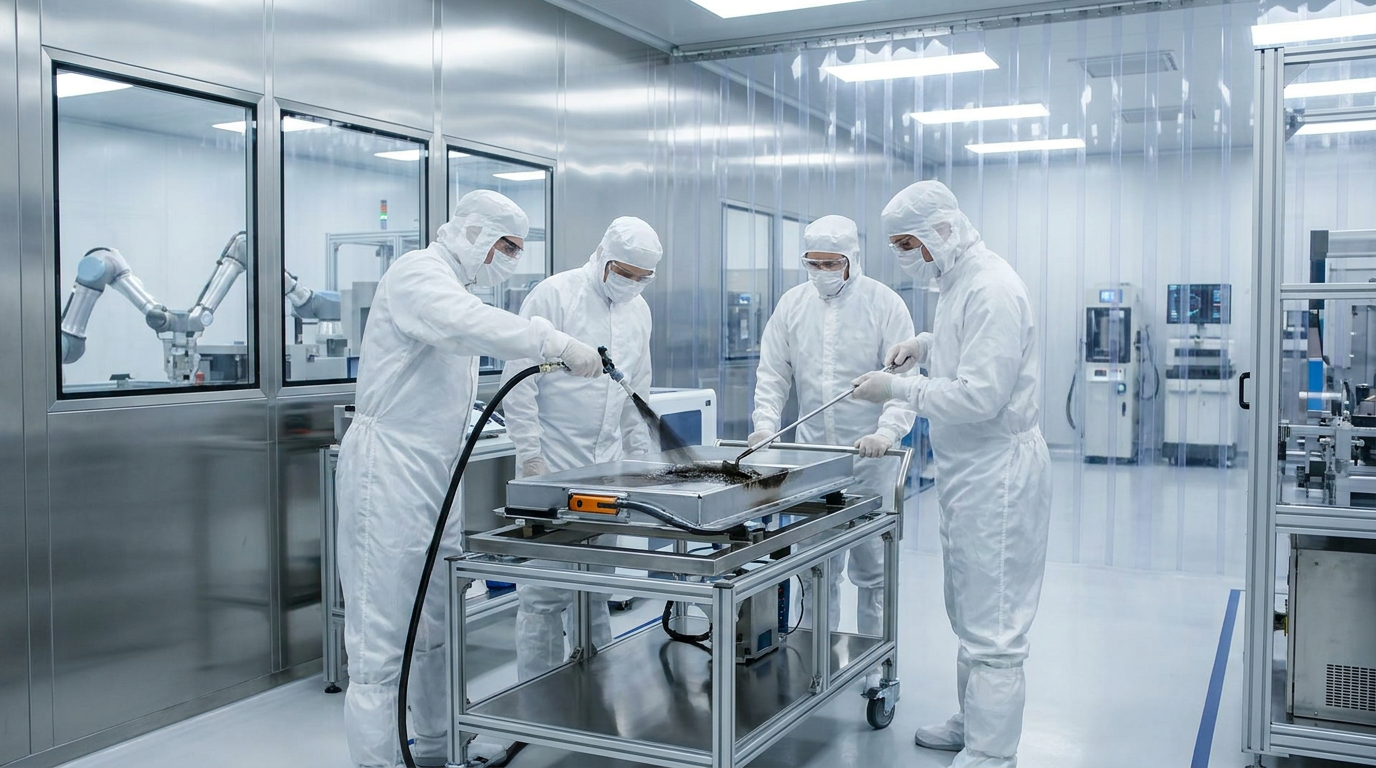
Despite the immense progress witnessed in 2026, significant uncertainties and manufacturing hurdles remain before solid-state batteries become ubiquitous. The primary challenge is extreme manufacturing complexity. Solid-state cells are highly sensitive to moisture and require hermetic sealing, demanding clean-room manufacturing environments that are significantly more expensive to build and operate than traditional battery plants. Furthermore, ensuring perfect, microscopic contact between the solid electrolyte and the electrodes—without the liquid to naturally fill the gaps—requires unprecedented precision in the manufacturing process.[3][7]

Because of these high production costs and complex manufacturing requirements, the first wave of solid-state electric vehicles arriving between 2026 and 2028 will not be budget-friendly commuter cars. Industry analysts expect the technology to debut exclusively in high-end luxury vehicles, flagship performance cars, and heavy-duty commercial applications where the premium for extreme range and fast charging can be easily absorbed into the vehicle's price. For the average consumer purchasing a mass-market EV, traditional lithium-ion and highly cost-effective lithium-iron-phosphate (LFP) batteries will remain the standard for several more years.[7]
Nevertheless, the trajectory is clear. The milestones achieved in 2026—from QuantumScape's Eagle Line to GBT's A-samples and Toyota's electrolyte factories—prove that solid-state batteries are no longer a distant scientific theory. They are an engineering reality currently undergoing the difficult, capital-intensive process of industrial scaling. As production volumes increase and manufacturing yields improve into the 2030s, costs will inevitably fall. When they do, the promise of an electric vehicle that can drive 600 miles and recharge in the time it takes to buy a cup of coffee will finally become the global standard.[1][2][4]
How we got here
Early 2020s
Solid-state technology remains largely confined to laboratory testing and prototype development.
2024
Semi-solid batteries begin appearing in commercial vehicles in China, proving the viability of high-density chemistry.
Early 2026
QuantumScape inaugurates its Eagle Line pilot facility; Chinese manufacturer GBT produces its first A-sample solid-state cells.
Late 2026
Automakers like Dongfeng plan to begin initial mass production of solid-state cells for high-end vehicles.
2027-2028
Toyota and its partners target the completion of massive solid electrolyte factories to support widespread commercial vehicle launches.
Viewpoints in depth
Solid-State Developers
Argue that solid-state technology is ready to scale, focusing on licensing models and pilot lines to prove commercial viability to automakers.
Companies dedicated purely to battery chemistry, such as QuantumScape and Greater Bay Technology, emphasize that the fundamental science of solid-state batteries is now solved. Their focus has shifted entirely to 'manufacturability.' By inaugurating pilot lines like QuantumScape's Eagle Line, these developers aim to prove to skeptical automakers that ceramic separators and lithium-metal anodes can be produced at scale with high yields. They argue that their licensing models will allow the broader automotive industry to rapidly adopt the technology without having to reinvent the wheel.
Legacy Automakers
View solid-state batteries as a strategic equalizer to catch up in the EV race, investing heavily in proprietary supply chains for a 2027-2028 launch.
For legacy automakers like Toyota, which have historically lagged behind pure-play EV companies in battery-electric volume, solid-state technology represents a chance to leapfrog the competition. Rather than relying solely on third-party developers, these automotive giants are investing billions in proprietary supply chains, such as Toyota's partnership with Idemitsu Kosan to manufacture solid electrolytes in-house. They view the 2027-2028 launch window as the moment they will redefine the EV market with vehicles that finally eliminate consumer range anxiety.
Market Pragmatists
Caution that while the chemistry works, extreme manufacturing costs mean solid-state batteries will remain a luxury-only feature until the 2030s.
Industry analysts and manufacturing pragmatists acknowledge the impressive performance metrics of solid-state prototypes but warn against unrealistic consumer expectations. They point out that solid-state cells require hermetically sealed clean rooms and unprecedented manufacturing precision, which drastically inflates production costs compared to standard lithium-ion plants. Consequently, this camp argues that the first wave of solid-state vehicles will be prohibitively expensive for the average buyer, and that traditional, cheaper lithium-iron-phosphate (LFP) batteries will continue to dominate the global mass market well into the next decade.
What we don't know
- Exactly how much of a price premium the first commercial solid-state vehicles will carry over standard EVs.
- Whether solid-state manufacturing yields can be improved quickly enough to meet the ambitious 2027-2028 mass-market targets.
- How the batteries will perform in terms of degradation after 10+ years of real-world consumer driving.
Key terms
- Solid Electrolyte
- A solid material, often ceramic or sulfide-based, that conducts ions between a battery's anode and cathode without the need for a liquid.
- Energy Density
- The amount of energy a battery can store relative to its weight, typically measured in watt-hours per kilogram (Wh/kg). Higher density means longer driving range.
- Dendrites
- Microscopic, needle-like lithium structures that can grow inside liquid batteries over time, potentially causing dangerous short circuits.
- Lithium-Metal Anode
- A highly efficient battery component that stores more energy than traditional graphite anodes, made possible by the use of solid electrolytes.
- Semi-Solid Battery
- A transitional battery technology that uses a mix of solid materials and a small amount of liquid electrolyte to improve performance while utilizing existing manufacturing methods.
Frequently asked
What is a solid-state battery?
A battery that replaces the liquid electrolyte found in standard lithium-ion cells with a solid material, like ceramics or sulfides, enabling higher energy storage and improved safety.
Why are solid-state batteries safer?
Because they do not contain flammable liquid electrolytes, they are highly resistant to catching fire even if punctured, crushed, or severely overheated.
When will solid-state EVs be available to buy?
Pilot production is beginning in 2026, with the first commercial vehicles expected to hit the market between 2027 and 2028, likely starting with high-end luxury models.
Will solid-state batteries make electric cars cheaper?
Not initially. The complex manufacturing required means early solid-state batteries will be expensive. However, as production scales into the 2030s, costs are expected to drop significantly.
Sources
Source coverage
7 outlets
3 viewpoints surfaced






[1]ElectrekSolid-State Developers
China ramps up solid-state EV battery production
Read on Electrek →QuantumScape inaugurates Eagle Line pilot for solid-state battery production
Read on Electrek →[3]Battery Tech OnlineSolid-State Developers
QuantumScape details commercialization strategy for solid-state batteries
Read on Battery Tech Online →[4]CarscoopsLegacy Automakers
Toyota's 620-Mile Solid-State EV Plan Just Got A Major Boost From Big Oil
Read on Carscoops →[5]CarsGuideLegacy Automakers
Groundbreaking EV battery tech coming soon: The latest on BYD, Chery, Mercedes-Benz and more car brands' solid-state battery plans
Read on CarsGuide →[6]ElectriveMarket Pragmatists
CATL secures copper foil for solid-state batteries
Read on Electrive →[7]The Battery Show AsiaMarket Pragmatists
When Can You Buy a Solid-State Battery Car?
Read on The Battery Show Asia →
Every angle. Every day.
Get automotive stories with full source coverage and perspective breakdowns delivered to your inbox.