
Investigation Launched After B-52 Bomber Crash at Edwards Air Force Base Kills Eight
A B-52 Stratofortress crashed during a test flight in the Mojave Desert, killing all eight crew members and prompting a sweeping military investigation into the aging bomber fleet.
By Javier Cruz

A United States Air Force B-52 Stratofortress crashed Monday during a test flight at Edwards Air Force Base in California, resulting in a fiery explosion that killed all eight crew members on board. The incident, which sent thick plumes of black smoke over the Mojave Desert, marks the deadliest accident involving the strategic bomber in decades.[1]
Emergency response teams from Edwards Air Force Base and surrounding Kern County were dispatched immediately after radar contact was lost at approximately 10:15 a.m. local time. The wreckage was located roughly 15 miles northeast of the main runway, scattered across a remote section of the military testing range.[3]
The Air Force has not yet released the names of the eight personnel pending notification of next of kin. However, military officials confirmed the crew consisted of a mix of experienced test pilots, weapon systems officers, and flight test engineers assigned to the 412th Test Wing, a unit dedicated to pushing aerospace technology to its limits.[2]
US officials cautioned on Tuesday that a comprehensive investigation into the crash could take up to six months. The Air Force has convened an interim safety board to secure the site and begin recovering flight data recorders, while a formal Accident Investigation Board will be appointed in the coming days to conduct a thorough forensic analysis.[1][2]
The B-52, affectionately known as the "BUFF" (Big Ugly Fat Fella), is the undisputed workhorse of the US strategic bomber fleet. Despite the last airframe rolling off the Boeing assembly line in 1962, the aircraft remains a critical component of the nation's nuclear triad and conventional global strike capabilities, capable of carrying up to 70,000 pounds of ordnance.
The doomed aircraft was participating in a scheduled test sortie related to the Air Force's ongoing modernization efforts. Edwards Air Force Base serves as the military's premier flight testing center, responsible for evaluating new avionics, weapons integrations, and structural upgrades before they are rolled out to the broader operational fleet.
Defense analysts immediately pointed to the B-52 Commercial Engine Replacement Program (CERP), a massive $2.6 billion initiative designed to replace the bomber's original Pratt & Whitney TF33 engines with modern Rolls-Royce F130 turbofans. It remains unclear if the crashed aircraft was actively testing the new engine configuration, advanced radar arrays, or other upgraded subsystems at the time of the failure.
Boeing, the original manufacturer of the B-52 and the primary contractor for its ongoing upgrades, issued a brief statement expressing condolences to the families of the fallen airmen. The aerospace giant confirmed it is deploying a team of technical experts to Edwards Air Force Base to assist the military in analyzing the wreckage and telemetry data.
The Pentagon is currently assessing whether to issue a temporary stand-down for the remaining 76 B-52H bombers in the active inventory. While safety pauses are standard protocol following fatal military aviation accidents, grounding the B-52 fleet for an extended period would create a significant gap in US strategic deterrence, particularly amid heightened global tensions.[2]
Fatal B-52 crashes have become exceedingly rare as the Air Force has refined its maintenance and operational protocols over the decades. The last major fatal incident occurred in 2008, when a B-52 crashed off the coast of Guam, killing all six crew members. Monday's crash represents the highest loss of life in a single B-52 incident since the Cold War era.[3]
Lawmakers on the House and Senate Armed Services Committees have already requested classified briefings on the incident. Defense committee members are expected to scrutinize whether the crash was the result of mechanical failure, software anomalies in the new upgrade packages, or human error during a high-risk test profile.
Over the coming weeks, investigators will painstakingly reconstruct the aircraft's final moments using radar tracks, voice communications, and recovered debris. Until the root cause is identified, the timeline for the B-52 modernization program—and the operational tempo of the strategic bomber force—remains in a state of precarious uncertainty.[1]
Key points
- A B-52 bomber crashed during a test flight at Edwards Air Force Base, killing all eight crew members.
- The incident is the deadliest involving a B-52 since the Cold War era.
- Investigators warn that determining the root cause of the crash could take up to six months.
- The aircraft was participating in testing related to a multi-billion-dollar modernization program.
What we don’t know
- The identities of the eight crew members, pending family notification.
- The specific cause of the crash, including whether it was mechanical failure or human error.
- Whether the doomed aircraft was actively testing the new Rolls-Royce engines at the time of the incident.
- How long the investigation will delay the broader B-52 modernization program.
How we got here
1955
The first B-52 Stratofortress enters active service with the US Air Force.
1962
The final B-52 airframe is delivered by Boeing.
2021
The Air Force awards Rolls-Royce a contract to replace the B-52's original engines.
June 15, 2026
A B-52 crashes during a test flight at Edwards Air Force Base, killing eight crew members.
June 16, 2026
The Air Force launches a formal Accident Investigation Board to determine the cause.
- Military Command
- Focused on identifying the root cause of the crash, ensuring fleet safety, and maintaining the strategic nuclear deterrent.
- Defense Industry Analysts
- Concerned with how the crash will impact the timeline and budget of the multi-billion-dollar B-52 modernization program.
- Congressional Oversight
- Demanding transparency regarding the safety of aging military airframes and the efficacy of ongoing upgrade contracts.
Perspectives this story doesn't cover
- Families of the deceased crew members
- Local emergency responders in Kern County
Sources
Source coverage
3 outlets
3 viewpoints surfaced



- [1]The GuardianCongressional Oversight
Investigation into deadly B-52 bomber crash could take months, US officials say
Read on The Guardian → - [2]ReutersDefense Industry Analysts
US Air Force launches probe into fatal B-52 bomber crash in California
Read on Reuters → - [3]Fox NewsCongressional Oversight
Air Force identifies 8 crew members killed in B-52 Stratofortress crash at Edwards Air Force Base
Read on Fox News →
More in News & Politics
See all →Pacific Defense
US Marines Deploy Iron Dome-Based Missile Defense System to Japan Amid Taiwan Tensions
3 sources
Pacific Defense
Japanese Torpedo Sinks US Navy Vessel in Friendly Fire Incident During Valiant Shield Exercise
3 sources
Military Space
US Army Establishes Dedicated Space Operations Branch in Major Strategic Shift
4 sources
Ukraine Air War
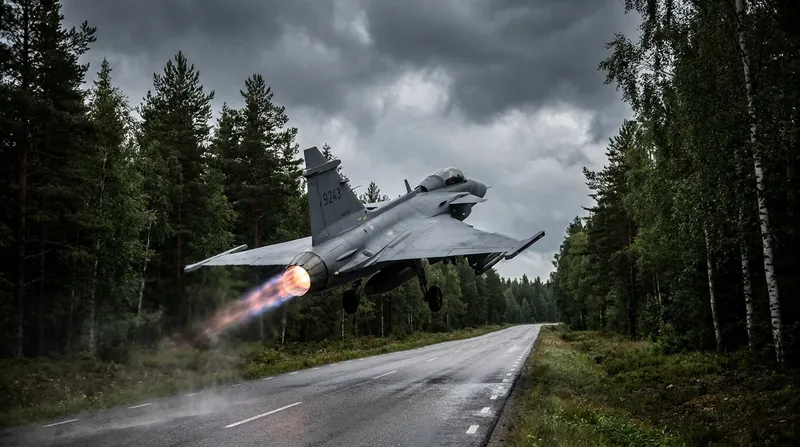
Ukraine Signs $2.5 Billion Contract With Sweden for Gripen E Fighters, Securing Major Air Force Upgrade
5 sources
Comments
Every angle. Every day.
Get News & Politics stories with full source coverage and perspective breakdowns, free every day.